
Northern Ghana (Mole NP)
Safari adventures under the savanna sun 🐘🕌
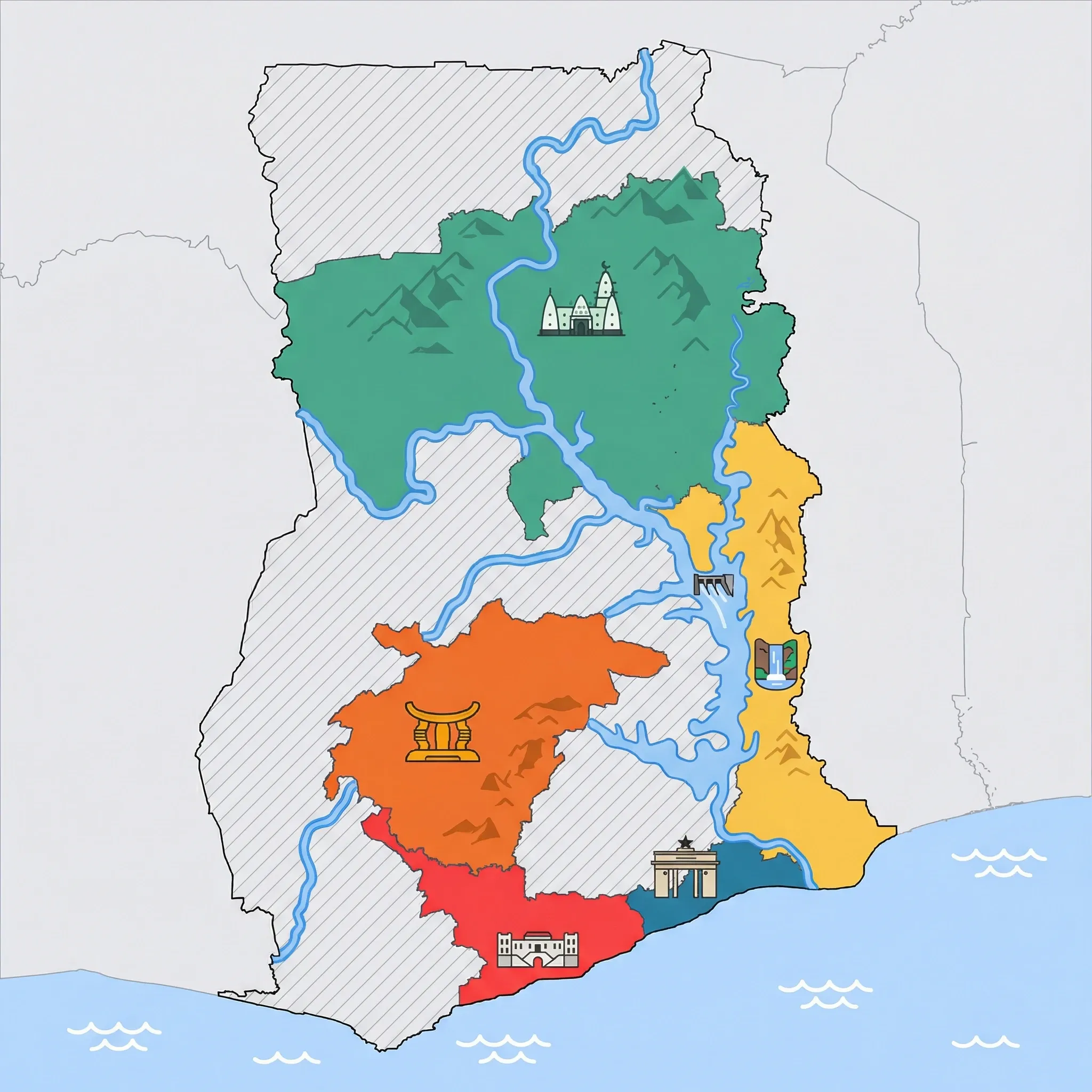
Click a region to explore
⚠️ SAFETY WARNING: Northern Ghana requires increased caution due to terrorism threats near the Burkina Faso border. UK, US, and Canadian agencies advise travelers to remain vigilant and avoid all travel to areas within 20-40km of the northern border. Mole National Park is the main tourist draw and is located south of these immediate border zones, but travelers should stay on main routes, travel during daylight, and prioritize organized tours. Families are strongly urged to consult their own government's official travel advisory before considering a trip, as circumstances and risk assessments vary.
Stepping off the plane in Tamale, the Northern Region feels like a different country compared to the humid south. The air is drier, the vegetation shifts from rainforest to golden savanna dotted with baobab trees, and the culture is predominantly Islamic. For families, this is the destination for adventure and wildlife. The pace of life is slower and more dignified. You will see cyclists navigating wide roads and architecture defined by round mud huts with thatched roofs. The heat here can be intense—often dry and dusty—so hydration is key. However, the open spaces and lack of congestion make it a refreshing escape from the bustle of Accra or Kumasi.
The cultural experience here focuses on history and nature. This is the land of the Dagomba, Gonja, and Mamprusi peoples. The vibe is welcoming but conservative; dressing modestly is important here. The region offers a unique opportunity for children to see elephants in the wild without the massive price tag of East African safaris. It is also a place of deep history, from ancient trading routes to the scars of the slave trade. The stark beauty of the landscape, especially during sunrise and sunset, provides a magical backdrop for a family trip that feels genuinely intrepid.
Key Attractions
The primary reason families visit is Mole National Park. It is Ghana's largest wildlife refuge and offers arguably the best elephant viewing in West Africa. Unlike many parks, Mole offers walking safaris (for older children and adults) where you can get thrillingly close to elephants, baboons, and antelopes on foot, accompanied by an armed ranger. The park lodge sits on an escarpment with a pool overlooking waterholes, meaning you can often watch elephants swim while you eat lunch.
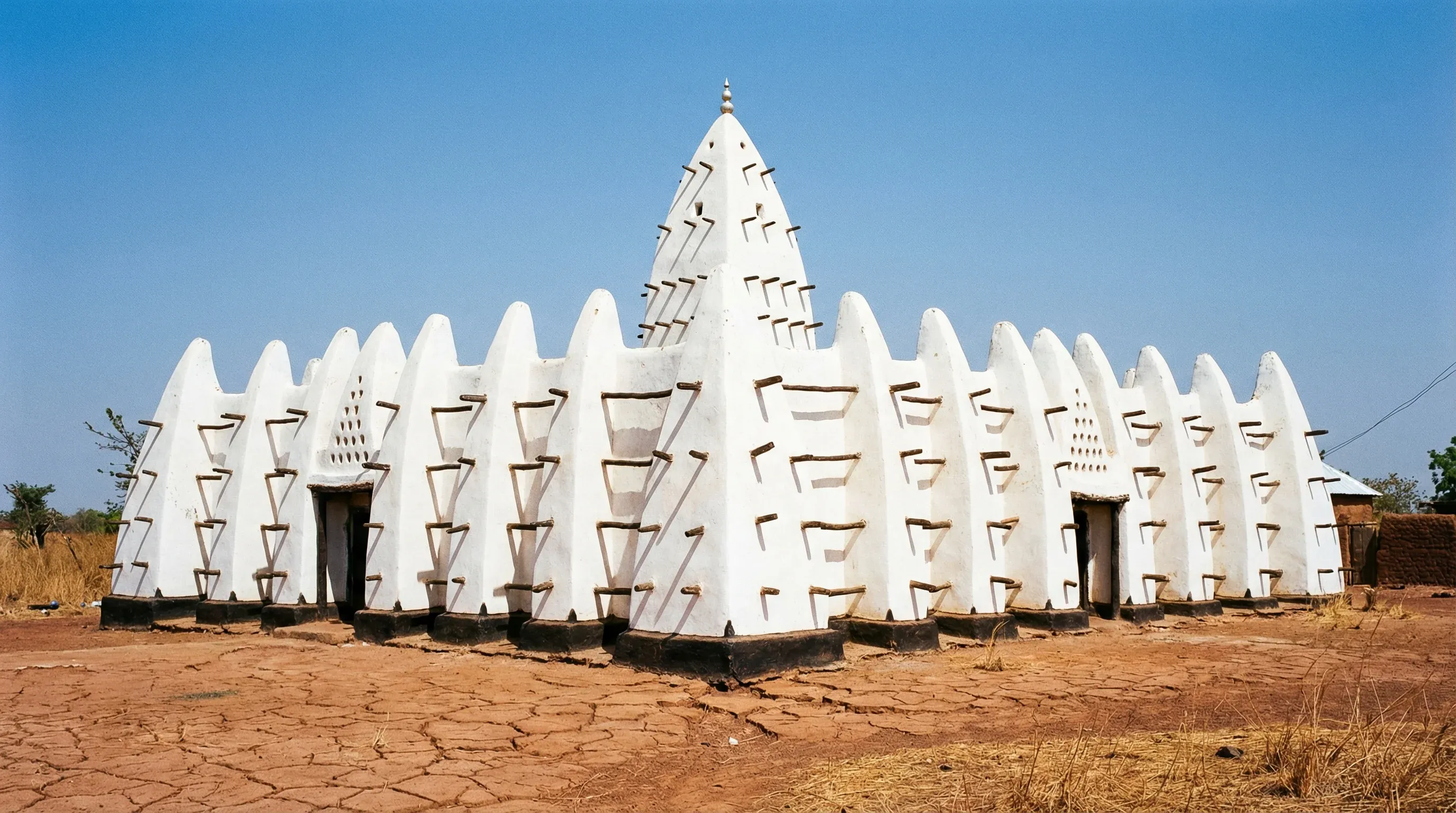
Just outside the park lies the Larabanga Mosque, known as the "Mecca of West Africa." This 15th-century mud-and-stick structure is visually striking and offers a great history lesson on the trans-Saharan trade routes. Nearby, the Red Clay Studio in Tamale is a surprising gem—a world-class art space founded by artist Ibrahim Mahama that engages local children and visitors in contemporary art, featuring massive installations often made from repurposed materials. For a sobering history lesson, the Salaga Slave Market Heritage Site marks a key point in the historic trade routes, though it is a more somber visit best suited for older teens.
Practical Advice
The best time to visit Mole is the dry season (December to April) when animals congregate around the waterholes. Avoid the peak rainy season (August/September) as grass is tall, making spotting animals harder. The "Harmattan" season (December/January) brings dust from the Sahara, which can irritate eyes and throats, so bring masks and drops.
Food & Drink
Typical meal times: Breakfast is early (6:00 am - 8:00 am) to beat the heat. Lunch is 12:00 pm to 2:00 pm. Dinner is 6:30 pm to 8:30 pm.
Typical meal costs: The north is very affordable. Local meals cost GH₵ 20–40 (approx. $1.20–2.50 USD / €1.10–2.30 EUR). Dining at the Mole Motel or Zaina Lodge is pricier, with meals ranging from GH₵ 150–400 (approx. $9–25 USD / €8.50–23 EUR).
Dietary requirements: The north relies heavily on grains (maize, millet) and shea butter. Vegetarians will find plenty of bean dishes. Wagashi (local cheese) is a fantastic vegetarian protein source unique to this area.
Signature dishes:
- Tuo Zaafi (TZ) – A soft millet or corn flour swallow, served with a green Ayoyo leaf soup; it has a lighter texture than fufu.
- Wagashi – A local cow's milk cheese, usually fried and dipped in spicy pepper sauce. It is red on the outside (dyed with millet stalks) and chewy.
- Masa – Fermented rice cakes fried in a special pan, similar to a donut, often eaten for breakfast with spicy powder.

General costs in the north are low, but the safari element raises the category. Accommodation at Zaina Lodge (luxury) is international standard ($300+ USD), while the Mole Motel is more budget-friendly at GH₵ 600–900 (approx. $38–55 USD / €35–52 EUR). Park entry and guide fees are very reasonable, typically under GH₵ 100 per person.

Getting Here & Around
Getting Here
- Airports – Tamale International Airport (TML) is the main hub. Flying from Accra takes 1 hour and is strongly recommended over driving, which takes 12+ hours.
- Driving – Once in Tamale, you will need a vehicle to reach Mole National Park. The road to Mole is now paved and in excellent condition, taking about 2-3 hours from the airport.
- Bus – STC buses run from Accra to Tamale, but it is a grueling overnight journey not recommended for families with young children.
Getting Around
- Car Rental – Renting a robust car (preferably 4x4) with a driver in Tamale is the best way to explore the region and reach Larabanga Mosque.
- Tuk-tuks – In Tamale city, "Yellow Yellows" (tricycles) are the common way to get around. They are cheap and breezy but have no seatbelts.
- Safari Jeep – Within Mole National Park, you will rely on the park's jeeps or your own vehicle for game drives.
Nearby Airports (1 airport)
Tamale
TMLTamale
View full flight map for Ghana →

Packing List
Essential during Harmattan season (Dec-Feb) when the air is thick with Saharan dust.
Tsetse flies in Mole can deliver a painful bite; standard mosquito spray often isn't enough.
The dry heat will crack lips and skin very quickly compared to the humid south.
Power cuts can happen, and walking paths at safari lodges are often dimly lit.
Mandatory physical document checked before you even leave the plane.
Frequent power cuts ("Dumsor") mean you need backup for phones/fans.
Street lighting is inconsistent and power outages can happen at night.
Exchange bureaus often reject notes that are old, torn, or marked.

Activities & Best Times

Hiking, wildlife, outdoor exploration, ecotourism
Mole National Park is West Africa's premier wildlife destination, offering unique walking safaris and reliable elephant sightings in an authentic savanna setting. Peak season coincides with the height of the dry season when animals congregate at water holes; the rainy season brings tall grass that obscures visibility.

Urban tourism, museums, historical sites, architecture
While Tamale and traditional villages offer cultural experiences, the region lacks the density of cultural institutions and heritage sites that would justify 'very_good' on an international scale. The primary draw is nature (Mole NP), not urban cultural infrastructure. 'Good' better reflects the authentic village experiences without overstating the urban cultural offer.

Sport tourism, fitness activities, active recreation
The region provides specialized infrastructure for cycling safaris and wilderness trekking, allowing for immersive physical engagement with the savanna landscape. These activities are most enjoyable during the dry Harmattan months when trails are firm and heat is manageable.

Learning experiences, scientific sites, historical education
The Mole National Park Information Center provides valuable ecological and conservation education for families, though it serves as a secondary attraction to the park itself. It is best visited alongside the park during peak wildlife viewing months.

Scenic drives, countryside tours, route-based travel
The Tamale-Mole Safari Route offers a distinctive driving experience through rural northern landscapes and community eco-villages. While roads are generally well-maintained, the experience is best in the dry season when visibility is high and there is no risk of seasonal flooding.




Public Holidays & Calendar Next 12 months
Public holidays, festivals, cultural celebrations, and seasonal natural phenomena coming up in Northern Ghana (Mole NP) over the next 12 months.
Loading holidays and events...

Travel Advisory
All major agencies maintain a baseline advisory for travellers to exercise increased vigilance across Ghana, primarily due to crime and regional security threats. While the country is generally stable, specific regional warnings and demographic-based risks necessitate higher awareness than standard travel.
Safety Topics
Traveller Advice (3 groups)

There are reports of sexual assault and harassment targeting women. Crimes often occur at night or in secluded spots; travellers should avoid walking alone after dark.

Visitors should avoid travel between cities after dark due to highway robberies. Be extremely cautious at beaches as coastal currents are powerful and often lack lifeguards.

Same-sex intimacy is criminalized and can lead to imprisonment. Recent legislative efforts have increased hostile rhetoric, discrimination, and the risk of targeted violence or extortion.
Agency Summaries
Safety concerns are higher than in New Zealand, driven by rising crime rates including armed robbery and kidnapping. Terrorism risks are elevated near the northern borders.
While general travel is permitted, the UK advises against all but essential travel to the Bawku Municipal area. There is a notable threat of terrorism in northern border areas and frequent demonstrations in cities.
Irish citizens are urged to be cautious, particularly regarding political gatherings and civil unrest. Comprehensive travel insurance and early visa application are strongly recommended.
Increased caution is advised nationwide due to crime and specific threats against women and LGBTQ+ travellers. There is a higher risk of civil unrest and crime in the northern border regions near Burkina Faso and Côte d'Ivoire.
Travellers should remain highly vigilant due to safety and security concerns, including petty and violent crime. There is a specific warning regarding increased risks for the 2SLGBTQI+ community due to legislative developments.
Heightened vigilance is required because of the risk of violent crime. Terrorism is a significant concern in the north, and local curfews are active in several regions due to security incidents.
Information is provided for general guidance only and does not constitute travel, safety, medical, or legal advice. Conditions may change. Users are responsible for independently verifying information before travel.