

Greece is a dazzling mosaic of ancient history and island bliss that feels custom-made for family exploration. Geographically, it is a land of dramatic contrasts, ranging from the rugged mountains of the mainland to thousands of islands scattered across the Aegean and Ionian seas. For families, this means you can combine hiking and history with lazy days by the sea in a single trip. The Greek concept of philoxenia-friendship to strangers-is palpable here; children are not just tolerated but adored, often treated as the guests of honour in tavernas and town squares.
Culturally, Greece is relaxed and nocturnal, a rhythm that might require adjustment but ultimately allows for leisurely family bonding. Life happens outdoors, whether it is exploring the marble ruins of ancient civilizations in Athens & Attica or splashing in the shallow, warm waters of the South Aegean Islands. The sheer variety of experiences-from the Venetian harbours of Crete to the medieval castles of Rhodes-ensures that toddlers, teens, and parents are equally captivated. It is a safe, sunny, and profoundly educational destination that feels less like a classroom and more like an epic adventure.
Key Attractions
No family trip to Greece is complete without climbing to the Acropolis of Athens. Seeing the Parthenon in person brings textbooks to life, though it is best visited early morning to beat the heat. Nearby, the Attica Zoological Park offers a fun break from history with its impressive collection of animals. For a deep dive into mythology, venture to the Peloponnese to visit Ancient Olympia, where kids can run on the original sprint track of the first Olympic Games, or marvel at the acoustics of the Ancient Theatre of Epidaurus, which is still used for performances today.
Island hopping offers its own wonders. On Crete, the Palace of Knossos captivates imaginations with the legend of the Minotaur and the Labyrinth. After exploring ruins, families can cool off at the Cretaquarium (Thalassocosmos), one of the largest aquariums in Europe, or play on the magical pink sands of Elafonissi Beach. In the Dodecanese, the Medieval City of Rhodes looks like a movie set, with its castle walls and Street of the Knights offering a perfect backdrop for young explorers to pretend they are time travellers.
Practical Advice
The best time to visit is late spring (May–June) or early autumn (September–October). July and August can be fiercely hot (often exceeding 35°C/95°F) and crowded. If travelling with a stroller, be aware that many villages have cobblestones and stairs; a sturdy carrier is often more practical for exploring archaeological sites. Medical care is generally good, especially in major cities and on large islands like Crete and Rhodes, but smaller islands may have limited facilities.
Food & Drink
Typical meal times: Greeks eat late. Lunch is typically served from 1:30 pm to 3:30 pm, and dinner rarely starts before 9:00 pm, though tourist areas will serve families earlier (around 7:00 pm or 8:00 pm).
Typical meal costs: €15–25 (approx. $16–27 USD / £13–21 GBP) per person for a hearty tavern meal. Gyros and street food cost around €4–6 (approx. $4.50–6.50 USD / £3.50–5 GBP).
Dietary requirements: Excellent for vegetarians, as many traditional dishes (ladera) are vegetable-based. Vegan options are common during fasting periods. Gluten-free awareness is growing in tourist hubs, but cross-contamination can be a risk in small kitchens.
Family-friendly dining: Children are welcome everywhere. While specific "kids menus" are rare, tavernas happily serve half-portions or shareable plates (mezedes). Highchairs are standard in most tourist-friendly restaurants.
Signature dishes:
- Moussaka – Layers of eggplant, minced meat (usually beef or lamb), and potatoes topped with a creamy béchamel sauce.
- Souvlaki / Gyros – Grilled meat skewers or shavings wrapped in pita with tomatoes, onions, and tzatziki; the ultimate kid-friendly fast food.
- Gemista – Tomatoes and peppers stuffed with rice and herbs (sometimes meat), baked until soft and sweet.
- Spanakopita – A savoury pastry filled with spinach and feta cheese, perfect for a quick snack.
- Loukoumades – Small, fluffy fried dough balls soaked in honey and sprinkled with cinnamon and walnuts.

Greece offers good value compared to Western Europe, though prices vary by location. A family of four can expect to spend around €160–240 (approx. $175–260 USD / £135–200 GBP) per day, covering mid-range accommodation, ferry tickets, and tavern meals. Popular islands like Mykonos and Santorini are significantly more expensive than the mainland or Crete.
Age Suitability





Did you know? Greece welcomes approximately 27.8 million international visitors per year. Most visitors come from Europe.
Explore Regions
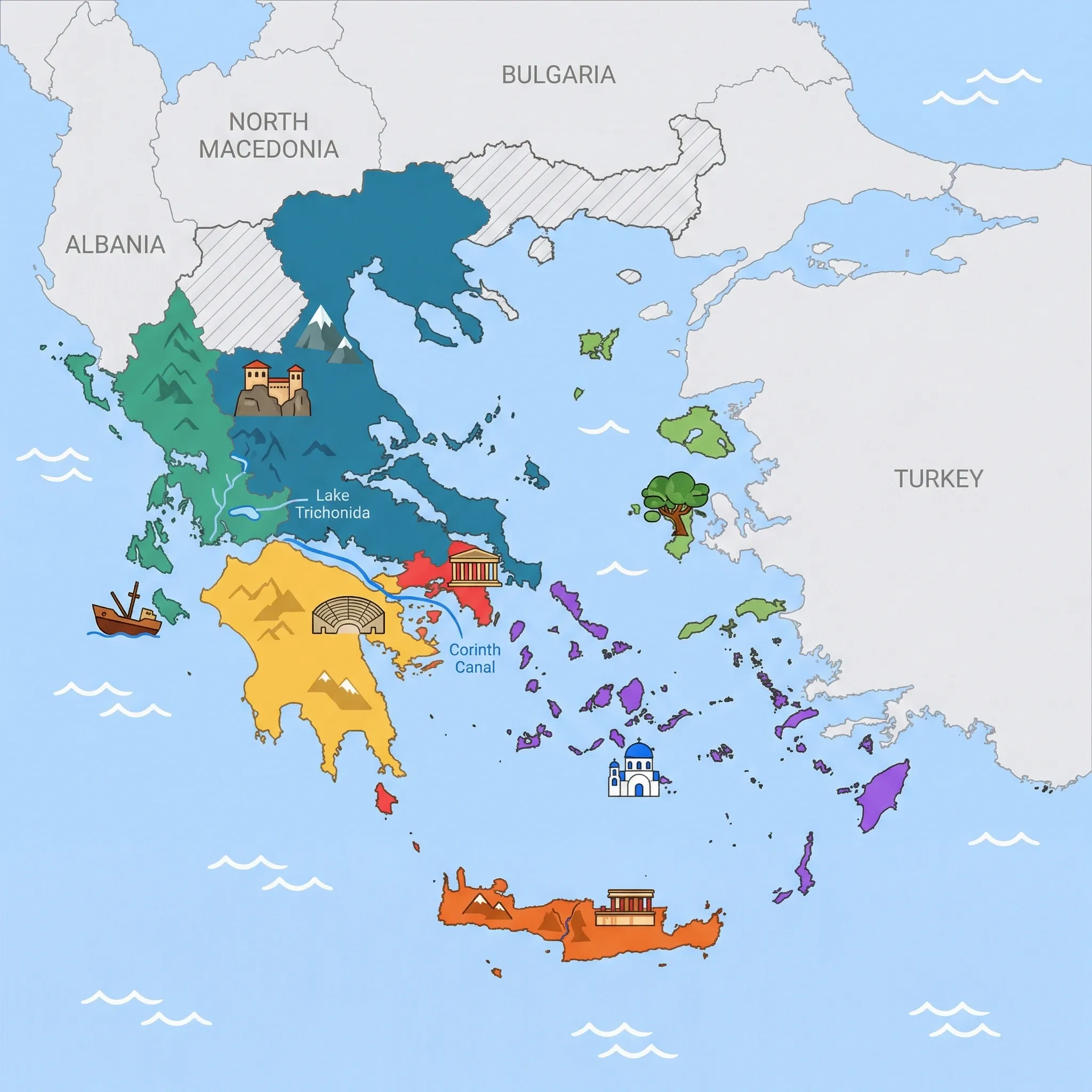
7 Regions
Athens & Attica
Where ancient myths meet modern family adventures 🏛️🌊
Central & Northern Greece (Thessaloniki, Meteora, Delphi, Halkidiki)
Mythical mountains, golden beaches, and culinary delights 🏔️🏖️
Crete
Rugged gorges, pink sands, and legendary hospitality 🦁🏝️
Ionian Islands (Corfu, Kefalonia, Zakynthos)
Emerald islands, Venetian castles, and turtle spotting 🐢🏰
North Aegean (Lesbos, Samos, Chios)
Authentic island life, medieval villages, and natural wonders 🏺🌲
Peloponnese
Legendary ruins, castle towns, and endless coastlines 🏟️🏰
South Aegean Islands (Cyclades: Santorini, Mykonos, Naxos, Paros; Dodecanese: Rhodes, Kos)
Sugar-cube villages, knights' castles, and deep blue seas 🧿⛪
Click on a region marker to explore details. Use the dropdown to color regions by activity suitability.

Getting There & Around
Getting There
- By Air – Athens International Airport (ATH) is the main hub, connecting to the world. Direct charters also fly into Crete (Heraklion/Chania), Rhodes, and Corfu during the tourist season.
- By Sea – Ferries connect Italian ports (Venice, Ancona, Bari) to Patras and Igoumenitsa on the mainland. Cruise ships frequently dock at Piraeus, Santorini, and Mykonos.
- Entry Requirements – Greece is part of the Schengen Area. EU nationals need only an ID card; US, UK, Canadian, and Australian citizens do not need a visa for short stays (up to 90 days). Check your government website for the latest visa requirements, or use the IATA Travel Centre entry-requirements checker.
Getting Around
- Ferries – The lifeblood of the islands. High-speed catamarans are fast but bumpy; large conventional ferries (like Blue Star) are slower, steadier, and offer deck space for kids to run around. Booking ahead is essential in summer.
- Car Hire – Essential for exploring the Peloponnese, Crete, and larger islands. Driving can be aggressive, and mountain roads are winding.
- Domestic Flights – A quick way to jump from Athens to distant islands like Rhodes or Corfu, saving hours of ferry travel.
- Public Transport – Athens has a clean, modern metro (kids under 6 ride free). KTEL buses connect most mainland towns and are reliable and affordable.

Packing List
Essential for pebble beaches and protecting feet from sea urchins, which are common in rocky coves.
Plug-in liquid mats are standard in Greek homes; bringing your own ensures bite-free nights as screens aren't universal.
Many archaeological sites and island villages have stairs and cobblestones that make strollers impractical.
The Greek sun is intense, and UV levels remain high even on windy days; essential for kids in the water.
The 'Meltemi' wind in July/August can make island evenings surprisingly cool and breezy.

Activities & Best Times

Adventure & Nature
ExcellentHiking, wildlife, outdoor exploration, ecotourism
Home to the Samaria Gorge and the E4 European Long Distance Path, the island offers premier hiking and geological exploration. Peak seasons avoid the extreme mid-summer heat and the winter months when the gorge and high mountain trails are closed for safety.
Home to the iconic Mount Olympus and Meteora, the region offers premier trekking and wildlife observation (Lake Kerkini) that surpasses most European benchmarks for authenticity and scale.
Boasts 17 attractions including unique volcanic landscapes like the Santorini Caldera hike and authentic organic farms in Mykonos and Rhodes. Peak summer months provide optimal access to these natural sites, while the shoulder seasons offer more comfortable temperatures for strenuous trekking.

City & Cultural
ExcellentUrban tourism, museums, historical sites, architecture
The island is a cradle of Western civilization, anchored by the Minoan Palace of Knossos and the historic Venetian harbors of Chania and Rethymno. Late spring and early autumn provide the perfect balance of manageable crowds and comfortable temperatures for exploring vast archaeological sites.
The density of UNESCO sites like Delphi and the Royal Tombs of Aigai, combined with Thessaloniki's Byzantine heritage, makes this a globally significant destination for heritage-focused families.
Home to 14 significant sites including the UNESCO-listed Medieval City of Rhodes and the Minoan ruins of Akrotiri. The region offers world-class living culture and heritage, though accessibility and the vibrant atmosphere are significantly diminished during the winter closures from November to April.

Sports & Active
Very GoodSport tourism, fitness activities, active recreation
With diverse infrastructure ranging from the E4 trekking route to major water adventure centers, the island is a hub for active families. Conditions for organized outdoor sports are optimal in the transitional seasons when temperatures are warm but not restrictive for physical exertion.
Exceptional for windsurfing and kitesurfing, particularly at Surf Club Keros in Lemnos, which benefits from consistent summer Meltemi winds. The region also features significant trail networks for active travelers, though wind sports are the primary seasonal draw.
The region features internationally recognized infrastructure for active tourism, including the E4 long-distance path and professional-grade hiking routes in Delphi and Meteora.

Beach & Sea
GoodBeach resorts, marine activities: diving, snorkelling, kite surfing, wind surfing, sailing
Home to globally iconic beaches like Navagio and Myrtos, offering stunning turquoise waters and white limestone cliffs. Peak season aligns with the warmest sea temperatures and calmest conditions for yachting and swimming.
Crete features world-class beaches like Balos and Elafonissi with unique pink sands and turquoise waters. The season is strictly defined by Mediterranean water temperatures, which are ideal for swimming and snorkeling from June through September.
Home to unique volcanic black pebble beaches like Mavra Volia and expansive stretches like Vatera, offering crystal-clear Aegean waters. Peak visitation aligns with high summer temperatures and calm sea conditions, while winter months see significant rainfall and cooler water.

Educational & Exploratory
GoodLearning experiences, scientific sites, historical education
Provides high-quality marine biology education through sea turtle rescue centers and several aquariums. Peak timing coincides with the turtle nesting and hatching season, providing unique hands-on learning for families.
Educational highlights include the Cretaquarium and the Natural History Museum of Crete, which provide internationally recognized insights into Mediterranean ecosystems. While mostly indoor, visitation peaks align with the main tourism season when all family-oriented guided programs are active.
Boasts significant specialized museums regarding mastic production and olive oil, alongside the world-renowned Petrified Forest museum. These sites offer deep insights into unique Mediterranean geology and traditional industries, best visited when primary sites are fully operational.

Road Trips & Scenic
GoodScenic drives, countryside tours, route-based travel
Offers spectacular coastal driving routes such as the Argostoli to Fiskardo road, featuring dramatic cliffside views. Late spring and early autumn are best to avoid the heavy summer tourist traffic and winter's high precipitation.
Crete offers iconic scenic drives such as the Sfakia Pass and the Mirabello Coastal Drive, passing through dramatic gorges and traditional villages. Peak travel is best in May, June, and September to ensure clear visibility and avoid the heavy congestion of mid-summer coastal traffic.
The islands offer scenic coastal drives and routes through the historic Mastihohoria (Mastic Villages). Best conditions occur in late spring and early autumn when visibility is high and mountain roads are easily accessible.

Theme Park & Entertainment
GoodAmusement parks, family entertainment venues
High-quality water parks like Watercity and Limnoupolis offer substantial family entertainment, though they are primarily regional in scale. These facilities operate seasonally, catering to the peak summer tourist influx from June to August.
Contains 5 notable water parks and family entertainment venues such as Water Park Faliraki and Throne of Helios. These facilities are strictly seasonal, operating for the international tourist market during the warm summer months and closing entirely during the winter.
Features regional-scale water parks like Aqualand and Zante Water Village which are popular with families but not destination-level attractions. Operations are seasonal, typically limited to the warmer months of May through September.

Relaxation & Wellness
GoodSpa retreats, wellness centers, peaceful getaways
Famed for its therapeutic natural hot springs and historic bathhouses such as Eftalou and Polichnitos. The experience is best enjoyed in cooler but pleasant weather; hot springs are less appealing during the intense heat of July and August.
Authentic thermal traditions at Agistro and Agia Paraskevi offer unique restorative experiences, best enjoyed during the cooler months when the thermal waters provide the greatest contrast.
Features 3 unique natural thermal sites including Palea Kameni and Kallithea Springs. These outdoor wellness experiences are highly dependent on fair weather, making the sunny summer and shoulder months the only viable time for an authentic restorative visit.

Ski & Snow
GoodWinter sports, ski resorts, snow activities
Mount Parnassos and Voras host Greece's most sophisticated ski infrastructure, providing a high-quality boutique winter sports experience during the short but reliable snow window.
Offers authentic but small-scale alpine experiences at resorts like Kalavryta and Mainalo, primarily suitable for domestic travelers or those seeking a non-traditional Greek winter. The operational season is short and highly dependent on peak winter snowfall in January and February.

Festivals & Seasonal
MarginalEvents, celebrations, seasonal attractions
Includes internationally noted events like the Venetian-influenced Easter in Corfu and the sea turtle nesting season. These events are highly date-specific and drive peak visitation during their respective calendars.
The Thessaloniki International Film Festival in November is a major cultural event, while various local festivals provide seasonal appeal during the summer months.
Anchored by the world-renowned Athens-Epidaurus Festival, which brings high-caliber international performances to ancient venues. The peak season is strictly tied to the summer festival calendar, particularly in July and August.

Public Holidays & Calendar Next 12 months
Public holidays, festivals, cultural celebrations, and seasonal natural phenomena coming up in Greece over the next 12 months.
Loading holidays and events...

Climate & Weather
Athens & Attica
Show Details
| Month | Temp °C | Rain | Humidity |
|---|
Central & Northern Greece (Thessaloniki, Meteora, Delphi, Halkidiki)
Show Details
| Month | Temp °C | Rain | Humidity |
|---|
Crete
Show Details
| Month | Temp °C | Rain | Humidity |
|---|
Ionian Islands (Corfu, Kefalonia, Zakynthos)
Show Details
| Month | Temp °C | Rain | Humidity |
|---|
North Aegean (Lesbos, Samos, Chios)
Show Details
| Month | Temp °C | Rain | Humidity |
|---|
Peloponnese
Show Details
| Month | Temp °C | Rain | Humidity |
|---|

Travel Advisory
Greece is assessed as a low-risk destination by all major agencies. Standard safety awareness is sufficient for most travelers, though one should stay informed of local strikes and seasonal natural hazards.
Safety Topics
Traveller Advice (5 groups)

Maintain awareness in crowded tourist areas and on public transport where pickpocketing is common. Carry a photocopy of your passport and be aware of new biometric entry systems (EES) when arriving from outside the Schengen area.

Greece is generally welcoming, especially in major cities and popular islands like Mykonos. However, more conservative attitudes may be encountered in rural or deeply religious areas.

Ensure you have the correct national visa for long-term study stays, as tourist exemptions do not apply for periods exceeding 90 days.

Female travelers should follow standard safety precautions as they would at home. While Greece is safe, avoid walking alone in poorly lit or isolated areas late at night.

Accessibility varies significantly; while major modern infrastructure in Athens is improving, many historic sites and older island villages have challenging terrain and limited facilities.
Agency Summaries
Greece is considered a safe destination for visitors, though standard vigilance is recommended. Travelers should be mindful of petty crime in busy urban areas and tourist hotspots. Seasonal environmental factors, such as summer wildfires and strong Aegean winds, may impact travel plans.
Safety levels in Greece are consistent with other major European destinations. Travelers should prepare for extreme weather variations, including summer heat and wildfires or winter snow, and stay informed about new biometric entry requirements for non-EU citizens.
While travel is generally safe, visitors should expect significant disruptions on specific dates, such as the late February anniversary of the Tempi train crash, which often triggers nationwide strikes and protests. High standards of personal security are advised in major cities.
Irish citizens are advised to take standard safety measures. Travelers should ensure they hold valid identification and appropriate insurance. For stays exceeding three months, local registration with Greek authorities is mandatory.
New Zealanders should maintain a standard level of security awareness. Frequent civil unrest and strikes in major cities like Athens and Thessaloniki can impact transportation. Natural hazards like wildfires and seismic activity are also present.
Greece is broadly safe for tourism. Visitors are encouraged to maintain awareness in crowded areas due to petty theft and to be prepared for occasional political demonstrations that can disrupt local services. New European entry protocols are being implemented.
Information is provided for general guidance only and does not constitute travel, safety, medical, or legal advice. Conditions may change. Users are responsible for independently verifying information before travel.