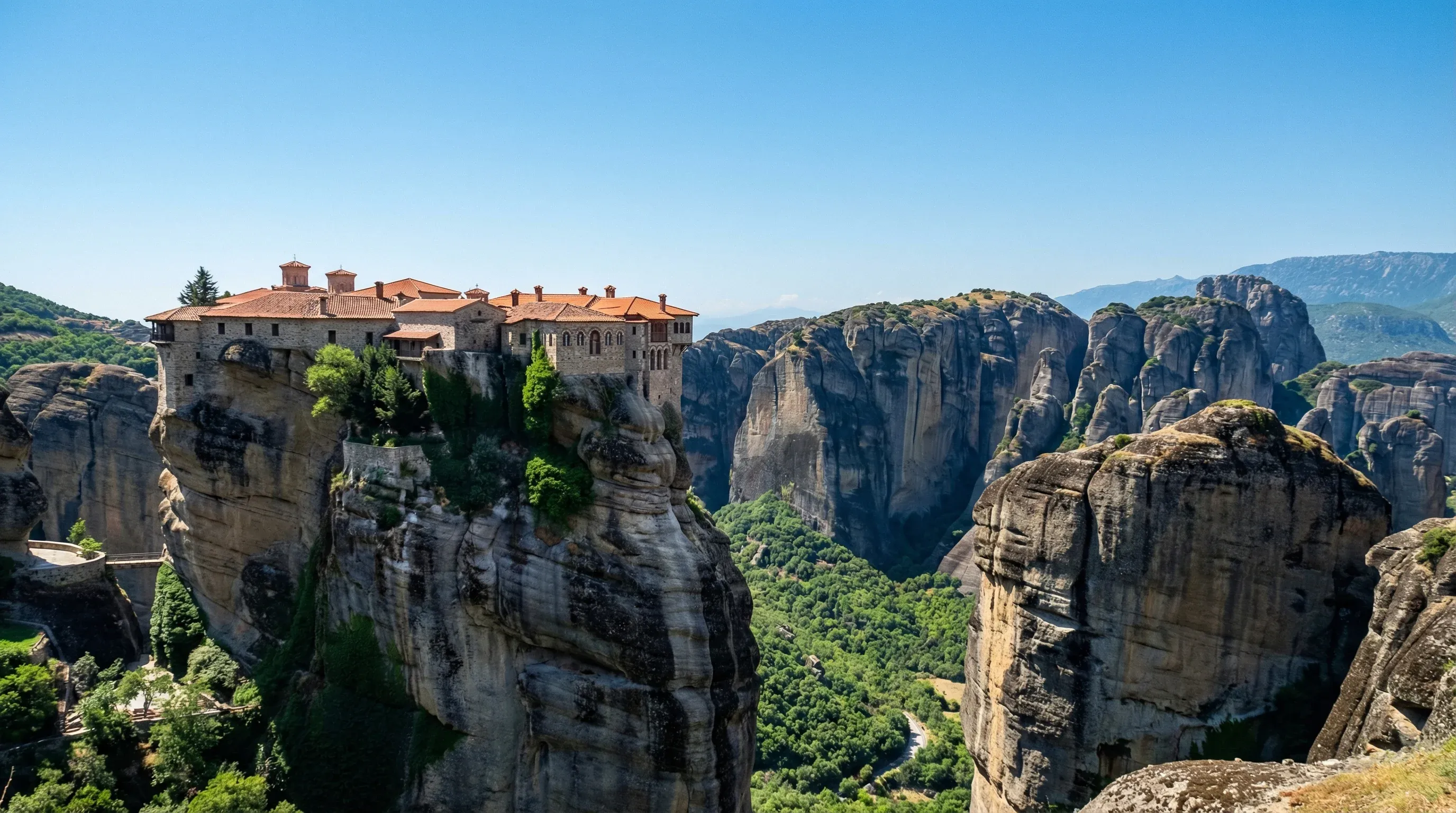

Central & Northern Greece (Thessaloniki, Meteora, Delphi, Halkidiki)
Mythical mountains, golden beaches, and culinary delights 🏔️🏖️
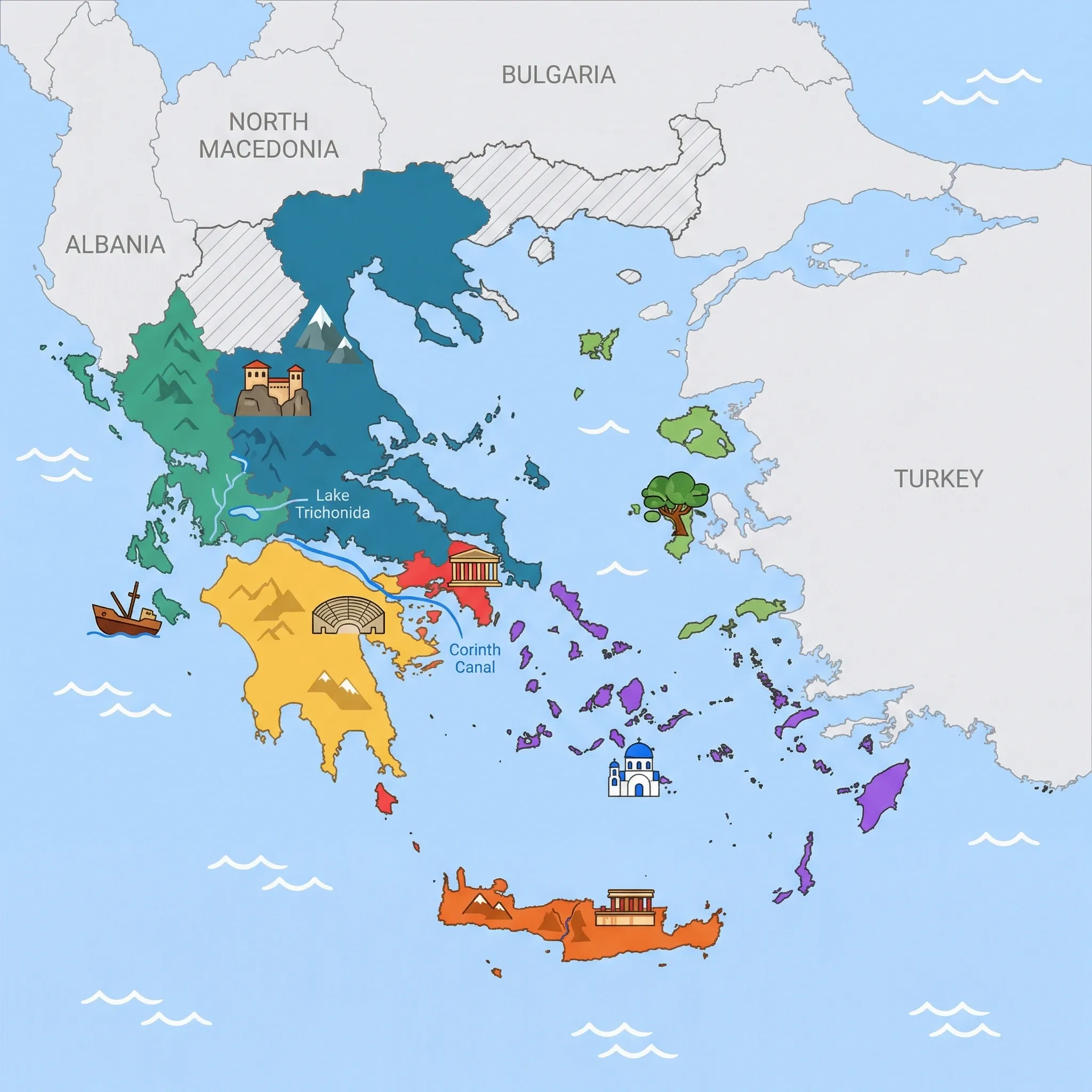
Click a region to explore
Central and Northern Greece offers a diversity of landscapes that few other European regions can match. For families who love road trips, this is the ultimate playground. You can start your day hiking in the cool, alpine air of Mount Olympus National Park—the mythical home of the 12 ancient gods—and end it swimming in the warm, shallow waters of the Aegean Sea in Halkidiki. The region is anchored by Thessaloniki, Greece's second city, which has a more relaxed, youthful energy than Athens and a waterfront promenade that is perfect for family strolls. The climate varies significantly here; while the coast enjoys a Mediterranean summer, the mountains can be cool even in August, and winters bring snow and ski opportunities to places like Parnassus.
Culturally, this region is a crossroads of civilizations, with influences from the Balkans, the Ottoman Empire, and ancient Macedon. This rich history is accessible to children through visual wonders rather than dry textbooks—giant rock pillars topped with floating monasteries, underground caves full of stalactites, and waterfalls you can walk behind. It is a region for active families; the hiking, canyoning, and swimming opportunities are world-class, yet the vibe remains unpretentious and deeply welcoming.
Key Attractions
The visual impact of the Meteora Monasteries is undeniable. Seeing these historic buildings balanced precariously on sandstone pillars will leave children awe-struck. Visiting the Great Meteoron Monastery involves some stairs, but the views and the history are worth the climb. Further south, the Temple of Apollo at Delphi offers a chance to run around the 'navel of the world' where the oracle once spoke; the setting on the side of a mountain is dramatic and inspiring.
In Thessaloniki, the White Tower of Thessaloniki is a manageable fortress museum with a great view from the top, located right on the bustling waterfront. For a nature-focused day out, the Edessa Waterfalls are spectacular and very accessible, allowing families to walk behind the curtain of water. If you venture into Halkidiki, the Petralona Cave and Anthropological Museum offers a cool respite from the sun and a fascinating look at early human history with impressive rock formations.
Practical Advice
A rental car is almost essential for this region to properly explore the distances between Meteora, Delphi, and the coast. The best time to visit is late spring or early autumn to avoid the peak crowds in Halkidiki and the intense heat at archaeological sites. Roads are generally good, but mountain routes can be winding—prepare for motion sickness.
Food & Drink
Typical meal times: Lunch 1:00 pm to 3:00 pm; Dinner 8:30 pm to 10:30 pm. Thessaloniki is famous for its food culture and eating out is a major social activity.
Typical meal costs: Very good value. A family meal is often €45–70 (approx. $49–76 USD / £38–60 GBP). Thessaloniki offers high-quality street food for minimal cost.
Dietary requirements: Vegetarian options are abundant. Northern Greece is famous for its peppers and cheese dishes. In Halkidiki resorts, all dietary needs are catered for.
Signature dishes:
- Bougatsa – Phyllo pastry filled with sweet semolina cream (served with cinnamon and icing sugar) or savory cheese/mince. Thessaloniki is the capital of Bougatsa.
- Soutzoukakia – Spicy, cumin-scented meatballs in a rich tomato sauce, a favorite with children who like a bit of flavor.
- Trigona Panoramatos – Cone-shaped phyllo pastries soaked in syrup and filled with rich cream, a local dessert specialty.
Why this score?
The region is home to Mount Olympus and the rugged Pindus range, offering significant trekking and mountaineering opportunities. The 'floating' monasteries of Meteora and the bear sanctuaries of the north provide a more raw, nature-focused experience compared to the coastal resorts.
Why this score?
Thessaloniki provides excellent medical services with several major teaching hospitals that cater to international patients. However, medical accessibility decreases in the mountainous interior of Delphi or remote parts of Epirus, where facilities are more basic and language barriers are more common.
Why this score?
This region combines major cultural draws like Delphi and Meteora with the high-volume beach tourism of Halkidiki, which attracts millions from across Europe. Thessaloniki serves as a significant secondary hub, though it lacks the global 'mega-destination' status of Athens or the southern islands.

Northern Greece is generally cheaper than Athens and significantly cheaper than the islands. A family apartment in Halkidiki can range from €60–150 (approx. $65–165 USD / £50–130 GBP) depending on proximity to the sea. Dining out in villages is incredibly affordable, often €12–15 (approx. $13–16 USD / £10–13 GBP) per person.

Getting Here & Around
Getting Here
- Airports – Thessaloniki Airport 'Makedonia' (SKG) is the main international hub. Volos (VOL) serves the central region near Pelion.
- Train – The rail connection between Athens and Thessaloniki is a scenic 4-hour journey, passing through mountains and tunnels.
- Driving – The E75 motorway connects Athens to Thessaloniki (approx. 5 hours). The drive to Meteora Monasteries from Thessaloniki takes about 3 hours.
Getting Around
- Car – The best way to explore. The drive from Mount Olympus National Park to the beaches of Halkidiki takes about 1.5 hours.
- Bus – KTEL buses are reliable and connect almost every town and village, but schedules can be infrequent in remote areas.
- Walking – Thessaloniki's city center and Upper Town (Ano Poli) are best explored on foot.
Nearby Airports (5 airports)
Skiathos Airport
JSISkiathos
Filippos
KZIKozani
Thessaloniki Airport
SKGThessaloniki
Skyros
SKUSkiros
Nea Anchialos Airport
VOLVolos
View full flight map for Greece →
Official Links

Packing List
Strictly required for entering Meteora monasteries (shoulders and knees must be covered).
Roads to Delphi, Meteora, and Pelion are extremely winding and mountainous.
Essential if planning to explore the trails of Mount Olympus or the Vikos Gorge.
Mosquitoes can be prevalent in the lush northern regions and near lakes/rivers.
Essential for pebble beaches and protecting feet from sea urchins, which are common in rocky coves.
Plug-in liquid mats are standard in Greek homes; bringing your own ensures bite-free nights as screens aren't universal.
Many archaeological sites and island villages have stairs and cobblestones that make strollers impractical.
The Greek sun is intense, and UV levels remain high even on windy days; essential for kids in the water.
The 'Meltemi' wind in July/August can make island evenings surprisingly cool and breezy.

Activities & Best Times

Hiking, wildlife, outdoor exploration, ecotourism
Home to the iconic Mount Olympus and Meteora, the region offers premier trekking and wildlife observation (Lake Kerkini) that surpasses most European benchmarks for authenticity and scale.

Urban tourism, museums, historical sites, architecture
The density of UNESCO sites like Delphi and the Royal Tombs of Aigai, combined with Thessaloniki's Byzantine heritage, makes this a globally significant destination for heritage-focused families.

Sport tourism, fitness activities, active recreation
The region features internationally recognized infrastructure for active tourism, including the E4 long-distance path and professional-grade hiking routes in Delphi and Meteora.

Beach resorts, marine activities: diving, snorkelling, kite surfing, wind surfing, sailing
Halkidiki provides world-class family beach experiences, notably at the Sani Resort, though sea temperatures and coastal services are strictly seasonal from late spring to early autumn.

Learning experiences, scientific sites, historical education
The Petralona Cave and NOESIS Science Center provide exceptional specialized learning environments that complement the region's deep historical narrative.

Spa retreats, wellness centers, peaceful getaways
Authentic thermal traditions at Agistro and Agia Paraskevi offer unique restorative experiences, best enjoyed during the cooler months when the thermal waters provide the greatest contrast.

Scenic drives, countryside tours, route-based travel
The Sithonia Peninsula loop and the ascent to Meteora's monasteries are celebrated scenic drives that offer well-maintained roads and world-class vistas.

Winter sports, ski resorts, snow activities
Mount Parnassos and Voras host Greece's most sophisticated ski infrastructure, providing a high-quality boutique winter sports experience during the short but reliable snow window.

Events, celebrations, seasonal attractions
The Thessaloniki International Film Festival in November is a major cultural event, while various local festivals provide seasonal appeal during the summer months.

Amusement parks, family entertainment venues
Facilities like Waterland and Noesis offer quality family entertainment but are regional in scope rather than standalone international travel motivators.

Attractions (30 total)



Public Holidays & Calendar Next 12 months
Public holidays, festivals, cultural celebrations, and seasonal natural phenomena coming up in Central & Northern Greece (Thessaloniki, Meteora, Delphi, Halkidiki) over the next 12 months.
Loading holidays and events...

Travel Advisory
Greece is assessed as a low-risk destination by all major agencies. Standard safety awareness is sufficient for most travelers, though one should stay informed of local strikes and seasonal natural hazards.
Safety Topics
Traveller Advice (5 groups)

Maintain awareness in crowded tourist areas and on public transport where pickpocketing is common. Carry a photocopy of your passport and be aware of new biometric entry systems (EES) when arriving from outside the Schengen area.

Greece is generally welcoming, especially in major cities and popular islands like Mykonos. However, more conservative attitudes may be encountered in rural or deeply religious areas.

Ensure you have the correct national visa for long-term study stays, as tourist exemptions do not apply for periods exceeding 90 days.

Female travelers should follow standard safety precautions as they would at home. While Greece is safe, avoid walking alone in poorly lit or isolated areas late at night.
Accessibility varies significantly; while major modern infrastructure in Athens is improving, many historic sites and older island villages have challenging terrain and limited facilities.
Agency Summaries
Greece is considered a safe destination for visitors, though standard vigilance is recommended. Travelers should be mindful of petty crime in busy urban areas and tourist hotspots. Seasonal environmental factors, such as summer wildfires and strong Aegean winds, may impact travel plans.
Safety levels in Greece are consistent with other major European destinations. Travelers should prepare for extreme weather variations, including summer heat and wildfires or winter snow, and stay informed about new biometric entry requirements for non-EU citizens.
While travel is generally safe, visitors should expect significant disruptions on specific dates, such as the late February anniversary of the Tempi train crash, which often triggers nationwide strikes and protests. High standards of personal security are advised in major cities.
Irish citizens are advised to take standard safety measures. Travelers should ensure they hold valid identification and appropriate insurance. For stays exceeding three months, local registration with Greek authorities is mandatory.
New Zealanders should maintain a standard level of security awareness. Frequent civil unrest and strikes in major cities like Athens and Thessaloniki can impact transportation. Natural hazards like wildfires and seismic activity are also present.
Greece is broadly safe for tourism. Visitors are encouraged to maintain awareness in crowded areas due to petty theft and to be prepared for occasional political demonstrations that can disrupt local services. New European entry protocols are being implemented.
Information is provided for general guidance only and does not constitute travel, safety, medical, or legal advice. Conditions may change. Users are responsible for independently verifying information before travel.