
Click a region to explore
Crete is the largest of the Greek islands and arguably the most complete destination for families. It has a distinct identity, culture, and even dialect compared to the rest of Greece. For a family holiday, this size is a massive advantage; you can spend weeks here and never run out of things to do. The island is divided by a high mountain range crossing from west to east, creating dramatic scenery where snow-capped peaks overlook warm African seas. The north coast is developed with family-friendly resorts and calm waters, while the south coast is wilder, windier, and perfect for adventurous older kids.
Hospitality, or 'philoxenia', is taken seriously here. You will likely be treated to free desserts or fruit after meals, and locals genuinely welcome children everywhere. The history is palpable—this is the birthplace of Zeus and the home of the Minotaur. Exploring the ruins doesn't feel academic; it feels like stepping into a storybook. Beyond history, the natural environment is the main playground. Whether it's hiking one of the many gorges, exploring caves, or simply building sandcastles on world-class beaches, Crete encourages outdoor living. The food is also legendary for being some of the healthiest in the world, heavily relying on local olive oil, fresh vegetables, and mountain herbs.
Key Attractions
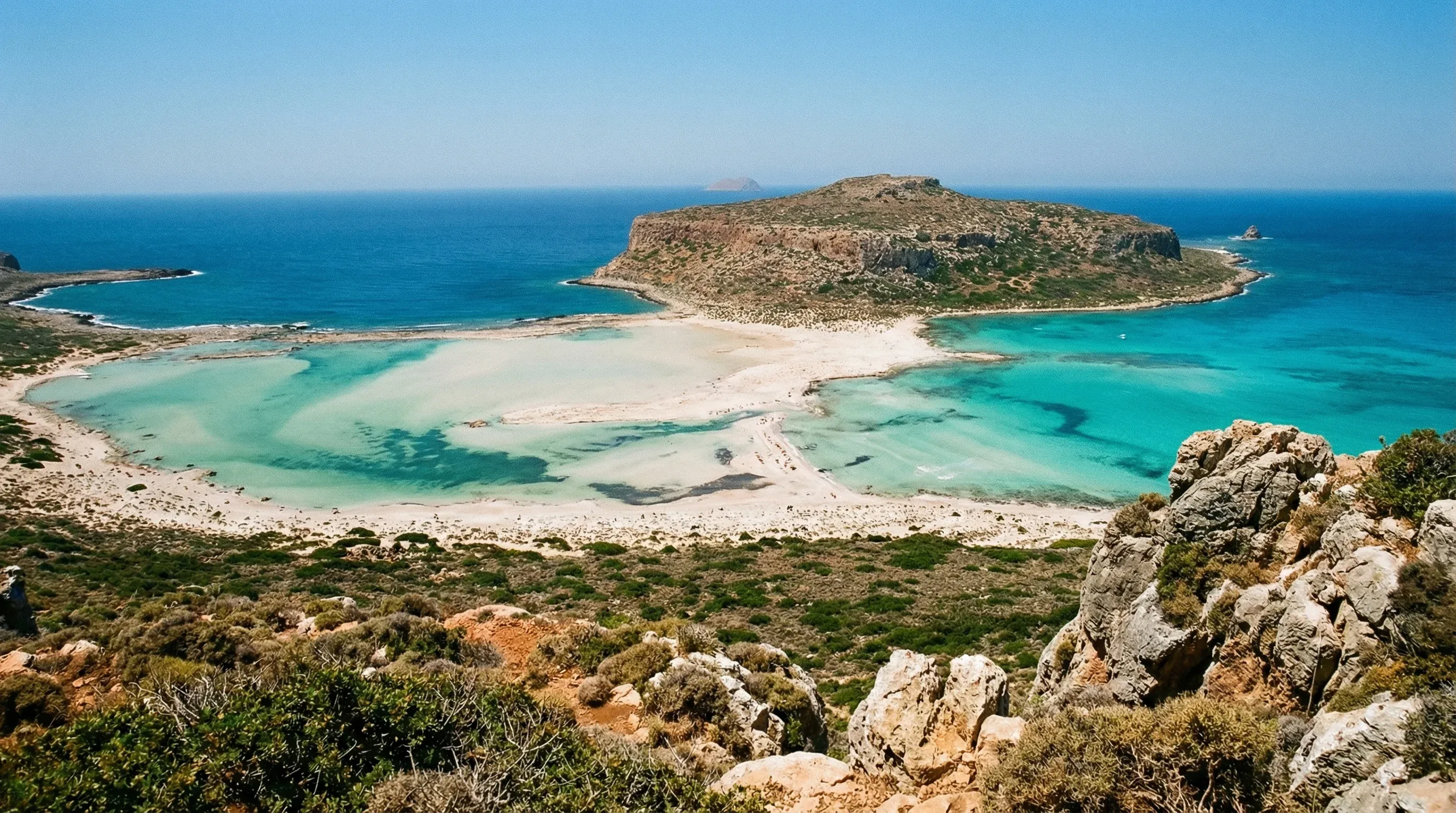
The Palace of Knossos is the absolute must-do historic site; it's the setting for the myth of the Minotaur and the Labyrinth. The colorful reconstructed frescoes make it much more engaging for children than other archaeological sites. For a day of pure natural wonder, Elafonissi Beach on the southwest tip offers pink-hued sand and shallow, warm lagoon waters that are safe for even the smallest toddlers.
Animal lovers should visit Cretaquarium (Thalassocosmos) near Heraklion, one of the Mediterranean's best aquariums, where kids can see sharks and jellyfish close up. Active families with older children (10+) might tackle the famous Samaria Gorge National Park, an epic 16km downhill hike, though shorter gorge walks are available. History comes alive again at the Spinalonga Fortress, an island fortress with a fascinating (if slightly spooky) history as a leper colony, reachable by a fun short boat ride that kids usually enjoy.
Practical Advice
Crete is huge. Do not try to see the whole island in one week. Pick a base (Chania or Rethymno are great for families due to their walkable old towns and nearby beaches) and explore that region. The best time to visit is May-June or September-October. July and August can be extremely hot and the popular beaches like Balos get overcrowded.
Food & Drink
Typical meal times: Similar to the mainland, lunch is late (2:00 pm) and dinner is late (9:00 pm), but tourist resorts cater to earlier schedules.
Typical meal costs: Very reasonable. A family dinner costs €45–75 (approx. $49–82 USD / £38–64 GBP). Portions are notoriously huge in Crete.
Dietary requirements: Excellent for vegetarians. Cretan diet is plant-heavy. 'Horta' (wild greens) is a staple.
Signature dishes:
- Dakos – A barley rusk topped with grated fresh tomato, mizithra (soft white cheese), oregano, and copious olive oil. A crunchy, healthy pizza alternative.
- Kalitsounia – Small sweet or savory cheese pies, often made with honey and cinnamon.
- Gamopilafo – 'Wedding rice', a rich, creamy risotto cooked in goat/sheep meat broth with stakovoutiro (local butter).
Why this score?
The island features the challenging Samaria Gorge and the White Mountains, providing genuine ruggedness for active families. While many areas are developed, the vast interior and wild south coast offer significantly more adventure than the smaller, more manicured islands.
Why this score?
Crete has a robust healthcare network for an island, with university hospitals in Heraklion and well-equipped facilities in Chania and Rethymno. It is capable of handling most emergencies locally, though specialized trauma cases may still require transfer to the mainland.
Why this score?
Crete is a massive standalone destination with two major international airports and over 5 million annual visitors, making it one of the most popular islands in the Mediterranean. Its blend of Minoan history, world-famous beaches like Elafonissi, and extensive hotel infrastructure sustains a high international flow.

Crete offers options for every budget. Luxury resorts in Elounda are expensive, but family-run apartments in the south can be found for €50–80 (approx. $55–85 USD / £40–70 GBP). Food is generally cheaper and higher quality than on smaller islands. A hearty meal with wine often costs under €20 (approx. $22 USD / £17 GBP) per head.

Getting Here & Around
Getting Here
- Airports – Heraklion (HER) and Chania (CHQ) are the two main international airports with many direct European flights.
- Ferry – Overnight ferries run from Athens (Piraeus) to Heraklion and Chania (approx. 9 hours), which can be a fun adventure for kids if you book a cabin.
Getting Around
- Car – Highly recommended. Crete is 260km long, and public transport to remote beaches like Balos Lagoon or Elafonissi Beach can be slow and crowded.
- Bus – KTEL buses are green, air-conditioned, and reliable for connecting major cities (e.g., Heraklion to Rethymno), but less convenient for beach hopping.
Nearby Airports (3 airports)
Chania International Airport
CHQChania
Heraklion International Airport
HERHeraklion
Sitia
JSHSitia
View full flight map for Greece →
Official Links

Packing List
Many beaches have rocky entries or sea urchins, especially on the wilder southern coast.
Essential if you plan to hike gorges or visit ruins; strollers are useless in Samaria or Knossos.
The Cretan sun is incredibly strong, and UV indices remain high for long hours.
Rental cars often lack tinted windows, and long drives across the island can be roasting for kids in the back.
Essential for pebble beaches and protecting feet from sea urchins, which are common in rocky coves.
Plug-in liquid mats are standard in Greek homes; bringing your own ensures bite-free nights as screens aren't universal.
Many archaeological sites and island villages have stairs and cobblestones that make strollers impractical.
The Greek sun is intense, and UV levels remain high even on windy days; essential for kids in the water.
The 'Meltemi' wind in July/August can make island evenings surprisingly cool and breezy.

Activities & Best Times

Hiking, wildlife, outdoor exploration, ecotourism
Home to the Samaria Gorge and the E4 European Long Distance Path, the island offers premier hiking and geological exploration. Peak seasons avoid the extreme mid-summer heat and the winter months when the gorge and high mountain trails are closed for safety.

Urban tourism, museums, historical sites, architecture
The island is a cradle of Western civilization, anchored by the Minoan Palace of Knossos and the historic Venetian harbors of Chania and Rethymno. Late spring and early autumn provide the perfect balance of manageable crowds and comfortable temperatures for exploring vast archaeological sites.

Sport tourism, fitness activities, active recreation
With diverse infrastructure ranging from the E4 trekking route to major water adventure centers, the island is a hub for active families. Conditions for organized outdoor sports are optimal in the transitional seasons when temperatures are warm but not restrictive for physical exertion.

Beach resorts, marine activities: diving, snorkelling, kite surfing, wind surfing, sailing
Crete features world-class beaches like Balos and Elafonissi with unique pink sands and turquoise waters. The season is strictly defined by Mediterranean water temperatures, which are ideal for swimming and snorkeling from June through September.

Learning experiences, scientific sites, historical education
Educational highlights include the Cretaquarium and the Natural History Museum of Crete, which provide internationally recognized insights into Mediterranean ecosystems. While mostly indoor, visitation peaks align with the main tourism season when all family-oriented guided programs are active.

Scenic drives, countryside tours, route-based travel
Crete offers iconic scenic drives such as the Sfakia Pass and the Mirabello Coastal Drive, passing through dramatic gorges and traditional villages. Peak travel is best in May, June, and September to ensure clear visibility and avoid the heavy congestion of mid-summer coastal traffic.
Amusement parks, family entertainment venues
High-quality water parks like Watercity and Limnoupolis offer substantial family entertainment, though they are primarily regional in scale. These facilities operate seasonally, catering to the peak summer tourist influx from June to August.

Attractions (23 total)



Public Holidays & Calendar Next 12 months
Public holidays, festivals, cultural celebrations, and seasonal natural phenomena coming up in Crete over the next 12 months.
Loading holidays and events...

Travel Advisory
Greece is assessed as a low-risk destination by all major agencies. Standard safety awareness is sufficient for most travelers, though one should stay informed of local strikes and seasonal natural hazards.
Safety Topics
Traveller Advice (5 groups)

Maintain awareness in crowded tourist areas and on public transport where pickpocketing is common. Carry a photocopy of your passport and be aware of new biometric entry systems (EES) when arriving from outside the Schengen area.

Greece is generally welcoming, especially in major cities and popular islands like Mykonos. However, more conservative attitudes may be encountered in rural or deeply religious areas.

Ensure you have the correct national visa for long-term study stays, as tourist exemptions do not apply for periods exceeding 90 days.

Female travelers should follow standard safety precautions as they would at home. While Greece is safe, avoid walking alone in poorly lit or isolated areas late at night.
Accessibility varies significantly; while major modern infrastructure in Athens is improving, many historic sites and older island villages have challenging terrain and limited facilities.
Agency Summaries
Greece is considered a safe destination for visitors, though standard vigilance is recommended. Travelers should be mindful of petty crime in busy urban areas and tourist hotspots. Seasonal environmental factors, such as summer wildfires and strong Aegean winds, may impact travel plans.
Safety levels in Greece are consistent with other major European destinations. Travelers should prepare for extreme weather variations, including summer heat and wildfires or winter snow, and stay informed about new biometric entry requirements for non-EU citizens.
While travel is generally safe, visitors should expect significant disruptions on specific dates, such as the late February anniversary of the Tempi train crash, which often triggers nationwide strikes and protests. High standards of personal security are advised in major cities.
Irish citizens are advised to take standard safety measures. Travelers should ensure they hold valid identification and appropriate insurance. For stays exceeding three months, local registration with Greek authorities is mandatory.
New Zealanders should maintain a standard level of security awareness. Frequent civil unrest and strikes in major cities like Athens and Thessaloniki can impact transportation. Natural hazards like wildfires and seismic activity are also present.
Greece is broadly safe for tourism. Visitors are encouraged to maintain awareness in crowded areas due to petty theft and to be prepared for occasional political demonstrations that can disrupt local services. New European entry protocols are being implemented.
Information is provided for general guidance only and does not constitute travel, safety, medical, or legal advice. Conditions may change. Users are responsible for independently verifying information before travel.