
Ionian Islands (Corfu, Kefalonia, Zakynthos)
Emerald islands, Venetian castles, and turtle spotting 🐢🏰
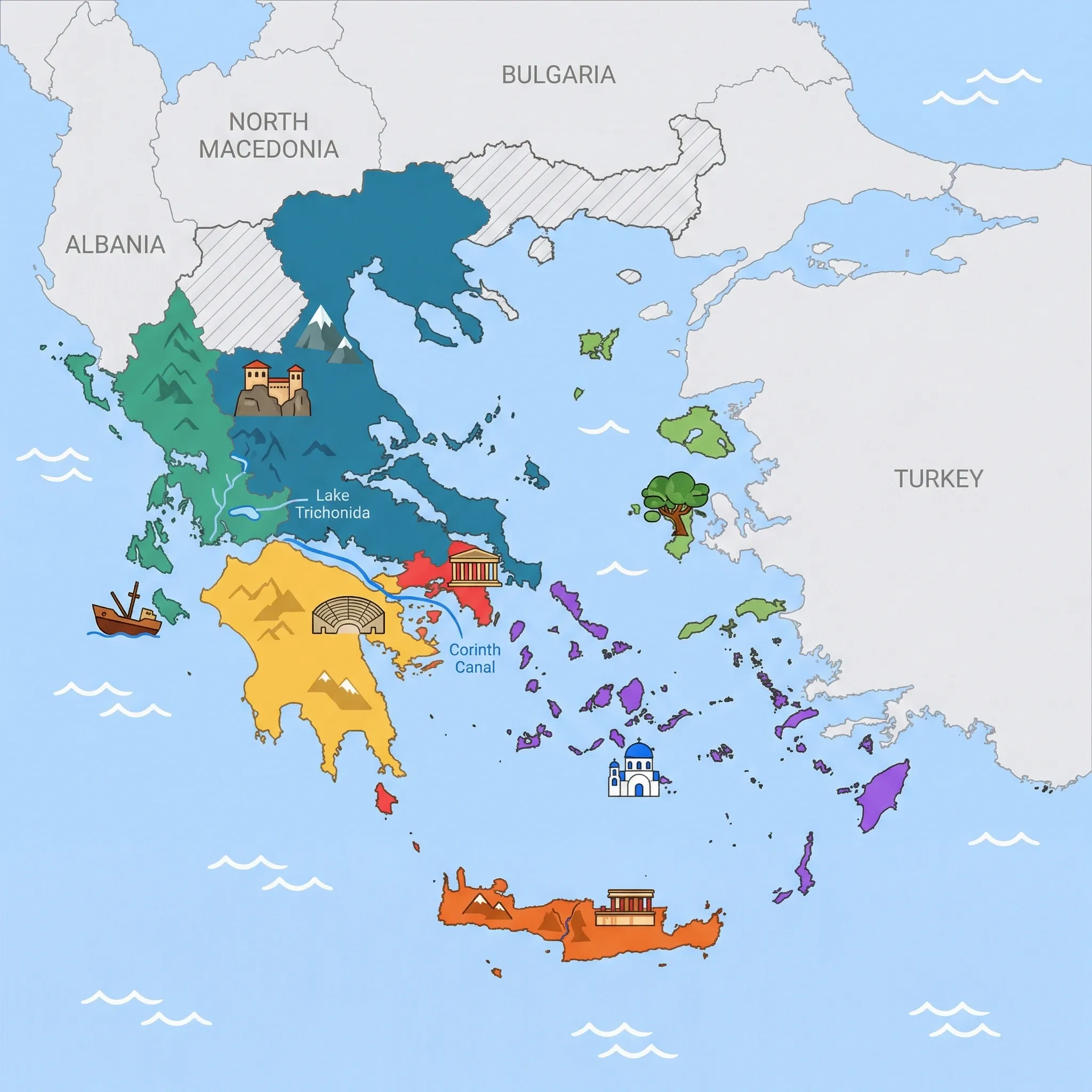
Click a region to explore
The Ionian Islands differ remarkably from the rest of Greece. Due to higher rainfall in winter, they are lush, green, and covered in cypress trees and olive groves that reach right down to the sea. For families who find the dry, rocky landscape of the Cyclades too harsh, the Ionians are a refreshing paradise. The architecture here is heavily influenced by centuries of Venetian rule, giving towns like Corfu a romantic, Italianate feel with narrow ochre-colored streets and grand squares. The sea here is a startling shade of electric blue, often cooler and calmer than the Aegean, making it ideal for swimming with younger children.
Each island has a distinct character. Corfu is the most cosmopolitan, with a bustling old town and grand palaces. Zakynthos (Zante) is famous for its shipwreck beach and marine life, specifically the Caretta-Caretta turtles which nest on its southern shores. Kefalonia, the largest island, is quieter and wilder, with underground lakes and wild horses on Mount Ainos. The vibe across the Ionians is musical and artistic; you are likely to hear marching bands practicing in the squares of Corfu or kantades (serenades) being sung in tavernas.
Key Attractions
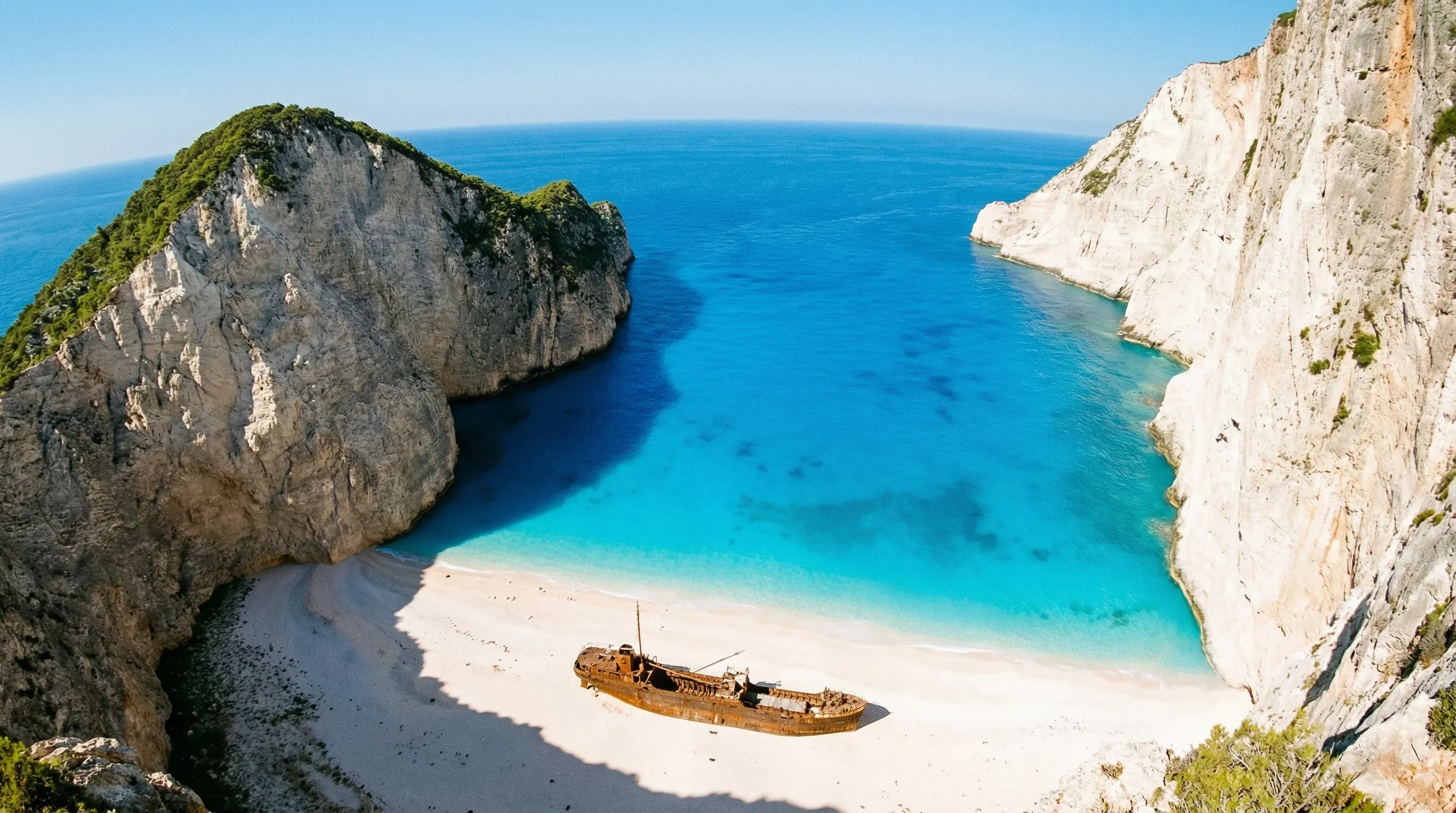
In Corfu, the UNESCO-listed Corfu Old Town is a maze of safe, pedestrianized streets where kids can run free while parents admire the architecture. The Old Fortress of Corfu is a highlight, offering tunnels, moats, and canons to explore. On Zakynthos, a boat trip to Navagio Beach (Shipwreck Cove) is iconic; seeing the rusty hull of a smuggler's ship on the white sand captures every child's imagination (note: access to the beach itself is sometimes restricted for safety, but the view from the boat or cliffs is still spectacular).
Also on Zakynthos, the National Marine Park of Zakynthos offers glass-bottom boat tours where spotting wild sea turtles is highly probable—a magical experience for young naturalists. In Kefalonia, the Melissani Lake Cave is unmissable; you enter a cave where the roof has collapsed, letting sunlight illuminate the water in an iridescent blue, and are rowed around in small boats. Nearby, Myrtos Beach offers dramatic scenery and azure waters that look like a swimming pool.
Practical Advice
The Ionian islands are popular package holiday destinations, so direct flights are plentiful from May to October. The water is generally calmer than the Aegean (no Meltemi winds), but it can be deep. Late August can see wasps becoming a nuisance in outdoor dining areas—bring deterrents. Mosquitoes are also more prevalent here than on the dry Aegean islands.
Food & Drink
Typical meal times: Standard Greek times (Lunch 1:30 pm+, Dinner 8:30 pm+), but due to British/Italian tourism, early dinners are easier to find here.
Typical meal costs: Mid-range. €50–80 (approx. $55–85 USD / £40–70 GBP) for a family meal. Tourist traps in main squares charge more.
Dietary requirements: Very good. Italian influence means excellent pasta and pizza options are available everywhere for fussy eaters.
Signature dishes:
- Pastitsada – A Corfiot Sunday dinner staple: rooster or beef slow-cooked in a spicy red sauce with cinnamon and cloves, served over thick pasta.
- Sofrito – Thin slices of beef cooked in a white wine, garlic, and vinegar sauce. Very tender and usually loved by kids.
- Mandoles – Caramelized almonds with meringue, a traditional sweet snack from the islands.
Why this score?
Adventure is primarily water-based, focusing on sailing and sea caves, though Kefalonia's Mount Ainos offers some rugged hiking. The terrain is generally more lush and less harsh than the Aegean, with tourism infrastructure that prioritizes family comfort over wilderness exploration.
Why this score?
Each major island has its own general hospital, but they often experience heavy strain during the peak summer months. While adequate for minor injuries and basic emergencies, serious medical conditions frequently necessitate medical evacuation to Athens or Patras.
Why this score?
These islands are major international draws, particularly for British, Italian, and German markets, known for iconic spots like Navagio Beach. They maintain a high density of tourist beds and frequent seasonal flight connections, placing them among the most recognized island groups in Europe.

Prices are generally fair, sitting between the expensive Cyclades and the cheaper mainland. Accommodation varies wildly from luxury resorts to budget studios. A car rental typically costs €40–60 (approx. $43–65 USD / £34–50 GBP) per day in high season.

Getting Here & Around
Getting Here
- Airports – Corfu (CFU), Zakynthos (ZTH), and Kefalonia (EFL) all have international airports with many seasonal charter flights.
- Ferry – Ferries connect the islands to the Greek mainland ports of Igoumenitsa and Kyllini. There are also ferry connections between the islands (e.g., Kefalonia to Zakynthos) during summer.
Getting Around
- Car – Essential for exploring the large islands like Kefalonia and reaching the best beaches on Corfu. Driving is on the right.
- Boat – Small boat rentals (no license needed for low horsepower) are a fantastic family activity to explore private coves around Porto Katsiki or Paleokastritsa.
Nearby Airports (3 airports)
Kefalonia
EFLKefallinia
Aktio
PVKPreveza
Zakynthos International Airport
ZTHZakinthos
View full flight map for Greece →
Official Links

Packing List
The lush vegetation and standing water make mosquitoes much more aggressive here than in the dry Aegean.
Wasps can be a major nuisance when eating outdoors in late summer (August/September).
The water clarity in rocky coves (like Paxos or northern Corfu) is exceptional for underwater exploring.
Many of the most beautiful beaches (like Myrtos) are pebbly, not sandy, and can hurt little feet.
Essential for pebble beaches and protecting feet from sea urchins, which are common in rocky coves.
Plug-in liquid mats are standard in Greek homes; bringing your own ensures bite-free nights as screens aren't universal.
Many archaeological sites and island villages have stairs and cobblestones that make strollers impractical.
The Greek sun is intense, and UV levels remain high even on windy days; essential for kids in the water.
The 'Meltemi' wind in July/August can make island evenings surprisingly cool and breezy.

Activities & Best Times

Hiking, wildlife, outdoor exploration, ecotourism
Features lush mountainous terrain, the extensive Corfu Trail, and unique marine ecosystems like the Zakynthos Marine Park. Spring and autumn offer ideal temperatures for trekking, while the high winter rainfall makes many trails inaccessible or unpleasant.

Urban tourism, museums, historical sites, architecture
Corfu Town is a UNESCO World Heritage site with deep Venetian influence and world-class museums like the Museum of Asian Art. High summer is crowded and hot for city exploration, while spring and autumn provide pleasant walking conditions.

Beach resorts, marine activities: diving, snorkelling, kite surfing, wind surfing, sailing
Home to globally iconic beaches like Navagio and Myrtos, offering stunning turquoise waters and white limestone cliffs. Peak season aligns with the warmest sea temperatures and calmest conditions for yachting and swimming.

Learning experiences, scientific sites, historical education
Provides high-quality marine biology education through sea turtle rescue centers and several aquariums. Peak timing coincides with the turtle nesting and hatching season, providing unique hands-on learning for families.

Scenic drives, countryside tours, route-based travel
Offers spectacular coastal driving routes such as the Argostoli to Fiskardo road, featuring dramatic cliffside views. Late spring and early autumn are best to avoid the heavy summer tourist traffic and winter's high precipitation.

Sport tourism, fitness activities, active recreation
Supported by strong hiking infrastructure like the Corfu Trail and major water parks for active families. Conditions are best in the shoulder seasons when it is not too hot for mountain hiking or too wet for trail sports.

Events, celebrations, seasonal attractions
Includes internationally noted events like the Venetian-influenced Easter in Corfu and the sea turtle nesting season. These events are highly date-specific and drive peak visitation during their respective calendars.
Amusement parks, family entertainment venues
Features regional-scale water parks like Aqualand and Zante Water Village which are popular with families but not destination-level attractions. Operations are seasonal, typically limited to the warmer months of May through September.

Attractions (17 total)



Public Holidays & Calendar Next 12 months
Public holidays, festivals, cultural celebrations, and seasonal natural phenomena coming up in Ionian Islands (Corfu, Kefalonia, Zakynthos) over the next 12 months.
Loading holidays and events...

Travel Advisory
Greece is assessed as a low-risk destination by all major agencies. Standard safety awareness is sufficient for most travelers, though one should stay informed of local strikes and seasonal natural hazards.
Safety Topics
Traveller Advice (5 groups)

Maintain awareness in crowded tourist areas and on public transport where pickpocketing is common. Carry a photocopy of your passport and be aware of new biometric entry systems (EES) when arriving from outside the Schengen area.

Greece is generally welcoming, especially in major cities and popular islands like Mykonos. However, more conservative attitudes may be encountered in rural or deeply religious areas.

Ensure you have the correct national visa for long-term study stays, as tourist exemptions do not apply for periods exceeding 90 days.

Female travelers should follow standard safety precautions as they would at home. While Greece is safe, avoid walking alone in poorly lit or isolated areas late at night.

Accessibility varies significantly; while major modern infrastructure in Athens is improving, many historic sites and older island villages have challenging terrain and limited facilities.
Agency Summaries
Greece is considered a safe destination for visitors, though standard vigilance is recommended. Travelers should be mindful of petty crime in busy urban areas and tourist hotspots. Seasonal environmental factors, such as summer wildfires and strong Aegean winds, may impact travel plans.
Safety levels in Greece are consistent with other major European destinations. Travelers should prepare for extreme weather variations, including summer heat and wildfires or winter snow, and stay informed about new biometric entry requirements for non-EU citizens.
While travel is generally safe, visitors should expect significant disruptions on specific dates, such as the late February anniversary of the Tempi train crash, which often triggers nationwide strikes and protests. High standards of personal security are advised in major cities.
Irish citizens are advised to take standard safety measures. Travelers should ensure they hold valid identification and appropriate insurance. For stays exceeding three months, local registration with Greek authorities is mandatory.
New Zealanders should maintain a standard level of security awareness. Frequent civil unrest and strikes in major cities like Athens and Thessaloniki can impact transportation. Natural hazards like wildfires and seismic activity are also present.
Greece is broadly safe for tourism. Visitors are encouraged to maintain awareness in crowded areas due to petty theft and to be prepared for occasional political demonstrations that can disrupt local services. New European entry protocols are being implemented.
Information is provided for general guidance only and does not constitute travel, safety, medical, or legal advice. Conditions may change. Users are responsible for independently verifying information before travel.