
Click a region to explore
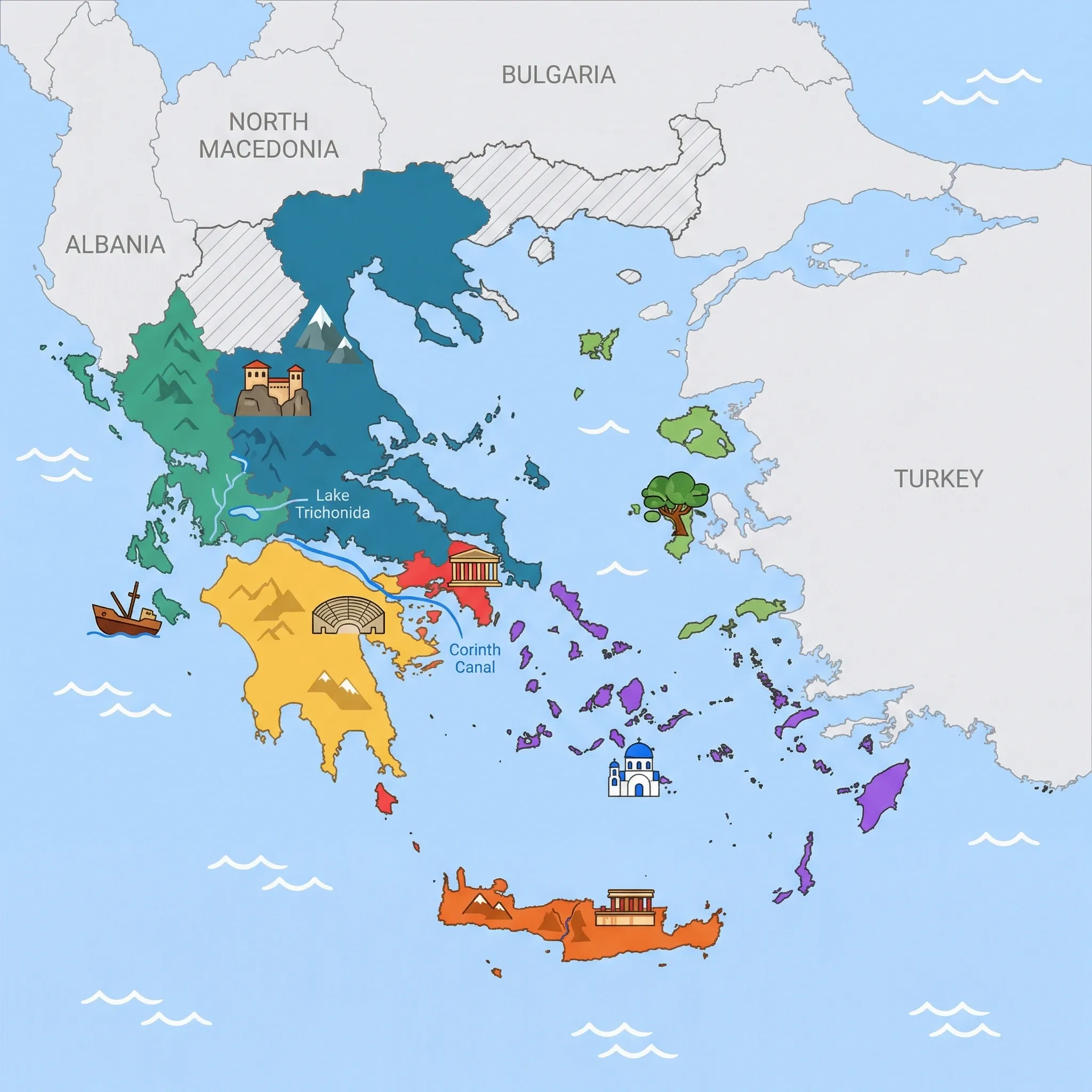
Technically an island since the Corinth Canal was cut, the Peloponnese feels like the mainland—vast, mountainous, and agriculturally rich. For families, it offers the perfect balance of culture and nature without the need for ferry schedules. It is the heartland of ancient Greece; here lies Mycenae, the kingdom of Agamemnon, and Sparta, home of the legendary warriors. But it's not just ancient history; the region is dotted with Venetian castles and Byzantine ghost towns that ignite the imagination.
The landscape is incredibly varied, from the olive groves of Kalamata to the forested mountains of Arcadia and the barren, stone-tower scenery of the Mani peninsula. The coastline is equally diverse, offering miles of sandy beaches in the west and hidden pebbly coves in the east. It is a year-round destination; you can swim until November and ski in Kalavryta in January. Nafplio, the first capital of modern Greece, is arguably the most beautiful and family-friendly town in the country, with three castles, a walkable waterfront, and great gelato, making it a perfect base for exploration.
Key Attractions
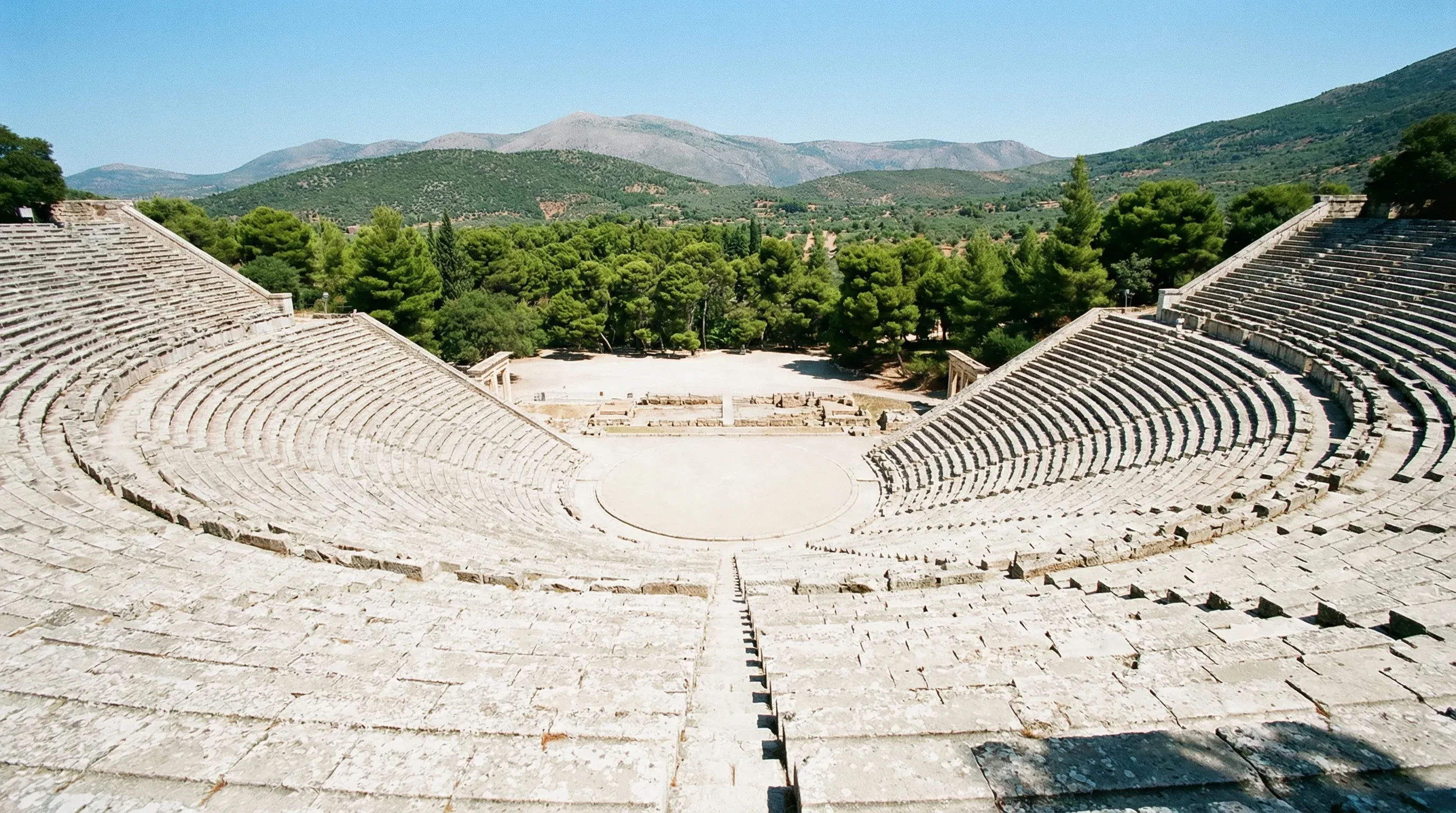
The Ancient Olympia site is magical; children can run on the original track where the ancient Olympic Games were born—a race here is a memory for a lifetime. The Ancient Theatre of Epidaurus is famous for its acoustics; let your kids drop a coin in the center of the stage while you listen from the top row—they will be amazed that you can hear it. For a medieval adventure, Monemvasia Castle Town is a must; it's a living village hidden on a rock island, accessible only by a causeway, free of cars and full of tunnels and pirate lore.
Nature lovers should head to the Diros Caves in the Mani region, where you explore a subterranean river by boat, passing spectacular stalactites. Finally, a swim at Voidokilia Beach is essential; shaped like the Greek letter Omega (Ω), its shallow, calm waters are perfect for children, and the sand dunes offer great climbing.
Practical Advice
The Peloponnese is best explored by car. The roads have improved massively in recent years with new highways, making the trip from Athens to Kalamata just 2.5 hours. Summers are hot, especially at inland archaeological sites (Mycenae offers zero shade), so bring hats and water. Spring is the most beautiful time when the wildflowers are in bloom.
Food & Drink
Typical meal times: Standard Greek times. Lunch 1:30 pm–3:30 pm, Dinner 9:00 pm.
Typical meal costs: Very good value. €45–70 (approx. $49–76 USD / £38–60 GBP) for a family meal. Produce is locally grown and cheaper than on the islands.
Dietary requirements: Excellent. This is a major agricultural region producing oranges, olives, and vegetables.
Signature dishes:
- Gournopoula – Roast piglet with crispy skin, a specialty of the Messinia region often sold by the kilo at roadside stands.
- Kayanas – Scrambled eggs cooked with fresh tomatoes and sometimes cured pork (siglino). A perfect simple lunch for kids.
- Diples – Crispy fried dough rolls dipped in honey and walnuts, a traditional wedding sweet found in many bakeries.
Why this score?
The region is geographically diverse, featuring the rugged Mani Peninsula, the deep Diros Caves, and the high Taygetos Mountains. It offers a more rustic and physically demanding experience for those who venture away from the main archaeological sites.
Why this score?
Cities like Patras and Kalamata have good regional hospitals with experienced staff, providing a decent safety net for the region. However, the deep interior and the southern peninsulas are remote, meaning emergency response times can be slow in the more adventurous areas.
Why this score?
The Peloponnese is a recognized destination for its immense historical value (Olympia, Mycenae) and is increasingly popular for luxury beach tourism. It attracts a steady flow of international cultural tourists and domestic vacationers, though it lacks the sheer visitor volume of the major islands.

Prices are fair and consistent. While luxury resorts like Costa Navarino are high-end, general touring is affordable. A family room in a guesthouse in Nafplio or Mani costs €80–130 (approx. $87–140 USD / £68–110 GBP). Tolls on the new highways are relatively expensive, so factor that into the budget.

Getting Here & Around
Getting Here
- Driving – The primary way to arrive. It is a 1.5 to 2-hour drive from Athens to Nafplio via the Corinth Canal.
- Airports – Kalamata International Airport (KLX) serves the southern Peloponnese with seasonal flights from Europe.
- Bus – KTEL buses from Athens (Kifisos station) are frequent and comfortable, connecting to all major towns like Nafplio, Sparta, and Kalamata.
Getting Around
- Car – Essential. The region is vast and sights are spread out. The driving is scenic, especially along the coastal roads of Mani.
- Train – A unique Chelmos-Vouraikos UNESCO Global Geopark rack railway runs from Diakopto to Kalavryta—a fantastic scenic ride for kids through a gorge.
Nearby Airports (1 airport)
Kalamata
KLXKalamata
View full flight map for Greece →
Official Links

Packing List
Castles like Methoni and the tunnels in Nafplio's Palamidi are dark and fun to explore with light.
Many beaches in the Peloponnese (especially in Mani and the Corinthian Gulf) are pebbly.
This is road-trip territory; keeping water and snacks cool in the car during long drives is essential.
Perfect for the car rides between sites like Olympia and Mycenae to set the scene for the kids.
Essential for pebble beaches and protecting feet from sea urchins, which are common in rocky coves.
Plug-in liquid mats are standard in Greek homes; bringing your own ensures bite-free nights as screens aren't universal.
Many archaeological sites and island villages have stairs and cobblestones that make strollers impractical.
The Greek sun is intense, and UV levels remain high even on windy days; essential for kids in the water.
The 'Meltemi' wind in July/August can make island evenings surprisingly cool and breezy.

Activities & Best Times

Urban tourism, museums, historical sites, architecture
A world-class cultural destination featuring major UNESCO sites like Ancient Olympia, Mycenae, and Epidaurus that appeal to sophisticated travelers. Spring and autumn are the peak months for site visitation to avoid the extreme summer heat which can make outdoor archaeological exploration difficult.

Hiking, wildlife, outdoor exploration, ecotourism
With 15 supporting attractions including the Menalon Trail and Vouraikos Gorge, the region is a premier destination for hiking and wilderness immersion. Late spring and early autumn provide the ideal climate for exploration, avoiding both the intense summer heat and the heavy winter precipitation.

Beach resorts, marine activities: diving, snorkelling, kite surfing, wind surfing, sailing
Home to iconic coastal spots like Voidokilia and Simos, the region offers stunning natural beauty and clear waters, though it maintains a more authentic, low-key infrastructure than the Aegean islands. Peak conditions for swimming and sailing occur during the hot, dry summer months from June through September.

Learning experiences, scientific sites, historical education
Features internationally significant learning experiences like the Museum of Ancient Greek Technology and the Open-Air Water Power Museum. These facilities offer high-quality engagement for curious families, with visitation patterns following the broader cultural tourism season.

Spa retreats, wellness centers, peaceful getaways
Established spa heritage in towns like Loutraki and Methana provides authentic thermal bath experiences with a strong regional reputation. Optimal visiting times are the transitional months when mild temperatures complement the therapeutic focus.

Scenic drives, countryside tours, route-based travel
Celebrated for iconic scenic drives like the Mani Peninsula and Langada Pass, offering dramatic coastal and mountain vistas. Travelers benefit from better visibility and safer driving conditions in the spring and autumn months.

Sport tourism, fitness activities, active recreation
Supported by high-quality infrastructure for hiking, trekking, and organized family activities at centers like The Ranch. The best conditions for active sports tourism occur outside the peak summer heat and the wettest winter months.

Events, celebrations, seasonal attractions
Anchored by the world-renowned Athens-Epidaurus Festival, which brings high-caliber international performances to ancient venues. The peak season is strictly tied to the summer festival calendar, particularly in July and August.

Winter sports, ski resorts, snow activities
Offers authentic but small-scale alpine experiences at resorts like Kalavryta and Mainalo, primarily suitable for domestic travelers or those seeking a non-traditional Greek winter. The operational season is short and highly dependent on peak winter snowfall in January and February.

Amusement parks, family entertainment venues
Limited to regional facilities such as Splash Waterpark, providing basic family entertainment rather than unique international-tier attractions. These venues are only seasonally relevant during the warmest summer months.

Attractions (22 total)



Public Holidays & Calendar Next 12 months
Public holidays, festivals, cultural celebrations, and seasonal natural phenomena coming up in Peloponnese over the next 12 months.
Loading holidays and events...

Travel Advisory
Greece is assessed as a low-risk destination by all major agencies. Standard safety awareness is sufficient for most travelers, though one should stay informed of local strikes and seasonal natural hazards.
Safety Topics
Traveller Advice (5 groups)

Maintain awareness in crowded tourist areas and on public transport where pickpocketing is common. Carry a photocopy of your passport and be aware of new biometric entry systems (EES) when arriving from outside the Schengen area.

Greece is generally welcoming, especially in major cities and popular islands like Mykonos. However, more conservative attitudes may be encountered in rural or deeply religious areas.

Ensure you have the correct national visa for long-term study stays, as tourist exemptions do not apply for periods exceeding 90 days.

Female travelers should follow standard safety precautions as they would at home. While Greece is safe, avoid walking alone in poorly lit or isolated areas late at night.

Accessibility varies significantly; while major modern infrastructure in Athens is improving, many historic sites and older island villages have challenging terrain and limited facilities.
Agency Summaries
Greece is considered a safe destination for visitors, though standard vigilance is recommended. Travelers should be mindful of petty crime in busy urban areas and tourist hotspots. Seasonal environmental factors, such as summer wildfires and strong Aegean winds, may impact travel plans.
Safety levels in Greece are consistent with other major European destinations. Travelers should prepare for extreme weather variations, including summer heat and wildfires or winter snow, and stay informed about new biometric entry requirements for non-EU citizens.
While travel is generally safe, visitors should expect significant disruptions on specific dates, such as the late February anniversary of the Tempi train crash, which often triggers nationwide strikes and protests. High standards of personal security are advised in major cities.
Irish citizens are advised to take standard safety measures. Travelers should ensure they hold valid identification and appropriate insurance. For stays exceeding three months, local registration with Greek authorities is mandatory.
New Zealanders should maintain a standard level of security awareness. Frequent civil unrest and strikes in major cities like Athens and Thessaloniki can impact transportation. Natural hazards like wildfires and seismic activity are also present.
Greece is broadly safe for tourism. Visitors are encouraged to maintain awareness in crowded areas due to petty theft and to be prepared for occasional political demonstrations that can disrupt local services. New European entry protocols are being implemented.
Information is provided for general guidance only and does not constitute travel, safety, medical, or legal advice. Conditions may change. Users are responsible for independently verifying information before travel.