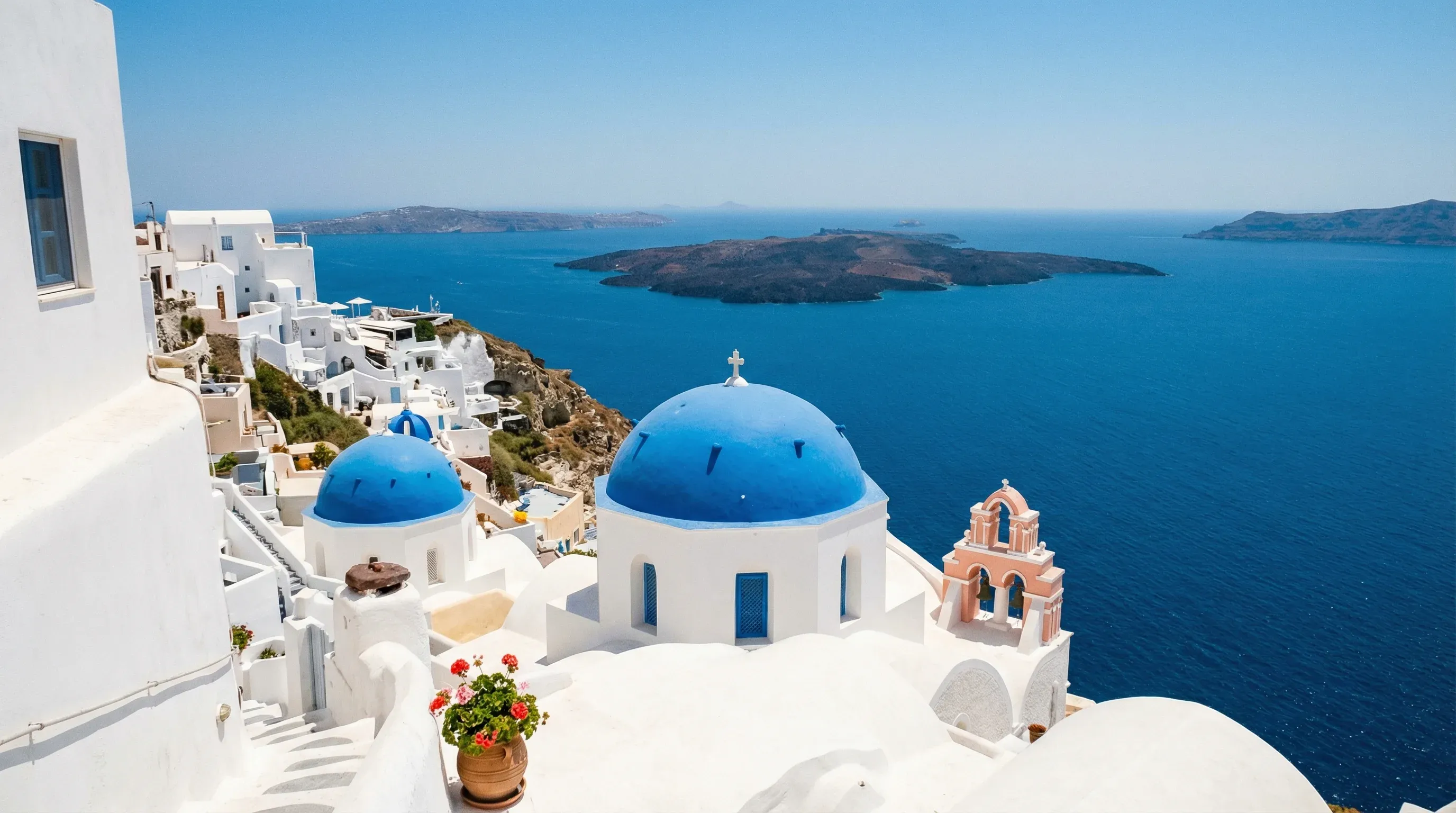

South Aegean Islands (Cyclades: Santorini, Mykonos, Naxos, Paros; Dodecanese: Rhodes, Kos)
Sugar-cube villages, knights' castles, and deep blue seas 🧿⛪
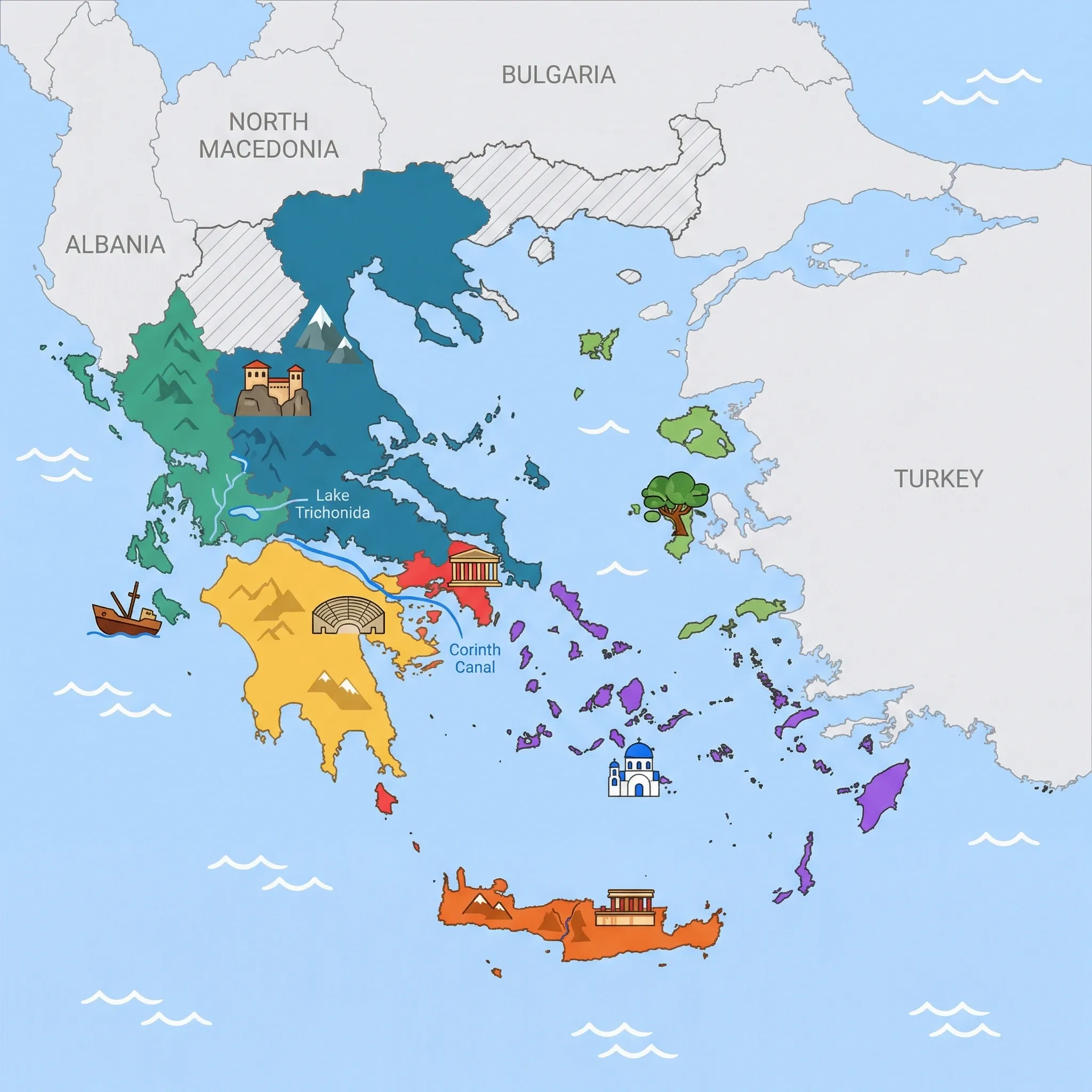
Click a region to explore
The South Aegean encompasses the most famous Greek islands, split into two main groups with distinct personalities. The Cyclades (Santorini, Naxos, Paros) are the iconic 'white and blue' islands. The landscape is dry, rocky, and dramatic, bathing in a light so bright it requires sunglasses at all times. For families, Naxos and Paros are often the top choices—they offer the classic Cycladic look but with better beaches and a more relaxed, family-oriented pace than the party/honeymoon hubs of Mykonos and Santorini. However, seeing the Santorini caldera is a bucket-list experience that even teenagers will appreciate for its 'Instagrammability'.
Further east, the Dodecanese (Rhodes, Kos) are larger, greener, and heavily influenced by their medieval history. Rhodes is a standout for families; its Old Town is a living castle where kids can run through moats and battlements. Kos is famous for being flat and bike-friendly, with endless sandy beaches. A key factor in this region is the 'Meltemi'—a strong north wind that blows in July and August. While it keeps the temperature bearable, it can make sandy beaches whip visitors with sand and disrupt ferry schedules, so checking wind forecasts is part of the daily routine.
Key Attractions
In the Dodecanese, the Medieval City of Rhodes is a UNESCO World Heritage site that feels like a movie set. The Palace of the Grand Master of the Knights of Rhodes is immense and fascinating for kids interested in knights and castles. On Santorini, walking through Oia Village offers world-famous views, but for a hands-on history lesson, visit the Akrotiri Archaeological Site—a prehistoric city preserved in volcanic ash, often called the 'Greek Pompeii', which is roofed and cool.
On Naxos, the Portara (Temple of Apollo) is a giant marble doorway to nowhere standing on an islet—a perfect sunset photo spot where kids can scramble over rocks. For beach days, Agios Prokopios Beach on Naxos offers pool-like water, while Sarakiniko Beach on Milos looks like a lunar landscape with white volcanic rock that children love to climb and jump from.
Practical Advice
Inter-island ferries (Seajets, Blue Star) make hopping possible, but don't overdo it. Packing and unpacking with kids is stressful. Naxos and Paros are the most family-friendly Cyclades. Rhodes and Kos are best for all-inclusive resort holidays. Avoid Santorini with a stroller—the cobbles and steps are a nightmare; bring a carrier.
Food & Drink
Typical meal times: Very late. Lunch 2:00 pm, Dinner 9:30 pm. In tourist hubs, service is continuous, but authentic tavernas stick to local times.
Typical meal costs: High variance. Santorini/Mykonos are expensive (€100+ / $110+ / £85+ for a family). Naxos/Rhodes are mid-range (€50–70 / $55–76 / £42–60). Always check menu prices before sitting down in prime locations.
Dietary requirements: Excellent. Tourism is well-established, so vegan/gluten-free requests are understood in most places.
Signature dishes:
- Tomatokeftedes – Tomato fritters, a specialty of Santorini made from the local cherry tomatoes. A delicious vegetarian starter.
- Fava – A yellow split-pea puree served warm with lemon and onion. Smooth, mild, and usually a hit with toddlers.
- Patatato – A Naxian specialty of goat meat stewed with potatoes in a rich tomato sauce.
Why this score?
While islands like Naxos and Milos offer hiking and unique geology, the region is largely defined by highly developed resort towns and organized beaches. The 'adventure' here is typically curated for tourists, such as donkey rides or well-marked caldera walks, rather than true wilderness exploration.
Why this score?
Major islands like Rhodes and Kos have respectable hospitals, but the smaller Cycladic islands rely heavily on private clinics and emergency air-sea rescues. The seasonal influx of millions of tourists often exceeds the local medical capacity, making it a '6' despite the high-end private options.
Why this score?
This region contains global icons like Santorini and Mykonos alongside mass-tourism giants like Rhodes, making it a global mega-destination. The combined annual visitor numbers and the sheer density of international tourism infrastructure rival the world's most famous vacation hubs.

This is the most expensive region of Greece. Santorini and Mykonos prices are in a league of their own (Luxury). Naxos, Paros, and Rhodes are Mid-to-High. A sunbed set on a popular beach can cost anywhere from €20 to €100+ (approx. $22–110 USD / £17–85 GBP). Ferry tickets are also significant, with high-speed boats costing €50–80 (approx. $55–85 USD / £42–70 GBP) per person for short hops.

Getting Here & Around
Getting Here
- Airports – Santorini (JTR), Mykonos (JMK), Rhodes (RHO), and Kos (KGS) have international airports. Paros and Naxos have domestic airports connecting to Athens.
- Ferry – The ferry network is extensive. High-speed catamarans are fast but bumpy; huge conventional ferries (Blue Star) are slower but more stable and offer room for kids to walk around.
Getting Around
- Car – Recommended for Naxos, Paros, and Rhodes to escape the hotel crowds.
- Bus – Local buses (KTEL) are very cheap and efficient on Santorini and Mykonos, but can get incredibly crowded in high season.
- Walking – The only way to see the Chora (main town) of most islands. Lindos Village in Rhodes is pedestrian-only.
Nearby Airports (11 airports)
Karpathos
AOKKarpathos
Kalymnos Island
JKLKalymnos
Mykonos Airport
JMKMykonos
Naxos Airport
JNXNaxos, Cyclades Islands
Santorini (Thira) International Airport
JTRThira
Astypalaia
JTYAstypalaia Island
Kos International Airport
KGSKos
Kasos Island Airport
KSJKasos Island
Leros Airport
LRSLeros
Milos
MLOMilos
Paros Airport
PASParos
View full flight map for Greece →
Official Links

Packing List
The 'Meltemi' wind in July/August can be surprisingly strong and cool in the evenings.
Essential for long hair due to the constant strong winds on the Cyclades.
Walls in traditional rooms can be thin, and resort towns can be noisy late into the night.
Strollers are impossible in the stepped streets of Santorini and the cobbled lanes of Monemvasia.
Essential for pebble beaches and protecting feet from sea urchins, which are common in rocky coves.
Plug-in liquid mats are standard in Greek homes; bringing your own ensures bite-free nights as screens aren't universal.
Many archaeological sites and island villages have stairs and cobblestones that make strollers impractical.
The Greek sun is intense, and UV levels remain high even on windy days; essential for kids in the water.
The 'Meltemi' wind in July/August can make island evenings surprisingly cool and breezy.

Activities & Best Times

Hiking, wildlife, outdoor exploration, ecotourism
Boasts 17 attractions including unique volcanic landscapes like the Santorini Caldera hike and authentic organic farms in Mykonos and Rhodes. Peak summer months provide optimal access to these natural sites, while the shoulder seasons offer more comfortable temperatures for strenuous trekking.

Urban tourism, museums, historical sites, architecture
Home to 14 significant sites including the UNESCO-listed Medieval City of Rhodes and the Minoan ruins of Akrotiri. The region offers world-class living culture and heritage, though accessibility and the vibrant atmosphere are significantly diminished during the winter closures from November to April.

Sport tourism, fitness activities, active recreation
Features 6 major active attractions including internationally recognized hiking routes like the Byzantine Road and established water-based activity centers. Conditions are ideal during the dry summer months, particularly when the Meltemi winds provide world-class sailing and windsurfing opportunities.
Beach resorts, marine activities: diving, snorkelling, kite surfing, wind surfing, sailing
Renowned for iconic beaches like Saint Paul's Bay and Agios Prokopios with exceptional sea clarity. Peak visitation aligns with the warmest water temperatures and calmest seas, as most beach-front services are unavailable and conditions are too cold for swimming in the off-season.

Learning experiences, scientific sites, historical education
Offers 4 specialized facilities including the Aquarium of Rhodes and the Lost Atlantis Experience. While providing unique scientific and historical insights, these are best experienced when the region's tourist infrastructure is fully operational in the warmer months.

Spa retreats, wellness centers, peaceful getaways
Features 3 unique natural thermal sites including Palea Kameni and Kallithea Springs. These outdoor wellness experiences are highly dependent on fair weather, making the sunny summer and shoulder months the only viable time for an authentic restorative visit.

Scenic drives, countryside tours, route-based travel
Includes 3 celebrated scenic routes such as the Rhodes East Coast road and mountain village loops. Safe driving conditions and maximum visibility coincide with the dry season, whereas winter rainfall can make rural mountain roads less appealing for sightseeing.
Amusement parks, family entertainment venues
Contains 5 notable water parks and family entertainment venues such as Water Park Faliraki and Throne of Helios. These facilities are strictly seasonal, operating for the international tourist market during the warm summer months and closing entirely during the winter.
Attractions (28 total)



Public Holidays & Calendar Next 12 months
Public holidays, festivals, cultural celebrations, and seasonal natural phenomena coming up in South Aegean Islands (Cyclades: Santorini, Mykonos, Naxos, Paros; Dodecanese: Rhodes, Kos) over the next 12 months.
Loading holidays and events...

Travel Advisory
Greece is assessed as a low-risk destination by all major agencies. Standard safety awareness is sufficient for most travelers, though one should stay informed of local strikes and seasonal natural hazards.
Safety Topics
Traveller Advice (5 groups)

Maintain awareness in crowded tourist areas and on public transport where pickpocketing is common. Carry a photocopy of your passport and be aware of new biometric entry systems (EES) when arriving from outside the Schengen area.

Greece is generally welcoming, especially in major cities and popular islands like Mykonos. However, more conservative attitudes may be encountered in rural or deeply religious areas.

Ensure you have the correct national visa for long-term study stays, as tourist exemptions do not apply for periods exceeding 90 days.

Female travelers should follow standard safety precautions as they would at home. While Greece is safe, avoid walking alone in poorly lit or isolated areas late at night.

Accessibility varies significantly; while major modern infrastructure in Athens is improving, many historic sites and older island villages have challenging terrain and limited facilities.
Agency Summaries
Greece is considered a safe destination for visitors, though standard vigilance is recommended. Travelers should be mindful of petty crime in busy urban areas and tourist hotspots. Seasonal environmental factors, such as summer wildfires and strong Aegean winds, may impact travel plans.
Safety levels in Greece are consistent with other major European destinations. Travelers should prepare for extreme weather variations, including summer heat and wildfires or winter snow, and stay informed about new biometric entry requirements for non-EU citizens.
While travel is generally safe, visitors should expect significant disruptions on specific dates, such as the late February anniversary of the Tempi train crash, which often triggers nationwide strikes and protests. High standards of personal security are advised in major cities.
Irish citizens are advised to take standard safety measures. Travelers should ensure they hold valid identification and appropriate insurance. For stays exceeding three months, local registration with Greek authorities is mandatory.
New Zealanders should maintain a standard level of security awareness. Frequent civil unrest and strikes in major cities like Athens and Thessaloniki can impact transportation. Natural hazards like wildfires and seismic activity are also present.
Greece is broadly safe for tourism. Visitors are encouraged to maintain awareness in crowded areas due to petty theft and to be prepared for occasional political demonstrations that can disrupt local services. New European entry protocols are being implemented.
Information is provided for general guidance only and does not constitute travel, safety, medical, or legal advice. Conditions may change. Users are responsible for independently verifying information before travel.