

Overview
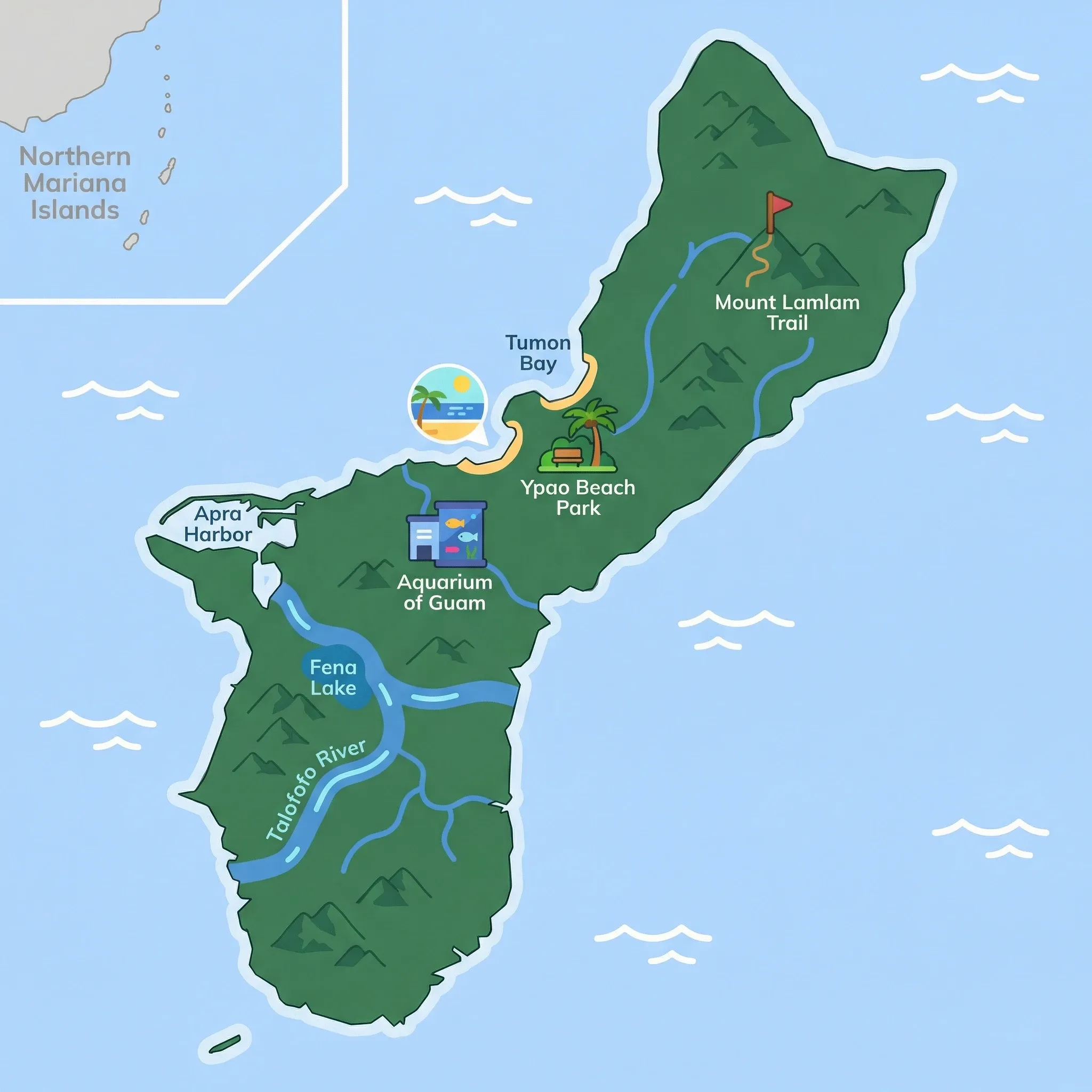
Guam is a fascinating crossroads of cultures, often described as "America in Asia." Located in Micronesia, this US territory serves as the gateway to the Western Pacific, offering families a tropical escape that feels both exotic and reassuringly familiar. The island is defined by its limestone plateaus in the north and volcanic hills in the south, fringed by coral reefs that create calm, shallow lagoons perfect for young swimmers. For families, the appeal lies in the ease of travel: you'll find US electrical outlets, the US dollar, and English as the primary language, all set against a backdrop of lush jungles and turquoise waters.
Beyond the resort strip of Tumon Bay, the island reveals a deep Chamorro soul. Families can drive the scenic southern loop to sleepy villages where life moves at a slower pace, exploring Spanish forts and hearing legends of ancient chiefs. The climate is tropical and warm year-round, making it an ideal beach destination, though the wet season (July to December) brings occasional tropical showers. Whether you are hiking to hidden waterfalls or shopping in duty-free malls, Guam offers a diverse itinerary that keeps both parents and children engaged.
Key Attractions
For a spectacular introduction to the island's geography, visit Two Lovers Point. Towering 400 feet above the Philippine Sea, this iconic lookout offers breathtaking panoramic views and a colorful legend of star-crossed lovers that captivates older children. Nearby, the Guam National Wildlife Refuge at Ritidian Point is a pristine sanctuary. While the currents can be strong (check safety flags before swimming), the white sand beach is stunning, and the nature center features murals depicting pre-contact Chamorro life, offering a quiet educational break from the busy tourist centers.
History comes alive at the War in the Pacific National Historical Park. The T. Stell Newman Visitor Center uses interactive exhibits to explain Guam's pivotal WWII role in a way that is accessible to children, while the park's outdoor units allow families to walk through former battlefields and see restored equipment. For a deeper dive into local culture, the Senator Antonio M. Palomo Guam Museum in the capital, Hagåtña, features high-tech exhibitions on Chamorro history and art. Just across the street, you can stroll through the Plaza de España to see the ruins of the Spanish Governor's Palace, a great spot for kids to run around while parents soak in the colonial architecture.
A drive to the south is essential for a complete experience. Stop at Fort Nuestra Señora de la Soledad in the village of Umatac. The small Spanish fortification offers some of the best views on the island, overlooking the bay where Ferdinand Magellan is said to have landed. It's an easy, safe spot for children to explore historic cannons while enjoying the ocean breeze.
Practical Advice
Best time to visit: The dry season (January to May) is ideal for beach activities and hiking, with lower humidity and less rain. June to December is the rainy season, with a higher chance of tropical storms.
Logistics: As a US territory, the currency is the US Dollar. US citizens can enter with a passport (or compliant ID), while many international visitors can use the Guam-CNMI Visa Waiver Program. Electrical outlets are standard US Type A/B (110V). Tap water is generally safe in major hotels, but bottled water is recommended for sensitive tummies. Tipping is customary (15–20%) in restaurants, similar to the US mainland.
Food & Drink
Typical meal times: Lunch is typically served from 11:00 am to 2:00 pm, and dinner from 6:00 pm to 9:30 pm. Sunday brunch is a popular local tradition.
Typical meal costs: $15–25 USD (approx. €14–23 EUR / £12–20 GBP) for casual lunch; $40–80 USD (approx. €37–74 EUR / £32–64 GBP) for a sit-down dinner. Prices are generally higher than the US mainland due to import costs.
Dietary requirements: Vegetarian and gluten-free options are increasingly common in Tumon's tourist restaurants and hotels. Traditional Chamorro food relies heavily on soy sauce and meats, so ask about ingredients if you have allergies.
Family-friendly dining: Guam loves children. Highchairs and kids' menus are standard in almost all restaurants. Fiesta-style buffet restaurants are popular and offer great value for hungry families.
Signature dishes:
- Red Rice (Hineksa' Agaga') – Short-grain rice colored with achote (annatto) seeds, offering a mild, nutty flavor that kids usually love.
- Chicken Kelaguen – Chopped grilled chicken mixed with lemon, onions, and grated coconut. It can be spicy, so ask for a "mild" version for children.
- BBQ Ribs – Marinated in a soy and vinegar sauce and grilled over open flame; a messy, delicious staple found at every fiesta and night market.
- Latiya – A popular dessert made of sponge cake topped with a rich vanilla custard and cinnamon, perfect for a sweet treat.

Guam is comparable to Hawaii or a major US city in cost. A family of four should budget $200–300 USD (approx. €185–275 EUR / £155–235 GBP) per day for car rental, mid-range meals, and entry fees. Groceries are expensive as most goods are imported.
Age Suitability




Did you know? Guam welcomes approximately 739,000 international visitors per year. Most visitors come from East Asia and the Pacific.
Guam uses the US Dollar. Prices are comparable to a major US city or Hawaii. A mid-range hotel in Tumon costs $150–250 (approx. €135–225 EUR / £115–195 GBP) per night. Grocery items are slightly more expensive due to shipping costs, but there is no sales tax on the island, which helps offset expenses. Car rentals are reasonable, averaging $40–60 (approx. €35–55 EUR / £30–45 GBP) per day.

Getting There & Around
Getting There
- By Air – A.B. Won Pat International Airport (GUM) is the main gateway. Direct flights arrive from Honolulu, Tokyo, Seoul, Manila, and other Asian hubs.
- Entry Requirements – US citizens need a passport or Real ID. Many other nationals (e.g., Australia, UK, Japan, Korea) may enter visa-free under the Guam-CNMI Visa Waiver Program. Check your government website for the latest visa requirements, or use the IATA Travel Centre entry-requirements checker.
Getting Around
- Car Hire – The most practical way for families to explore Guam. US driving laws apply, and traffic drives on the right. Essential for reaching southern villages and secluded beaches like Guam National Wildlife Refuge.
- Shuttle Buses – The "Red Guahan Shuttle" connects major hotels in Tumon with shopping malls (Micronesia Mall, GPO) and Two Lovers Point. It is convenient for shopping trips but slow for island touring.
- Taxis & Rideshare – Taxis are available at hotels but expensive. 'Stroll' is the local rideshare app equivalent to Uber and is generally reliable.

Packing List
Guam has strict laws protecting its coral reefs; standard sunscreens with oxybenzone are harmful and discouraged.
Many beaches outside Tumon Bay have rocky, coral-filled shallows that can cut bare feet.
The equatorial sun is incredibly strong; UV clothing protects kids much better than just sunscreen.
Plastic bags are banned or charged for in many stores; a tote is essential for grocery runs.
Food is expensive; packing a collapsible cooler lets you carry drinks and snacks for beach days.

Activities & Best Times

Adventure & Nature
Very GoodHiking, wildlife, outdoor exploration, ecotourism
With 14 attractions including the Valley of the Latte and Mt Lamlam, Guam provides authentic jungle and coastal exploration. The dry season from January to May offers stable conditions for hiking and cave tours, whereas the July-November period is frequently disrupted by heavy tropical downpours.

Beach & Sea
GoodBeach resorts, marine activities: diving, snorkelling, kite surfing, wind surfing, sailing
Guam offers high-quality reef access and clear waters at Ypao Beach and Ritidian Point, ideal for snorkeling families. Peak visitation occurs during the dry season (Jan-May) when visibility is highest, while the late summer monsoon brings significant rain and rougher seas.

City & Cultural
GoodUrban tourism, museums, historical sites, architecture
The island features significant CHamoru heritage and Spanish colonial sites like Plaza de España and Fort Soledad. Cultural tours are best enjoyed during the drier months to avoid the intense humidity and storm activity of the late summer and autumn.

Educational & Exploratory
GoodLearning experiences, scientific sites, historical education
Underworld World Guam and the Senator Antonio M. Palomo Guam Museum provide world-class insights into Pacific marine life and history. While these facilities are largely indoor, they are most frequented during the peak travel months aligning with the dry season.

Sports & Active
GoodSport tourism, fitness activities, active recreation
Excellent infrastructure exists for diving, hiking trails like Pagat, and organized outdoor adventure centers. High-intensity activities are best suited for the cooler, drier months of January through May before the peak humidity and rainfall of the monsoon season.

Road Trips & Scenic
MarginalScenic drives, countryside tours, route-based travel
The Southern Guam Scenic Drive offers a pleasant route through traditional villages and coastal viewpoints. Driving conditions are optimal during the dry months, as heavy rain during the wet season can reduce visibility on winding island roads.

Attractions (13 total)



Public Holidays & Calendar Next 12 months
Public holidays, festivals, cultural celebrations, and seasonal natural phenomena coming up in Guam over the next 12 months.
Loading holidays and events...

Travel Advisory
Guam is widely considered a safe destination where standard personal safety awareness is sufficient. Significant risks are limited to seasonal weather events and minor criminal activity.
Safety Topics
Traveller Advice (3 groups)

Guam follows U.S. federal laws and general social norms regarding LGBTQ+ rights, which are broadly protective, though travellers should check local regulations for any specific nuances.

Divers and hikers should be aware that unexploded military ordnances from World War II remain a hazard in some coastal areas, construction sites, and diving spots. Their presence is not always clearly marked.

Ensure you have comprehensive travel insurance due to the very high cost of medical services and potential for expensive medical evacuations. Secure your personal belongings in tourist areas and beaches to avoid petty theft.
Agency Summaries
Travellers should follow standard security routines and maintain awareness of their surroundings as they would in Canada. Safety risks are generally low, though seasonal weather events like typhoons pose occasional hazards.
Guam is covered under the general advice for the USA. No specific travel restrictions or high-risk warnings are in place, though visitors should remain vigilant against global threats like terrorism and typical urban crime.
Irish citizens should follow standard safety measures. Entry requires a valid ESTA or visa consistent with United States immigration policy.
As an unincorporated U.S. territory, Guam does not have a foreign travel advisory level; however, standard safety precautions apply. Entry for U.S. citizens is domestic, while international visitors must follow U.S. federal immigration requirements.
Safety levels in Guam are similar to New Zealand. Specific local risks include unexploded World War II ordnances in some rural or coastal areas and seasonal tropical storms.
The safety environment is stable and comparable to Australia. Primary concerns involve petty crime, high healthcare costs, and natural hazards such as typhoons and earthquakes.
Information is provided for general guidance only and does not constitute travel, safety, medical, or legal advice. Conditions may change. Users are responsible for independently verifying information before travel.