

Guatemala is a country of profound cultural depth and stunning landscapes, often considered the most authentic destination in Central America. For families, it offers a vivid classroom of living history where the ancient Maya civilization blends seamlessly with Spanish colonial influence and modern life. The geography is dominated by the spectacular Highlands, a region of pine forests, mist-covered mountains, and over 30 volcanoes, three of which are active. In contrast, the northern Petén region is a vast, humid jungle concealing thousands of ancient ruins.
While it requires more vigilance than some neighbours, the rewards for adventurous families are immense. The colourful markets, particularly in Chichicastenango & Highlands, are a sensory feast of textiles and incense that captivate children and adults alike. The local culture is warm and welcoming to children, who are central to Guatemalan family life. Whether you are navigating the cobalt waters of Lake Atitlán or exploring the cobbled streets of the colonial capital, the country provides a rich, immersive experience that feels genuinely undiscovered.
Key Attractions
No family trip is complete without visiting Antigua Guatemala, a UNESCO World Heritage site and one of the best-preserved colonial cities in the Americas. Families can walk under the iconic Santa Catalina Arch, explore the atmospheric ruins of the Catedral de San José Ruins, and visit the Palace of the Captain Generals. Just outside the city, Hobbitenango offers "Hobbit-style" burrows and games that are a hit with younger children.
For a brush with ancient history, the towering pyramids of Tikal National Park in Tikal & Petén are essential. It was one of the most powerful kingdoms of the ancient Maya, and seeing the temples rise above the jungle canopy is unforgettable. In the highlands, the natural beauty of Lake Atitlán is mesmerizing; families can take boat trips between villages or hike the lower slopes of Volcán San Pedro. For a unique adventure, a guided hike in Pacaya Volcano National Park allows kids to safely roast marshmallows on volcanic heat vents.
On the Caribbean coast, the Río Dulce & Caribbean region offers a tropical change of pace. You can explore the Castillo de San Felipe de Lara, a historic Spanish fort that looks like it was plucked from a pirate movie, or take a boat down the river to Livingston Town, unique for its Garifuna culture.
Safety
Safety is a primary concern for families here. Always travel during daylight hours; highways are dangerous at night due to poor lighting and risk of robbery. Use Uber in Guatemala City and Antigua rather than hailing street taxis. For inter-city travel, book private transfers or reputable tourist shuttles rather than using public "chicken buses," which are often overcrowded and driven recklessly. Stay in established tourist areas and ask your hotel for local advice before exploring new neighbourhoods.
Practical Advice
The dry season (November to April) is the best time to visit, offering clear skies and pleasant temperatures. Spanish is the official language, though over 20 Maya languages are spoken; in tourist hubs, English is widely understood. Healthcare in Guatemala City is good, but remote areas have limited facilities-comprehensive travel insurance is mandatory. Be cautious with tap water; stick to bottled or purified water for drinking and brushing teeth.
Food & Drink
Typical meal times: Lunch is the main meal, typically served from 12:30 pm to 2:30 pm. Dinner is lighter and eaten between 7:00 pm and 9:00 pm.
Typical meal costs: Q35–80 (approx. $4.50–10 USD / €4–9 EUR) for casual dining; Q120–250 (approx. $15–32 USD / €14–29 EUR) for mid-range to high-end meals.
Dietary requirements: Corn tortillas, beans, and eggs are staples, making vegetarian options easy to find. Gluten-free is relatively easy due to the corn-based diet, but cross-contamination can occur. Dairy is common but often served on the side (cream/cheese).
Family-friendly dining: Guatemalan food is generally mild, not spicy, which suits children well. "Desayuno Chapín" (traditional breakfast) with eggs, beans, and plantains is a kid favourite. Highchairs are available in tourist restaurants but rare in local comedores.
Signature dishes:
- Pepián – A rich, hearty stew made with roasted spices, seeds, and meat (usually chicken), considered the national dish.
- Kak'ik – A traditional turkey soup from the Cobán region, flavoured with coriander and spices, often served with tamales.
- Rellenitos – Sweet mashed plantains stuffed with refried beans and chocolate, then fried-a delicious dessert or snack.
- Fiambre – A massive, chilled salad with over 50 ingredients (sausages, cheeses, pickled vegetables) prepared specifically for All Saints' Day.
- Cardamom – Guatemala is the world's largest exporter; try it in local coffee, desserts, or even chewing gum.

Guatemala is one of the most affordable destinations in the Americas. A family of four can travel comfortably for Q1,200–2,000 (approx. $150–250 USD / €140–230 EUR) per day, covering mid-range hotels, private transport, and meals. Market food and local transport are extremely cheap, while guided tours and luxury lodges in <a data-region-id="-1851850517657248197">Tikal & Petén</a> will push the budget higher.
Age Suitability





Did you know? Guatemala welcomes approximately 1.5 million international visitors per year. Most visitors come from Americas.

Explore Regions
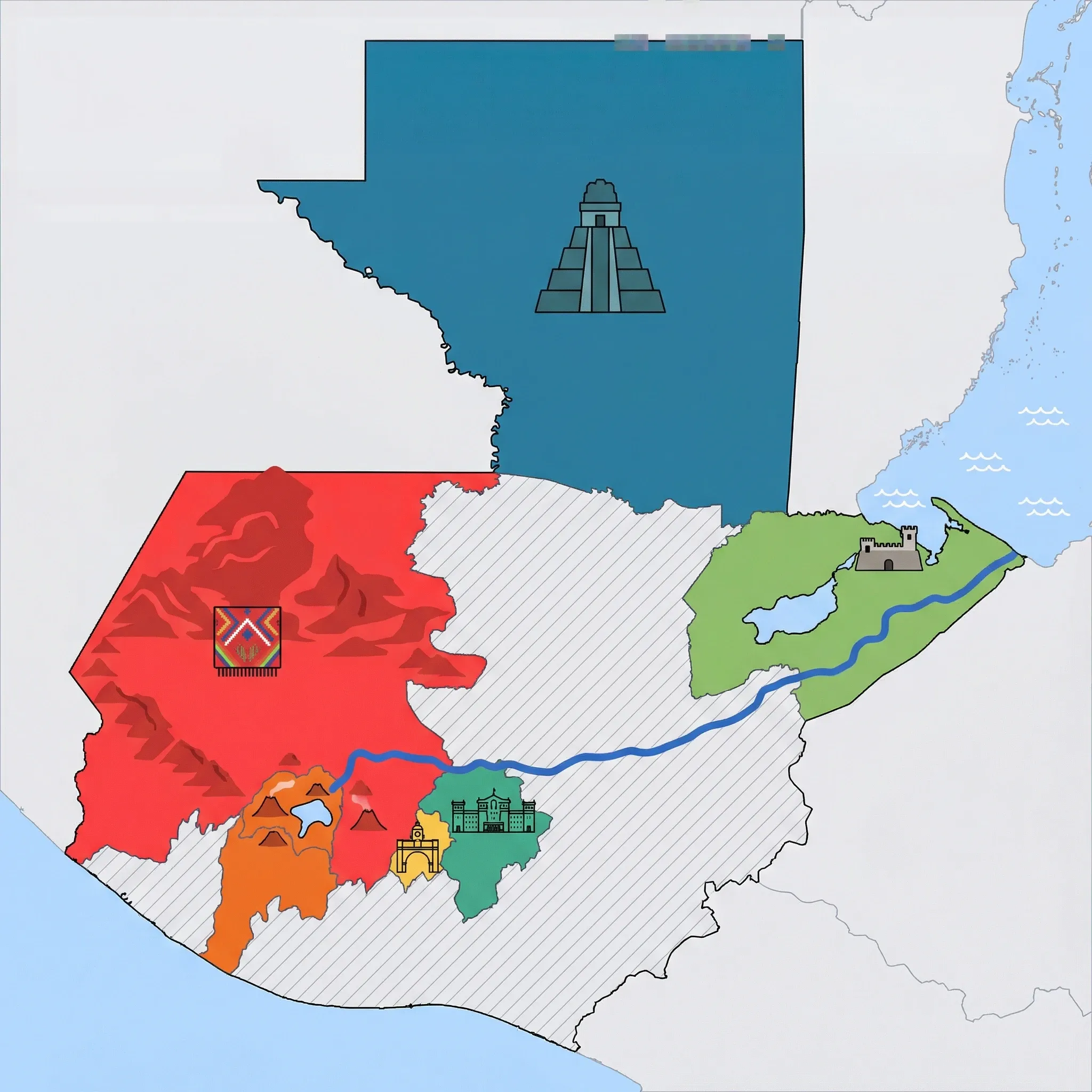
6 Regions
Antigua Guatemala
Colonial charm and volcano views 🌋
Chichicastenango & Highlands
Where ancient traditions come alive 🕯️
Guatemala City
A modern metropolis with deep history 🏙️
Lake Atitlán
A mystical blue lake ringed by volcanoes 🌋
Río Dulce & Caribbean
Jungle rivers and Caribbean rhythms 🌴
Tikal & Petén
Jungle adventures and ancient temples 🐆
Click on a region marker to explore details. Use the dropdown to color regions by activity suitability.

Getting There & Around
Getting There
- By Air – La Aurora International Airport (GUA) in Guatemala City is the primary gateway, with direct flights from the US, Mexico, and Spain. Mundo Maya International Airport (FRS) in Flores serves the north.
- By Land – Borders open with Mexico, Belize, Honduras, and El Salvador. The crossing from Belize to Tikal & Petén is popular for travellers on a multi-country route.
- Entry Requirements – Citizens of the US, UK, and EU usually do not need a visa for stays up to 90 days. Check your government website for the latest visa requirements, or use the IATA Travel Centre entry-requirements checker.
Getting Around
- Tourist Shuttles – The safest and most popular option for families. These shared minivans connect major hubs like Antigua Guatemala, Lake Atitlán, and Lanquín door-to-door.
- Private Drivers – Highly recommended for families with luggage. Offers flexibility to stop for breaks and is surprisingly affordable compared to Western prices.
- Domestic Flights – TAG Airlines and Avianca operate flights between Guatemala City (GUA) and Flores (FRS), saving a gruelling 10-hour bus ride to Tikal National Park.
- Tuk-tuks – Three-wheeled motorized rickshaws are ubiquitous in towns like Antigua and Panajachel. They are fun for short trips but agree on the price before hopping in.
- Chicken Buses (Camionetas) – brightly painted retired US school buses. While iconic, they are often reckless, overcrowded, and targeted by extortionists; they are generally not recommended for families with luggage.

Packing List
Required for swimming in eco-sensitive areas like Lake Atitlán and Semuc Champey to protect water quality.
Roosters, church bells, and fireworks (cohetes) are extremely loud and start very early in the morning.
Roads to Lake Atitlán and Lanquín are incredibly winding and mountainous; essential for kids in shuttles.
The Highlands (Antigua/Atitlán) get surprisingly cold at night and in the early morning, often dropping below 10°C.
Street lighting is poor in uneven cobbled streets, and power outages can occur in smaller villages.
Essential for rocky volcanic shores at Lake Atitlán and slippery limestone pools at Semuc Champey.

Activities & Best Times

Adventure & Nature
ExcellentHiking, wildlife, outdoor exploration, ecotourism
Home to the Maya Biosphere Reserve and the legendary Tikal, this region offers unparalleled jungle immersion and world-class wildlife viewing opportunities. The dry season from December to March is the only time to comfortably access remote sites like El Mirador via multi-day jungle treks.
Lake Atitlán is world-renowned for its dramatic volcanic skyline and unique highland ecosystems, offering iconic experiences like the Indian Nose sunrise hike. The dry season from November to April is essential for clear visibility and safe trekking on the steep caldera trails.
Antigua serves as a premier global hub for volcano trekking, featuring the iconic overnight hike to Acatenango with views of erupting Fuego. Optimal conditions occur during the dry season (Nov-Apr) when clear skies provide the dramatic volcanic vistas families expect.

City & Cultural
ExcellentUrban tourism, museums, historical sites, architecture
A globally significant archaeological hub featuring UNESCO-listed Tikal and the charming island heritage of Flores. Peak travel aligns with the dry season and major cultural celebrations like Semana Santa, providing optimal conditions for exploring massive limestone complexes.
The region is a premier destination for living Mayan culture, particularly in villages like San Juan La Laguna and Santiago Atitlán known for world-class textiles and art. Peak tourism coincides with the dry season when festivals like Semana Santa bring vibrant traditional celebrations to the village streets.
A UNESCO World Heritage site renowned for its preserved Spanish Colonial architecture, cobblestone streets, and sophisticated culinary scene. While peak visitation aligns with the dry season and Holy Week, the city's museums and heritage sites remain accessible and vibrant throughout the year.

Sports & Active
Very GoodSport tourism, fitness activities, active recreation
Demanding jungle trekking routes and extensive canopy systems offer high-intensity physical adventure for active families. Conditions are most favorable during the cooler dry months, as peak humidity and rain from June to October make many trails hazardous or impassable.
Offers internationally recognized high-altitude mountain biking trails and strenuous volcano ascents for active families. Peak months avoid the heavy highland rains that make technical trails and steep volcanic ash slopes difficult and unsafe.
Features challenging high-altitude trekking and mountain biking routes through the Western Highlands. Infrastructure is best utilized in the dry season when mountain paths are firm and visibility is optimal for technical navigation.

Educational & Exploratory
GoodLearning experiences, scientific sites, historical education
Features specialized museums focusing on regional history, jade production, and pharmacy history that offer meaningful cultural insights. These facilities provide consistent year-round educational value, though they are most frequently visited during the primary dry-season tourism window.
Quiriguá Archaeological Park offers world-class Mayan stelae of global significance, complemented by biological research centers in the biotopes. These sites are most effectively visited during the dry season to ensure comfortable access to the outdoor archaeological monuments.
Specialized centers like ARCAS and the Lithic Museum provide significant scientific and historical context for the region's biodiversity and Mayan heritage. These sites are best visited in conjunction with the major ruins during the peak dry season.

Road Trips & Scenic
GoodScenic drives, countryside tours, route-based travel
The scenic loop around Lake Petén Itzá and the primary route to Tikal offer well-maintained infrastructure for tropical driving tours. Best experienced when visibility is high and road surfaces are dry, avoiding the heavy downpours of the monsoon season.
The steep, winding descents from Sololá and the scenic routes connecting lakeside towns offer some of the most spectacular driving views in Central America. These routes are best navigated during peak months to avoid heavy rainfall and fog which can compromise safety and visibility.
Dramatic mountain passes like the Inter-American Highland Pass and the Ixil Triangle route provide spectacular vistas for touring families. Driving is best during the dry season to avoid frequent fog and seasonal road damage caused by heavy rainfall.

Beach & Sea
GoodBeach resorts, marine activities: diving, snorkelling, kite surfing, wind surfing, sailing

Theme Park & Entertainment
MarginalAmusement parks, family entertainment venues
Regional water parks like Nimlapek provide a necessary diversion for families in the tropical heat, though they lack international-scale theming. These are most popular during the hottest months of March and April when water-based recreation is most desired.
Parque Acuático El Reino serves as a regional aquatic entertainment venue. Peak interest occurs during the hottest and driest months of the year when water-based cooling is most desirable for families.
While Mundo Petapa IRTRA may be well-maintained for Central America, it does not meet international 'good' standards when compared to global theme park destinations. 'Good' should be reserved for parks that compete internationally (e.g., Europa-Park, Universal Studios quality), not regional best-in-class.

Relaxation & Wellness
MarginalSpa retreats, wellness centers, peaceful getaways
Known internationally as a hub for yoga and holistic retreats, the region features natural thermal baths and serene lakeside settings. While facilities are more rustic than global spa destinations, they offer an authentic and tranquil environment during the drier, sunnier months.
The region offers access to natural thermal baths and high-end boutique hotels with wellness facilities, though it is not a primary global wellness destination. These sites are most pleasant during the cooler, drier months from November to April.
The natural hot spring waterfalls at Finca El Paraíso provide a rustic and authentic wellness experience. Peak months coincide with cooler ambient temperatures, making the thermal waters particularly pleasant for travelers.

Festivals & Seasonal
MarginalEvents, celebrations, seasonal attractions
The region hosts the world-renowned Feast of Saint Thomas in December, featuring spectacular traditional dances and rituals. Outside of this major event and the Easter period, internationally significant festival programming is limited.
Home to the world-renowned Semana Santa (Holy Week) celebrations, featuring elaborate sawdust carpets and processions. While peak interest is centered on March and April, the end-of-year holiday traditions also attract international visitors seeking authentic cultural immersion.
The city hosts significant Holy Week (Semana Santa) processions that draw international crowds, though the rating is capped due to limited festival entries in the database. Peak timing is strictly tied to the liturgical calendar.

Public Holidays & Calendar Next 12 months
Public holidays, festivals, cultural celebrations, and seasonal natural phenomena coming up in Guatemala over the next 12 months.
Loading holidays and events...
Climate & Weather
Antigua Guatemala
Show Details
| Month | Temp °C | Rain | Humidity |
|---|
Chichicastenango & Highlands
Show Details
| Month | Temp °C | Rain | Humidity |
|---|
Guatemala City
Show Details
| Month | Temp °C | Rain | Humidity |
|---|
Lake Atitlán
Show Details
| Month | Temp °C | Rain | Humidity |
|---|
Río Dulce & Caribbean
Show Details
| Month | Temp °C | Rain | Humidity |
|---|
Tikal & Petén
Show Details
| Month | Temp °C | Rain | Humidity |
|---|

Travel Advisory
Five out of six major agencies recommend exercising a high degree of caution or increased vigilance. While popular tourist destinations remain open, pervasive violent crime and frequent political demonstrations necessitate a high level of situational awareness.
Safety Topics
Traveller Advice (3 groups)

While same-sex relationships are legal, social acceptance varies significantly. Individuals may encounter discrimination or hostility in more conservative or rural regions.

Female travellers should avoid walking alone, particularly after dark or in isolated areas, due to reports of sexual assault and harassment. Conservative dress and travelling in groups are recommended.

Travellers should ensure their passports are valid for at least six months upon entry. It is highly recommended to use only official radio-dispatched taxis and to avoid displaying signs of wealth in public.
Agency Summaries
Ireland highlights the prevalence of crime and violence throughout the country. It warns that security risks for foreigners are substantial, particularly at land borders where disruptions and illegal fee requests are common.
Australia warns of a high threat from violent crime, including carjacking and kidnapping. Travellers are advised to monitor local media closely following the declaration of a state of prevention by the Guatemalan government.
The UK advises against all but essential travel to areas near the Mexican border and specific high-crime zones in the capital. A 'State of Prevention' is currently in place, giving authorities power to restrict movements and dissolve protests.
Travellers should be extremely vigilant in Guatemala because of significant crime rates and frequent public demonstrations or roadblocks. Specific high-risk areas in Guatemala City and border regions should be avoided entirely due to elevated violence.
New Zealand advises increased caution due to the risk of violent crime and civil unrest. It specifically warns against non-essential travel to border areas with Mexico due to security concerns and the activity of armed gangs.
The U.S. government recommends reconsidering travel to Guatemala due to widespread violent crime, including armed robbery and murder. Specific regions like San Marcos and Huehuetenango are under 'Do Not Travel' warnings due to drug trafficking and gang activity.
Information is provided for general guidance only and does not constitute travel, safety, medical, or legal advice. Conditions may change. Users are responsible for independently verifying information before travel.