
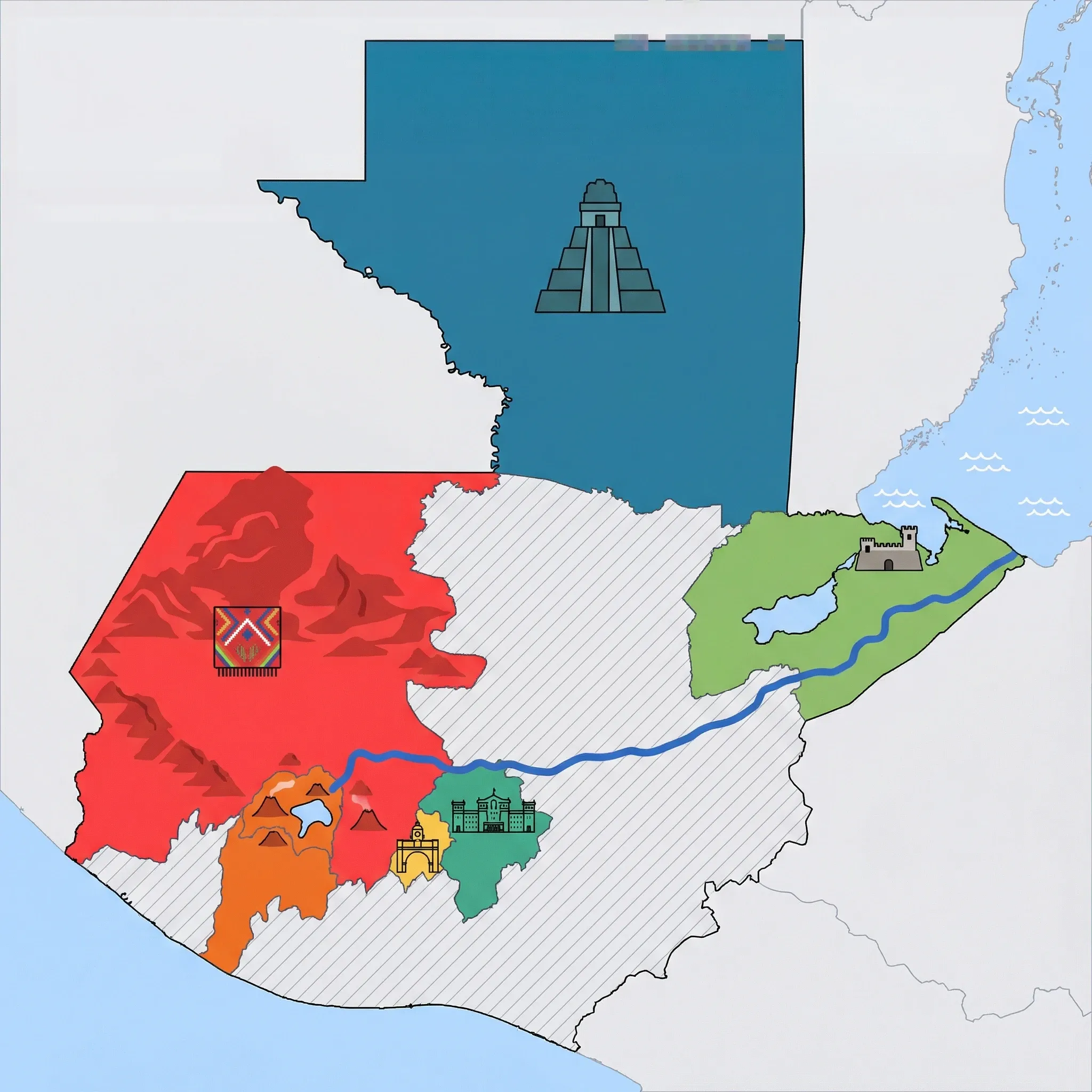
Click a region to explore
⚠️ SAFETY WARNING: Due to elevated crime rates in specific zones, government agencies (including CA, USA, UK, AU, IE, NZ) advise travelers to exercise a high degree of caution or reconsider travel to Guatemala City. Risks include armed robbery and theft, particularly in Zones 1, 18, and on public buses. However, Zones 10, 14, and 16 are considered safer and heavily policed. Families are strongly urged to consult their own government's official travel advisory before considering a trip, as individual risk tolerance varies.
Guatemala City, locally known as "Guate," is often treated merely as a transit hub, but it holds the country's best museums and most modern amenities. For families, it offers a change of pace from the rustic countryside, with high-end malls, cinemas, and interactive educational spaces. The city is divided into zones; visitors primarily stick to Zone 10 (Zona Viva) for hotels and dining, Zone 1 for historic sites (best visited during the day), and Zone 16 for open-air shopping districts like Cayalá. While the traffic is legendary and the urban sprawl intense, the city reveals the modern face of Guatemala.
Cultural immersion here is easier to control than in the chaotic markets. You can view ancient Maya artifacts in air-conditioned comfort and eat at restaurants that rival those in major US cities. It serves as a good base for day trips to nearby volcanoes or a comfortable final stop to relax before flying out.
Key Attractions
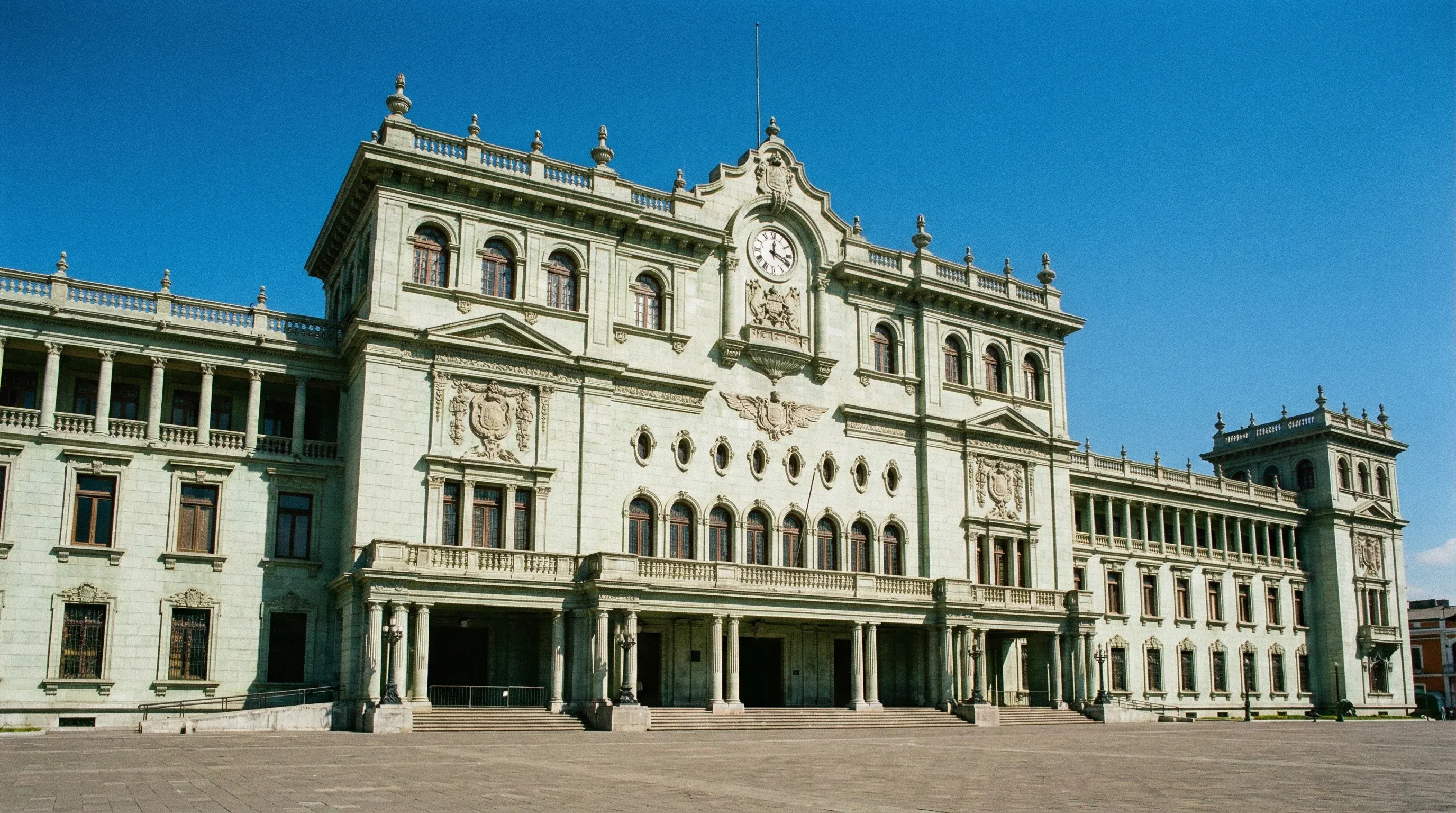
The Museo Ixchel del Traje Indígena is a standout for families; it focuses on Mayan textiles but includes interactive displays that keep kids engaged. Just across from it is the Popol Vuh Museum (often visited together). In the historic center, the Palacio Nacional de la Cultura—the "Green Guacamole" building—offers guided tours where kids can see the zero-kilometer marker and changing of the peace rose ceremony. For a nature escape within the city, the Botanical Garden of the University of San Carlos provides a green lung to run around in. Just outside the city limits, active families can take a day trip to Pacaya Volcano National Park to roast marshmallows on volcanic heat vents.
Practical Advice
Traffic is a major factor; a 5km trip can take 45 minutes during rush hour (7:00 am–9:00 am and 4:00 pm–7:00 pm). Plan activities in the same zone to minimize travel. Sundays are quieter and great for visiting the historic center's pedestrian street (Paseo de la Sexta).
Food & Drink
Typical meal times: Lunch is 12:30 pm to 2:30 pm. Dinner is later than in the villages, typically 7:00 pm to 9:00 pm.
Typical meal costs: Varies wildly. A meal in a mall food court is Q45–70 (approx. $6–9 USD / €5–8 EUR). Fine dining in Zone 10 is Q200–400 (approx. $25–50 USD / €23–45 EUR).
Dietary requirements: Excellent. The city has specialized vegan restaurants, gluten-free bakeries, and soy-free options, particularly in Zones 4, 10, and 14.
Signature dishes:
- Shucos – Guatemalan hot dogs served on toasted bread with guacamole, cabbage, mustard, and mayonnaise. (Best bought from reputable shops rather than street carts for safety).
- Hilachas – Shredded beef stewed in a mildly tart tomato and tomatillo sauce, usually served with rice.
- Fiambre – A massive salad of cold cuts, pickled vegetables, and cheeses, traditionally eaten only on All Saints' Day (Nov 1), but sometimes found in specialty delis.
Why this score?
The capital is a dense urban environment focused on commerce, museums, and residential life with very few outdoor adventure opportunities. Most activities occur within safe, developed zones or indoor shopping and dining complexes. It offers little for families seeking rugged or wilderness-based experiences.
Why this score?
This region serves as the country's medical epicenter, boasting several high-end private hospitals in Zone 10 that meet international standards. These facilities often have English-speaking specialists and accept international insurance for complex procedures. It is the only place in Guatemala where comprehensive, world-class medical care is consistently available.
Why this score?
As the main international gateway, the city sees high transit volume, but most leisure tourists depart immediately for more scenic regions. It functions primarily as a hub for business travelers and domestic commerce rather than a primary vacation destination. Despite its size, its international tourism footprint remains secondary to Antigua and Tikal.

Guatemala City has the widest price range in the country. You can spend like a local or a diplomat. A modern hotel in a safe zone costs Q600–1,200 (approx. $75–150 USD / €70–140 EUR). Museum entries are reasonable, usually Q30–50 (approx. $4–6.50 USD / €3.50–6 EUR). Uber rides across town are cheap, typically Q25–60 (approx. $3–8 USD / €3–7 EUR).

Getting Here & Around
Getting Here
- Airports – La Aurora International Airport (GUA) is right in the city (Zone 13), very close to the hotel districts of Zones 10 and 9.
- Bus – First-class buses (Pullman) from Mexico or El Salvador arrive at private terminals, mostly in Zone 1.
- Driving – Not recommended for tourists due to complex navigation and aggressive traffic.
Getting Around
- Ride-hailing – Uber is the safest and most convenient way to get around. It removes the language barrier and tracks your journey.
- Taxis – Use only "Taxi Amarillo" (Yellow Taxis) which are metered and dispatch-based. Avoid white street taxis.
- Public Transport – Avoid the "Red Buses" (Transurbano) due to safety concerns. The Transmetro (green BRT buses) is safer but can be very crowded.
Nearby Airports (1 airport)
La Aurora
GUAGuatemala City
View full flight map for Guatemala →
Official Links

Packing List
Traffic jams are long; you'll need phone battery for maps/entertainment.
City residents dress up more than in tourist towns; shorts are rare in nice venues.
The city is loud with traffic and construction noise.
Essential precaution for visiting the Historic Center (Zone 1).
Required for swimming in eco-sensitive areas like Lake Atitlán and Semuc Champey to protect water quality.
Roosters, church bells, and fireworks (cohetes) are extremely loud and start very early in the morning.
Roads to Lake Atitlán and Lanquín are incredibly winding and mountainous; essential for kids in shuttles.
The Highlands (Antigua/Atitlán) get surprisingly cold at night and in the early morning, often dropping below 10°C.
Street lighting is poor in uneven cobbled streets, and power outages can occur in smaller villages.
Essential for rocky volcanic shores at Lake Atitlán and slippery limestone pools at Semuc Champey.

Activities & Best Times

Urban tourism, museums, historical sites, architecture
Home to world-class Mayan collections at Museo Popol Vuh and Museo Ixchel, alongside the historic National Palace. The dry season is ideal for exploring the open-air Historic Center and the vibrant street life of Zone 10.

Hiking, wildlife, outdoor exploration, ecotourism
Offers high-quality semi-natural experiences like La Aurora Zoo and proximity to the active Pacaya Volcano hike. Peak months provide clear views of the volcanic landscape and dry trails essential for family safety and comfort.

Scenic drives, countryside tours, route-based travel
Acts as the primary hub for scenic routes like the Pan-American Highway and the descent into Antigua. Traveling during the dry season avoids the landslide risks and visibility issues common during the heavy mountain rains.

Sport tourism, fitness activities, active recreation
Provides infrastructure for active families including adventure parks and world-renowned volcano trekking nearby. Peak months offer stable weather for strenuous outdoor activities and clear navigation on high-altitude trails.

Events, celebrations, seasonal attractions
The city hosts significant Holy Week (Semana Santa) processions that draw international crowds, though the rating is capped due to limited festival entries in the database. Peak timing is strictly tied to the liturgical calendar.
Amusement parks, family entertainment venues
While Mundo Petapa IRTRA may be well-maintained for Central America, it does not meet international 'good' standards when compared to global theme park destinations. 'Good' should be reserved for parks that compete internationally (e.g., Europa-Park, Universal Studios quality), not regional best-in-class.

Attractions (15 total)



Public Holidays & Calendar Next 12 months
Public holidays, festivals, cultural celebrations, and seasonal natural phenomena coming up in Guatemala City over the next 12 months.
Loading holidays and events...

Travel Advisory
Five out of six major agencies recommend exercising a high degree of caution or increased vigilance. While popular tourist destinations remain open, pervasive violent crime and frequent political demonstrations necessitate a high level of situational awareness.
Safety Topics
Traveller Advice (3 groups)

While same-sex relationships are legal, social acceptance varies significantly. Individuals may encounter discrimination or hostility in more conservative or rural regions.

Female travellers should avoid walking alone, particularly after dark or in isolated areas, due to reports of sexual assault and harassment. Conservative dress and travelling in groups are recommended.

Travellers should ensure their passports are valid for at least six months upon entry. It is highly recommended to use only official radio-dispatched taxis and to avoid displaying signs of wealth in public.
Agency Summaries
Ireland highlights the prevalence of crime and violence throughout the country. It warns that security risks for foreigners are substantial, particularly at land borders where disruptions and illegal fee requests are common.
Australia warns of a high threat from violent crime, including carjacking and kidnapping. Travellers are advised to monitor local media closely following the declaration of a state of prevention by the Guatemalan government.
The UK advises against all but essential travel to areas near the Mexican border and specific high-crime zones in the capital. A 'State of Prevention' is currently in place, giving authorities power to restrict movements and dissolve protests.
Travellers should be extremely vigilant in Guatemala because of significant crime rates and frequent public demonstrations or roadblocks. Specific high-risk areas in Guatemala City and border regions should be avoided entirely due to elevated violence.
New Zealand advises increased caution due to the risk of violent crime and civil unrest. It specifically warns against non-essential travel to border areas with Mexico due to security concerns and the activity of armed gangs.
The U.S. government recommends reconsidering travel to Guatemala due to widespread violent crime, including armed robbery and murder. Specific regions like San Marcos and Huehuetenango are under 'Do Not Travel' warnings due to drug trafficking and gang activity.
Information is provided for general guidance only and does not constitute travel, safety, medical, or legal advice. Conditions may change. Users are responsible for independently verifying information before travel.