
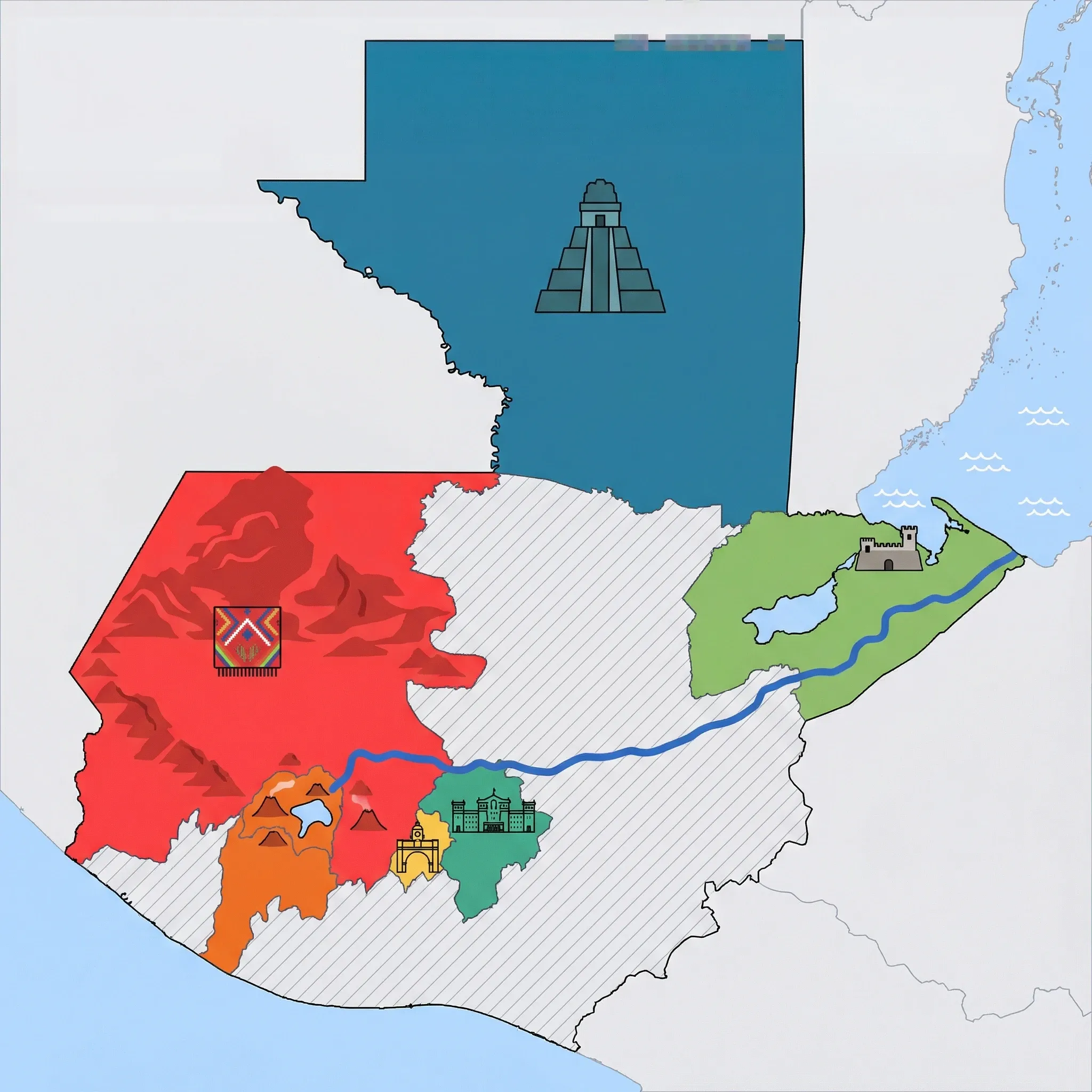
Click a region to explore
This region offers a complete contrast to the highlands: it is hot, humid, tropical, and teeming with life. Río Dulce ("Sweet River") connects Guatemala's largest lake, Lake Izabal, to the Caribbean Sea. For families, this is an area of high adventure. The river flows through a spectacular gorge with towering limestone cliffs covered in vines and bromeliads. Wildlife spotting is excellent here; you might see manatees (if lucky), iguanas, turtles, and countless aquatic birds. Accommodation often consists of eco-lodges built on stilts over the water, which kids find magical (though parents must be vigilant with toddlers).
At the river's mouth lies Livingston, a town accessible only by boat. It is the center of Garifuna culture in Guatemala, offering a unique Afro-Caribbean vibe, coconut bread, and drumming music that differs entirely from the Maya culture elsewhere. The pace here is slow and relaxed. It's not a place for rushing; it's a place for swimming in warm waters, exploring water caves, and enjoying the humidity.
Key Attractions
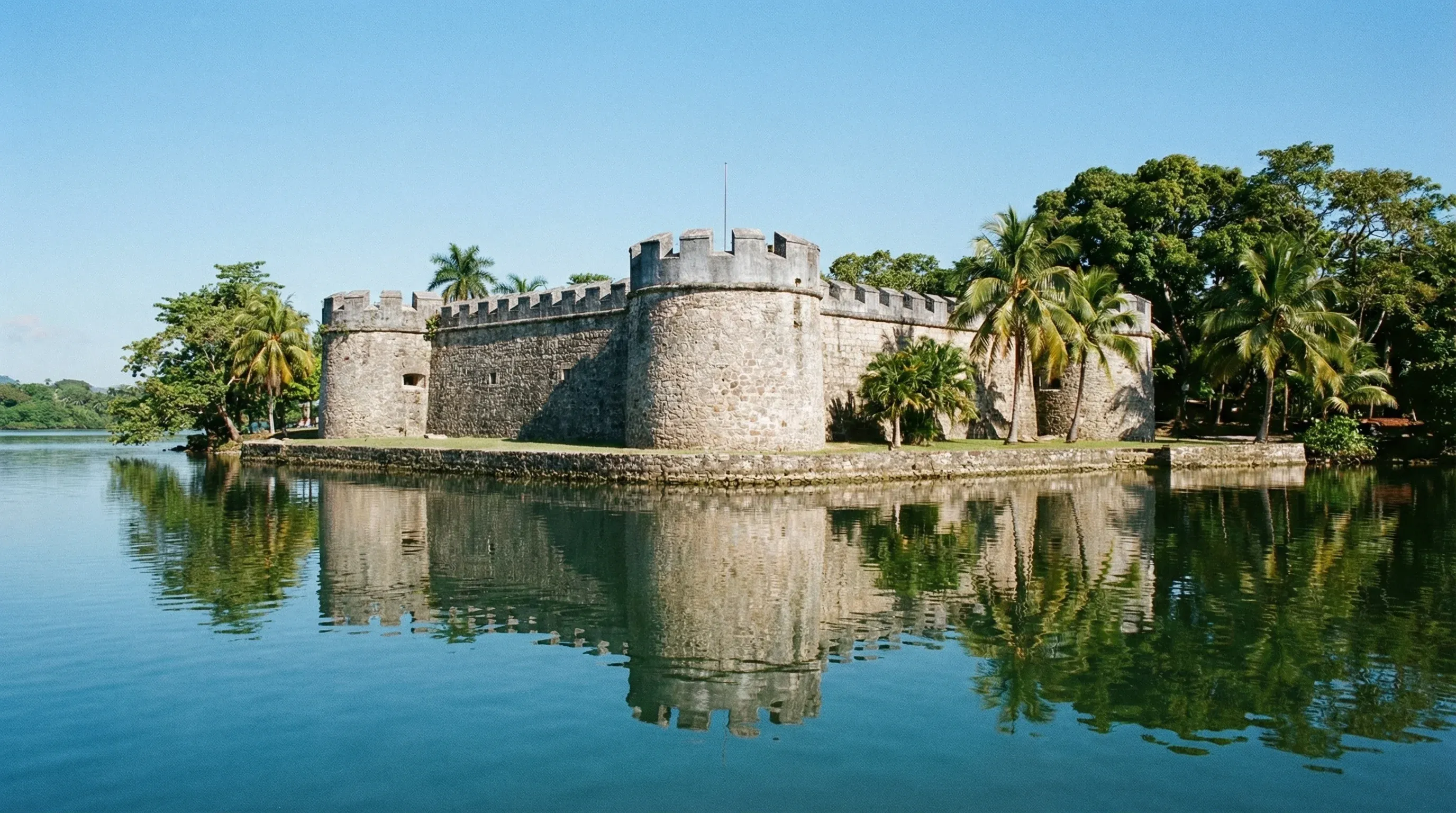
History comes alive at the Castillo de San Felipe de Lara, a small but perfectly preserved Spanish fort built to stop pirates from entering the lake. It has cannons and cramped towers that spark children's imaginations. The journey itself is an attraction: a boat ride through the Río Dulce National Park canyon is breathtaking. In Livingston Town, families can experience a different culture, walking streets where cars are rare. For active families, the Sendero Las Escobas offers crystal-clear waterfalls and swimming holes deep in the jungle, maintained by local conservationists.
Practical Advice
The heat here is intense and humid. Hydration is critical. Boat travel is the only way to reach many hotels and Livingston; arrange transfers in advance if arriving late. This is a malaria/dengue risk area; diligent mosquito protection is required.
Food & Drink
Typical meal times: "Island time" applies. Lunch 12:00 pm to 3:00 pm. Service can be slower than in the capital—relax and enjoy the view.
Typical meal costs: Seafood is the staple but can be pricey. A fresh fish dinner runs Q90–150 (approx. $12–19 USD / €10–17 EUR). Basic fried chicken or rice dishes are Q35–50 (approx. $4.50–6.50 USD / €4–6 EUR).
Dietary requirements: Seafood and coconut are ubiquitous. Vegetarians can rely on rice and beans, plantains, and tropical fruit. Gluten-free is relatively easy with rice-based dishes, but watch for soy sauce in marinades.
Signature dishes:
- Tapado – A spectacular seafood soup made with coconut milk, plantains, and cilantro. It often contains whole crabs and fish—messy but delicious.
- Rice and Beans – Unlike the "casamiento" of the highlands, this is cooked with coconut milk, giving it a distinct Caribbean flavor.
- Pan de Coco – Slightly sweet, dense yeast rolls made with coconut milk, sold by women carrying baskets on their heads in Livingston.
Why this score?
The region's primary transit is by boat through dense jungle canyons, creating an inherently adventurous travel experience. Exploring the hot springs, pirate forts, and remote coastal towns like Livingston requires navigating water-based logistics and wild tropical environments. It is one of the more rugged and physically engaging parts of the country for families.
Why this score?
Healthcare infrastructure is minimal throughout the river and coastal areas, with Livingston and Rio Dulce having only very basic clinics. Emergency response is complicated by the need for boat transport to reach any land-based ambulance services. Travelers are highly vulnerable in the event of a serious medical incident.
Why this score?
This area remains an emerging or niche destination, popular with the international sailing community but seeing fewer traditional tourists. Its remote location on the Caribbean coast makes it less accessible than the central highland destinations. It attracts those specifically seeking jungle rivers and Afro-Caribbean Garifuna culture.

Accommodation ranges from budget jungle hostels to upscale marina resorts. A mid-range waterfront cabin costs Q450–900 (approx. $58–115 USD / €52–105 EUR). Boat transfers add up; a private boat hire can cost Q800+ (approx. $100+ USD / €95+ EUR), while the collective public boat is around Q125–150 (approx. $16–19 USD / €15–18 EUR) per person.

Getting Here & Around
Getting Here
- Bus – Pullman buses (Litegua) run regularly from Guatemala City to Río Dulce town (approx. 5–6 hours).
- Boat – The only way to reach Livingston is by boat from Río Dulce (downriver scenic trip, 1.5 hours) or from Puerto Barrios (30 mins).
- Driving – The road from the capital is paved but busy with cargo trucks heading to the port.
Getting Around
- Lancha (Boat) – The primary mode of transport. Hotels will send boats to pick you up. Public "collectivo" boats run between Rio Dulce town and Livingston.
- Walking – Livingston is small enough to walk everywhere.
- Tuk-tuks – Available in Rio Dulce town and Livingston for short hauling of luggage.
Nearby Airports (1 airport)
Puerto Barrios Airport
PBRPuerto Barrios
View full flight map for Guatemala →
Official Links

Packing List
Mosquitoes and sandflies are aggressive near the water and jungle.
Essential for keeping electronics safe during frequent boat transfers.
Synthetic fabrics feel unbearable in the intense humidity here.
Useful for swimming in waterfalls or entering the lake where the bottom is silty.
Required for swimming in eco-sensitive areas like Lake Atitlán and Semuc Champey to protect water quality.
Roosters, church bells, and fireworks (cohetes) are extremely loud and start very early in the morning.
Roads to Lake Atitlán and Lanquín are incredibly winding and mountainous; essential for kids in shuttles.
The Highlands (Antigua/Atitlán) get surprisingly cold at night and in the early morning, often dropping below 10°C.
Street lighting is poor in uneven cobbled streets, and power outages can occur in smaller villages.
Essential for rocky volcanic shores at Lake Atitlán and slippery limestone pools at Semuc Champey.

Activities & Best Times

Hiking, wildlife, outdoor exploration, ecotourism
The region features a spectacular river gorge, the Chocón Machacas manatee reserve, and unique jungle-fringed waterfalls like Finca El Paraíso. Peak exploration occurs during the drier months when jungle trails are accessible and river visibility is at its highest.

Beach resorts, marine activities: diving, snorkelling, kite surfing, wind surfing, sailing
Playa Blanca and the Amatique Bay provide authentic Caribbean beach experiences with calm, warm waters. Conditions are optimal in late winter and spring when rainfall is lowest and sea visibility is best for coastal recreation.

Urban tourism, museums, historical sites, architecture
Offers a unique cultural blend of the Afro-Caribbean Garifuna people in Livingston and the UNESCO-listed Mayan ruins of Quiriguá. The driest months align with the peak international travel season and traditional festive periods.

Learning experiences, scientific sites, historical education
Quiriguá Archaeological Park offers world-class Mayan stelae of global significance, complemented by biological research centers in the biotopes. These sites are most effectively visited during the dry season to ensure comfortable access to the outdoor archaeological monuments.

Sport tourism, fitness activities, active recreation
Infrastructure supports hiking in the Las Escobas reserve and canyoning in the Boquerón Canyon. Peak months provide stable conditions for outdoor physical activities before the heavy tropical rains of the summer monsoon.

Spa retreats, wellness centers, peaceful getaways
The natural hot spring waterfalls at Finca El Paraíso provide a rustic and authentic wellness experience. Peak months coincide with cooler ambient temperatures, making the thermal waters particularly pleasant for travelers.

Scenic drives, countryside tours, route-based travel
The Ruta al Caribe offers scenic views of Lake Izabal and the lush lowlands of eastern Guatemala. Driving is best during the dry season when visibility is clear and the risk of road-blocking landslides from tropical storms is minimized.

Amusement parks, family entertainment venues
Parque Acuático El Reino serves as a regional aquatic entertainment venue. Peak interest occurs during the hottest and driest months of the year when water-based cooling is most desirable for families.




Public Holidays & Calendar Next 12 months
Public holidays, festivals, cultural celebrations, and seasonal natural phenomena coming up in Río Dulce & Caribbean over the next 12 months.
Loading holidays and events...

Travel Advisory
Five out of six major agencies recommend exercising a high degree of caution or increased vigilance. While popular tourist destinations remain open, pervasive violent crime and frequent political demonstrations necessitate a high level of situational awareness.
Safety Topics
Traveller Advice (3 groups)

While same-sex relationships are legal, social acceptance varies significantly. Individuals may encounter discrimination or hostility in more conservative or rural regions.

Female travellers should avoid walking alone, particularly after dark or in isolated areas, due to reports of sexual assault and harassment. Conservative dress and travelling in groups are recommended.

Travellers should ensure their passports are valid for at least six months upon entry. It is highly recommended to use only official radio-dispatched taxis and to avoid displaying signs of wealth in public.
Agency Summaries
Ireland highlights the prevalence of crime and violence throughout the country. It warns that security risks for foreigners are substantial, particularly at land borders where disruptions and illegal fee requests are common.
Australia warns of a high threat from violent crime, including carjacking and kidnapping. Travellers are advised to monitor local media closely following the declaration of a state of prevention by the Guatemalan government.
The UK advises against all but essential travel to areas near the Mexican border and specific high-crime zones in the capital. A 'State of Prevention' is currently in place, giving authorities power to restrict movements and dissolve protests.
Travellers should be extremely vigilant in Guatemala because of significant crime rates and frequent public demonstrations or roadblocks. Specific high-risk areas in Guatemala City and border regions should be avoided entirely due to elevated violence.
New Zealand advises increased caution due to the risk of violent crime and civil unrest. It specifically warns against non-essential travel to border areas with Mexico due to security concerns and the activity of armed gangs.
The U.S. government recommends reconsidering travel to Guatemala due to widespread violent crime, including armed robbery and murder. Specific regions like San Marcos and Huehuetenango are under 'Do Not Travel' warnings due to drug trafficking and gang activity.
Information is provided for general guidance only and does not constitute travel, safety, medical, or legal advice. Conditions may change. Users are responsible for independently verifying information before travel.