

⚠️ SAFETY WARNING: Guinea is currently rated Level 2 (Exercise Increased Caution) by the US State Department due to crime and civil unrest. Demonstrations can occur with little warning, particularly in Conakry. Families should maintain high situational awareness, avoid all large gatherings, and ensure they have comprehensive travel insurance that includes medical evacuation.
Guinea is a destination for families who truly want to venture off the beaten path. It is a land of dramatic contrasts, from the chaotic energy of the capital, Conakry, to the serene, mist-covered peaks of the Fouta Djallon Highlands. While it lacks the polished infrastructure of more established tourist hubs, it rewards patient travelers with breathtaking landscapes and a culture deeply rooted in tradition. The country is known as the "Water Tower of West Africa" because many of the region's great rivers, including the Niger and the Gambia, originate here, creating a verdant interior of rolling hills and powerful waterfalls.
For families, the experience is less about ticking off famous monuments and more about immersion. You will navigate bustling markets, cross rivers in traditional pirogues, and meet welcoming communities where children are often the center of attention. The Conakry & Coast region offers a mix of urban intensity and island relaxation, while the interior promises hiking adventures that feel like genuine exploration. It is a challenging destination that requires preparation, but the memories of its green valleys and warm hospitality are indelible.
Key Attractions
The Îles de Los are the most accessible family escape, located just off the coast of Conakry. This archipelago offers a calm respite from the capital's traffic. A favorite spot is Île de Roume, often linked to Robert Louis Stevenson's Treasure Island. Here, families can enjoy picnic lunches on golden sands and swim in relatively calm waters, making it a perfect day trip or weekend getaway.
In the heart of the country, the Fouta Djallon Highlands offer some of West Africa's best hiking. The star attraction here is Kambadaga Falls, a magnificent tiered waterfall surrounded by jungle. While the hike requires moderate fitness, the sight of the water crashing down into the deep pools below is a spectacular reward for active families. Back in the capital, the National Museum of Guinea provides a necessary cultural context, housing an impressive collection of masks, statues, and musical instruments that introduce children to the diverse ethnic groups of the region.
For the truly adventurous with older teenagers, the remote Forest Region in the far southeast is home to the Mount Nimba Strict Nature Reserve. A UNESCO World Heritage site shared with Côte d'Ivoire, it is a biodiversity hotspot famous for its unique viviparous toads and chimpanzees. Access is strictly controlled and requires permits, making it an exclusive expedition for nature-loving families.
Practical Advice
The best time to visit is during the dry season, from November to April, when roads are passable and humidity is lower. A visa is required for most visitors and should be arranged well in advance, alongside a mandatory Yellow Fever vaccination certificate. Malaria prophylaxis is essential. Families should hire a private 4x4 vehicle with an experienced driver; this is the safest and most reliable way to navigate the country's poor road network.
Safety
Travel in Guinea requires vigilance. Petty crime like pickpocketing is common in markets and traffic jams in Conakry. Avoid driving at night due to poor lighting, livestock on roads, and the risk of banditry in rural areas. Political protests can disrupt transport; monitor local media and stay indoors if unrest breaks out. Medical facilities are limited, so carry a robust first-aid kit and ensure your insurance covers air evacuation.
Food & Drink
Typical meal times: Lunch is usually eaten between 12:30 pm and 3:00 pm, while dinner is a late affair, typically served from 7:30 pm to 10:00 pm.
Typical meal costs: Street food and local eateries (maquis) charge around 25,000–50,000 GNF (approx. $3–6 USD / €2.50–5 EUR). Mid-range restaurant meals in Conakry cost 80,000–180,000 GNF (approx. $9–20 USD / €8–17 EUR).
Dietary requirements: Vegetarian options are generally available, as rice and cassava are staples, but many sauces are meat-based. Vegan travelers may find it harder to ensure dishes are entirely animal-product-free (e.g., dried fish is often used for seasoning). Peanuts are a very common ingredient, so those with nut allergies must be extremely cautious.
Family-friendly dining: Highchairs are rare outside of top international hotels. "Maquis" (local open-air restaurants) are casual and welcoming to children, but service can be slow. It is best to order simple grilled chicken or fish with rice for fussy eaters.
Signature dishes:
- Poulet Yassa – Chicken marinated in onions, lemon, and mustard, then braised. It is tangy, tender, and usually a hit with children.
- Riz Gras – The Guinean version of Jollof rice; rice cooked in a rich tomato and vegetable stew, often with meat or fish.
- Kansiye – A rich beef stew made with peanut butter sauce, offering a creamy, savory flavor.
- Konkoé – A smoked fish stew that is a local favorite, though the strong smoky flavor might be intense for some kids.
- Ketoun – A hearty tuber stew/porridge made with sweet potatoes, cassava, and fish, often eaten during Ramadan but available year-round.

While local food is cheap, the lack of tourism infrastructure means families often need to pay for higher-end logistics to ensure safety and comfort. A family of four should budget around 1,500,000–2,500,000 GNF (approx. $170–280 USD / €150–250 EUR) per day to cover a private 4x4 vehicle rental with driver, mid-range hotel accommodation, and meals.
Age Suitability




Did you know? Guinea welcomes approximately 99,000 international visitors per year. Most visitors come from Europe.
Explore Regions
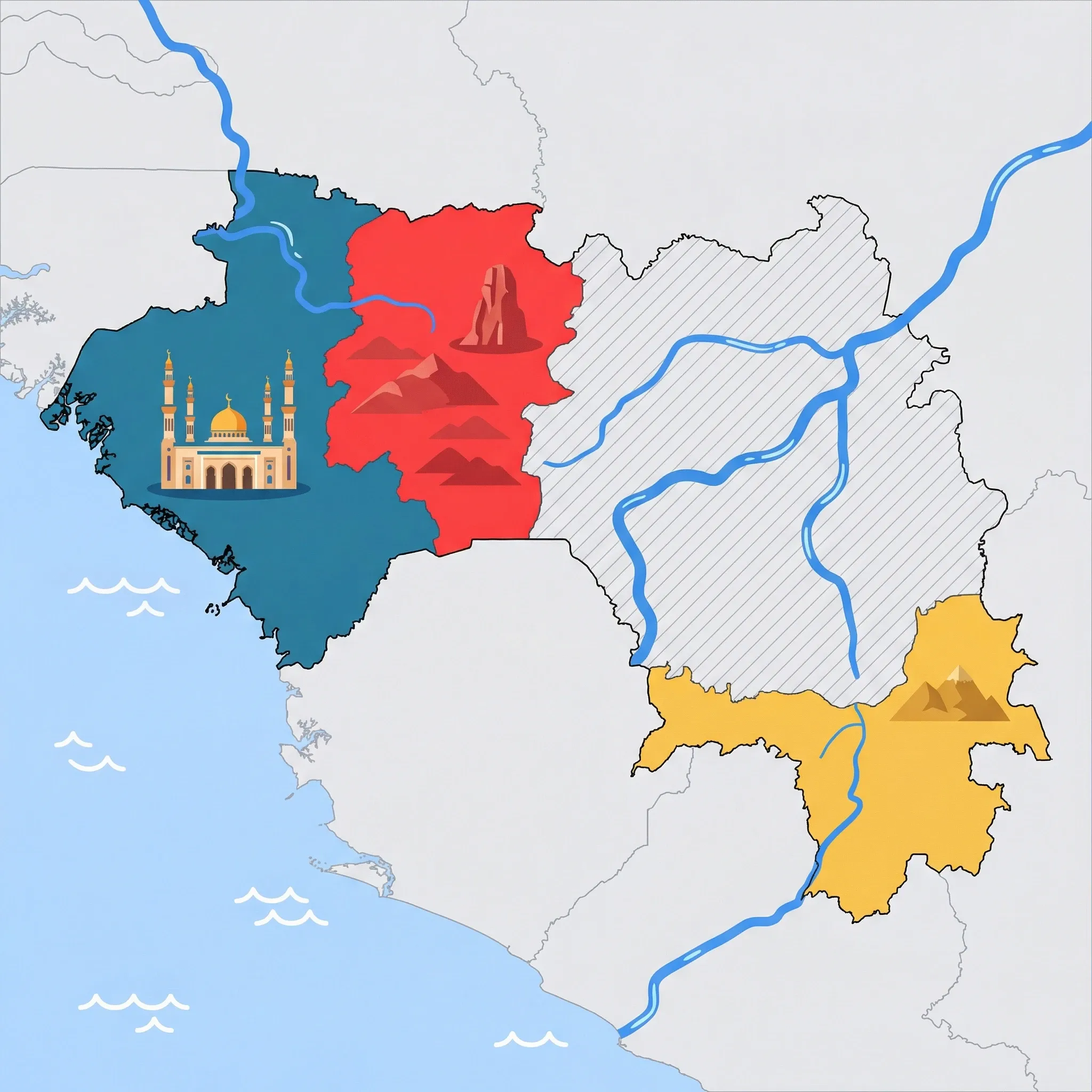
3 Regions
Conakry & Coast
From bustling markets to pirate legends and tropical islands 🏝️🌊
Forest Region
Ancient rainforests and vine bridges in the deep south 🌳🦍
Fouta Djallon Highlands
Chasing waterfalls in the cool highlands ⛰️💦
Click on a region marker to explore details. Use the dropdown to color regions by activity suitability.

Getting There & Around
Getting There
- By Air – Conakry International Airport (CKY) is the main gateway, receiving flights from Europe (Air France, Brussels Airlines) and regional hubs (Royal Air Maroc, Ethiopian Airlines). It serves the Conakry & Coast region.
- By Land – Border crossings with Senegal, Côte d'Ivoire, and Sierra Leone exist but can be bureaucratic and rough. The road from Sierra Leone is paved but long.
- Entry Requirements – A visa is required for most travelers (US, UK, EU). An e-visa system is available. A Yellow Fever vaccination certificate is mandatory for entry. Check your government website for the latest visa requirements, or use the IATA Travel Centre entry-requirements checker.
Getting Around
- Car Hire – The only practical option for families is hiring a 4x4 with a local driver. Roads are often in poor condition, especially in the Forest Region and Fouta Djallon Highlands. Self-driving is not recommended due to chaotic traffic and lack of signage.
- Taxis – In Conakry, shared taxis are ubiquitous but often overcrowded and unsafe for children. Private "déplacement" taxis can be negotiated for city trips but lack seatbelts.
- Domestic Flights – Flights to regional capitals like Nzérékoré are sporadic and schedules change frequently. They are not a reliable primary mode of transport.

Packing List
Mandatory for entry; keep it in your carry-on as you will be asked for it before immigration.
Power cuts are frequent and street lighting is non-existent in many areas outside central Conakry.
English is rarely spoken outside of high-end hotels; basic French is essential for daily interactions.
You will frequently remove shoes when entering homes, some shops, or mosques.
ATMs are unreliable outside Conakry; bring pristine, new bills to exchange.
Tap water is not safe to drink, and buying plastic bottles creates waste in a country with limited recycling.

Activities & Best Times

Adventure & Nature
Very GoodHiking, wildlife, outdoor exploration, ecotourism
The region features unique geological formations like the 'Lady of Mali' and spectacular canyon waterfalls that provide an authentic West African wilderness experience. Peak months offer cool, dry conditions for trekking, while the heavy monsoon rains from June to September make trails dangerous and inaccessible.
The Îles de Los and Cape Verga provide exceptional opportunities for ecotourism and island exploration in a raw, authentic environment highly valued by experienced travelers. Peak season (Dec-Apr) offers dry trails and accessible islands, whereas the heavy rains of May-Oct lead to difficult terrain and limited logistics.
Home to the UNESCO-listed Mount Nimba and the rare Bossou chimpanzees, this region offers exceptional, raw wildlife encounters and rainforest immersion. Peak visitation occurs during the dry season when wildlife is easier to track and forest trails are passable.

City & Cultural
GoodUrban tourism, museums, historical sites, architecture
While the region has significant cultural heritage as the heart of the Fouta Djallon Imamate, 'very_good' should be reserved for globally outstanding cultural destinations with UNESCO density or world-class museums. The region's cultural appeal is nationally important but not internationally exceptional. Downgrading to 'good' maintains recognition of cultural value while properly calibrating against international standards.
Conakry's energetic street life, the Grand Mosque, and the National Museum offer a deep dive into Guinean heritage and urban culture. Travelers should prioritize the drier months (Dec-Apr) to navigate the city comfortably, as the intense rainfall from June to October disrupts infrastructure and outdoor markets.
The Forest Region is primarily a natural/wilderness destination focused on Mount Nimba and Bossou chimpanzees. While it offers cultural insights into sacred forests and ethnic heritage, it lacks the urban cultural infrastructure (museums, galleries, historic architecture) that 'good' typically implies. The cultural experiences here are secondary to the primary nature/wildlife focus. 'Marginal' better reflects that cultural tourism is possible but not the region's strength.

Road Trips & Scenic
GoodScenic drives, countryside tours, route-based travel
Defined scenic routes like the RN2 and the escarpment drive to Mali-ville offer dramatic mountain vistas suitable for self-drive or guided touring. Travel is best during the dry season to ensure road safety and visibility; many unpaved mountain passes become treacherous or impassable during the peak rains.
The drive from Conakry to Cape Verga is a recognized scenic route showcasing the region's diverse coastal beauty and rural life. It is best attempted in the dry season (Dec-Apr) when roads are reliable; during the rainy season (May-Oct), poor road conditions and low visibility make touring unadvisable.
The Ziama Forest Corridor and Nimba Highland drives offer spectacular scenic vistas through high-altitude rainforests. These routes require high-clearance vehicles and are virtually impassable during the peak monsoon months due to mud and washouts.

Sports & Active
GoodSport tourism, fitness activities, active recreation
Recognized trekking infrastructure like the Indiana Jones Trail provides challenging terrain for active families seeking authentic highland hiking. The peak season aligns with stable, cooler weather, while the extended wet season (May-September) creates slippery conditions and high-risk river crossings.
The region features notable coastal trails and hiking routes like Mount Chien Assis, providing solid opportunities for active exploration in natural settings. Activities are most enjoyable during the stable dry season (Dec-Apr), while the high humidity and heavy rainfall from June to October limit outdoor sports.
Provides rugged trekking opportunities on Mount Nimba and through the Ziama Massif for active families. Infrastructure is limited to basic trails, which become dangerous and slippery during the extended rainy season.

Beach & Sea
GoodBeach resorts, marine activities: diving, snorkelling, kite surfing, wind surfing, sailing

Educational & Exploratory
MarginalLearning experiences, scientific sites, historical education

Public Holidays & Calendar Next 12 months
Public holidays, festivals, cultural celebrations, and seasonal natural phenomena coming up in Guinea over the next 12 months.
Loading holidays and events...

Climate & Weather
Conakry & Coast
Show Details
| Month | Temp °C | Rain | Humidity |
|---|
Forest Region
Show Details
| Month | Temp °C | Rain | Humidity |
|---|
Fouta Djallon Highlands
Show Details
| Month | Temp °C | Rain | Humidity |
|---|

Travel Advisory
Standard safety awareness is insufficient. Travellers must exercise increased vigilance due to high rates of crime, potential for sudden civil unrest, and significant infrastructure limitations.
Safety Topics
Traveller Advice (3 groups)

Same-sex relationships and acts are criminalized and socially stigmatized. Public displays of affection should be avoided to prevent legal consequences or targeted harassment.

Female travellers may encounter verbal harassment and should avoid walking alone, especially after dark. Dressing modestly in accordance with local customs is recommended to reduce unwanted attention.

Ensure access to backup supplies of food, water, and fuel as shortages are frequent. Register your travel plans with your national authorities and maintain comprehensive medical evacuation insurance.
Agency Summaries
Protests and political gatherings can occur with little warning and may become violent. Road-based crime involving armed individuals posing as security personnel is a risk. Terrorism remains a threat that could affect public spaces frequented by foreigners.
Travellers should remain extremely vigilant due to ongoing social and political instability. Public demonstrations are frequent and have the potential to escalate into violence. Health risks include cholera outbreaks and being located within the meningitis belt.
Civil unrest and political tensions create a volatile security environment. Essential services like water and fuel are subject to regular shortages. There is a high risk of banditry and kidnapping in regions bordering Mali.
Visitors should be cautious due to the lack of local diplomatic representation and the risk of civil disturbances. Comprehensive insurance is essential to cover potential medical evacuations given the limited local healthcare options.
Violent crimes, including armed robbery and carjacking, are becoming more common across the country. Tensions are particularly high in border areas, where non-essential travel should be avoided.
Heightened vigilance is advised due to prevalent crime, potential for civil unrest, and insufficient medical infrastructure. Street crimes like pickpocketing and muggings are frequent, particularly in Conakry. Nighttime travel between cities is strongly discouraged.
Information is provided for general guidance only and does not constitute travel, safety, medical, or legal advice. Conditions may change. Users are responsible for independently verifying information before travel.