
Overview
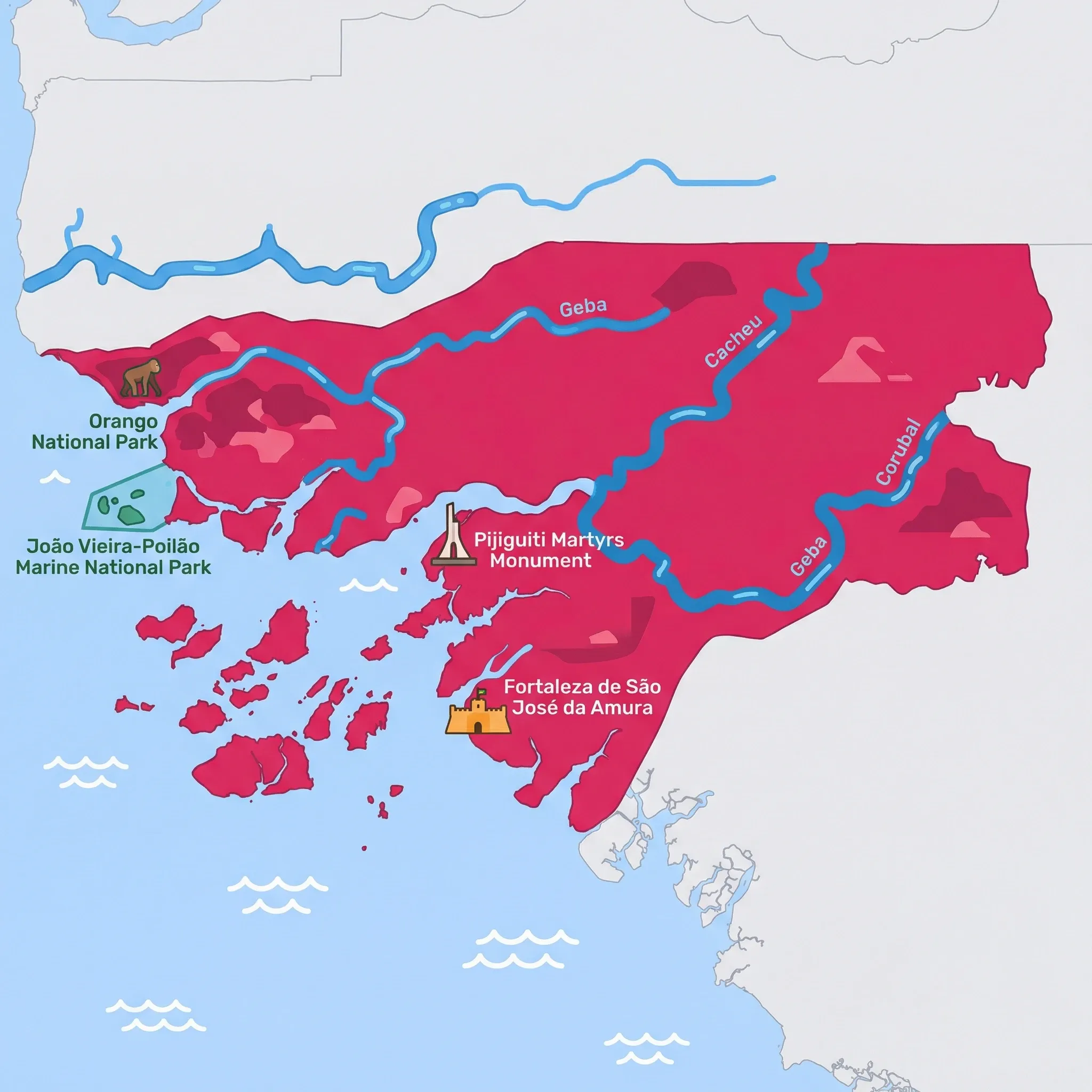
For families with a spirit of true adventure, Guinea-Bissau offers an experience that has virtually disappeared from the rest of the world: a coastline largely untouched by mass tourism. This small nation is defined by water, with a mainland shredded by meandering river estuaries and an offshore crown of 88 emerald islands known as the Bijagós Archipelago. The vibe here is slow, rhythmic, and deeply connected to nature. It is not a destination for families seeking kids' clubs or all-inclusive resorts; rather, it is a classroom of the wild, where teenagers and older children can learn about biodiversity, colonial history, and traditional cultures that have resisted outside influence for centuries.
The culture is a vibrant tapestry of ethnic groups, with the friendly Portuguese-creole spirit binding the nation together. In the capital, Bissau, crumbling colonial villas line dusty streets, while the air smells of grilled corn and tropical humidity. But the real magic lies in the islands, where matriarchal societies still govern and wildlife rules the shores. Traveling here requires patience-roads are rough and ferries can be erratic-but the reward is seeing elephants on the beach, tracking chimpanzees in sacred forests, and meeting communities who welcome visitors with genuine, uncommercialised warmth.
Key Attractions
The undisputed highlight for any visitor is the Bijagós Archipelago. Of the 88 islands, only a handful are inhabited, and they form a UNESCO Biosphere Reserve of global importance. Orango Island is the most famous, home to the rare and surreal sight of saltwater hippos that swim in the ocean and graze near the beach. Families can take guided treks to see these majestic creatures, a wildlife encounter unlike any other in Africa. Nearby, Poilão Island is a sacred site that hosts one of the world's largest colonies of nesting green sea turtles; visiting during the hatching season is a magical experience for children.
On the mainland, the capital Bissau offers a gentle introduction to the country. A walk through Bissau Velho (the Old Quarter) reveals hauntingly beautiful Portuguese colonial architecture in various states of decay, leading to the massive fortress Fortaleza d'Amura (viewable from the outside). For a history lesson, the town of Cacheu features a 17th-century fort and a poignant museum dedicated to the history of slavery, situated right on the edge of the mangroves. Further south, the Cantanhez National Park protects the last remnants of sub-humid forest, where families can hire local guides to spot chimpanzees in the wild.
For a ghostly but fascinating day trip, the island of Bolama-the former colonial capital-is a must. It feels like a place frozen in time, with grand neo-classical government buildings and Grecian pillars being slowly reclaimed by the jungle. It is an atmospheric playground for the imagination, perfect for families who enjoy exploring ruins and history. Meanwhile, the island of Bubaque serves as the main hub for the archipelago, offering the most reliable amenities, a small museum, and a lively market where you can buy fresh fish and local crafts.
Practical Advice
The best time to visit is during the dry season, from November to May, when roads are passable and boat crossings are calmer. The turtle nesting season (August to February) overlaps with this window. Visas are required for most travellers; while visas on arrival are technically available, it is strongly recommended to arrange them in advance via an embassy or online to avoid airport hassles. Malaria is a serious risk year-round; strictly adhere to prophylaxis and bring high-quality insect repellent. English is rarely spoken, so a Portuguese phrasebook is essential.
Safety
Beyond the political instability, petty crime can be an issue in Bissau, particularly around the port and markets at night. Avoid walking alone after dark. Transport safety is a major consideration; avoid travelling on overloaded pirogues (canoes) without life jackets. Stick to reputable boat operators or the official ferry for island crossings. Medical facilities are extremely basic; for any serious illness or injury, evacuation to Dakar (Senegal) or Europe will be necessary.
Food & Drink
Typical meal times: Lunch is the main meal, eaten from 12:30 pm to 2:30 pm. Dinner is usually served from 7:30 pm to 9:30 pm.
Typical meal costs: 3,000–8,000 XOF (approx. $5–13 USD / €4.50–12 EUR) for a local meal; 12,000–25,000 XOF (approx. $20–40 USD / €18–38 EUR) for a dinner at a hotel or expat restaurant.
Dietary requirements: Vegetarians may struggle, as cuisine is heavily fish and meat-based. Rice and tropical fruit are abundant, but vegan protein sources are scarce in restaurants. Peanut allergies are a major concern as groundnuts are a staple ingredient.
Family-friendly dining: Highchairs are virtually non-existent. Dining is casual, and children are welcome everywhere. The local grilled chicken and chips is a safe bet for picky eaters.
Signature dishes:
- Caldo de Mancarra – A rich, hearty stew made with chicken, onions, tomatoes, and a thick peanut sauce.
- Thiéboudienne (Ceebu Jën) – The beloved West African staple of rice cooked in tomato broth with fish and vegetables.
- Yassa Chicken – Chicken marinated in onions, lemon, and mustard, then grilled or stewed; tangy and mild enough for kids.
- Caldo de Peixe – A fragrant fish stew often cooked with red palm oil and okra.
- Sultiga – A local speciality from the islands, featuring fish cooked with palm oil and lime.
Family Travel Notice
Minors, including those with dual citizenship, must have notarized written consent from a parent or guardian if they are travelling without both parents. Local authorities may prevent children from departing the country if this documentation is missing.

While local street food is cheap, family travel in Guinea-Bissau is mid-range due to logistics. Reaching the islands requires hiring private boats (fuel is expensive) or relying on scarce ferries. A family can expect to spend 90,000–150,000 XOF (approx. $150–250 USD / €135–230 EUR) per day for decent accommodation, meals, and private island transport.
Age Suitability




Did you know? Guinea-Bissau welcomes approximately 52,000 international visitors per year. Most visitors come from Europe.
Why this score?
The country is a significant adventure destination due to its rugged terrain and the logistical complexity of navigating the 88 islands of the Bijagós Archipelago. Visitors must rely on boat charters and basic camps to see rare saltwater hippos and nesting turtles, offering a raw and off-the-beaten-path experience.
Why this score?
Medical infrastructure is extremely minimal, with even the main facilities in Bissau lacking the equipment and specialized staff necessary for complex cases. For international families, the lack of reliable emergency services and English-speaking medical personnel means that comprehensive medical evacuation insurance is a necessity.
Why this score?
With approximately 52,000 annual arrivals and very limited hotel infrastructure, Guinea-Bissau remains one of the least visited nations in West Africa. Tourism is largely restricted to niche wildlife enthusiasts visiting the Bijagós Archipelago and business travelers in Bissau, resulting in very low international visibility.
While street food is cheap, tourism infrastructure is scarce and therefore relatively expensive for what you get. A basic hotel room costs 25,000–50,000 XOF (approx. $40–80 USD / €38–76 EUR). Hiring a private boat to the islands is the biggest expense, costing 150,000–300,000 XOF (approx. $250–500 USD / €230–460 EUR) per day.

Getting There & Around
Getting There
- By Air – Osvaldo Vieira International Airport (OXB) in Bissau is the main gateway. Direct flights arrive from Lisbon (TAP Air Portugal) and Casablanca (Royal Air Maroc). Regional connections exist from Dakar, Senegal (Air Senegal).
- By Land – The main border crossing with Senegal is at São Domingos (north). Shared taxis run from Ziguinchor (Senegal) to Bissau, taking 4–6 hours depending on the border speed. The border with Guinea (Conakry) is more difficult and remote.
- Entry Requirements – Visas are required for US, UK, and EU citizens. A visa-on-arrival is technically available but often requires a pre-issued letter of invitation. Arranging a visa at an embassy (e.g., in Lisbon or Dakar) before travel is safer. Check your government website for the latest visa requirements, or use the IATA Travel Centre entry-requirements checker.
Getting Around
- Boats & Ferries – The only way to reach the Guinea-Bissau islands. The public ferry to Bubaque is cheap but runs infrequently (usually once a week). Private speedboats are faster and safer for families but significantly more expensive.
- Taxis – In Bissau, blue and white Mercedes taxis are plentiful. Negotiate the fare before getting in. Shared taxis (toca-tocas) are crowded and not recommended for families with luggage.
- Sept-Place Taxis – For inter-city travel on the mainland, these 7-seater station wagons are the standard. They are often old and uncomfortable; buying extra seats for more space is a common trick for travellers.
- Car Hire – Self-drive is not recommended due to police checkpoints and poor road conditions. Hiring a car with a driver is the safest option for mainland exploration.
Official Links

Packing List
ATMs are rare and unreliable. XOF is pegged to the Euro, making it the easiest currency to exchange.
Essential for keeping electronics and documents dry during open boat crossings to the islands.
Street lighting is scarce and power cuts in hotels are frequent; essential for navigating at night.
Sockets are Type C (European standard), but you may need a power bank as electricity is not 24/7.
English is virtually unknown outside top hotels; knowing basic Portuguese or Kriol is vital.

Activities & Best Times

Adventure & Nature
Very GoodHiking, wildlife, outdoor exploration, ecotourism
Home to globally unique saltwater hippos in Orango and major turtle nesting sites in Poilão, offering world-class wildlife encounters for experienced travelers. Nature exploration is best during the dry season when wildlife congregates near water and forest trails remain accessible.
Beach & Sea
GoodBeach resorts, marine activities: diving, snorkelling, kite surfing, wind surfing, sailing
The Bijagós Archipelago offers remote, pristine beaches like Praia de Bruce with high authenticity for adventurous families, though infrastructure is rustic. Peak season aligns with the dry months when sea visibility is highest and boat transit between islands is safest.

City & Cultural
MarginalUrban tourism, museums, historical sites, architecture
Guinea-Bissau's colonial architecture consists largely of poorly maintained or abandoned buildings. Bolama is essentially ruins. There are no major museums, galleries, or UNESCO sites. While historically interesting, this does not constitute 'very_good' cultural tourism, which should indicate well-curated, accessible heritage experiences. Marginal is appropriate for a destination with cultural interest but minimal tourism infrastructure.

Road Trips & Scenic
MarginalScenic drives, countryside tours, route-based travel
Guinea-Bissau has poor road infrastructure with many unpaved roads in poor condition. The Bissau-Gabú highway exists but does not offer exceptional scenic value compared to dedicated scenic routes elsewhere. Road trips require reliable infrastructure, which Guinea-Bissau lacks. Marginal better reflects the challenging conditions for driving tourism.

Sports & Active
MarginalSport tourism, fitness activities, active recreation
While specialized treks like the Anôr Hippo Trek exist, Guinea-Bissau lacks the infrastructure, marked trails, and tourism services that characterize 'good' sports/active destinations. The limited accessibility and minimal organized activities make 'marginal' a more accurate rating.

Attractions (5 total)



Public Holidays & Calendar Next 12 months
Public holidays, festivals, cultural celebrations, and seasonal natural phenomena coming up in Guinea-Bissau over the next 12 months.
Loading holidays and events...

Travel Advisory
Guinea-Bissau is currently experiencing significant political instability following a military power seizure in late 2025. While large-scale violence has not broken out, the security environment is fragile. Most international agencies advise exercising a high degree of caution or reconsidering travel plans due to high crime rates, weak infrastructure, and the presence of unexploded landmines in several regions.
Safety Topics
Traveller Advice (3 groups)

The economy is heavily dependent on cash; credit cards are rarely accepted and ATMs are unreliable. Travellers must ensure they have comprehensive insurance that covers private medical evacuation, as local healthcare does not meet international standards.

Minors, including those with dual citizenship, must have notarized written consent from a parent or guardian if they are travelling without both parents. Local authorities may prevent children from departing the country if this documentation is missing.

While laws may not explicitly prohibit same-sex relationships, social conservative norms prevail. Travellers are advised to exercise discretion and avoid public displays of affection to prevent unwanted attention or harassment.
Agency Summaries
Ireland advises against all but essential travel due to significant security risks and the potential for life-threatening situations. Consular assistance for Irish citizens is very limited, and the overall security situation remains volatile following recent political transitions.
Serious consideration should be given to the necessity of travel due to political unrest, poor health infrastructure, and the presence of landmines. There is no permanent U.S. diplomatic presence in the country, which severely limits the ability of the government to assist citizens in an emergency.
While no specific travel bans are in place for the whole country, visitors must be aware of persistent political instability and the risk of civil unrest. Essential services can be disrupted without notice, and travellers are advised to avoid all large public gatherings and government or military installations.
Increased vigilance is required due to the risk of civil disturbances and a high level of crime. The security environment can change rapidly, and consular support is extremely limited as there is no resident Australian mission in the country.
Travellers should remain highly vigilant due to elevated crime rates and a fragile national infrastructure. A military takeover in late 2025 has created significant political uncertainty, and while the situation is currently calm, it remains unpredictable. Avoid all non-essential travel to areas within 20km of the Senegalese border due to banditry and rebel activity.
There are heightened safety concerns compared to typical travel due to crime and political instability following a 2025 coup attempt. Avoid travel to the northwest border with Senegal where armed groups are active. Medical facilities are extremely basic and evacuation insurance is essential.
Information is provided for general guidance only and does not constitute travel, safety, medical, or legal advice. Conditions may change. Users are responsible for independently verifying information before travel.