
Cap-Haïtien & North
The historic kingdom of mountaintop fortresses 🏰⛰️
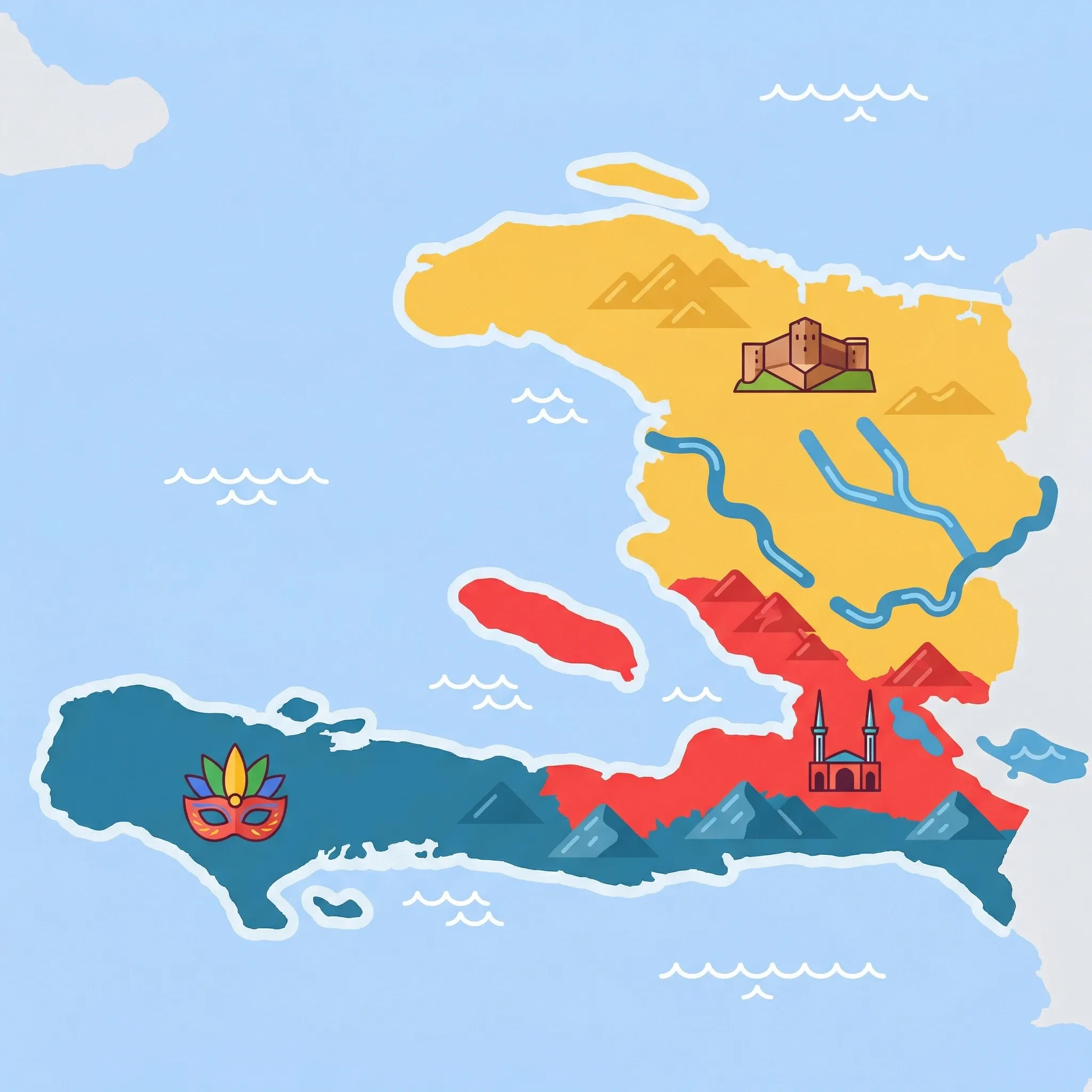
Click a region to explore
⚠️ SAFETY WARNING: Due to ongoing civil unrest and gang activity affecting supply chains and infrastructure, government agencies (including CA, USA, UK, AU, IE, NZ) advise travelers to avoid all travel to Haiti, including the northern regions. While Cap-Haïtien has historically been more stable than Port-au-Prince, the nationwide state of emergency implies significant risk. Families are strongly urged to consult their own government's official travel advisory before considering a trip, as circumstances and risk assessments vary significantly.
Overview
Cap-Haïtien, often referred to as "Le Cap," sits proudly on the northern coast of Haiti, distinct in character and history from the rest of the nation. For families interested in history, this region is the crown jewel of the Caribbean. It was here that the only successful slave revolution in history solidified its power, leaving behind monuments of immense scale and ambition. The architecture in the city center features French colonial ginger-bread houses with narrow balconies and tall shutters, creating an atmosphere that feels suspended in time. The streets are bustling but generally maintain a rhythm different from the chaotic energy of the capital.
The geography of the North is defined by the dramatic Massif du Nord mountain range which plunges into the Atlantic Ocean. This creates a landscape of steep, verdant hills backing beautiful bays. The climate is tropical and humid, with the ocean breeze providing some relief in the coastal towns. For adventurous children, the sheer scale of the landscape—towering mountains crowned with stone fortresses—ignites the imagination. It is a place where history feels tangible, from the cannonballs still stacked at the fortresses to the stories of King Henri Christophe that locals still tell with a mix of reverence and caution.
Key Attractions
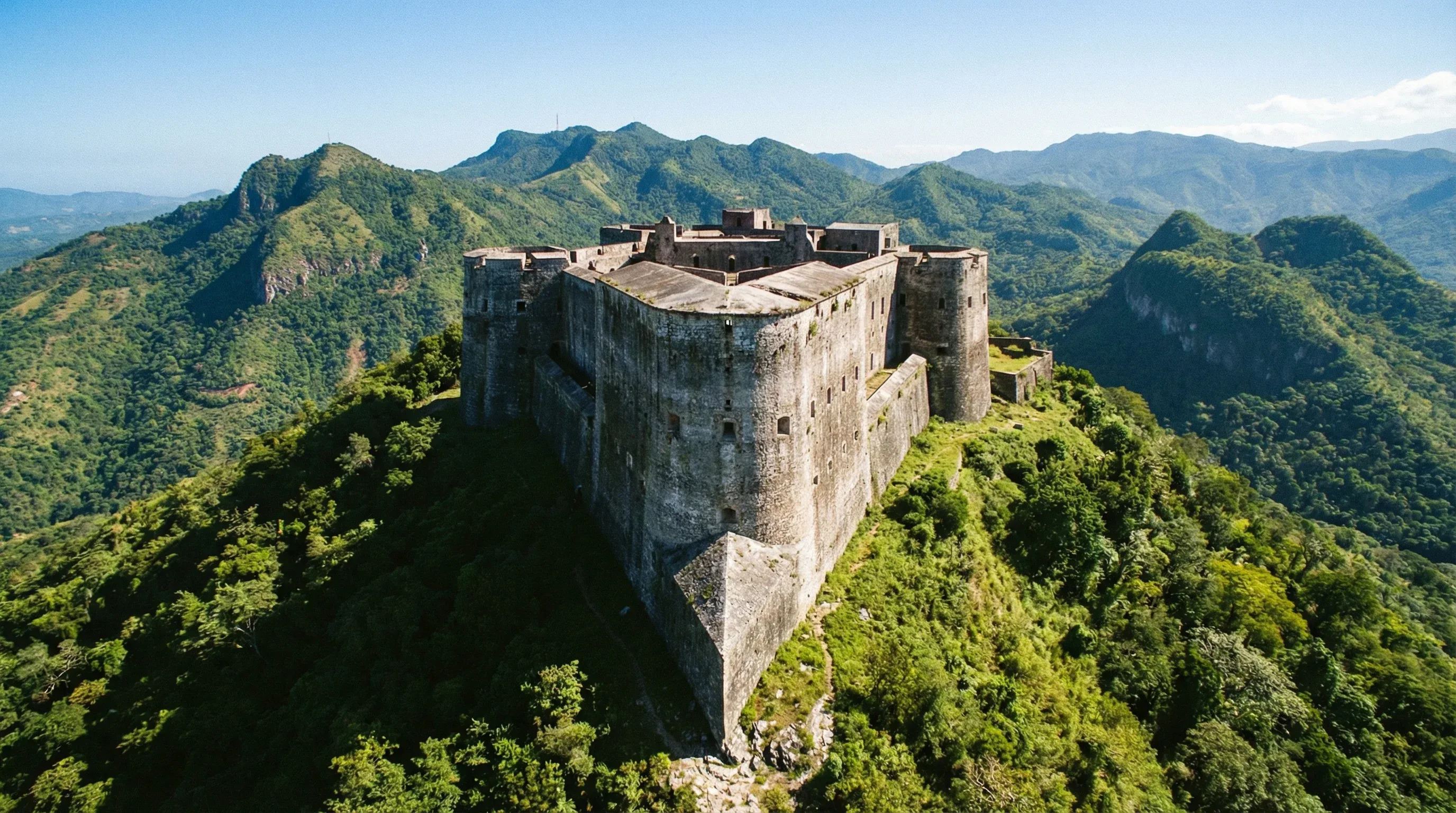
The undisputed highlight of the region, and indeed the entire country, is the Citadelle Laferrière. Perched 900 meters above sea level, this UNESCO World Heritage site is the largest fortress in the Americas. For families, the journey up is part of the adventure; typically, visitors travel to the town of Milot and then ascend the steep mountain path, often on horseback—a thrilling experience for children. The fortress itself is a labyrinth of stone corridors, stockpiles of 19th-century cannons, and sweeping views that, on a clear day, stretch all the way to Cuba. It is a powerful educational site where children can learn about resilience and engineering.
At the foot of the mountain lies the Sans-Souci Palace. Once intended to rival the great palaces of Europe, it was destroyed by an earthquake in 1842, but its ruins remain majestic. Families can walk up the grand staircases and stand in the shell of the royal chapel. The site offers a hauntingly beautiful glimpse into the opulence of Henri Christophe's kingdom. Combining these two sites makes for a full and physically active day trip that immerses visitors in the early 19th-century grandeur of the Haitian Revolution.
Practical Advice
Best time to visit: The dry season from December to April is the most comfortable time to explore, as the hike to the Citadelle can be grueling in the summer heat. Early morning visits are essential to beat the midday sun.
Family logistics: The terrain at the historical sites is steep and uneven; strollers are not practical. Families with small children should opt for hiring horses for the ascent to the Citadelle. Hydration is critical, as shade can be scarce on the mountain trails.
Food & Drink
Typical meal times: Lunch is the main meal of the day, typically served from 12:00 pm to 2:30 pm. Dinner is usually lighter and eaten later, from 7:00 pm to 9:00 pm.
Typical meal costs: A meal at a mid-range tourist-friendly restaurant will cost approximately 1,900–3,300 HTG (approx. $15–25 USD / €14–23 EUR). Street food snacks are much cheaper, around 300–650 HTG (approx. $2.25–5.00 USD / €2.10–4.65 EUR).
Dietary requirements: Vegetarian options are available but can be limited to sides like rice, beans, and plantains (banane pesée). Cashews are a major local crop, so families with nut allergies must be extremely vigilant, as nuts are used in sauces and stews.
Signature dishes:
- Poulet aux Noix – The signature dish of the North, this is chicken slowly simmered in a rich, savory sauce made from locally grown cashew nuts.
- Kasav (Cassava Bread) – Flat, round bread made from yucca flour, often eaten with peanut butter or coconut for breakfast.
- Lambi – Grilled or stewed conch meat, a spicy and chewy seafood delicacy found near the coastal areas.
Why this score?
Visiting the Citadelle requires a steep mountain ascent either on foot or by horseback, offering a rugged experience for active families. The Massif du Nord provides significant off-the-beaten-path potential, though the lack of marked trails and formal tourism infrastructure necessitates local guides. Coastal areas like Amiga Island offer remote beach experiences without the crowds of typical Caribbean resorts.
Why this score?
Medical facilities in Cap-Haïtien are extremely limited and often lack the specialized equipment, medication, and English-speaking staff required for international standards. While basic emergency stabilization may be available, any serious injury or illness would likely necessitate immediate medical evacuation to the United States or the Dominican Republic.
Why this score?
This region is home to Haiti's most famous landmark, the UNESCO-listed Citadelle Laferrière, and the Labadee cruise port. While Labadee brings thousands of visitors to a private enclave, stay-over international tourism remains a niche market focused on the historic center of Cap-Haïtien. Overall visitor numbers are low compared to global standards due to ongoing national travel advisories.

Due to inflation and reliance on imports, prices can be higher than expected for the Caribbean. A comfortable family hotel costs 13,000–20,000 HTG (approx. $100–150 USD / €92–140 EUR) per night. Entry to the <a data-attraction-id="49809">Citadelle Laferrière</a> involves a fee plus the cost of horse rentals, roughly 3,300–6,600 HTG (approx. $25–50 USD / €23–46 EUR) per person depending on negotiation.

Getting Here & Around
Getting Here
- Airports – Cap-Haïtien International Airport (CAP) is the primary gateway. It receives some international flights (primarily from Florida) and domestic connections. This is the safest way to enter the region, bypassing the dangerous roads from the capital.
- Driving – WARNING: Driving from Port-au-Prince to Cap-Haïtien involves passing through gang-controlled territories (such as Canaan). This route is currently considered extremely dangerous and should be avoided by tourists.
Getting Around
- Private Driver – The only recommended method for families. Hiring a trusted local driver with a reliable vehicle (preferably an SUV for the mountain roads to Citadelle Laferrière) ensures safety and navigation aid.
- Moto-Taxi – Ubiquitous but dangerous due to lack of helmets and erratic traffic. Not recommended for children.
- Walking – The historic center of Cap-Haïtien is walkable during daylight hours, but caution is advised regarding personal security.
Nearby Airports (1 airport)
Hugo Chavez International Airport
CAPCap Haitien
View full flight map for Haiti →
Official Links

Packing List
Electricity is intermittent even in hotels; solar backup ensures phones stay charged.
The path to the Citadelle is steep, cobbled, and often slippery; sneakers may not suffice.
Heat exhaustion is a risk on the mountain climbs, and local pharmacies may be understocked.
ATMs are unreliable; $1 and $5 bills are essential for tipping and small purchases.
Cholera is a risk and bottled water may not always be available in emergencies.
ATMs are unreliable or empty; USD is widely accepted for essential payments.
Malaria and Zika are present, and accommodation may not have adequate screening.
Cellular networks can fail during unrest; essential for emergency coordination in remote areas.
Street lighting is non-existent in many areas and indoor power is unreliable.

Activities & Best Times

Hiking, wildlife, outdoor exploration, ecotourism
Home to the UNESCO-listed Citadelle Laferrière and vast national parks, the region provides world-class hiking and ecological immersion. The drier months are peak for trekking to avoid the heavy tropical rains that make mountain trails muddy and difficult in May and autumn.

Urban tourism, museums, historical sites, architecture
Cap-Haïtien is the cultural soul of Haiti, featuring significant historic sites like the Sans-Souci Palace and iconic cathedrals. The winter months offer the most comfortable walking temperatures for exploring these monumental urban landmarks without extreme humidity.

Beach resorts, marine activities: diving, snorkelling, kite surfing, wind surfing, sailing
The region offers high-quality coastal experiences like Amiga Island and Cormier Plage, though infrastructure is more limited than major Caribbean hubs. Peak visitation aligns with the drier winter months when sea conditions are calm and underwater visibility is optimal for snorkeling.

Scenic drives, countryside tours, route-based travel
Scenic drives through the Massif du Nord and along the Atlantic coast offer spectacular views but are hindered by variable road quality. Travel is best during the dry season to ensure road stability and visibility, particularly on mountain passes.

Sport tourism, fitness activities, active recreation
Activity is centered around significant hiking routes like the trail to the Citadelle, which requires a degree of fitness and provides authentic historical context. Peak months provide the safest and most enjoyable conditions for these strenuous uphill routes.




Public Holidays & Calendar Next 12 months
Public holidays, festivals, cultural celebrations, and seasonal natural phenomena coming up in Cap-Haïtien & North over the next 12 months.
Loading holidays and events...

Travel Advisory
All major agencies have issued their highest warning level for Haiti, citing a complete breakdown of security, pervasive gang violence, and high rates of kidnapping. Travellers are advised to avoid the country entirely and those already present are urged to depart immediately.
Safety Topics
Traveller Advice (4 groups)

Missionaries have been victims of high-profile kidnappings. Religious organizations should reconsider any presence due to targeted criminal threats.

Female visitors, particularly those driving alone, are frequently targeted for carjackings and robberies. There is a high risk of sexual violence in areas with limited police presence.

While not legally prohibited, same-sex relationships face significant public hostility and social stigma, potentially leading to harassment or physical assault.

Aid workers are specifically targeted by criminal groups for kidnapping for ransom due to perceived access to organizational funds.
Agency Summaries
Gangs have overrun major infrastructure, including prisons and airports. Security forces have limited capacity to respond to emergencies, making all areas of the country high-risk.
Australians are urged to leave if they can do so safely. Essential resources like fuel and water are in critically short supply, and gang violence has paralyzed major transport routes.
The security landscape is extremely volatile. With no active UK consular staff on the ground, emergency assistance is essentially unavailable to British nationals in the country.
High risk of violent crime including homicide, sexual assault, and carjacking. Kidnapping is common, targeting foreign nationals and residents alike. US government employees face strict travel restrictions and night curfews.
Irish citizens are warned against all travel due to the collapse of public safety. Diplomatic support is limited as there is no local Irish embassy.
Travel is extremely hazardous due to systemic gang control, frequent kidnappings, and widespread political instability. Civil order is severely compromised, and there is a state of emergency across multiple regions.
Information is provided for general guidance only and does not constitute travel, safety, medical, or legal advice. Conditions may change. Users are responsible for independently verifying information before travel.