
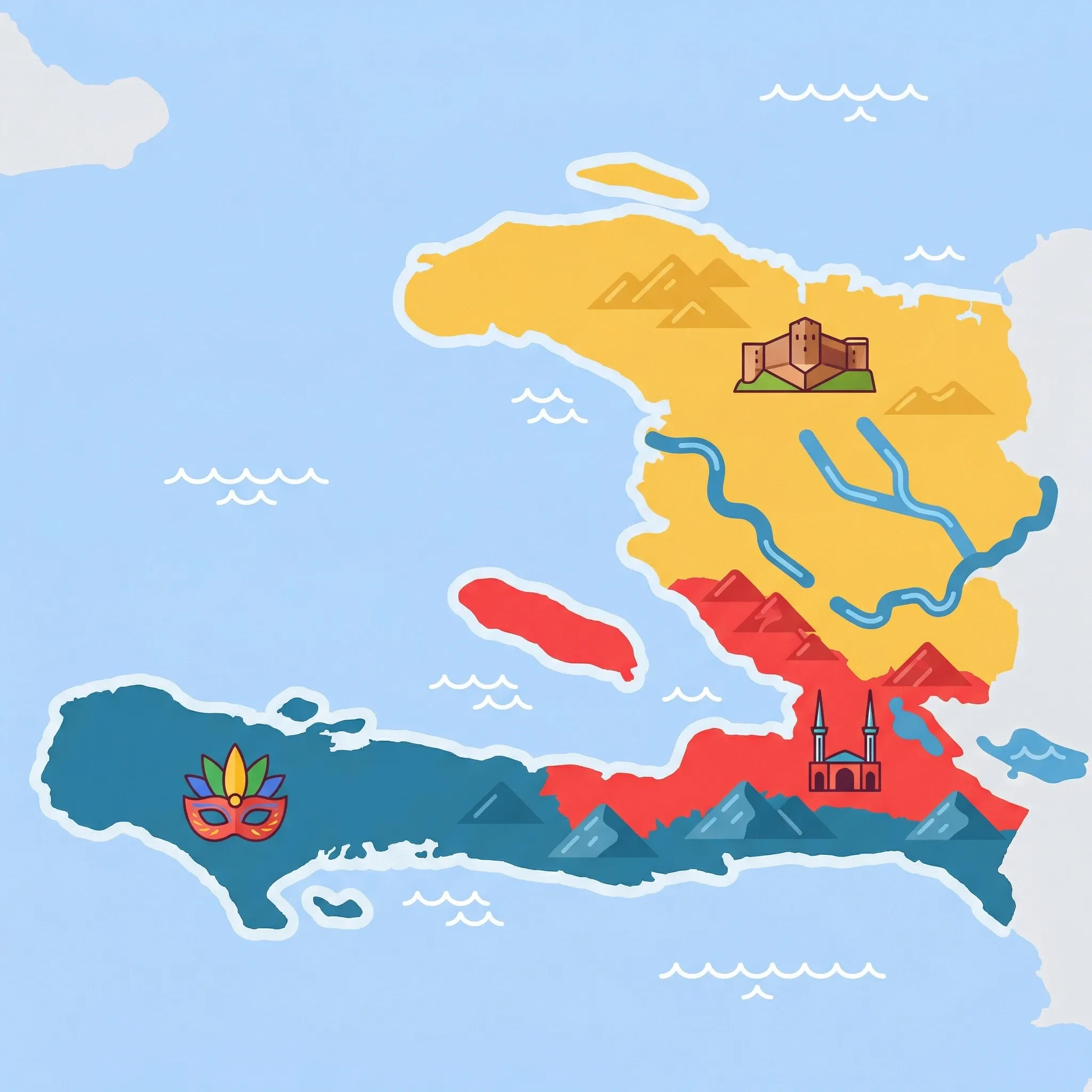
Click a region to explore
⚠️ SAFETY WARNING: Government agencies (including CA, USA, UK, AU, IE, NZ) advise travelers to avoid all travel to Jacmel and the south. While the region itself is often calmer than the capital, the main road connecting it to Port-au-Prince (Route Nationale 2) passes through Martissant, an area under strict gang control where kidnapping and violence are prevalent. Safe overland access is currently impossible for tourists, and emergency services are non-functional.
Overview
Jacmel is widely considered the artistic capital of Haiti. Sitting on the southern coast, it feels worlds away from the frenetic energy of Port-au-Prince. The town is famous for its French colonial architecture, specifically the coffee barons' mansions from the turn of the 20th century, which feature intricate cast-iron pillars and balconies reminiscent of New Orleans. For families, the town serves as a living open-air museum where art is everywhere—mosaic walls line the boardwalk, and artisan shops overflow with colorful papier-mâché masks, a signature craft of the region. The vibe here is creative, resilient, and deeply proud.
Geographically, the South is defined by its contrast between the calm Caribbean Sea and the steep mountains that rise immediately behind the coast. This topography creates hidden gems like waterfalls and grottos tucked away in the lush vegetation. The region is greener and more agriculturally dense than other parts of the country. For children, the environment offers a mix of cultural discovery in the town and jungle adventure in the hills. The beaches here are often pebbly or black sand, different from the white sands of the north, but the water is warm and inviting.
Key Attractions
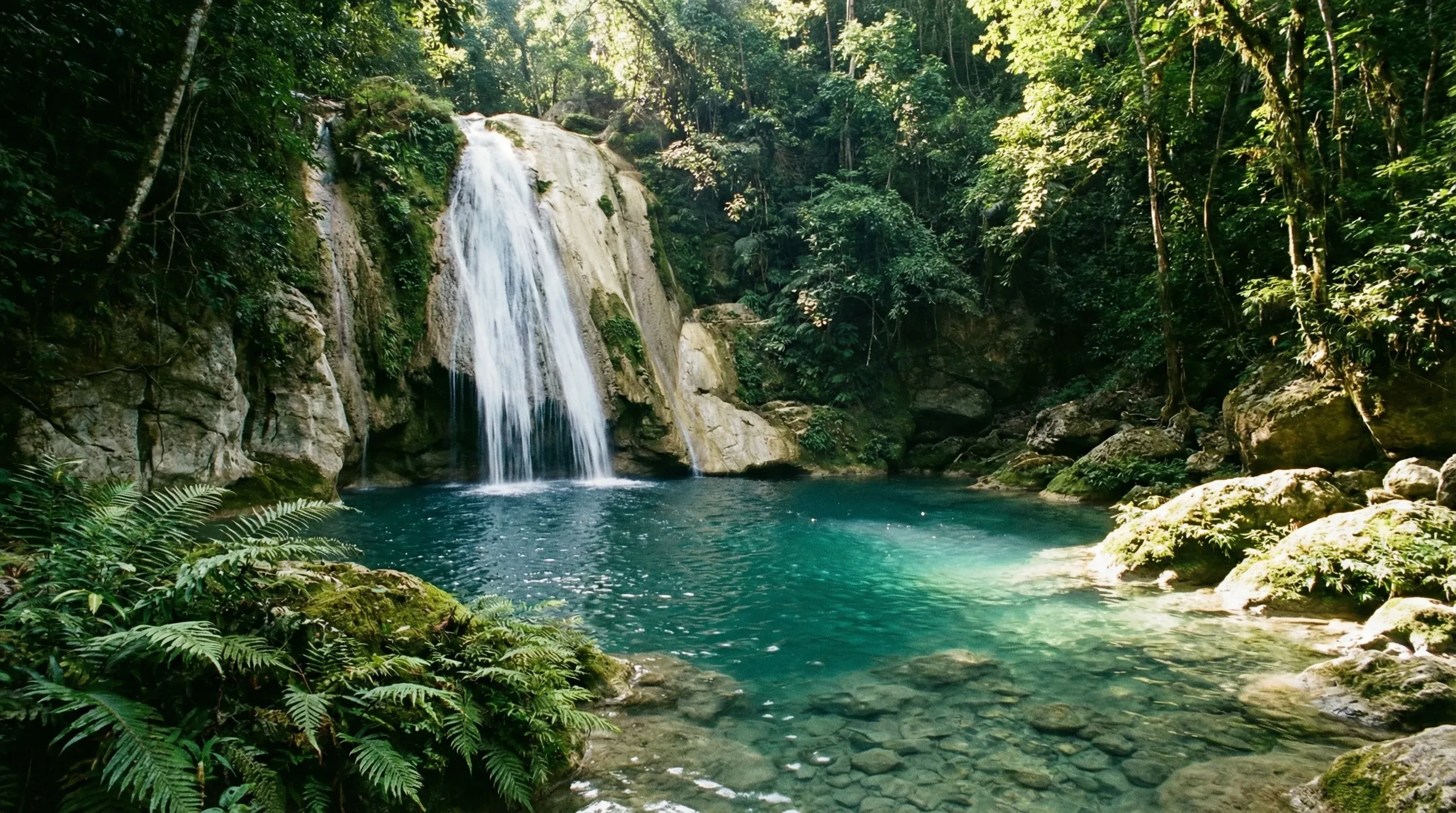
The absolute must-visit natural wonder in this region is Bassin Bleu. Located in the hills above Jacmel, this series of cobalt-blue pools is linked by waterfalls and surrounded by smooth rocks and hanging ferns. Reaching the main pool involves a short hike and a descent with ropes (guides are essential), which adventurous older children find exhilarating. The water is cool and refreshing, perfect for swimming away from the coastal heat. Local legends say water nymphs live in the caves, adding a layer of magic to the visit for younger travelers.
In Jacmel town itself, the boardwalk (Promenade du Bord de Mer) and the endless artisan workshops are the main draw. Families can visit studios where huge, fantastical carnival masks are created. While not a specific "site," the Bassin Bleu experience is often paired with a tour of these cultural workshops, giving families a balance of nature and art.
Practical Advice
Best time to visit: The climate is tropical. February is traditionally the most vibrant time due to the Jacmel Carnival, which is distinctively artistic and family-friendly compared to others, though safety conditions dictate whether this is viable.
Family logistics: The hike to Bassin Bleu requires moderate fitness and is not suitable for toddlers unless carried. Life jackets are usually available for rent at the falls and are recommended for children.
Food & Drink
Typical meal times: Breakfast is early (7:00 am to 9:00 am), often featuring coffee, for which the region is famous. Lunch is 12:00 pm to 2:00 pm, and dinner is 6:00 pm to 8:00 pm.
Typical meal costs: Dining in Jacmel is generally cheaper than in the capital. A family meal runs 1,300–2,600 HTG (approx. $10–20 USD / €9–18 EUR) per person. Beachside shacks serve fresh seafood for 650–1,300 HTG (approx. $5–10 USD / €4.50–9 EUR).
Dietary requirements: Seafood is the staple here. Vegetarians can find rice, beans, and salad, but vegan options are rare. Gluten-free travelers can rely on the abundance of fresh fruit, yam, and plantain.
Signature dishes:
- Soup Joumou – While eaten nationally on Independence Day, the pumpkin soup here is rich and flavorful, a symbol of freedom.
- Grilled Lobster/Fish – Fresh from the Caribbean, usually seasoned with lime and hot pepper (piment), served with fried plantains.
- Jacmel Coffee – Not a meal, but the local coffee is world-renowned; distinctively strong and often sweetened with cane sugar.
Why this score?
The south is home to Pic Macaya National Park, one of the most remote and biodiversity-rich wilderness areas in the Caribbean, requiring serious hiking to explore. Reaching attractions like the hidden turquoise pools of Bassin Bleu involves navigating poorly maintained roads and rugged forest trails. The current difficulty of logistics and the lack of developed guest facilities make it a high-adventure destination.
Why this score?
Healthcare infrastructure in the southern peninsula is minimal and frequently faces shortages of basic supplies and reliable electricity. Most facilities are primary care clinics with very few options for advanced trauma care or pediatric specialties. Foreign visitors are at significant risk if a medical emergency occurs, as access to the capital's better hospitals is often blocked by regional instability.
Why this score?
Jacmel is renowned for its Victorian architecture and vibrant arts scene, but international tourism has plummeted due to security risks on the main roads connecting it to the capital. It currently attracts very few foreign visitors, mostly consisting of intrepid cultural travelers and humanitarian workers. The region's natural attractions, like Bassin Bleu, remain stunning but are visited by only a handful of international tourists annually.

Jacmel is generally more affordable than Port-au-Prince or the North. Hotel rates for families range from 9,000–16,000 HTG (approx. $70–120 USD / €65–110 EUR). Guide fees for <a data-attraction-id="26198">Bassin Bleu</a> are negotiable but expect to pay around 1,300–2,000 HTG (approx. $10–15 USD / €9–14 EUR) per person, plus tips.

Getting Here & Around
Getting Here
- Airports – Jacmel has a small airport (JAK), but it largely handles charter flights. Domestic scheduled flights are irregular. Flying is the only potentially safe way to bypass the gang-controlled roads from the capital.
- Driving – WARNING: Access via Route Nationale 2 from Port-au-Prince passes through Martissant, a notorious choke-point controlled by armed gangs. Kidnapping risk is extreme. Overland travel is currently impossible for tourists.
- Ferry – Occasional boat services may run from other coastal points, but these are unregulated and safety standards vary wildly.
Getting Around
- Walking – The historic center of Jacmel is compact and best explored on foot to appreciate the architecture and artisan shops.
- Moto-Taxi – The primary mode of local transport. Fast but dangerous; generally not recommended for families.
- 4x4 Vehicle – Essential for reaching Bassin Bleu, as the mountain roads are unpaved, steep, and rocky.
Nearby Airports (1 airport)
Les Cayes Airport
CYALes Cayes
View full flight map for Haiti →

Packing List
Essential for Bassin Bleu as the rocks are slippery and the riverbed is uneven.
You will get wet at the waterfalls, and you'll want photos of the blue water.
Many guesthouses are open-air; a net is crucial for protection against malaria/dengue.
Street lighting is non-existent in many areas and power cuts are frequent.
Electricity blackouts are frequent and can last for days; keep devices charged for communication.
Cholera is a risk and bottled water may not always be available in emergencies.
ATMs are unreliable or empty; USD is widely accepted for essential payments.
Malaria and Zika are present, and accommodation may not have adequate screening.
Cellular networks can fail during unrest; essential for emergency coordination in remote areas.
Street lighting is non-existent in many areas and indoor power is unreliable.

Activities & Best Times

Hiking, wildlife, outdoor exploration, ecotourism
Home to the Pic Macaya National Park and the turquoise pools of Bassin Bleu, the region offers exceptional biodiversity and karst landscapes. Winter provides the stable weather necessary for mountain trekking, whereas peak rain in May and October makes trails hazardous.

Urban tourism, museums, historical sites, architecture
Jacmel is a cultural treasure known for its unique 'Gingerbread' architecture and a thriving artisan community centered around papier-mâché and painting. The peak season centers on the cooler winter months and the vibrant pre-Lenten atmosphere.

Beach resorts, marine activities: diving, snorkelling, kite surfing, wind surfing, sailing
The region features stunning Caribbean coastlines at Port-Salut and Raymond-les-Bains, offering authentic tropical beauty. Peak months align with the winter dry season and July's warmer waters, while autumn is avoided due to hurricane risks and peak rainfall.

Events, celebrations, seasonal attractions
Jacmel Carnival is nationally significant and draws regional tourism from the Caribbean diaspora. While not at the international scale of Trinidad or Rio, it's a genuine cultural event worthy of 'good' status once the festival attraction is added to the database.

Scenic drives, countryside tours, route-based travel
The Route de l'Amitié and the coastal drive to Port-Salut offer dramatic mountain and ocean vistas for adventurous drivers. Travel is best during the dry season to ensure safe passage on winding mountain roads that become treacherous during heavy rainfall.




Public Holidays & Calendar Next 12 months
Public holidays, festivals, cultural celebrations, and seasonal natural phenomena coming up in Jacmel & South over the next 12 months.
Loading holidays and events...

Travel Advisory
All major agencies have issued their highest warning level for Haiti, citing a complete breakdown of security, pervasive gang violence, and high rates of kidnapping. Travellers are advised to avoid the country entirely and those already present are urged to depart immediately.
Safety Topics
Traveller Advice (4 groups)

Missionaries have been victims of high-profile kidnappings. Religious organizations should reconsider any presence due to targeted criminal threats.

Female visitors, particularly those driving alone, are frequently targeted for carjackings and robberies. There is a high risk of sexual violence in areas with limited police presence.

While not legally prohibited, same-sex relationships face significant public hostility and social stigma, potentially leading to harassment or physical assault.
Aid workers are specifically targeted by criminal groups for kidnapping for ransom due to perceived access to organizational funds.
Agency Summaries
Gangs have overrun major infrastructure, including prisons and airports. Security forces have limited capacity to respond to emergencies, making all areas of the country high-risk.
Australians are urged to leave if they can do so safely. Essential resources like fuel and water are in critically short supply, and gang violence has paralyzed major transport routes.
The security landscape is extremely volatile. With no active UK consular staff on the ground, emergency assistance is essentially unavailable to British nationals in the country.
High risk of violent crime including homicide, sexual assault, and carjacking. Kidnapping is common, targeting foreign nationals and residents alike. US government employees face strict travel restrictions and night curfews.
Irish citizens are warned against all travel due to the collapse of public safety. Diplomatic support is limited as there is no local Irish embassy.
Travel is extremely hazardous due to systemic gang control, frequent kidnappings, and widespread political instability. Civil order is severely compromised, and there is a state of emergency across multiple regions.
Information is provided for general guidance only and does not constitute travel, safety, medical, or legal advice. Conditions may change. Users are responsible for independently verifying information before travel.