

Heard Island and McDonald Islands
Territory of Heard Island and McDonald Islands
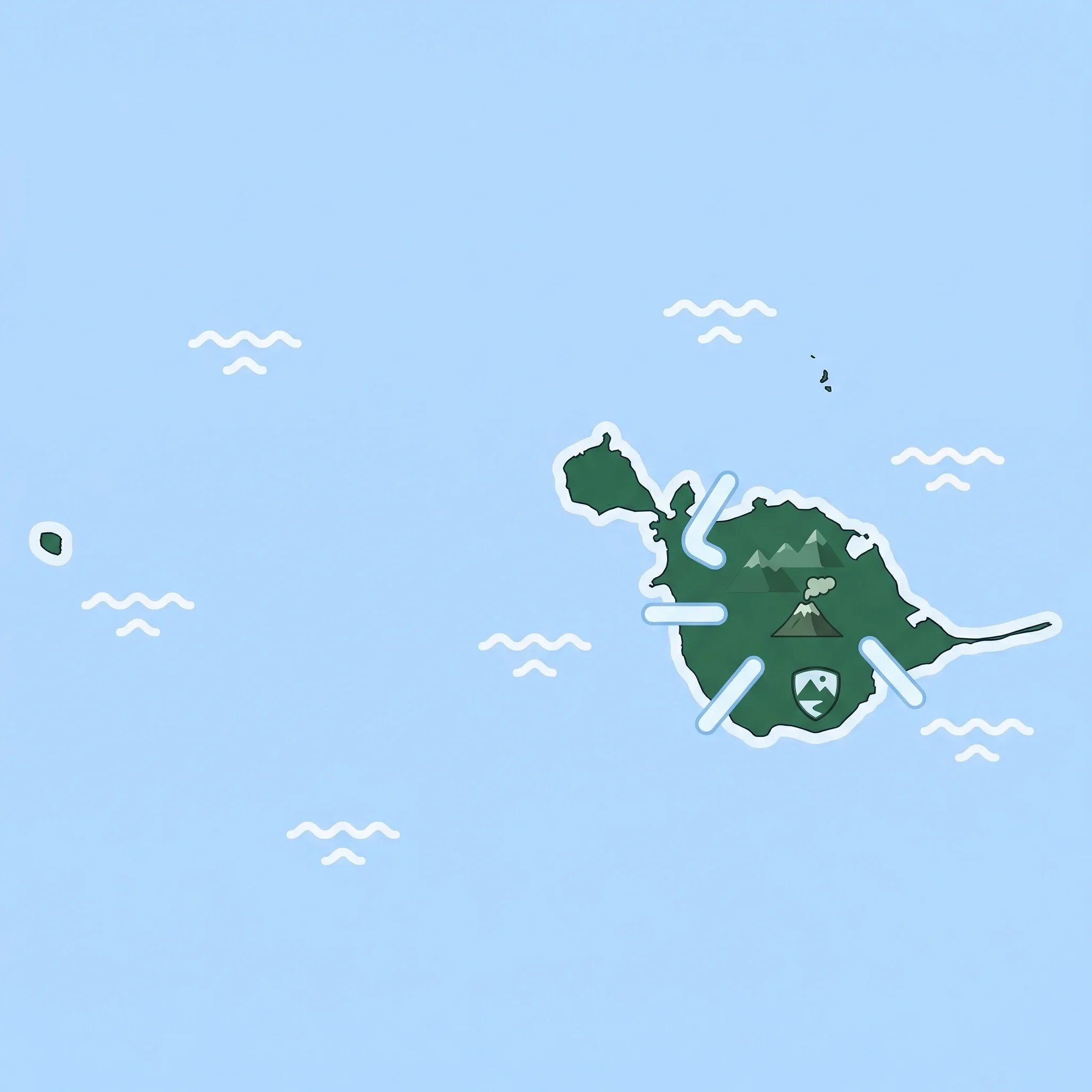
Located in the furious Southern Ocean, approximately 4,000 kilometres southwest of Perth, Heard Island & McDonald Islands is a destination that defies standard travel descriptions. There are no hotels, no roads, and no permanent inhabitants-only the raw, overpowering force of nature. For families with older children or teenagers who are passionate about science, wildlife, and adventure, a journey here is the pinnacle of exploration. The territory consists of the massive, ice-covered Heard Island, dominated by the active volcano Big Ben, and the smaller, rocky McDonald Islands. It is a UNESCO World Heritage site recognized for its pristine ecosystem, where nature evolves without human interference.
Traveling here requires joining a specialized expedition cruise, often spending two weeks crossing some of the roughest seas on the planet. The reward is a landscape of black volcanic sand, bluish-white glaciers that tumble into the ocean, and a cacophony of wildlife that has no fear of humans because they see them so rarely. It is a place to teach children about resilience, geology, and the delicate balance of our global climate. While landings are strictly controlled and weather-dependent, even viewing the islands from the deck of a ship is a majestic experience that few humans ever enjoy.
Key Attractions
Mawson Peak (Big Ben) is the centerpiece of Heard Island and the highest mountain in Australian territory, standing at 2,745 metres. Unlike the dormant peaks of the mainland, Big Ben is an active volcano that frequently emits smoke and ash, creating a dramatic contrast against the surrounding glaciers. Seeing the white cone rise out of the Southern Ocean mist is a moment of awe for any traveler.
Atlas Cove is the main historical site on the island, where the remains of the ANARE station (occupied in the 1940s and 50s) still stand, slowly succumbing to the elements. It is also a prime location for viewing wildlife. Families can see vast colonies of penguins-King, Gentoo, Macaroni, and Rockhopper-as well as massive Southern Elephant Seals moulting on the beaches. The density of wildlife here rivals South Georgia, offering unparalleled photography and observation opportunities.
The McDonald Islands, located about 44 kilometres to the west, are a separate group of small, rocky volcanic islands. They have doubled in size in recent decades due to volcanic eruptions, making them one of the few places on Earth where new land is actively being created. While landings here are almost never permitted due to their strict scientific protection, cruising past them provides a fascinating lesson in geology in action.
Practical Advice
Visiting Heard Island & McDonald Islands is a major logistical undertaking. The only access is by sea, typically on long-haul expedition cruises departing from Australia (Fremantle or Hobart) or South Africa. The best (and only) time to visit is during the austral summer, from November to March, when sea ice is minimal and temperatures hover around 0°C to 5°C. All visitors require a permit from the Australian Antarctic Division, which is usually arranged by the tour operator. Comprehensive medical evacuation insurance is mandatory and critical, as there are no medical facilities on the islands and help is days away.
Food & Drink
Typical meal times: 7:30 am to 9:00 am (Breakfast), 12:30 pm to 1:30 pm (Lunch), 7:00 pm to 8:30 pm (Dinner) – Dictated by ship schedule.
Typical meal costs: 0 AUD (approx. $0 USD / €0 EUR) – All meals are included in the expedition cruise fare. There is no local economy.
Dietary requirements: Expedition ships are generally very accommodating of dietary needs (vegetarian, gluten-free, dairy-free) provided they are notified well in advance of departure. Fresh produce may become limited towards the end of the voyage.
Family-friendly dining: Dining is communal in the ship’s mess. While there are no specific children's menus, chefs can often prepare simpler meals (pasta, grilled chicken) for younger palates upon request. Highchairs are rarely available.
Signature dishes:
- Expedition Roast Dinner – A celebratory meal often served by the ship's galley to mark the successful crossing of the Southern Ocean or a safe landing.
- Hot Cocoa on Deck – A warming staple served to guests returning from zodiac cruises in the freezing sub-Antarctic air.
- Freshly Baked Ship Bread – With no bakeries for thousands of miles, the ship's daily fresh bread becomes a highlight of the culinary experience.
- Sustainably Caught Toothfish – Occasionally served on Antarctic vessels as a regional specialty, sourced from strictly managed fisheries in the Southern Ocean.
Safety
This is an extreme environment. The Southern Ocean is known for the "Furious Fifties" winds and massive swells. Sea sickness is common; families should come prepared with prescription medication. On land, the weather changes instantly-sunny skies can turn to blizzard conditions in minutes. Strict biosecurity rules apply to prevent the introduction of alien species; all clothing and gear must be vacuumed and scrubbed before landing.

A family voyage here is a significant investment. Costs for expedition cruises typically range from 25,000–45,000 AUD (approx. $16,000–29,000 USD / €15,000–27,000 EUR) per person depending on the cabin and itinerary length. There are no local costs as the islands are uninhabited; all accommodation, meals, and transport are included in the cruise fare.
Age Suitability





Why this score?
The islands offer an extreme adventure environment characterized by an active volcano, massive glaciers, and the notoriously violent weather of the Southern Ocean's 'Furious Fifties.' With no man-made infrastructure and a landing process that is often dangerous or impossible due to heavy swell, it represents the ultimate challenge for expedition travelers.
Why this score?
There are no medical facilities or permanent inhabitants on the islands, making professional healthcare completely non-existent on-site. In the event of an emergency, travelers are entirely dependent on their vessel's limited infirmary and face a multi-day journey across treacherous seas to reach the nearest hospital in Australia.
Why this score?
Heard Island is one of the most remote places on Earth, receiving almost zero international tourists due to its extreme isolation and strict environmental protections. Access is limited to rare, permit-only scientific expeditions or highly specialized private voyages, resulting in years where no humans set foot on the islands at all.
This is one of the most expensive travel destinations on earth due to the logistics involved. A berth on a sub-Antarctic expedition cruise typically costs between $25,000–45,000 AUD (approx. $16,500–29,500 USD / €15,000–27,000 EUR) per person for a 3-week voyage. There are no local costs as there is no economy on the island.

Getting There & Around
Getting There
- By Sea – The only way to reach Heard Island & McDonald Islands is by expedition ship. Voyages typically depart from Fremantle (Western Australia), Hobart (Tasmania), or Cape Town (South Africa). The crossing takes approximately 10–14 days each way across the Southern Ocean.
- Entry Requirements – Although it is an Australian territory, a valid passport and a specific entry permit from the Australian Antarctic Division are required. These are strictly controlled and usually secured by the tour operator. Check your government website for the latest visa requirements, or use the IATA Travel Centre entry-requirements checker.
Getting Around
- Zodiacs – The primary mode of transport for getting from the ship to the shore. These heavy-duty inflatable boats are used for wet landings and coastal cruising to see wildlife up close.
- Walking – Once ashore, travel is entirely on foot. There are no vehicles or paths. Visitors must stick to designated zones to protect the fragile vegetation and nesting birds. Walking can be difficult on loose volcanic sand or scree.
- Ship – For moving between Heard Island & McDonald Islands, you will remain on your expedition vessel. The McDonald Islands are usually only viewed from the ship due to their protected status.

Packing List
The Southern Ocean is the roughest on Earth; over-the-counter meds often fail here.
Essential for protecting cameras and electronics from saltwater spray on Zodiac rides.
The cold sub-Antarctic air drains batteries twice as fast as normal.
The glare from the glaciers and ocean can be blinding even on cloudy days.
Required for wearing inside the rubber muck boots provided by the ship for wet landings.

Public Holidays & Calendar Next 12 months
Public holidays, festivals, cultural celebrations, and seasonal natural phenomena coming up in Heard Island and McDonald Islands over the next 12 months.
Loading holidays and events...

Travel Advisory
The territory is considered extremely safe from a security perspective, though it presents significant environmental and logistical hazards. All major agencies provide a baseline safety rating consistent with the sovereign nation of Australia.
Safety Topics
Traveller Advice (2 groups)

Leisure tourism is virtually non-existent and discouraged due to the extreme isolation and the status of the islands as a protected nature reserve. There are no permanent residents or commercial services available.

Visitors must be entirely self-sufficient, as there is no local infrastructure or support. All expeditions must secure prior authorization from the Australian Antarctic Division and prepare for multi-week sea voyages in treacherous conditions.
Agency Summaries
Ireland advises its citizens to follow standard security measures when visiting Australian territories. No specific warnings or heightened security alerts are listed for these remote sub-Antarctic islands.
The Australian government manages this territory through the Antarctic Division. There is no resident population and no tourism industry. Access is strictly controlled, requiring special permits for scientific or research expeditions due to the fragile environment and extreme hazards.
The Canadian government considers the sovereign territory of Australia, which includes these remote islands, to be a low-risk destination. While no specific advisory exists for the uninhabited territory, standard safety precautions are recommended for the region.
New Zealand authorities maintain a baseline safety rating for the region. Travellers are encouraged to be aware of the extreme environmental conditions and the remote nature of the islands when planning visits.
British officials do not have specific travel restrictions for this Australian external territory. The general safety assessment for Australia applies, meaning no elevated risk warnings are currently in effect.
United States authorities categorize Australia and its associated territories as Level 1, indicating a stable security environment. Visitors should maintain standard awareness as they would in any international destination.
Information is provided for general guidance only and does not constitute travel, safety, medical, or legal advice. Conditions may change. Users are responsible for independently verifying information before travel.