

Overview
Honduras offers a raw, authentic Central American experience that feels far less manicured than its neighbors. For families with a sense of adventure, it provides an incredible classroom of history and nature. The country is roughly divided into the mountainous interior, the Mayan heritage of the west, and the laid-back Caribbean coast. While the mainland cities of Tegucigalpa and San Pedro Sula are primarily transit points, the regions of Copán Ruins & West and the Roatán & Bay Islands are world-class destinations in their own right.
The cultural heartbeat of the country varies by region. In the west, the legacy of the Maya is palpable in the stone temples and cobblestone streets. On the north coast and islands, the Garifuna culture brings a vibrant Afro-Caribbean rhythm, with coconut-based cuisine and traditional drumming. For children, the immediate access to nature is the biggest draw-whether it's snorkeling off the Mesoamerican Barrier Reef or spotting monkeys in the canopy of La Ceiba & North Coast.
Key Attractions
The undisputed highlight for history-loving families is the Copán Archaeological Site. Unlike the towering pyramids of Tikal, Copán is famous for its intricate stone carvings and the Hieroglyphic Stairway. It is compact and manageable for little legs, and the resident scarlet macaws add a splash of colour kids will love. Don't miss the nearby Museum of Mayan Sculpture to see the preserved originals of the stelae.
For aquatic adventures, the Bay Islands are legendary. At the Roatán Institute for Marine Sciences, families can learn about marine conservation and interact with dolphins in a natural lagoon setting. On the mainland near La Ceiba, Pico Bonito National Park offers accessible hiking trails through lush rainforests and waterfalls. More active families can try whitewater rafting on the Cangrejal River, which features huge boulders and crystal-clear water.
If you find yourself in the capital, the Chiminike (Centro Interactivo de Enseñanza Chiminike) is a fantastic, modern children's museum that rivals any in North America, offering interactive exhibits on the human body, the environment, and Honduran culture. Nearby, Parque Nacional La Tigra provides a cool, misty escape into the cloud forest with trails suitable for older children.
Practical Advice
The dry season (December to April) is the best time to visit, ensuring clear waters for snorkeling and dry paths for ruins. Spanish is the official language, though English is widely spoken in the Bay Islands. The currency is the Lempira (HNL), though US dollars are accepted in many tourist areas. Visa Note: While US and EU citizens typically receive a 90-day entry, UK citizens currently require a visa obtained in advance-always verify the latest rules before booking.
Food & Drink
Typical meal times: Breakfast is early, from 6:30 am to 9:00 am. Lunch is the main meal, served 12:00 pm to 2:00 pm. Dinner is usually eaten between 6:30 pm and 8:00 pm.
Typical meal costs: Street food (Baleadas) costs 25–60 HNL (approx. $1–2.50 USD / €0.90–2.20 EUR). A mid-range restaurant meal runs 250–500 HNL (approx. $10–20 USD / €9–18 EUR).
Dietary requirements: Vegetarian options are easy to find thanks to the staple diet of beans, eggs, and cheese. Gluten-free travelers should stick to corn tortillas but must ask if wheat flour is used (especially in baleadas, which are wheat-based). Nut allergies are relatively rare in local cuisine, but always check.
Family-friendly dining: Honduran dining is casual and welcoming to children. Comedores (small family-run eateries) offer simple, familiar foods like grilled chicken, rice, and plantains that most kids accept easily.
Signature dishes:
- Baleada – A thick flour tortilla folded over refried beans, queso duro (salty cheese), and mantequilla (sour cream). You can add eggs, avocado, or meat. The ultimate Honduran comfort food.
- Sopa de Caracol – A rich, coconut milk-based soup with conch meat, yucca, plantains, and spices. Sweet and savoury.
- Plato Típico – A breakfast sampler with eggs, beans, cheese, fried plantains, tortillas, and sometimes sausage or steak.
- Anafre – A refried bean and cheese dip served bubbling hot in a clay pot with fresh tortilla chips, often served as a shared appetizer.
Safety
Safety is the primary concern for family travel here. Do not walk around cities like Tegucigalpa or San Pedro Sula at night. When traveling between cities, use reputable luxury bus lines (like Hedman Alas) or private shuttles/flights rather than "chicken buses." The Bay Islands and Copán Ruinas are significantly safer than the major mainland cities but petty theft can still occur. Always keep valuables out of sight.
Family Travel Notice
Minors travelling alone or with only one parent must provide a notarized letter of consent in Spanish from the non-travelling legal guardians to enter or exit the country.

Honduras is very affordable. A family of four can eat well for 800–1,200 HNL (approx. $32–48 USD / €30–45 EUR). Mid-range hotels in tourist zones range from 1,800–3,500 HNL (approx. $70–140 USD / €65–130 EUR) per night. The Bay Islands are pricier than the mainland, with costs closer to US averages.
Age Suitability





Did you know? Honduras welcomes approximately 844,000 international visitors per year. Most visitors come from Americas.

Explore Regions
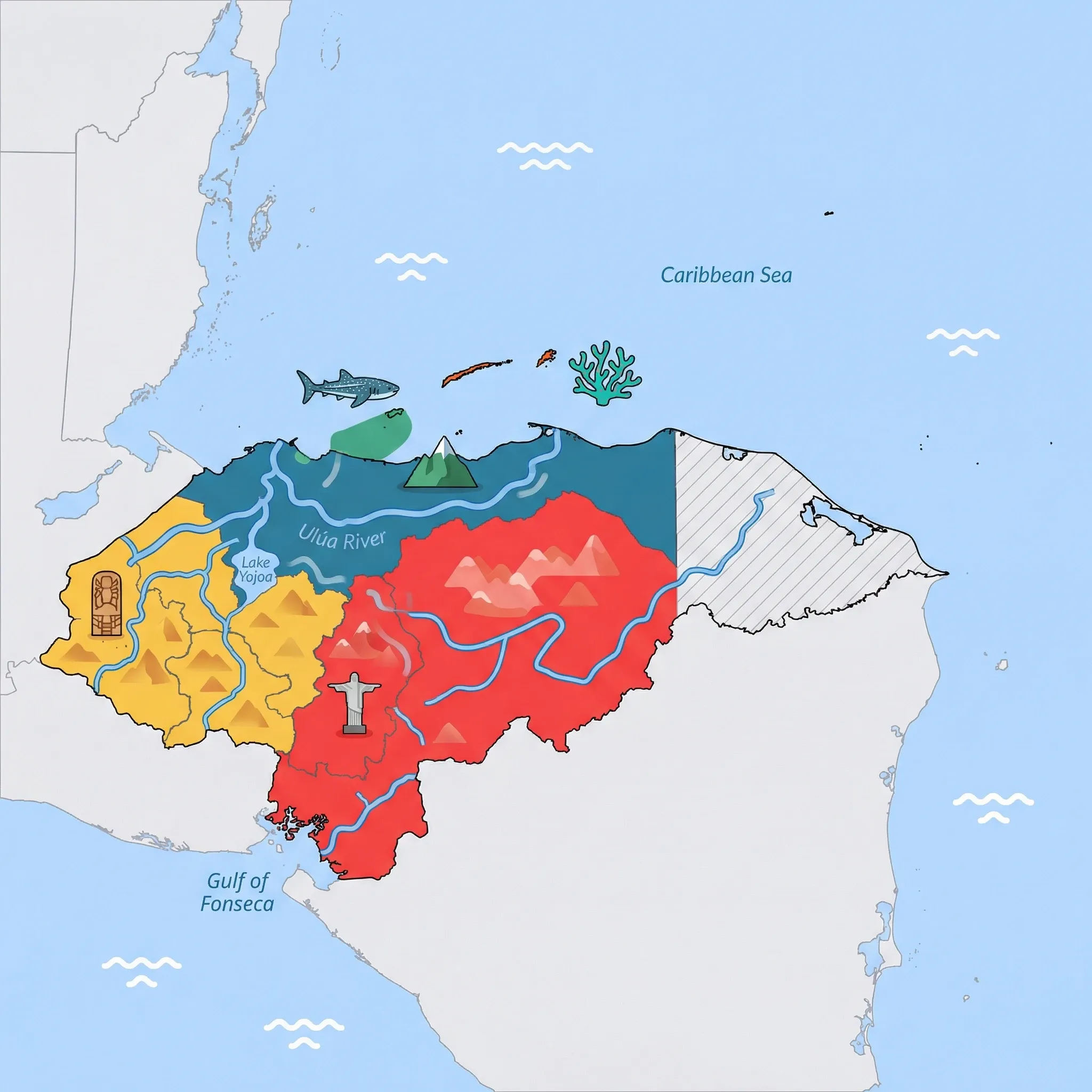
5 Regions
Copán Ruins & West
Ancient Maya mysteries and vibrant macaws in the cool highlands 🦜🏛️
La Ceiba & North Coast
Wild jungle rivers and Caribbean adventures 🌊🚣♂️
Roatán & Bay Islands
World-class snorkeling and turquoise waters for the whole family 🐬🏝️
Tegucigalpa
Mountain scenery and cultural treasures in the capital 🏛️🌲
Utila (diving)
The whale shark capital of the Caribbean 🦈🤿
Click on a region marker to explore details. Use the dropdown to color regions by activity suitability.

Getting There & Around
Getting There
- By Air – Palmerola International Airport (XPL) serves Tegucigalpa, while Ramón Villeda Morales (SAP) in San Pedro Sula is often cheaper and closer to the north coast. Juan Manuel Gálvez (RTB) allows direct entry to Roatán from US cities like Houston, Miami, and Atlanta.
- By Land – Land borders connect with Guatemala (El Florido is best for Copán), El Salvador, and Nicaragua. Private tourist shuttles are the safest way to cross borders.
- Entry Requirements – US, EU, and Canadian citizens typically do not need a visa for stays up to 90 days. Important: As of late 2024/2025, UK citizens are widely reported to require a visa-verify this strictly before travel. Check your government website for the latest visa requirements, or use the IATA Travel Centre entry-requirements checker.
Getting Around
- Domestic Flights – The safest and fastest way to reach Roatán & Bay Islands from the mainland. Airlines like CM Airlines and SOSA fly from Tegucigalpa (TGU/XPL) and San Pedro Sula (SAP).
- Ferries – The Galaxy Wave ferry connects La Ceiba to Roatán, and the Utila Dream connects La Ceiba to Utila. They are reliable and modern, though the crossing can be rough.
- Private Shuttles – Recommended for overland travel, such as from San Pedro Sula to Copán Ruins & West. Avoid public "chicken buses" with children due to safety concerns.
- Car Hire – Possible in Roatán for exploring the island, but generally discouraged for families on the mainland due to road conditions and security checkpoints.

Packing List
Crucial for protecting the Mesoamerican Barrier Reef; standard sunscreens with oxybenzone are harmful to coral.
The ferry crossing between La Ceiba and Roatán/Utila is notoriously rough, often called the 'Vomit Comet'.
Mosquito-borne illnesses like Dengue are real risks here, especially on the mainland and in rainforest areas.
Many beaches have broken coral or sea urchins, and river activities like at Cangrejal require foot protection.
Travel between islands and beaches is often on small 'lancha' boats where luggage gets soaked by spray.
Power outages are relatively common on the islands and in rural mainland areas.

Activities & Best Times

Adventure & Nature
ExcellentHiking, wildlife, outdoor exploration, ecotourism
With 14 supporting attractions, the region excels in immersive wildlife encounters with sloths, monkeys, and iguanas alongside extensive jungle canopy exploration. Peak visiting occurs during the dry season to ensure trail accessibility and comfortable conditions for family-oriented nature discovery.
Exceptional marine biodiversity and unique endemic species like the Swamper iguana make this a standout for nature-focused families. The dry season provides optimal conditions for both terrestrial trail hiking and marine reserve exploration.
La Tigra National Park offers exceptional cloud forest biodiversity and well-maintained hiking trails that appeal to sophisticated eco-tourists. The dry season from December to March provides optimal trail conditions and the best visibility for highland panoramas.

City & Cultural
ExcellentUrban tourism, museums, historical sites, architecture
The Copán Archaeological Site is a world-class destination for its unique high-relief Mayan carvings and significant sculpture museum. The dry months are optimal for exploring the extensive outdoor complexes and historic town centers like Santa Rosa.
The authentic Garifuna culture at Punta Gorda and the vibrant, walkable street life of West End Village offer significant cultural immersion for families. These open-air experiences are best enjoyed during the drier months when village life is most active and accessible.
Offers a unique blend of Garifuna heritage in villages like Sambo Creek and colonial history at San Fernando Fort. Cultural exploration is best during the drier spring months; the intense rain from October to December can disrupt outdoor urban tours and market visits.

Beach & Sea
Very GoodBeach resorts, marine activities: diving, snorkelling, kite surfing, wind surfing, sailing
Utila is internationally famous as one of the world's most affordable PADI certification destinations and a top whale shark diving location (Apr-May peak). This is a globally significant dive destination that attracts international travelers specifically for marine activities.
Roatán is home to the Mesoamerican Barrier Reef (second-largest in the world), world-class diving, and pristine Caribbean beaches. The region competes internationally with Cozumel and Belize for diving tourism. 'Good' undervalues its global significance.
Home to the pristine Cayos Cochinos and Tela's coastline, offering significant marine biodiversity and authentic Garifuna coastal culture. Peak visibility and calm seas occur during the drier months of February to May; heavy autumn rains degrade water clarity.

Sports & Active
Very GoodSport tourism, fitness activities, active recreation
Features established infrastructure for tropical hiking trails and multiple high-quality canopy zipline circuits. These active pursuits are best experienced during the first half of the year to avoid the intense humidity of summer and the heavy rainfall of the autumn months.
Renowned for world-class whitewater rafting on the Cangrejal River and extensive mountain biking and hiking networks. Optimal river levels and trail conditions occur from February to May; extreme rainfall in late year can make river activities dangerous.
Features several established hiking and coastal routes, such as the Pumpkin Hill and Iron Bound trails, for active exploration. Peak conditions avoid the excessive humidity and muddy trail conditions common during the October to January rains.

Educational & Exploratory
GoodLearning experiences, scientific sites, historical education
Home to internationally significant marine science and conservation centers, including the Roatán Institute for Marine Sciences. While research programs run year-round, the facilities are most comfortably visited outside of the humid and rainy months of October and November.
Home to specialized research facilities like the Whale Shark and Oceanic Research Center that offer unique learning opportunities. These facilities are most accessible during the main tourism season when marine research activity is at its height.
Chiminike stands out as a destination-level science museum for regional families, though it lacks the global scale of top-tier international institutions. Visiting during peak tourism months ensures all exhibits and guided programs are fully operational.

Road Trips & Scenic
GoodScenic drives, countryside tours, route-based travel
The 'Circuito de los Pueblos' connecting Tegucigalpa to Valle de Ángeles and Santa Lucía is a well-paved, scenic route through charming colonial highlands. Dry season travel is recommended to ensure the best road visibility and access to outdoor artisanal markets.
Celebrated routes like the Lenca Trail and the Western Coffee Route offer scenic drives through culturally rich highlands. Travel is restricted to the driest months to ensure safe road conditions in this mountainous terrain.
The scenic drive to the island's East End provides access to remote landscapes and traditional Caribbean vistas. Road conditions and visibility are most reliable during the dry season, whereas heavy tropical rainfall can make driving more challenging in the late year.

Theme Park & Entertainment
GoodAmusement parks, family entertainment venues
Features authentic Maya-themed aquatic facilities like Luna Jaguar and regional aquaparks. Peak interest aligns with the hottest months (March-April) when local holidays increase demand and water-based entertainment is most appealing.
Chiminike is a high-quality regional interactive center, but the city's entertainment offerings are generally modest by international standards. These venues are most pleasant during the dry season when outdoor water parks and transit are more reliable.
Features regional attractions like Water Jungle and hot spring parks that provide family entertainment. These are most popular during the hot, dry season and local school holidays (March–May), while heavy rains in late year limit outdoor park appeal.

Festivals & Seasonal
MarginalEvents, celebrations, seasonal attractions

Relaxation & Wellness
MarginalSpa retreats, wellness centers, peaceful getaways
Natural thermal springs at Sambo Creek provide restorative experiences in a jungle setting. Cooler, drier months (January–April) are most comfortable for soaking; the high humidity and heavy rains of late year are less conducive to wellness travel.
Natural thermal springs like Luna Jaguar provide a restorative jungle environment for wellness seekers. The cooler highland air from December to February creates a more refreshing contrast for the thermal baths.

Public Holidays & Calendar Next 12 months
Public holidays, festivals, cultural celebrations, and seasonal natural phenomena coming up in Honduras over the next 12 months.
Loading holidays and events...
Climate & Weather
Copán Ruins & West
Show Details
| Month | Temp °C | Rain | Humidity |
|---|
La Ceiba & North Coast
Show Details
| Month | Temp °C | Rain | Humidity |
|---|
Roatán & Bay Islands
Show Details
| Month | Temp °C | Rain | Humidity |
|---|
Tegucigalpa
Show Details
| Month | Temp °C | Rain | Humidity |
|---|
Utila (diving)
Show Details
| Month | Temp °C | Rain | Humidity |
|---|

Travel Advisory
Five out of six major agencies recommend exercising a high degree of caution or increased vigilance due to pervasive violent crime and civil instability. While the U.S. recommends reconsidering travel, the majority consensus supports an elevated caution status for the country overall, with severe restrictions for specific eastern and border regions.
Safety Topics
Traveller Advice (5 groups)

Do not display expensive items or signs of wealth. Stay alert at all times, especially when using banks or ATMs, and avoid any travel outside of major urban centres after sunset.

While legal, same-sex relationships may not be widely accepted in all social circles. Travellers may encounter discrimination or hostility in certain areas.

Minors travelling alone or with only one parent must provide a notarized letter of consent in Spanish from the non-travelling legal guardians to enter or exit the country.

Incidents of harassment and sexual assault occur. It is strongly advised not to travel alone, particularly in isolated areas or on unpopulated beaches.

Personnel should follow strict internal security protocols due to the risk of kidnapping and extortion by local criminal gangs.
Agency Summaries
Persistent threats of violent crime, including carjacking and armed robbery, necessitate a high level of personal security. Australians are advised to avoid walking or driving after dark and to be particularly cautious near transit hubs.
Serious crime levels are high across the country. The government advises against all travel to certain remote eastern regions and warns of increased gang violence targeting public transport and commercial drivers.
Travellers should remain extremely vigilant due to pervasive violent crime and gang activity. Specific regional warnings advise against all travel to the eastern department of Gracias a Dios and suggest avoiding non-essential trips to the border area with Guatemala.
Due to widespread homicide, armed robbery, and kidnapping, visitors are urged to reconsider their travel plans. A Level 4: Do Not Travel advisory is in effect for the Gracias a Dios region, where narcotics trafficking and limited police presence pose extreme risks.
Security concerns are significantly higher than typical. Notable risks include very high homicide rates, civil unrest with violent protests, and the presence of unexploded munitions in specific border zones.
Irish citizens are advised of the high risk environment regarding personal safety. Pre-registration with immigration authorities is required, and travellers are reminded of limited consular support within the country.
Information is provided for general guidance only and does not constitute travel, safety, medical, or legal advice. Conditions may change. Users are responsible for independently verifying information before travel.