
Copán Ruins & West
Ancient Maya mysteries and vibrant macaws in the cool highlands 🦜🏛️
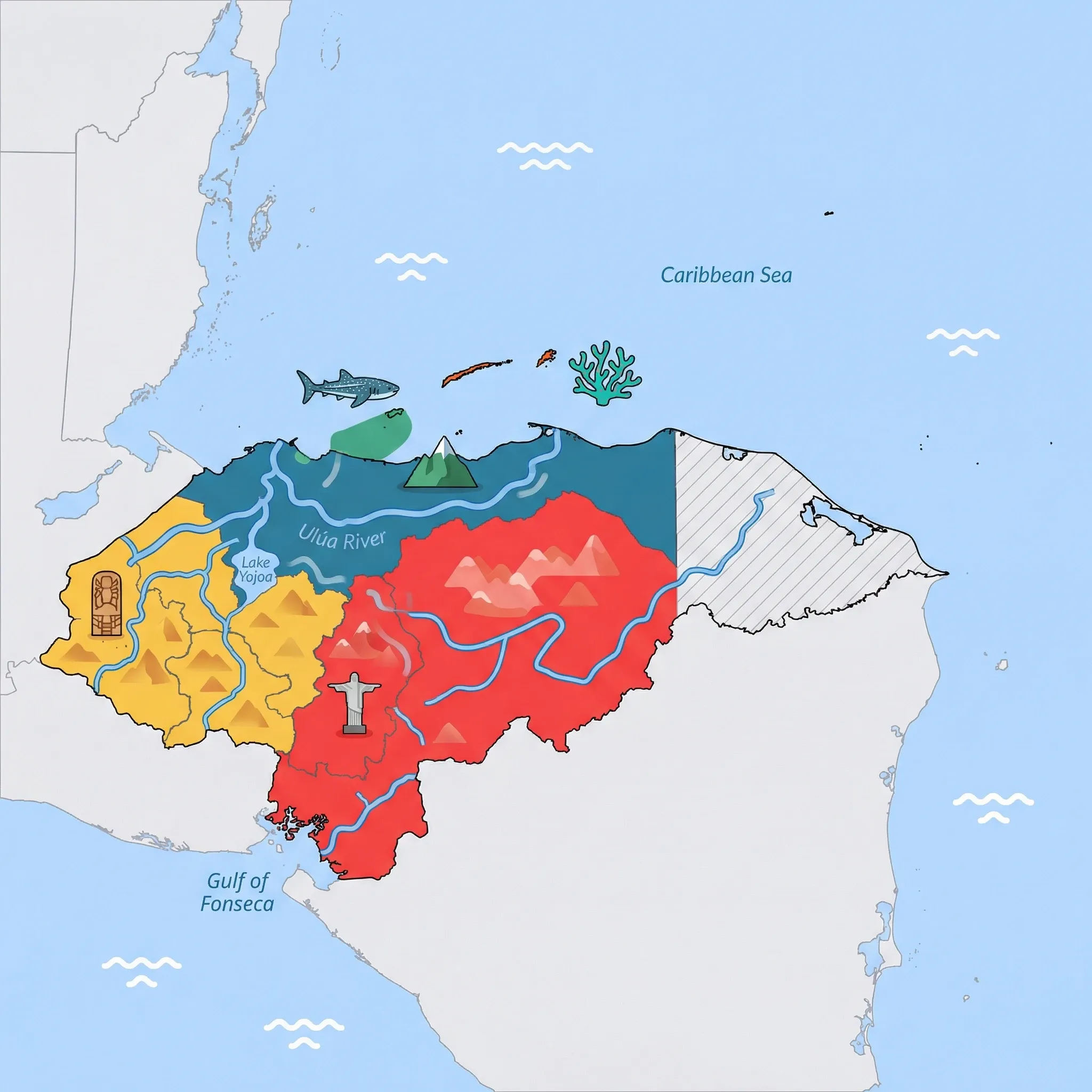
Click a region to explore
Nestled in the cool, pine-clad hills of western Honduras, the Copán region is widely considered one of the safest and most family-friendly destinations on the mainland. The pace of life here is slow and rhythmic, defined by the legacy of the Maya civilization and the rich aroma of locally grown coffee. Unlike the hotter coastal plains, the altitude provides a spring-like climate that makes exploring outdoors pleasant for children. The town of Copán Ruinas retains a charming village feel with cobblestone streets where families can walk safely in the evenings, enjoying ice cream in the central plaza while watching locals socialize.
Culturally, this region offers a deep dive into history without the overwhelming crowds found at other major archaeological sites. It is an educational playground where history comes alive; kids aren't just looking at ruins, they are walking through tunnels and seeing the scarlet macaws—the sacred bird of the Maya—flying free over the temples. Beyond the archaeology, the region is a nature lover's haven, offering canopy zip-lines, hot springs, and butterfly gardens that provide active entertainment for energetic children.
Key Attractions
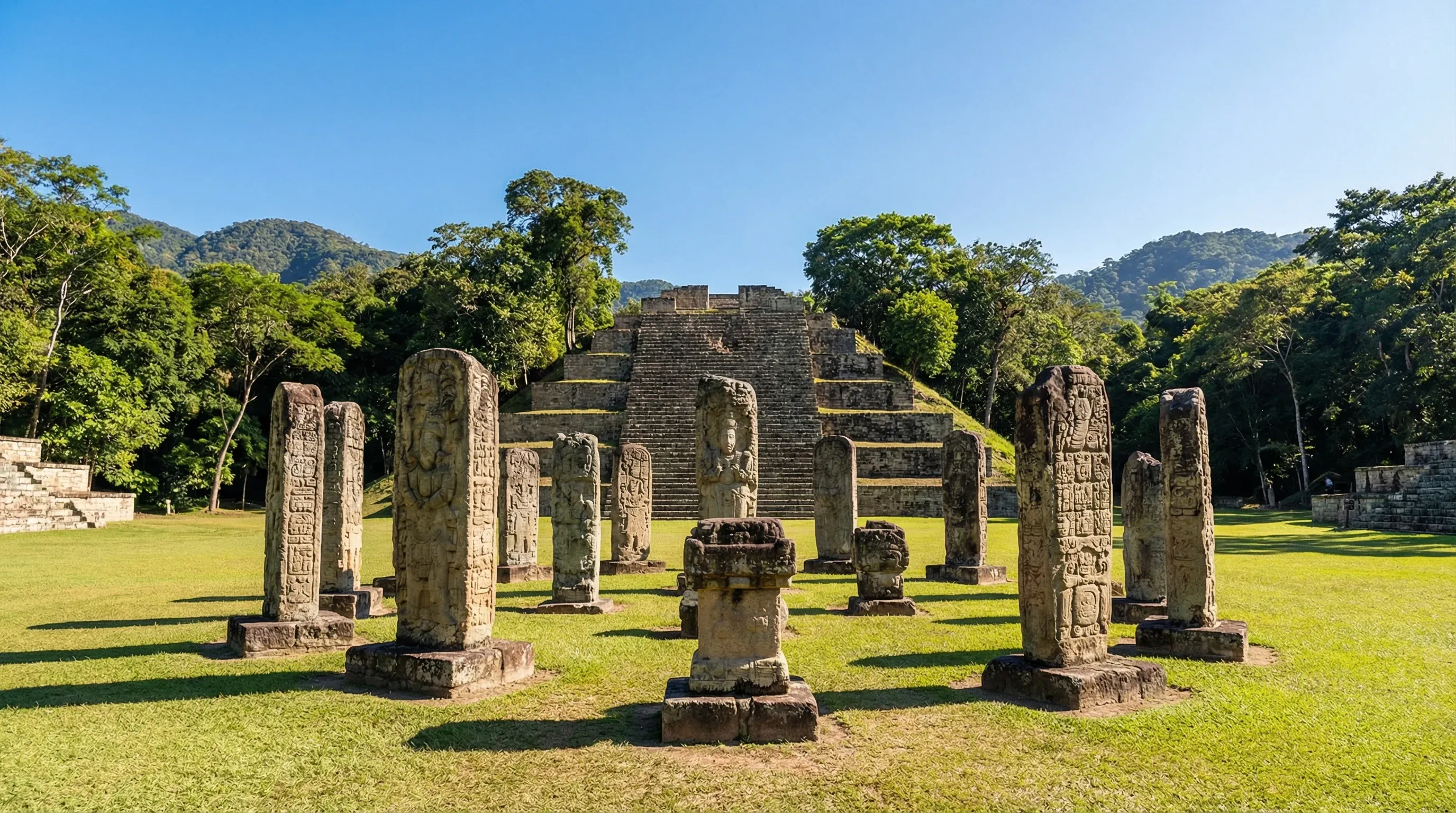
The crown jewel is the Copán Archaeological Site, famous for its intricate hieroglyphic staircase and artistic stelae. It is compact enough for little legs to navigate, and the resident wild macaws add a splash of colour that captivates younger visitors. For a deeper understanding of the artifacts, the nearby Museum of Mayan Sculpture is essential; entering the museum through the mouth of a replica snake is a thrill for kids, and the full-scale replica of the Rosalila temple inside provides a vivid picture of the site's former glory.
For families seeking wilderness, Celaque National Park offers a dense cloud forest environment. While the summit hike is demanding, the lower trails are magical for spotting monkeys and distinct flora. It serves as a fantastic introduction to Central American biodiversity in a protected, serene environment.
Practical Advice
The best time to visit is during the dry season (November to April). The town of Copán Ruinas is small and walkable; strollers can handle the main plaza but may struggle on steeper cobblestone side streets. Tuk-tuks are a fun and cheap way to zip between the town and the ruins.
Food & Drink
Typical meal times: Breakfast is hearty and early (7:00 am to 9:00 am), lunch is 12:00 pm to 2:00 pm, and dinner is usually 6:30 pm to 8:30 pm.
Typical meal costs: A family lunch costs around L 600–900 (approx. $24–36 USD / €22–34 EUR). Street snacks are cheaper.
Dietary requirements: Vegetarian options are plentiful due to the reliance on beans, eggs, and cheese. Gluten-free is relatively easy with corn tortillas, though cross-contamination is a risk.
Signature dishes:
- Anafre – A refried bean and cheese fondue served in a clay pot with tortilla chips, often with chorizo added.
- Ticucos – A regional tamale made with maize, beans, and chipodín (a local herb), wrapped in dried corn husks.
- Atol de Elote – A warm, sweet corn beverage spiced with cinnamon, perfect for the cooler highland evenings.
Why this score?
The region offers moderate adventure through cloud forest hiking in Celaque National Park and exploring coffee plantations in the highlands. While the terrain is mountainous, the primary attractions like the ruins and bird parks are well-facilitated with established trails and guide services.
Why this score?
The town of Copán Ruinas has basic clinics and pharmacies capable of treating minor ailments and tourist-related injuries. However, for serious emergencies or specialized care, patients typically require transport to larger medical facilities in San Pedro Sula.
Why this score?
As a key stop on the 'Mayan Route,' Copán Archaeological Site attracts a steady stream of international cultural tourists and regional travelers. While world-renowned for its stelae and hieroglyphics, its inland location and niche historical appeal keep visitor volumes moderate compared to coastal hubs.

Western Honduras provides excellent value. High-end boutique hotels are significantly cheaper here than in the Bay Islands. A comfortable family room costs L 2,000–3,500 (approx. $80–140 USD / €75–130 EUR). Local meals are very affordable, with street food (baleadas) costing as little as L 25–50 (approx. $1–2 USD / €0.90–1.80 EUR).
Family Travel Notice
Minors travelling alone or with only one parent must provide a notarized letter of consent in Spanish from the non-travelling legal guardians to enter or exit the country.

Getting Here & Around
Getting Here
- Bus – High-quality 'Hedman Alas' executive buses connect San Pedro Sula to Copán Ruinas (approx. 3.5–4 hours). They are safe, air-conditioned, and have bathrooms.
- Driving – The road from San Pedro Sula (CA-4) is paved but winding. Avoid driving at night due to limited lighting and livestock on roads.
- Border Crossing – Accessible via land from Guatemala (El Florido border), just 15 minutes from the town center.
Getting Around
- Tuk-tuks – The mototaxis are the primary way to move between your hotel, the Copán Archaeological Site, and bird parks. They are cheap and fun for kids.
- Walking – The town center is compact and safe for walking during the day and early evening.
- Private Shuttles – Recommended for day trips to hot springs or coffee farms outside the main town.
Nearby Airports (1 airport)
Palmerola Air Base
XPLComayagua
View full flight map for Honduras →
Official Links

Packing List
Highland evenings can get surprisingly chilly compared to the coast
Essential for uneven cobblestone streets and climbing ancient steps
The road getting to Copán is winding and mountainous
To see wild macaws and toucans in the tree canopies clearly
Crucial for protecting the Mesoamerican Barrier Reef; standard sunscreens with oxybenzone are harmful to coral.
Mosquito-borne illnesses like Dengue are real risks here, especially on the mainland and in rainforest areas.
Many beaches have broken coral or sea urchins, and river activities like at Cangrejal require foot protection.
Travel between islands and beaches is often on small 'lancha' boats where luggage gets soaked by spray.
Power outages are relatively common on the islands and in rural mainland areas.

Activities & Best Times

Urban tourism, museums, historical sites, architecture
The Copán Archaeological Site is a world-class destination for its unique high-relief Mayan carvings and significant sculpture museum. The dry months are optimal for exploring the extensive outdoor complexes and historic town centers like Santa Rosa.

Hiking, wildlife, outdoor exploration, ecotourism
Home to the lush Celaque National Park and Cerro Las Minas, the region offers exceptional cloud forest hiking and birdwatching. Peak conditions occur in the dry season when trails are navigable and mountain vistas are clearest.

Scenic drives, countryside tours, route-based travel
Celebrated routes like the Lenca Trail and the Western Coffee Route offer scenic drives through culturally rich highlands. Travel is restricted to the driest months to ensure safe road conditions in this mountainous terrain.

Sport tourism, fitness activities, active recreation
Offers recognized mountain trekking and canopy tours in a rugged highland setting. Activity peaks when dry conditions ensure safety for canopy lines and stability for the steep Cerro Las Minas ascent.

Amusement parks, family entertainment venues
Features authentic Maya-themed aquatic facilities like Luna Jaguar and regional aquaparks. Peak interest aligns with the hottest months (March-April) when local holidays increase demand and water-based entertainment is most appealing.

Learning experiences, scientific sites, historical education
The Regional Museum of Archaeology provides specialized educational value regarding Mayan civilization, serving as a secondary draw to the main ruins. Visitation is best when paired with dry-season archaeological exploration.

Spa retreats, wellness centers, peaceful getaways
Natural thermal springs like Luna Jaguar provide a restorative jungle environment for wellness seekers. The cooler highland air from December to February creates a more refreshing contrast for the thermal baths.




Public Holidays & Calendar Next 12 months
Public holidays, festivals, cultural celebrations, and seasonal natural phenomena coming up in Copán Ruins & West over the next 12 months.
Loading holidays and events...

Travel Advisory
Five out of six major agencies recommend exercising a high degree of caution or increased vigilance due to pervasive violent crime and civil instability. While the U.S. recommends reconsidering travel, the majority consensus supports an elevated caution status for the country overall, with severe restrictions for specific eastern and border regions.
Safety Topics
Traveller Advice (5 groups)

Do not display expensive items or signs of wealth. Stay alert at all times, especially when using banks or ATMs, and avoid any travel outside of major urban centres after sunset.

While legal, same-sex relationships may not be widely accepted in all social circles. Travellers may encounter discrimination or hostility in certain areas.

Minors travelling alone or with only one parent must provide a notarized letter of consent in Spanish from the non-travelling legal guardians to enter or exit the country.

Incidents of harassment and sexual assault occur. It is strongly advised not to travel alone, particularly in isolated areas or on unpopulated beaches.

Personnel should follow strict internal security protocols due to the risk of kidnapping and extortion by local criminal gangs.
Agency Summaries
Persistent threats of violent crime, including carjacking and armed robbery, necessitate a high level of personal security. Australians are advised to avoid walking or driving after dark and to be particularly cautious near transit hubs.
Serious crime levels are high across the country. The government advises against all travel to certain remote eastern regions and warns of increased gang violence targeting public transport and commercial drivers.
Travellers should remain extremely vigilant due to pervasive violent crime and gang activity. Specific regional warnings advise against all travel to the eastern department of Gracias a Dios and suggest avoiding non-essential trips to the border area with Guatemala.
Due to widespread homicide, armed robbery, and kidnapping, visitors are urged to reconsider their travel plans. A Level 4: Do Not Travel advisory is in effect for the Gracias a Dios region, where narcotics trafficking and limited police presence pose extreme risks.
Security concerns are significantly higher than typical. Notable risks include very high homicide rates, civil unrest with violent protests, and the presence of unexploded munitions in specific border zones.
Irish citizens are advised of the high risk environment regarding personal safety. Pre-registration with immigration authorities is required, and travellers are reminded of limited consular support within the country.
Information is provided for general guidance only and does not constitute travel, safety, medical, or legal advice. Conditions may change. Users are responsible for independently verifying information before travel.