
La Ceiba & North Coast
Wild jungle rivers and Caribbean adventures 🌊🚣♂️
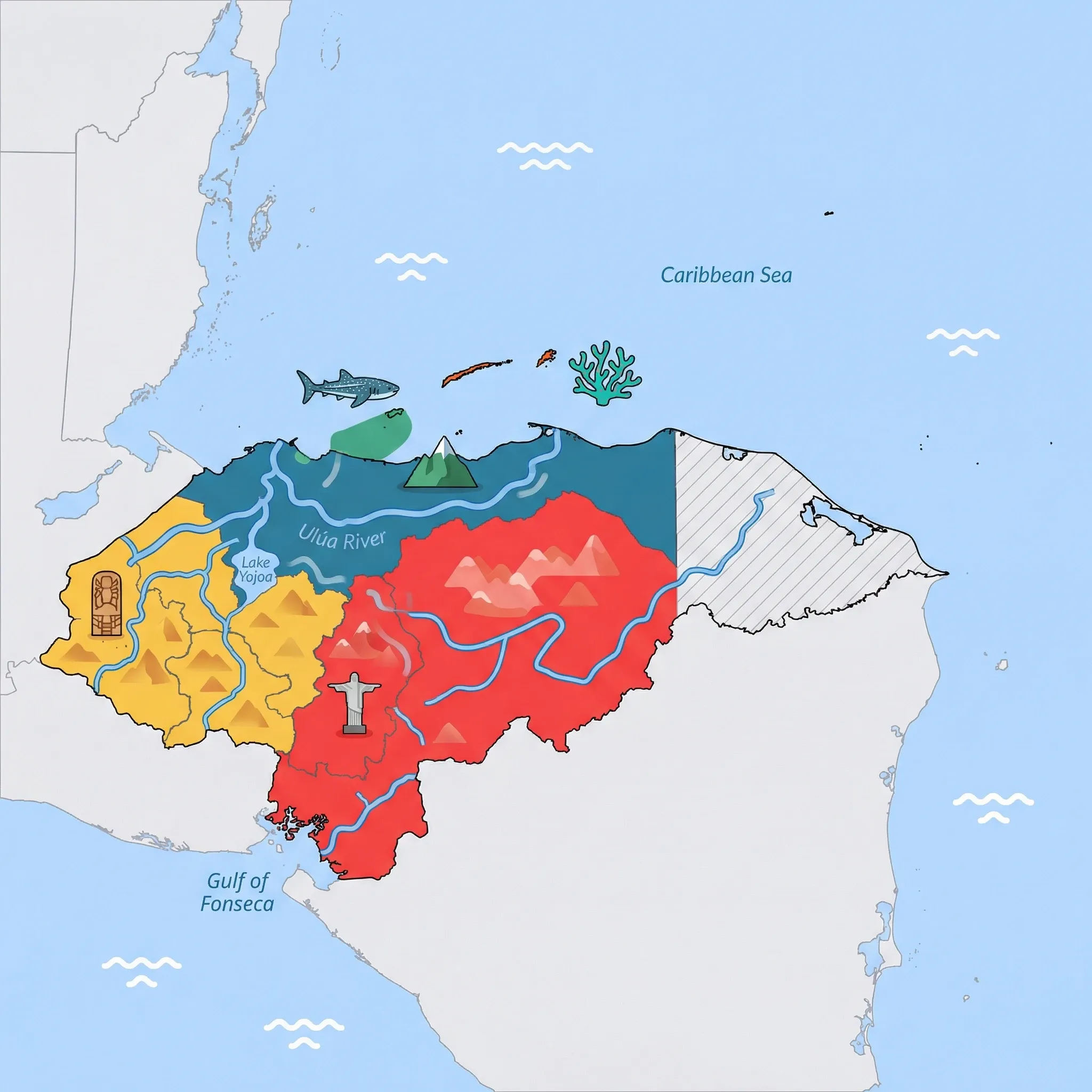
Click a region to explore
⚠️ SAFETY WARNING: Due to persistent violent crime and armed robbery risks, government agencies (including CA, USA, UK, and AU) advise travelers to reconsider travel to this region. Travelers should minimize time in La Ceiba city center, avoiding it completely at night, and stick to established tourist corridors like the ferry terminal or resort areas. Families are strongly urged to consult their own government's official travel advisory before considering a trip, as circumstances and risk assessments vary.
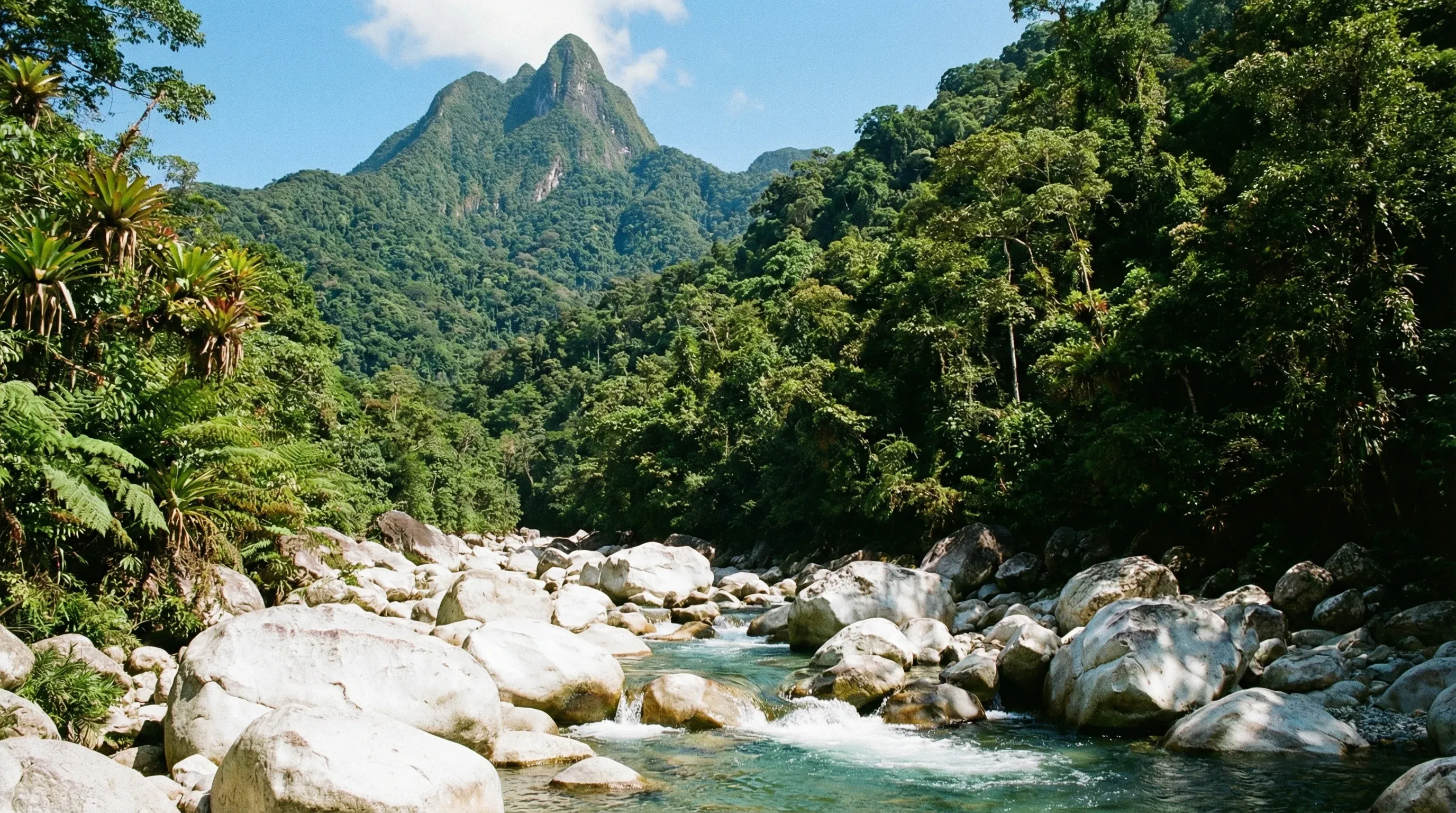
Despite the urban challenges of La Ceiba city, the surrounding natural landscape offers some of the most spectacular eco-adventures in Central America. For active families, this is a playground of lush rainforests, towering peaks, and rushing rivers. The region feels wild and alive; the mountains of Pico Bonito rise abruptly from the coastal plain, creating a dramatic green backdrop to the Caribbean Sea. This is not a place for all-inclusive lounging, but rather for guided exploration—hiking into waterfalls, spotting toucans, and experiencing the Afro-Indigenous Garifuna culture in coastal villages.
The "North Coast" vibe is humid, tropical, and green. While La Ceiba acts as the transit hub for the Bay Islands ferries, the nearby Cangrejal River Valley offers a safe, tranquil haven of eco-lodges tucked into the jungle. Here, families can disconnect from the chaos of the city and reconnect with nature. Further west, the town of Tela offers botanical gardens and wider beaches, providing a slightly more relaxed coastal atmosphere for those with younger children.
Key Attractions
Nature is the primary draw here. Pico Bonito National Park is a must-visit, offering trails that range from easy loops to challenging treks, all under the canopy of a diverse rainforest teeming with wildlife. Just along the park's border flows the Cangrejal River, famous for its massive granite boulders and crystal-clear water. It is one of the best places in Central America for white-water rafting, with operators offering family-friendly runs suited for children and beginners.
For a marine adventure, a day trip to Cayos Cochinos reveals a protected marine park of small coral cays where the snorkeling is pristine and the local Garifuna food is fresh. Near Tela, the Lancetilla Botanical Garden allows kids to run through massive bamboo tunnels and see fruit trees from around the world. History buffs can explore the Fortaleza de San Fernando in Omoa (a drive away), the largest Spanish colonial fortress in Central America.
Practical Advice
Visit from February to August for the best weather; the rainy season can be intense. Always use pre-arranged transport or hotel shuttles. If staying near La Ceiba, book a lodge in the Cangrejal River valley rather than a hotel in the city center for better safety and atmosphere.
Food & Drink
Typical meal times: Lunch is 12:00 pm to 2:00 pm; dinner is typically 6:00 pm to 8:00 pm in eco-lodges.
Typical meal costs: Meals in eco-lodges run L 350–600 (approx. $14–24 USD / €13–22 EUR). Local "comedors" are cheaper but require caution regarding hygiene.
Dietary requirements: Seafood and coconut are staples. Vegetarian options are available but limited in rural areas; lodges are usually accommodating if notified in advance.
Signature dishes:
- Sopa de Caracol – A rich, sweet-savory coconut milk soup with conch, yucca, and plantains (famously celebrated in song).
- Machuca – A Garifuna staple of mashed green and ripe plantains served with a fish and coconut milk stew.
- Casabe – A hard, cracker-like flatbread made from cassava (yucca), traditionally eaten with soups.
Why this score?
This is the most rugged region on the mainland, featuring world-class whitewater rafting on the Cangrejal River and dense rainforest trekking in Pico Bonito National Park. The steep, undeveloped terrain and biodiversity offer a significant challenge for outdoor enthusiasts.
Why this score?
La Ceiba has several functional regional hospitals and private clinics that provide a higher standard of care than rural areas. While adequate for stabilizing patients, the facilities may struggle with language barriers and lack the advanced technology found in the capital.
Why this score?
La Ceiba serves as a major transit hub for the Bay Islands and is a popular domestic destination for the annual carnival and beach holidays. While it attracts international eco-tourists for rafting and hiking, it lacks the massive international hotel infrastructure found on the islands.

The North Coast offers good value compared to Roatán. High-quality eco-lodges with meals included often cost L 3,000–5,000 (approx. $120–200 USD / €110–185 EUR) per night for a family. Adventure tours (rafting) are world-class but priced internationally, around L 1,200–2,000 (approx. $48–80 USD / €45–75 EUR) per person.
Family Travel Notice
Minors travelling alone or with only one parent must provide a notarized letter of consent in Spanish from the non-travelling legal guardians to enter or exit the country.

Getting Here & Around
Getting Here
- Ferry – The Galaxy Wave and Utila Dream ferries depart from the La Ceiba port to Roatán and Utila. Arrive in daylight.
- Airports – Golosón International Airport (LCE) in La Ceiba has domestic flights and limited international connections.
- Bus – Luxury buses connect from San Pedro Sula to the bus terminal, but taxi transfers from the terminal to the Cangrejal River lodges should be arranged by your hotel.
Getting Around
- Hotel Shuttles – The safest way to move between Pico Bonito National Park lodges and the ferry/airport.
- Taxis – Use only radio taxis called by your accommodation. Avoid hailing random cabs on the street.
- Boat – Essential for visiting Cayos Cochinos or accessing remote beaches near Tela.
Nearby Airports (2 airports)
Goloson International
LCELa Ceiba
La Mesa International
SAPSan Pedro Sula
View full flight map for Honduras →
Official Links

Packing List
Essential for keeping electronics safe during ferry rides and boat trips
Sandflies (jejenes) on beaches and mosquitoes in the jungle are aggressive
Riverbeds in Cangrejal and some beaches can be rocky
Many eco-lodges in the national parks require eco-friendly toiletries
Crucial for protecting the Mesoamerican Barrier Reef; standard sunscreens with oxybenzone are harmful to coral.
The ferry crossing between La Ceiba and Roatán/Utila is notoriously rough, often called the 'Vomit Comet'.
Travel between islands and beaches is often on small 'lancha' boats where luggage gets soaked by spray.
Power outages are relatively common on the islands and in rural mainland areas.

Activities & Best Times

Hiking, wildlife, outdoor exploration, ecotourism
The region boasts the dramatic Pico Bonito National Park and Cangrejal River valley, providing world-class rainforest immersion and wildlife viewing. The drier window from February to June is optimal for trail access and birding, while the year-end rainy season makes jungle trekking difficult.

Urban tourism, museums, historical sites, architecture
Offers a unique blend of Garifuna heritage in villages like Sambo Creek and colonial history at San Fernando Fort. Cultural exploration is best during the drier spring months; the intense rain from October to December can disrupt outdoor urban tours and market visits.

Sport tourism, fitness activities, active recreation
Renowned for world-class whitewater rafting on the Cangrejal River and extensive mountain biking and hiking networks. Optimal river levels and trail conditions occur from February to May; extreme rainfall in late year can make river activities dangerous.

Beach resorts, marine activities: diving, snorkelling, kite surfing, wind surfing, sailing
Home to the pristine Cayos Cochinos and Tela's coastline, offering significant marine biodiversity and authentic Garifuna coastal culture. Peak visibility and calm seas occur during the drier months of February to May; heavy autumn rains degrade water clarity.

Learning experiences, scientific sites, historical education
Natural history and marine research facilities in Tela and La Ceiba offer specialized learning experiences for families. Accessibility is best during the drier first half of the year, though facilities typically remain open until the peak of the rainy season.

Events, celebrations, seasonal attractions
The La Ceiba Carnival in May is a major international cultural event featuring parades and live music. Peak attendance is concentrated in May, while the rest of the year lacks equivalent destination-level festivals.

Spa retreats, wellness centers, peaceful getaways
Natural thermal springs at Sambo Creek provide restorative experiences in a jungle setting. Cooler, drier months (January–April) are most comfortable for soaking; the high humidity and heavy rains of late year are less conducive to wellness travel.

Scenic drives, countryside tours, route-based travel
The CA-13 highway and Cangrejal Valley road offer scenic vistas of the Caribbean and cloud forests. Driving conditions are safest and most scenic during the dry months; the rainy season brings risks of landslides and poor visibility on winding coastal roads.

Amusement parks, family entertainment venues
Features regional attractions like Water Jungle and hot spring parks that provide family entertainment. These are most popular during the hot, dry season and local school holidays (March–May), while heavy rains in late year limit outdoor park appeal.




Public Holidays & Calendar Next 12 months
Public holidays, festivals, cultural celebrations, and seasonal natural phenomena coming up in La Ceiba & North Coast over the next 12 months.
Loading holidays and events...

Travel Advisory
Five out of six major agencies recommend exercising a high degree of caution or increased vigilance due to pervasive violent crime and civil instability. While the U.S. recommends reconsidering travel, the majority consensus supports an elevated caution status for the country overall, with severe restrictions for specific eastern and border regions.
Safety Topics
Traveller Advice (5 groups)

Do not display expensive items or signs of wealth. Stay alert at all times, especially when using banks or ATMs, and avoid any travel outside of major urban centres after sunset.

While legal, same-sex relationships may not be widely accepted in all social circles. Travellers may encounter discrimination or hostility in certain areas.

Minors travelling alone or with only one parent must provide a notarized letter of consent in Spanish from the non-travelling legal guardians to enter or exit the country.

Incidents of harassment and sexual assault occur. It is strongly advised not to travel alone, particularly in isolated areas or on unpopulated beaches.

Personnel should follow strict internal security protocols due to the risk of kidnapping and extortion by local criminal gangs.
Agency Summaries
Persistent threats of violent crime, including carjacking and armed robbery, necessitate a high level of personal security. Australians are advised to avoid walking or driving after dark and to be particularly cautious near transit hubs.
Serious crime levels are high across the country. The government advises against all travel to certain remote eastern regions and warns of increased gang violence targeting public transport and commercial drivers.
Travellers should remain extremely vigilant due to pervasive violent crime and gang activity. Specific regional warnings advise against all travel to the eastern department of Gracias a Dios and suggest avoiding non-essential trips to the border area with Guatemala.
Due to widespread homicide, armed robbery, and kidnapping, visitors are urged to reconsider their travel plans. A Level 4: Do Not Travel advisory is in effect for the Gracias a Dios region, where narcotics trafficking and limited police presence pose extreme risks.
Security concerns are significantly higher than typical. Notable risks include very high homicide rates, civil unrest with violent protests, and the presence of unexploded munitions in specific border zones.
Irish citizens are advised of the high risk environment regarding personal safety. Pre-registration with immigration authorities is required, and travellers are reminded of limited consular support within the country.
Information is provided for general guidance only and does not constitute travel, safety, medical, or legal advice. Conditions may change. Users are responsible for independently verifying information before travel.