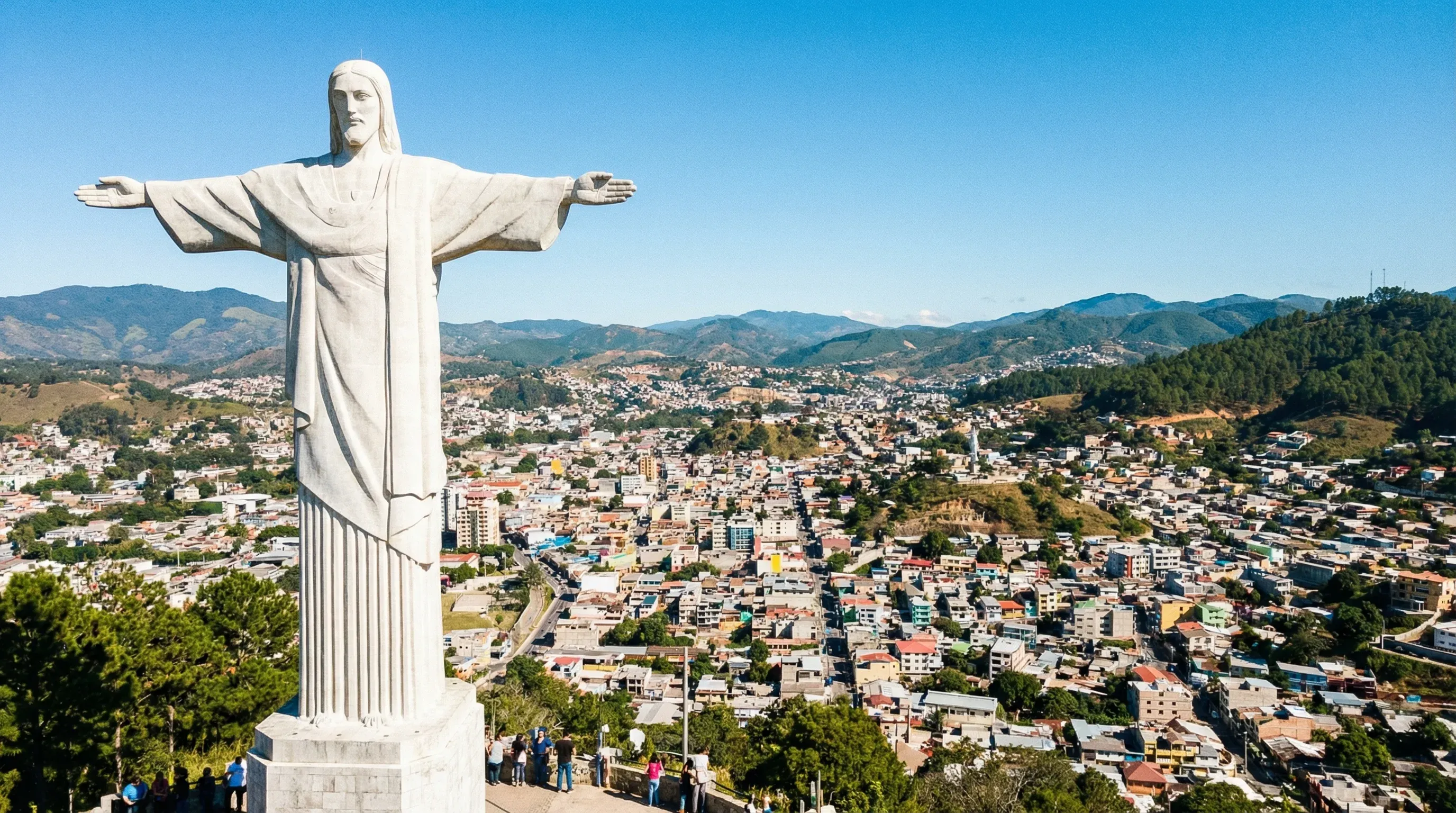

Tegucigalpa
Mountain scenery and cultural treasures in the capital 🏛️🌲
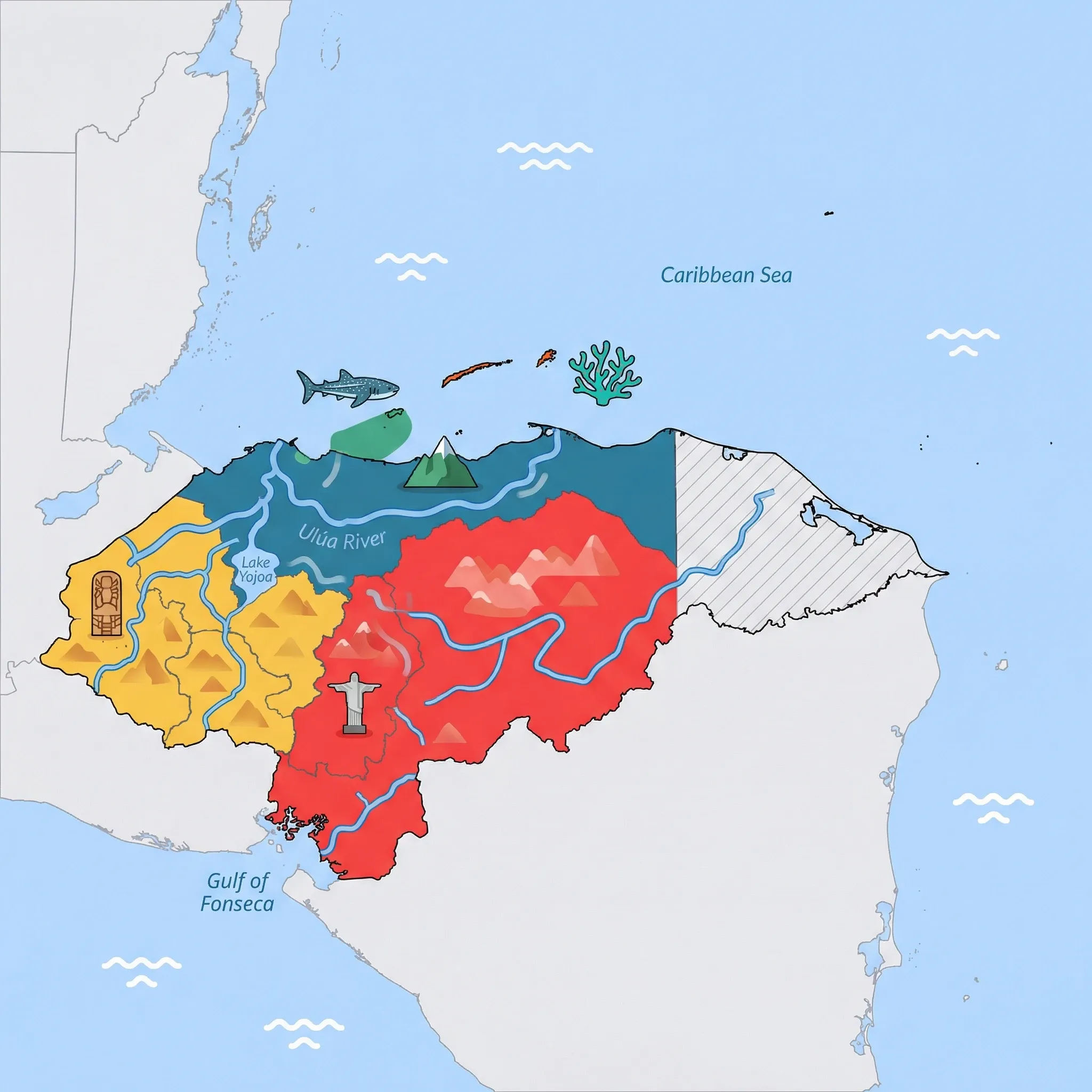
Click a region to explore
⚠️ SAFETY WARNING: Due to high rates of urban crime (including armed robbery and gang activity), government agencies (including CA, USA, UK, and AU) advise travelers to reconsider travel to Tegucigalpa. Visitors should remain in established safe zones (like Zona Viva or hotel districts), avoid walking at night, and use secure transportation. Families are strongly urged to consult their own government's official travel advisory before considering a trip, as circumstances and risk assessments vary.
Tegucigalpa, affectionately known as "Tegus," is a city of contrasts—a sprawling metropolis clinging to the sides of steep pine-covered mountains. While it is often bypassed by tourists heading to the coast, the capital offers a rich cultural layer that beach destinations lack. The climate here is significantly cooler and fresher than the coast, making it comfortable for walking tours during the day. The city is chaotic and traffic-heavy, but it holds pockets of colonial charm and modern education that are excellent for older children.
The real magic of the region lies just outside the city limits. A short drive takes you from urban density to the tranquility of colonial mining towns like Santa Lucía and Valle de Ángeles, where time seems to have stopped. These safe, cobblestoned villages are perfect for family day trips, offering artisan crafts, calm plazas, and traditional food without the security concerns of the city center.
Key Attractions
For families, the undisputed highlight is Chiminike (Centro Interactivo de Enseñanza). This world-class children's museum is designed to educate kids about Honduras, the human body, and the environment through hands-on exhibits. It is a safe, modern, and engaging space where kids can spend hours playing and learning.
Nature-loving families should head to Parque Nacional La Tigra, the first national park in Honduras. Located just 20km from the city, it offers cloud forest hiking trails where you might spot quetzals (if lucky) and enjoy the fresh mountain air. Back in the city, the Museo para la Identidad Nacional (MIN) is housed in a beautiful 19th-century hospital and offers a high-tech "Virtual Copán" tour, allowing you to see the ruins digitally if you can't make it to the actual site.
Practical Advice
Traffic in Tegucigalpa is intense; plan movements around rush hour (7-9 am and 4-7 pm). The new international airport (Palmerola) is about 1 hour and 15 minutes away from the city, so factor transfer times into your schedule.
Food & Drink
Typical meal times: Lunch is the main affair, 12:00 pm to 2:00 pm. Dinner is usually 6:30 pm to 8:30 pm.
Typical meal costs: Mid-range dining is reasonable, around L 300–600 (approx. $12–24 USD / €11–22 EUR) per person. High-end dining is cheaper than in the US/Europe.
Dietary requirements: The capital has the most diverse food scene. Gluten-free, vegan, and international chains are easily found in the malls and Zona Viva.
Signature dishes:
- Pupusas – Thick corn tortillas filled with cheese, pork (chicharrón), or beans; a staple dinner item.
- Carne Asada – Grilled marinated beef served with chimol (pico de gallo), roasted plantains, and salty cheese.
- Catrachitas – Fried tortilla chips topped with mashed beans and grated cheese, a common appetizer.
Why this score?
As a densely populated urban center, the adventure level is low, though the nearby La Tigra National Park offers accessible cloud forest trails. The terrain is mountainous, but most tourist activities are centered around developed urban sites and paved road circuits.
Why this score?
Tegucigalpa hosts the country's best medical infrastructure, including several modern private hospitals with English-speaking specialists and advanced diagnostic equipment. It serves as the primary referral point for the most complex medical cases in the country.
Why this score?
The capital is primarily a hub for business, government, and NGO activity rather than a primary leisure destination. While it offers cultural museums and colonial day trips to nearby towns, most international tourists bypass the city in favor of the ruins or the Caribbean coast.

Tegucigalpa offers a wide range of costs. Business hotels are priced for international travelers, around L 2,500–4,500 (approx. $100–180 USD / €90–165 EUR). However, dining and transport can be very affordable. A hearty plate of pupusas for a family might cost less than L 250 ($10 USD) total.
Family Travel Notice
Minors travelling alone or with only one parent must provide a notarized letter of consent in Spanish from the non-travelling legal guardians to enter or exit the country.

Getting Here & Around
Getting Here
- Airports – Palmerola International Airport (XPL) is the main hub, located in Comayagua (approx. 75 mins drive). Toncontín (TGU) handles mostly domestic flights.
- Bus – The main hub for luxury buses (Hedman Alas, Viana) connecting to San Pedro Sula, Copán Ruins, and La Ceiba.
- Driving – Not recommended for tourists within the city due to confusing layouts and aggressive driving.
Getting Around
- Private Driver/Uber – The safest and most convenient method. Uber is available and generally reliable in safe zones.
- Hotel Taxi – Always use taxis arranged by your hotel or restaurant; do not hail from the street.
- Walking – Only recommended in specific enclosed areas like the MIN museum district during the day, or inside malls/parks.
Nearby Airports (1 airport)
Toncontin International
TGUTegucigalpa
View full flight map for Honduras →
Official Links

Packing List
Tegucigalpa is at altitude and evenings can be surprisingly cool
Traffic pollution can be heavy in the city center
The road to La Tigra and Valle de Ángeles is extremely winding
Long transfer times from the new Palmerola airport
Crucial for protecting the Mesoamerican Barrier Reef; standard sunscreens with oxybenzone are harmful to coral.
The ferry crossing between La Ceiba and Roatán/Utila is notoriously rough, often called the 'Vomit Comet'.
Mosquito-borne illnesses like Dengue are real risks here, especially on the mainland and in rainforest areas.
Many beaches have broken coral or sea urchins, and river activities like at Cangrejal require foot protection.
Travel between islands and beaches is often on small 'lancha' boats where luggage gets soaked by spray.
Power outages are relatively common on the islands and in rural mainland areas.

Activities & Best Times

Hiking, wildlife, outdoor exploration, ecotourism
La Tigra National Park offers exceptional cloud forest biodiversity and well-maintained hiking trails that appeal to sophisticated eco-tourists. The dry season from December to March provides optimal trail conditions and the best visibility for highland panoramas.

Urban tourism, museums, historical sites, architecture
The Museum for National Identity (MIN) and the historic cathedral provide high-quality cultural touchpoints within a unique highland urban setting. Visiting during the dry months ensures comfortable walking conditions for exploring the historic center and the El Picacho monument.

Scenic drives, countryside tours, route-based travel
The 'Circuito de los Pueblos' connecting Tegucigalpa to Valle de Ángeles and Santa Lucía is a well-paved, scenic route through charming colonial highlands. Dry season travel is recommended to ensure the best road visibility and access to outdoor artisanal markets.

Sport tourism, fitness activities, active recreation
Purpose-built hiking and cycling infrastructure in parks like La Tigra and Juana Laínez offer reliable facilities for active families. These activities are best enjoyed in the cooler, drier months to avoid the humidity and slippery terrain of the rainy season.

Learning experiences, scientific sites, historical education
Chiminike stands out as a destination-level science museum for regional families, though it lacks the global scale of top-tier international institutions. Visiting during peak tourism months ensures all exhibits and guided programs are fully operational.

Amusement parks, family entertainment venues
Chiminike is a high-quality regional interactive center, but the city's entertainment offerings are generally modest by international standards. These venues are most pleasant during the dry season when outdoor water parks and transit are more reliable.

Attractions (8 total)



Public Holidays & Calendar Next 12 months
Public holidays, festivals, cultural celebrations, and seasonal natural phenomena coming up in Tegucigalpa over the next 12 months.
Loading holidays and events...

Travel Advisory
Five out of six major agencies recommend exercising a high degree of caution or increased vigilance due to pervasive violent crime and civil instability. While the U.S. recommends reconsidering travel, the majority consensus supports an elevated caution status for the country overall, with severe restrictions for specific eastern and border regions.
Safety Topics
Traveller Advice (5 groups)

Do not display expensive items or signs of wealth. Stay alert at all times, especially when using banks or ATMs, and avoid any travel outside of major urban centres after sunset.

While legal, same-sex relationships may not be widely accepted in all social circles. Travellers may encounter discrimination or hostility in certain areas.

Minors travelling alone or with only one parent must provide a notarized letter of consent in Spanish from the non-travelling legal guardians to enter or exit the country.

Incidents of harassment and sexual assault occur. It is strongly advised not to travel alone, particularly in isolated areas or on unpopulated beaches.

Personnel should follow strict internal security protocols due to the risk of kidnapping and extortion by local criminal gangs.
Agency Summaries
Persistent threats of violent crime, including carjacking and armed robbery, necessitate a high level of personal security. Australians are advised to avoid walking or driving after dark and to be particularly cautious near transit hubs.
Serious crime levels are high across the country. The government advises against all travel to certain remote eastern regions and warns of increased gang violence targeting public transport and commercial drivers.
Travellers should remain extremely vigilant due to pervasive violent crime and gang activity. Specific regional warnings advise against all travel to the eastern department of Gracias a Dios and suggest avoiding non-essential trips to the border area with Guatemala.
Due to widespread homicide, armed robbery, and kidnapping, visitors are urged to reconsider their travel plans. A Level 4: Do Not Travel advisory is in effect for the Gracias a Dios region, where narcotics trafficking and limited police presence pose extreme risks.
Security concerns are significantly higher than typical. Notable risks include very high homicide rates, civil unrest with violent protests, and the presence of unexploded munitions in specific border zones.
Irish citizens are advised of the high risk environment regarding personal safety. Pre-registration with immigration authorities is required, and travellers are reminded of limited consular support within the country.
Information is provided for general guidance only and does not constitute travel, safety, medical, or legal advice. Conditions may change. Users are responsible for independently verifying information before travel.