
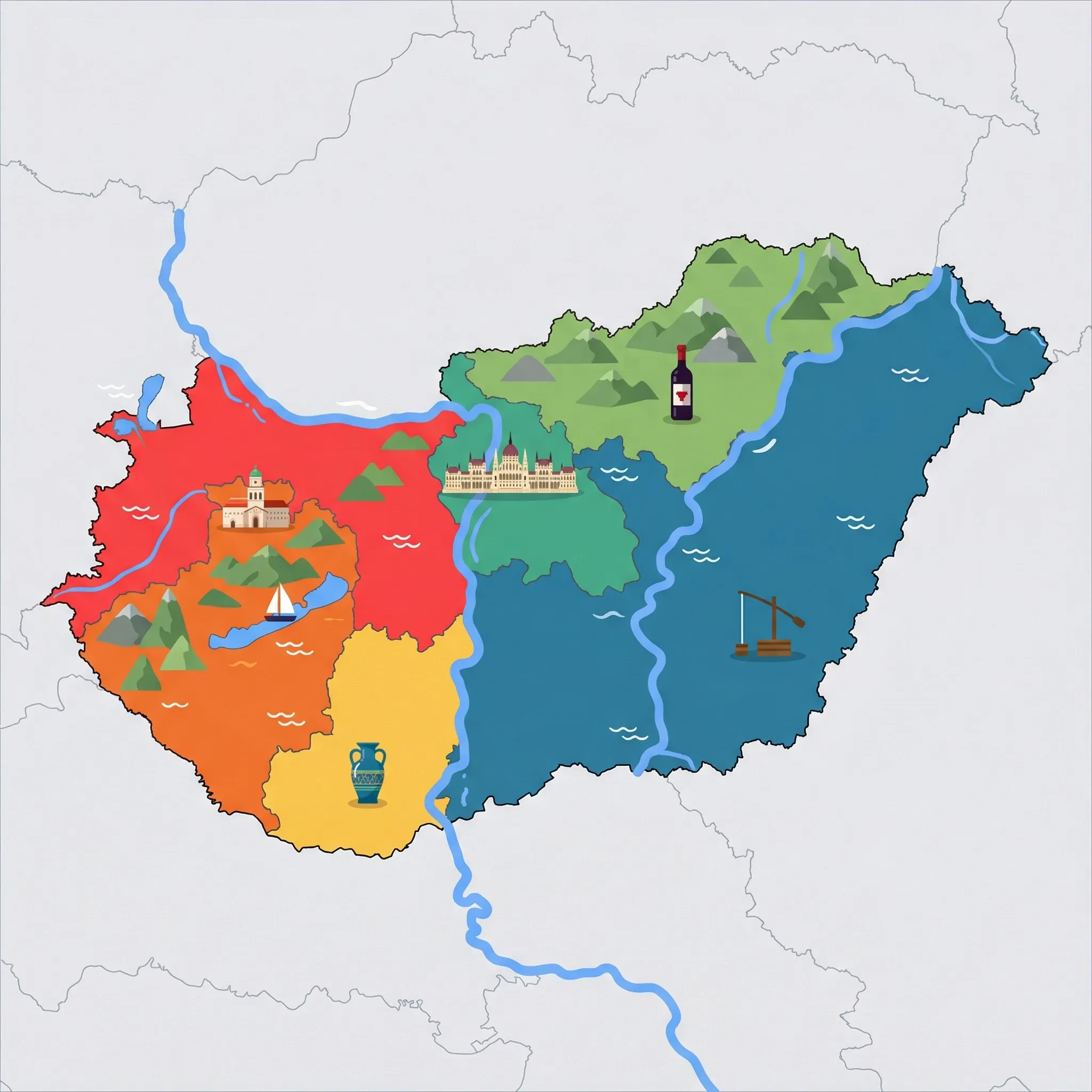
Click a region to explore
Overview
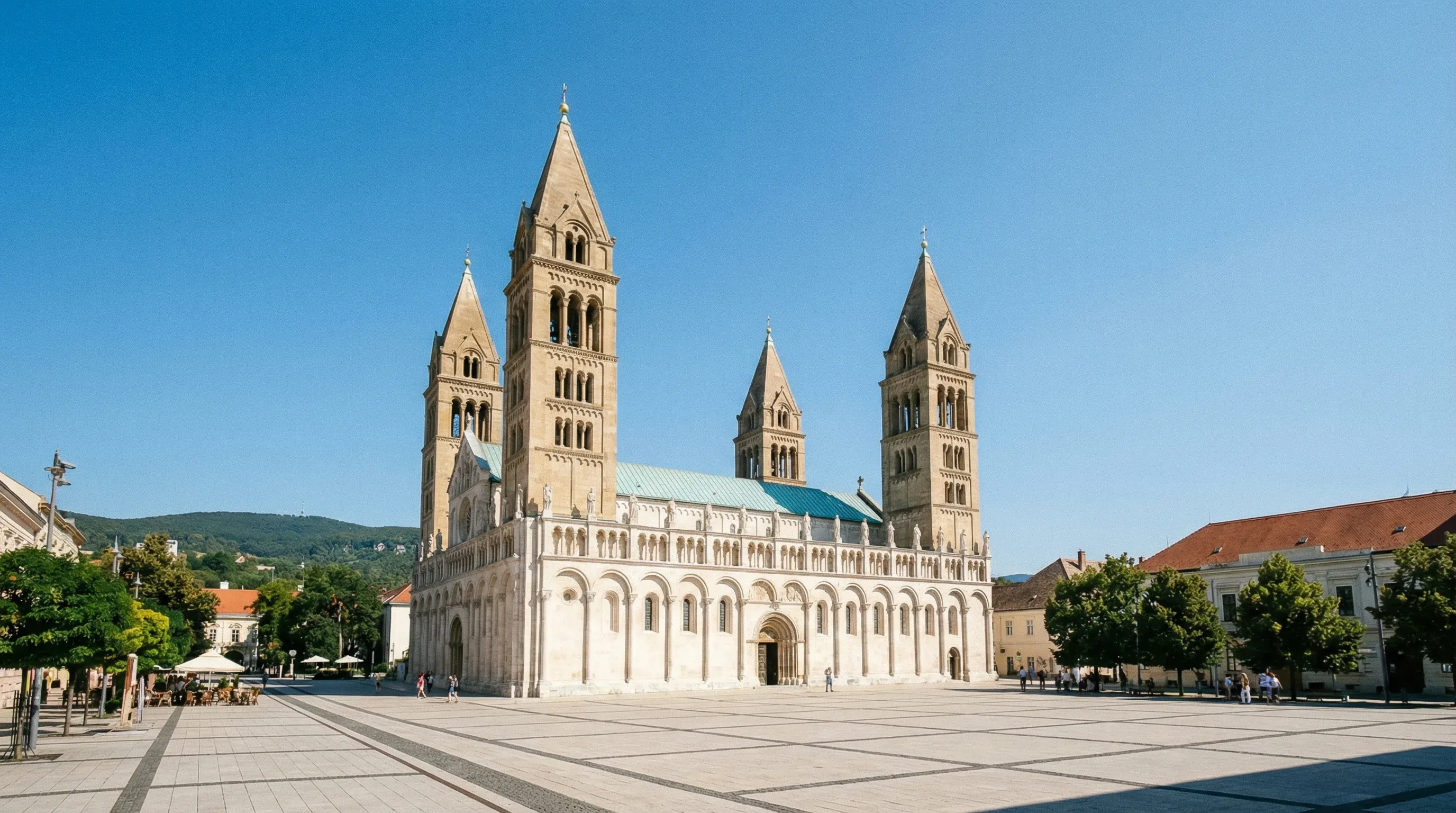
Pécs and the South feel different from the rest of Hungary. The climate is sub-Mediterranean, meaning fig trees grow in gardens and the pace of life is slower and sunnier. Pécs, the 2010 European Capital of Culture, is a jewel box of a city that is incredibly manageable for families. It is built on the slopes of the Mecsek mountains, offering a mix of hiking and urban exploration. The city is a melting pot of Roman, Ottoman, and Hungarian history; you can find a mosque on the main square (now a church) and Early Christian tombs underground.
For children, the region is magical because of the Zsolnay legacy. The Zsolnay family created world-famous ceramics, and their factory has been turned into a massive cultural quarter with puppet theatres, planetariums, and playgrounds adorned with colorful tiles. South of the city, the Villány region is famous for wine, but also for the Siklós Castle, one of the best-preserved medieval castles in the country, which hosts dedicated programs for kids including costume dressing and medieval games.
Key Attractions
The Zsolnay Cultural Quarter is the number one family stop; it's a car-free zone with vibrant statues, a candy manufacture shop, and great playgrounds. In the city center, the Mosque of Pasha Qasim is fascinating for kids to see the mix of Islamic and Christian symbols. Underground, the Sopianae Early Christian Necropolis (UNESCO site) offers a spooky but safe look at history. Just outside the city, Abaliget Cave offers a stalactite tour and a Bat Museum that children find fascinating. The Siklós Castle offers expansive walls to run along and a museum dedicated to the "Captain of Tenkes," a Hungarian Robin Hood figure.
Practical Advice
Pécs is hilly! Be prepared for some uphill walking if you venture north of the main square. The weather can be significantly hotter here than in Budapest, so plan sightseeing for the morning. The city center is largely pedestrianized, which is great for safety.
Food & Drink
Typical meal times: 12:00 pm to 2:30 pm for lunch. Dinner is lively and eaten 7:00 pm to 9:30 pm, thanks to the warm evenings.
Typical meal costs: Moderate. A family lunch costs 18,000–28,000 HUF (approx. $50–77 USD / €45–70 EUR). Pécs has a very strong café culture with affordable cakes.
Dietary requirements: As a university city, Pécs has many trendy eateries catering to vegan, gluten-free, and lactose-free diets, far more than other rural regions.
Signature dishes:
- Mohácsi Halászlé – A version of fish soup from the nearby town of Mohács, utilizing rich carp stock and homemade pasta.
- Stifolder – A local Swabian sausage, smoky and papery, often served on cold platters.
- Mecseki Itóka – While this is a herbal liqueur for adults, the region produces excellent herbal syrups for kids.
Why this score?
The Mecsek Mountains provide moderate outdoor opportunities including forest trails and cave exploration at Abaliget. It offers a more natural, less-crowded experience than the Balaton area, though it still features well-marked paths and tourist amenities.
Why this score?
Pécs is home to one of Hungary's leading medical universities, ensuring a high standard of care and a higher-than-average number of English-speaking doctors. The presence of specialized clinics and a major teaching hospital makes it one of the better-served regions outside the capital.
Why this score?
Pécs is a niche cultural gem with Roman ruins and UNESCO sites, but it remains off-the-beaten-path for the average global traveler. The region's visitor base is largely domestic or focused on specific interests like the Villány wine region or ceramics.

Pécs offers city amenities at prices lower than Budapest. Accommodation is good value; a family apartment near the center costs around 25,000–45,000 HUF (approx. $68–125 USD / €63–112 EUR). Dining out is comparable to Budapest prices due to the high quality, but budget options are plentiful near the university.

Getting Here & Around
Getting Here
- Driving – The M6 highway connects Budapest to Pécs. It is a modern road with many tunnels (which kids usually enjoy) and takes about 2 hours.
- Train – InterCity trains run from Budapest-Keleti to Pécs (approx. 2.5 - 3 hours). The scenery through the Mecsek hills is lovely.
Getting Around
- Walking – The historic center of Pécs is best explored on foot.
- Bus – Local buses are reliable for getting from the center to the Zsolnay Cultural Quarter if little legs are tired.
- Little Train – A rubber-tired tourist train (Dotto) circulates the city center and is a fun way to see the Pécs Cathedral and Mosque without walking.
Nearby Airports (1 airport)
Pecs-Pogany Airport
PEVPecs-Pogany
View full flight map for Hungary →
Official Links

Packing List
Pécs is built on a hillside; strollers struggle with the slopes and stairs.
This is the sunniest region of Hungary; the UV index is often higher here.
Pécs has excellent quality drinking water and many public fountains.
Strictly mandatory in the swimming lap pools at most thermal baths (like Széchenyi or Gellért).
Required for hygiene in thermal bath walkways; walking barefoot is often prohibited.
Ticks are common in Hungarian forests and the Buda Hills; handy for hiking families.
Towel rentals at baths can be expensive or low quality; bringing your own is cleaner and cheaper.
Essential for summer evenings, especially if staying near Lake Balaton or the Danube river.

Activities & Best Times

Hiking, wildlife, outdoor exploration, ecotourism
Offers immersion in the Mecsek Mountains and unique rural experiences like Ladybird Farm and Bőszénfa Deer Farm. Peak season aligns with mild hiking weather and active wildlife, while winter is often too cold and grey for outdoor immersion.

Urban tourism, museums, historical sites, architecture
Only 1 attraction in database (Early Christian Necropolis). 'Excellent' requires globally top-tier status with multiple major attractions. Pécs is culturally significant but not at the level of European cultural capitals. Downgrade to 'very_good' pending addition of more cultural sites.

Sport tourism, fitness activities, active recreation
Strong infrastructure for cycling (EuroVelo 13) and national hiking trails (Blue Tour) through the Mecsek range. Optimal conditions exist in the cooler transition months; summer peak can be overly hot for strenuous cycling or hiking.

Learning experiences, scientific sites, historical education
Pécs Zoo and the Labor Interactive Science Center provide high-quality engagement for families. While these are mostly indoor, visiting is best timed with broader regional peak months when all supporting tourism services are operational.

Spa retreats, wellness centers, peaceful getaways
Anchored by the internationally known thermal waters of Harkány and modern spas in Siklós and Gunaras. Summer is peak for outdoor pool complexes, while the coldest winter months attract wellness tourists seeking indoor thermal heat.

Scenic drives, countryside tours, route-based travel
The Villány-Siklós Wine Route and Mecsek Scenic Loop offer authentic rural landscapes and high-quality stopovers. Spring blooms and autumn harvest provide the best visual and cultural experience, with winter conditions often too bleak for scenic driving.

Amusement parks, family entertainment venues
Features unique, authentic experiences like the Renaissance Theme Park and several regional water parks. These facilities typically operate fully only during the summer season, with shoulder months offering reduced services.

Events, celebrations, seasonal attractions
The Mohács Busójárás in February is a world-class UNESCO event attracting global interest, though regional event density is low otherwise. Autumn months offer strong shoulder appeal due to the prominent grape harvest festivals in Villány.

Winter sports, ski resorts, snow activities
Limited to the local Pécsi Sípálya on Misina-tető, offering a modest experience for families already in the region. Snow coverage is inconsistent outside the core winter months, making it a purely local alternative to major alpine resorts.

Attractions (20 total)



Public Holidays & Calendar Next 12 months
Public holidays, festivals, cultural celebrations, and seasonal natural phenomena coming up in Pécs & Southern Hungary over the next 12 months.
Loading holidays and events...

Travel Advisory
All major agencies agree that Hungary is a safe destination requiring only standard travel safety awareness and common sense precautions.
Safety Topics
Traveller Advice (3 groups)

While the capital is generally open, be aware of legislation that may restrict public displays of affection or the depiction of certain identities to minors. Some public rallies or marches may be subject to fines or facial recognition monitoring.

When visiting lakes, forests, or rural areas from spring to autumn, take precautions against ticks which can transmit encephalitis. Check for ticks immediately after outdoor activities.

Exercise caution in tourist districts and on public transport where pickpocketing is common. Avoid large political demonstrations in Budapest and verify menu prices in bars to avoid overcharging scams.
Agency Summaries
Maintain common sense vigilance. Be alert for petty crime on public transport and overcharging scams in nightlife venues. Note that the Australian Embassy in Budapest is closed; assistance is provided via Vienna.
No specific security warnings are in place. Travellers are advised to monitor local conditions and be aware of health risks such as tick-borne encephalitis in rural or wooded areas.
Travellers should maintain standard safety awareness. While Hungary is generally safe, seasonal spring flooding can occur along the Danube and Tisza rivers. Consular assistance for dual citizens may be limited.
Standard precautions are advised. Recent updates highlight specific legal regulations affecting LGBTQ+ public events and the implementation of the new European Entry-Exit System for border crossings.
General safety awareness is recommended. Travellers should stay informed about potential civil unrest in Budapest and maintain vigilance in public spaces due to the global threat of terrorism.
Hungary is classified as a safe destination. Visitors should practice typical safety habits, especially regarding petty theft in crowded Budapest tourist spots, and use only legitimate currency exchange offices.
Information is provided for general guidance only and does not constitute travel, safety, medical, or legal advice. Conditions may change. Users are responsible for independently verifying information before travel.