
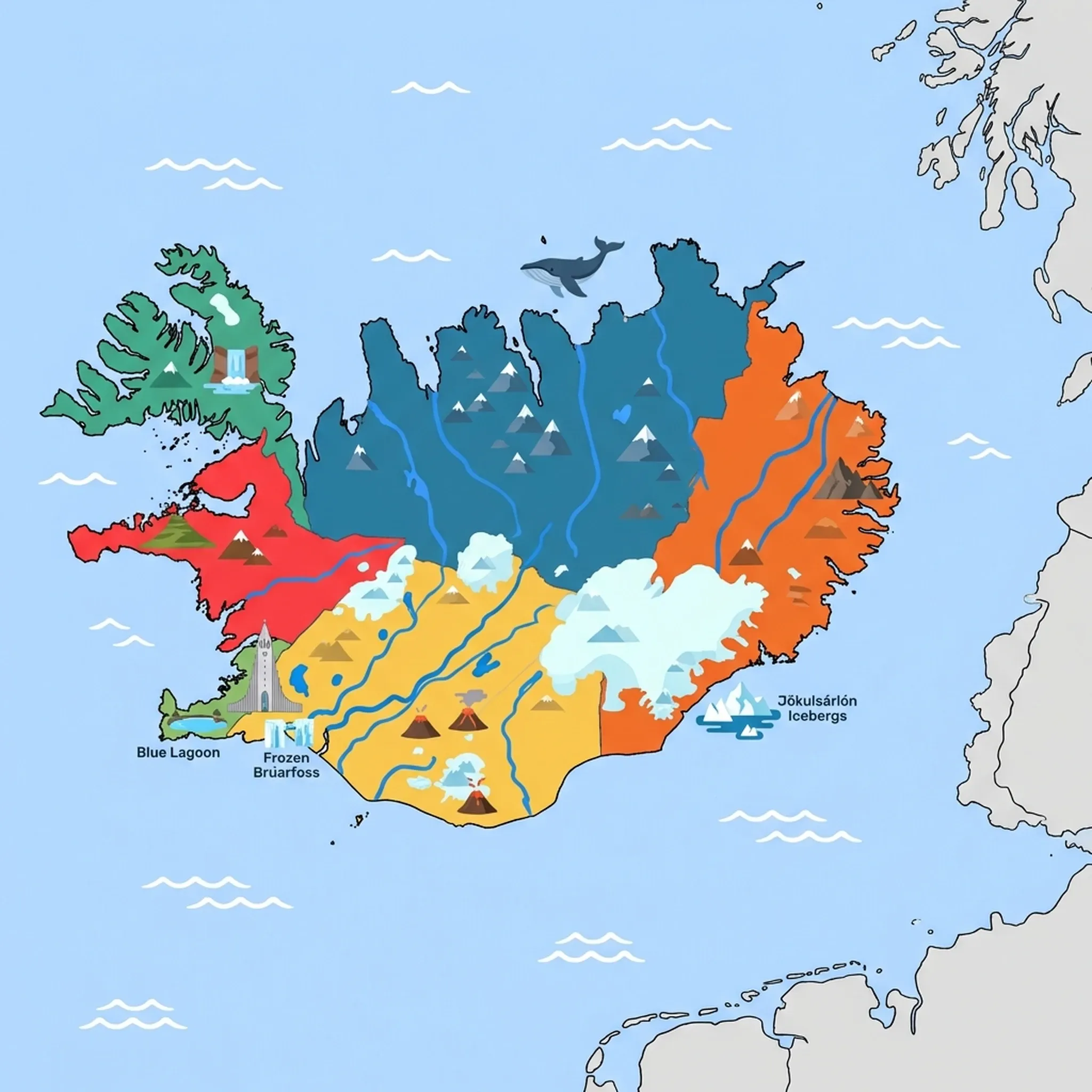
Click a region to explore
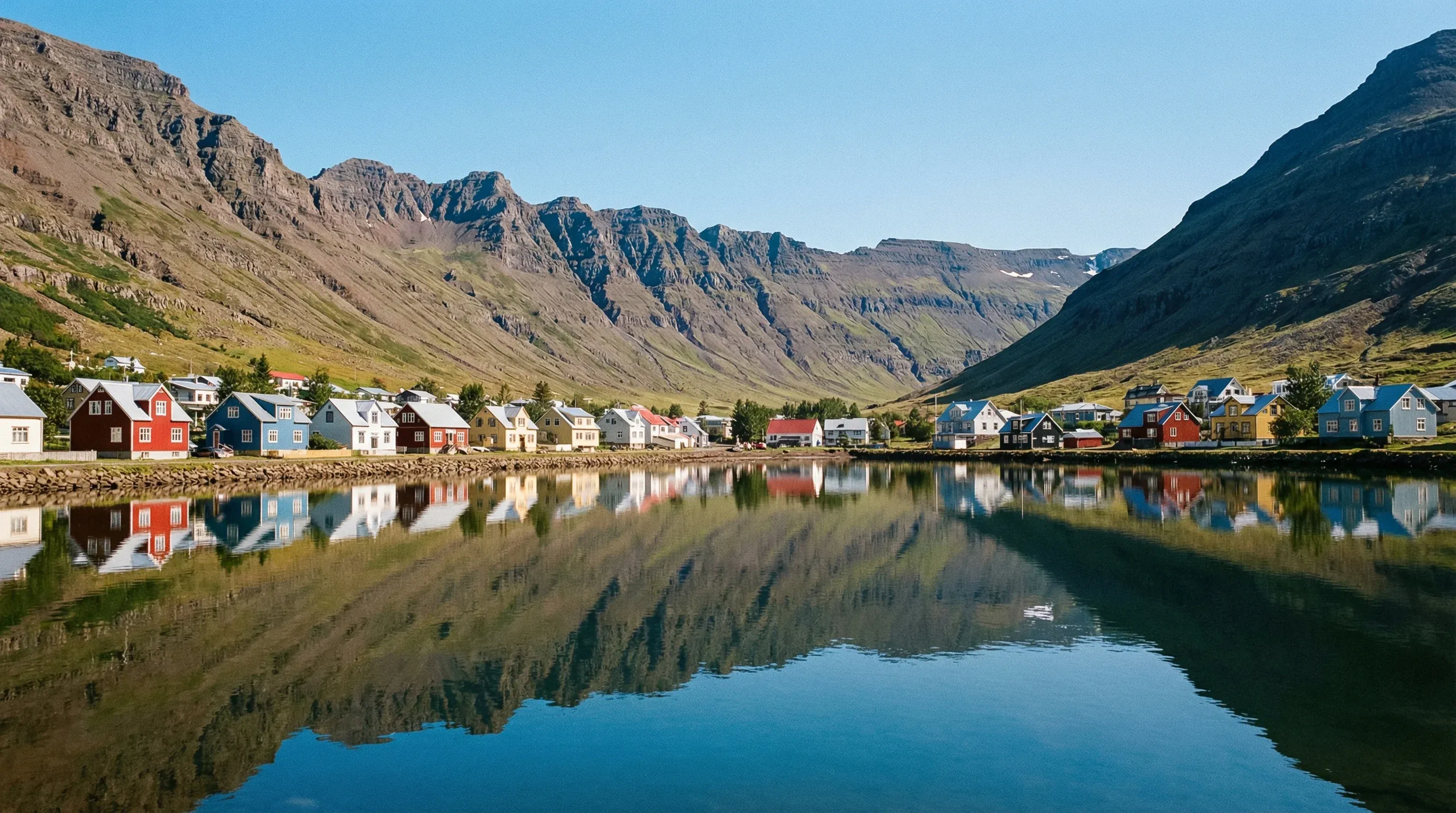
The East Fjords (Austurland) represents one of the most geographically diverse and visually stunning regions of Iceland, yet it remains blissfully uncrowded compared to the south and west. For families, this translates to a relaxed pace of travel where nature takes center stage without the pressure of queuing for viewpoints. The topography is defined by dramatic, narrow fjords carved by the Ice Age glaciers, with jagged basalt mountains rising steeply from the shoreline. Inland, the landscape softens into fertile valleys and the vast highland plateau, home to the country's only wild herds of reindeer—a sight that never fails to delight children. The climate here is often drier and sunnier than in the south, earning the area around Egilsstaðir the nickname "the sunny side of Iceland," though coastal fog can roll in quickly, adding a mystical atmosphere to the scenic drives.
Culturally, the East Fjords feel distinct, with small fishing villages that have retained a strong connection to their maritime heritage and folklore. It is a region steeped in stories of elves, trolls, and sea monsters, providing endless entertainment for imaginative young travelers. Whether you are hiking through Iceland's largest forest or skipping stones on a black sand beach in a quiet fjord, the East offers a sense of discovery that feels personal and unique. It is the perfect destination for families who love the outdoors, scenic drives, and a quieter, more authentic slice of Icelandic life.
Key Attractions
The region is packed with unique stops that appeal to children's curiosity and love for nature. A highlight for many is Petra's Stone Collection in Stöðvarfjörður. This is not a stuffy museum but a home and garden overflowing with thousands of colourful rocks and minerals collected by one woman over a lifetime; it inspires many kids to start their own rock collections immediately. Inland, families should head to the Hallormsstaður National Forest. As Iceland's largest forest, it offers a rare opportunity for sheltered picnics, easy family-friendly hiking trails, and boat rentals, providing a break from the windswept treeless landscapes found elsewhere.
For a touch of mystery, a visit to Lagarfljót Lake is essential. Legend says a giant worm monster (Lagarfljótsormurinn) lives in its depths—a cousin to the Loch Ness Monster—which keeps children scanning the water surfaces eagerly. Nearby, the hike to Hengifoss is moderately challenging but rewarding, revealing a waterfall flanked by striking red clay strata. Finally, the artistic town of Seyðisfjörður Village, reached by a spectacular mountain pass, is famous for its rainbow-painted street and the pale blue Seyðisfjarðarkirkja (The Blue Church), offering a picture-perfect backdrop for family photos.
Practical Advice
The best time to visit is from late May to September when the mountain passes are clear and puffins are visible (specifically at Borgarfjörður Eystri). Allow more time for driving than GPS suggests; the fjord roads wind significantly, and you will want to stop often for photos. Egilsstaðir is the main hub for supermarkets and pharmacy supplies.
Food & Drink
Typical meal times: Lunch is usually served from 11:30 am to 1:30 pm. Dinner is generally earlier than in mainland Europe, typically 6:00 pm to 8:00 pm, though places in Seyðisfjörður may stay open later in summer.
Typical meal costs: Dining is expensive. A main course costs roughly 3,500–5,500 ISK (approx. $25–40 USD / €23–37 EUR). Kids' menus are usually 1,500–2,000 ISK (approx. $11–15 USD / €10–13 EUR).
Dietary requirements: Vegetarian options are standard in most restaurants. Vegan and gluten-free options are available in Egilsstaðir and Seyðisfjörður but can be limited in smaller villages like Djúpivogur.
Signature dishes:
- Wild Reindeer – Only found in East Iceland, reindeer appears on menus as burgers, steaks, or paté. It is lean, flavorful, and sustainable.
- Randalín (Layer Cake) – A traditional Icelandic multi-layered cake with rhubarb jam, often served with coffee in local bakeries.
- Fresh Langoustine – While famous in the south, the East Fjords fishing towns serve exceptionally fresh lobster/langoustine soup.
Why this score?
The terrain is defined by steep, misty fjords and high mountain passes like Fjarðarheiði that can be challenging for drivers in poor weather. It offers significant ruggedness for families, including opportunities to spot wild reindeer and hike to remote waterfalls like Hengifoss without the crowds found elsewhere.
Why this score?
Medical facilities are limited to small clinics in fishing villages and a modest regional hospital in Egilsstaðir. While basic care and emergency transport are available, specialized treatment or major trauma requires a long-distance medical evacuation to Akureyri or Reykjavik.
Why this score?
This region is one of the least visited parts of the country due to its distance from Reykjavik and the Ring Road's tendency to bypass the deeper fjords. While Egilsstaðir serves as a hub, international visitor numbers remain low compared to the south, primarily attracting niche hikers and those on slow-travel road trips.

East Iceland is comparable to the rest of the country—expensive. Accommodation in summer is scarce, so book months ahead. A standard family guesthouse room costs 30,000–50,000 ISK (approx. $220–365 USD / €200–335 EUR) per night. Petrol prices are high. Budget-conscious families often rely on supermarkets like Bónus in Egilsstaðir for lunches. Museum entry fees are generally lower here than in the south.

Getting Here & Around
Getting Here
- Airports – Egilsstaðir Airport (EGS) is the regional hub, with daily domestic flights from Reykjavik (approx. 1 hour).
- Driving – The region is connected via the Ring Road (Route 1). It is roughly a 7-8 hour drive from Reykjavik along the south coast, or 6 hours from Akureyri in the north.
- Ferry – The Smyril Line ferry from Denmark and the Faroe Islands docks in Seyðisfjörður Village, making it the entry point for travelers bringing their own cars from Europe.
Getting Around
- Car – A rental car is essential for families to explore the fjords at their own pace. The roads are generally paved but can be narrow and winding.
- Bus – The Strætó public bus system connects major towns like Egilsstaðir and Seyðisfjörður Village, but schedules are infrequent and not suitable for sightseeing.
- Walking – Towns like Seyðisfjörður are compact and best explored on foot. Hiking trails in Hallormsstaður National Forest are well-marked for families.
Nearby Airports (2 airports)
Egilsstadir
EGSEgilsstadir
Vopnafjordur
VPNVopnafjordur
View full flight map for Iceland →
Official Links

Packing List
The fjord roads (and the mountain pass to Seyðisfjörður) are extremely winding.
Essential for spotting reindeer inland and puffins at Borgarfjörður Eystri.
Even in summer, hiking near glacial rivers or boat trips can be chilly for little feet.
The Midnight Sun is intense in the East; many rural cabins lack true blackout curtains.
Summer brings 24-hour daylight (Midnight Sun), making it very hard for children to sleep without total darkness.
Rain comes sideways, and waterfalls like Seljalandsfoss soak you completely. Jeans will stay wet and cold all day.
Icelandic tap water is pristine and free. Buying bottled water is considered a 'tourist tax' and unnecessary.
Essential for visiting natural hot springs or local swimming pools where towel rental can be expensive or unavailable.
The combination of strong winds and dry cold air chaps skin very quickly, especially on children's faces.
Pack this even in winter! You will visit geothermal pools, hot tubs, and lagoons constantly—it's a daily ritual.

Activities & Best Times

Hiking, wildlife, outdoor exploration, ecotourism
Features iconic attractions like the puffin colony at Hafnarhólmi and the dramatic Hengifoss waterfall, offering authentic sub-arctic wilderness. Peak season aligns with puffin nesting and accessible highland trails, while harsh winters make the interior nearly inaccessible.

Urban tourism, museums, historical sites, architecture
Seyðisfjörður is a charming historic town with preserved wooden architecture, but calling it a 'world-class cultural hub' overstates its significance. By international standards, it's a good small-town cultural experience, not very_good.

Spa retreats, wellness centers, peaceful getaways
The Vök Baths provide a sophisticated geothermal experience floating on Lake Urriðavatn, representing a high standard of authentic Icelandic wellness. While open year-round, the region's isolation makes it most suitable for families during the more accessible summer months.

Scenic drives, countryside tours, route-based travel
Dramatic coastal roads and steep mountain passes like Fjarðarheiði offer spectacular scenery for sophisticated travelers. Driving is optimal in mid-summer; winter travel is frequently disrupted by heavy snow and pass closures.

Sport tourism, fitness activities, active recreation
Offers world-class hiking routes like the Víknaslóðir trails and the Stórurð boulders, requiring the stable conditions and long daylight of summer. Winter conditions are dangerous for trekking and most active infrastructure is inaccessible.

Beach resorts, marine activities: diving, snorkelling, kite surfing, wind surfing, sailing
Black sand beaches like Meleyri offer unique coastal scenery, though the sub-arctic climate prevents traditional beach activities. Visits are limited to a short summer window for coastal walking and wildlife observation.

Learning experiences, scientific sites, historical education
Snaefellsstofa provides high-quality ecological exhibits on the Vatnajökull National Park, though it functions more as a visitor center than a standalone destination. Best visited during the summer tourism peak when guided educational programs are most active.

Winter sports, ski resorts, snow activities
Oddsskarð provides a unique fjord-side skiing experience but with infrastructure that is modest compared to global alpine standards. The season is short, peaking in late winter when daylight returns and snow depth is most reliable.

Amusement parks, family entertainment venues
Small-scale water facilities like the Egilsstaðir pool offer pleasant local recreation but lack the scale and immersion of international theme parks. Activity is primarily outdoor-focused and best enjoyed during the warmer summer season.

Attractions (15 total)



Public Holidays & Calendar Next 12 months
Public holidays, festivals, cultural celebrations, and seasonal natural phenomena coming up in East Fjords over the next 12 months.
Loading holidays and events...

Travel Advisory
The country is considered safe for travel with no major security concerns. Standard personal safety awareness is recommended.
Safety Topics
Traveller Advice (5 groups)

Solo female travel is generally safe and common in Iceland; standard personal safety precautions are recommended.

Consult local resources like SafeTravel.is before embarking on outdoor activities. High-risk areas include active volcanic sites, glaciers, and unpredictable coastal waters where sneaker waves occur.

Iceland is a highly inclusive destination with extensive legal protections and social acceptance for LGBTQ+ individuals.

Accessibility is generally good in urban centers like Reykjavik, though natural sites and rural areas may present significant physical challenges.

Ensure your passport is valid for at least three to six months beyond your departure date. Be prepared for the new electronic entry systems when arriving from outside the Schengen zone.
Agency Summaries
Travel risk is low, but visitors should be cautious regarding natural phenomena. Particular attention is drawn to the potential for volcanic eruptions and extreme weather changes.
Irish citizens should observe standard safety measures. As there is no resident Irish embassy in Iceland, consular services are managed through the mission in Oslo, Norway.
Travellers are advised to maintain a standard level of safety awareness while visiting Iceland. Entry is governed by Schengen Area regulations, allowing short stays without a visa for Canadian citizens.
Iceland is generally safe for visitors. The Department suggests standard safety measures and staying informed about potential natural hazards through local news and authorities.
No specific travel restrictions are in place. Visitors should follow general safety practices and remain aware of weather conditions and local entry requirements for the Schengen Zone.
Standard precautions are sufficient for travel to Iceland. Authorities highlight the need to avoid active volcanic zones on the Reykjanes Peninsula and to prepare for the implementation of the new European Entry/Exit System.
Information is provided for general guidance only and does not constitute travel, safety, medical, or legal advice. Conditions may change. Users are responsible for independently verifying information before travel.