

India is not just a country; it is a continent of contrasts that will captivate the imagination of every family member. For children, it is a real-life storybook where cows walk the streets, monkeys swing from ancient temples, and forts look like they were built for giants. The geography is staggering, stretching from the frozen peaks of Himalayan North India to the tropical palm-lined canals of the Malabar Coast & Western Ghats. While the sensory overload of bustling cities can be intense, the warmth of the people-who treat guests as gods (Atithi Devo Bhava)-makes it a deeply welcoming destination for families.
Traveling here requires patience and a sense of humour, but the rewards are immense. You might find yourself riding a rickshaw through a medieval bazaar in the morning and sleeping in a Maharaja’s palace by night. Whether you are exploring the Delhi & Upper Gangetic Plain or spotting wildlife in the central jungles, India offers an education in history, culture, and nature that no classroom can match.
Key Attractions
The famous "Golden Triangle" is the perfect introduction for families. In Agra, just down the river from the Taj Mahal, the massive Agra Fort offers a chance to explore a walled city of red sandstone where emperors once lived. Nearby, the abandoned city of Fatehpur Sikri fascinates children with its ghost-town atmosphere and vast courtyards. In Jaipur, kids can feel like royalty at Amer Fort, a hilltop fortress with secret passages and elephant motifs, or marvel at the honeycomb windows of the Hawa Mahal.
For a change of pace, the south offers a gentler experience. Fort Kochi is a walkable, historic town where children can watch fishermen operate the iconic Chinese Fishing Nets. Nature-loving families should head to Eravikulam National Park to spot the rare Nilgiri Tahr. If tigers are on your bucket list, Bandhavgarh National Park in central India offers some of the best sighting opportunities in the wild.
History buffs will be awestruck by the Ajanta Caves, ancient rock-cut temples hidden in a horseshoe-shaped valley, featuring paintings that are over 1,500 years old. Back in the cities, the gothic architecture of Chhatrapati Shivaji Maharaj Terminus (CSMT) in Mumbai looks like a railway station from a fantasy novel.
Practical Advice
The best time to visit is generally October to March, when the weather is cooler and dry. For the Himalayas, summer (April–June) is ideal. A "tourist visa" is required for most nationalities, but the e-Visa system is efficient. Health is a priority; drink only bottled or filtered water and avoid raw salads. Travel at a slower pace than you would in the West-two cities in a week is plenty.
Food & Drink
Typical meal times: Lunch is typically served from 1:00 pm to 2:30 pm, and dinner is later than in the West, usually from 8:00 pm to 10:30 pm.
Typical meal costs: ₹1,500–3,000 (approx. $18–36 USD / €16–33 EUR) for a mid-range family meal. Street snacks can be as low as ₹50 ($0.60 USD).
Dietary requirements: India is a vegetarian paradise. Vegan options are abundant, though clarify if ghee (clarified butter) is used. Gluten-free travelers can rely on rice-based dishes like dosas, but should avoid wheat breads (roti/naan). Nut allergies require caution as cashews are common in creamy sauces.
Family-friendly dining: Children are welcomed everywhere. Staff will often go out of their way to entertain toddlers. Most restaurants can make non-spicy rice, dal (lentils), or noodles for fussy eaters.
Signature dishes:
- Butter Chicken – Tender chicken in a mild, creamy tomato curry that is universally loved by children.
- Masala Dosa – A giant, crispy fermented rice crepe stuffed with spiced potatoes, fun to eat with hands.
- Thali – A platter with small bowls of various dishes, perfect for adventurous kids who want to taste everything.
- Chole Bhature – Puffy deep-fried bread served with a chickpea curry, a hearty North Indian brunch staple.
- Lassi – A refreshing yoghurt-based drink, often sweetened with mango or sugar, great for cooling down.

A family of four can expect to spend around ₹10,000–15,000 (approx. $120–180 USD / €110–165 EUR) per day for mid-range hotels, meals, and private driver hire. Entry fees for foreigners are higher than for locals but still affordable by Western standards.
Age Suitability





Did you know? India welcomes approximately 9.8 million international visitors per year. Most visitors come from Europe.

Explore Regions
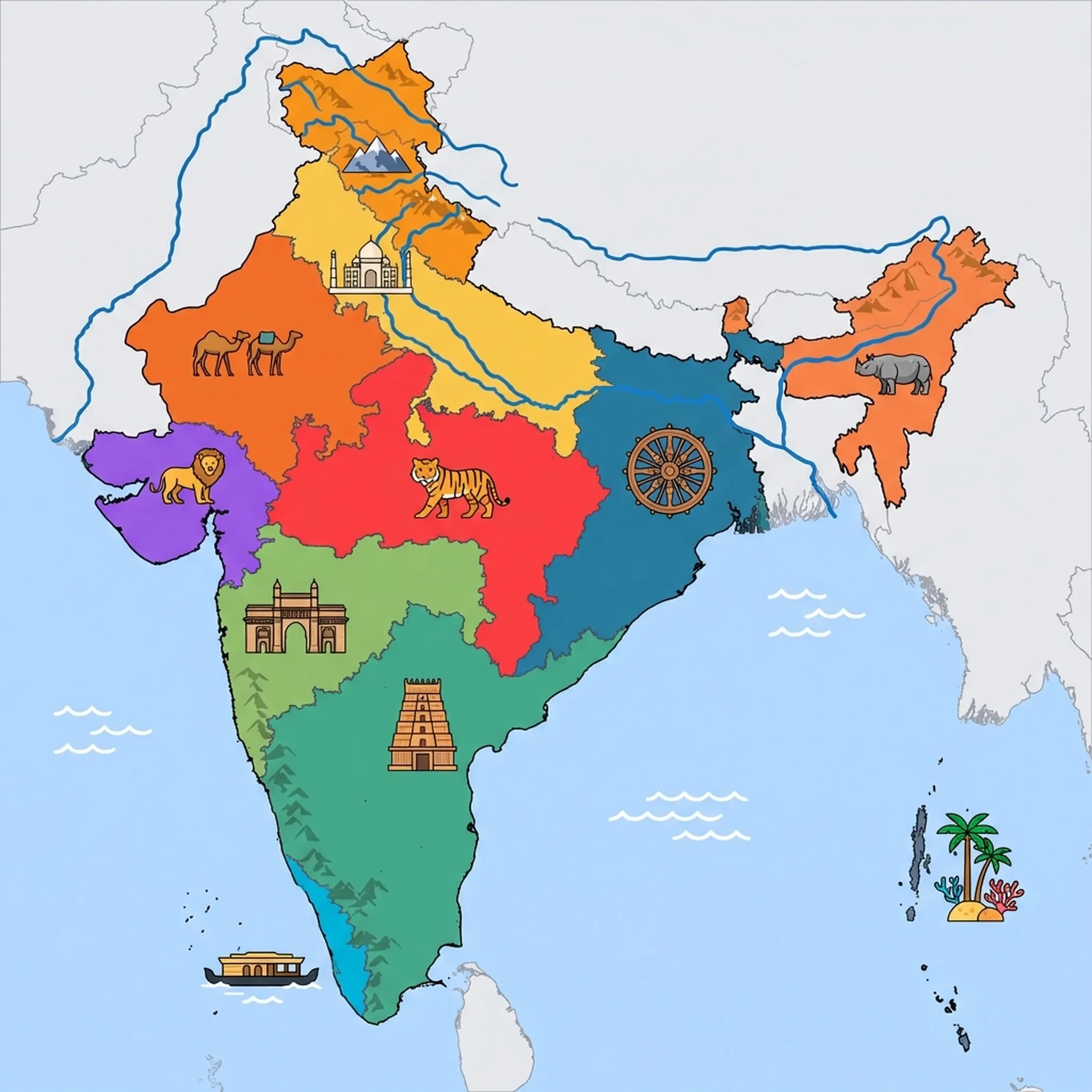
11 Regions
Central India & Tribal Heartland
Where tiger tales and ancient legends come to life 🐅🌿
Deccan & Coromandel South India
Ancient stone giants and coastal sun 🥥🏛️
Delhi & Upper Gangetic Plain
Empire builders and timeless rivers 🕌🇮🇳
Eastern India & Lower Ganges
Misty tea gardens and artistic souls ☕🎭
Gujarat & Western Heritage
Lions, legends, and the great white desert 🦁🧂
Himalayan North India
Snowy peaks and mountain magic 🏔️❄️
Island India
Turquoise waters and tropical secrets 🏝️🐢
Malabar Coast & Western Ghats
Backwaters, spices, and emerald hills 🌴🐘
Northeast India
Tribal lands and the rhino's realm 🦏🌿
Rajasthan & Thar Desert
Forts, palaces, and desert dreams 🐫🏰
Western India & Financial Coast
Bollywood dreams and golden sands 🎬🏖️
Click on a region marker to explore details. Use the dropdown to color regions by activity suitability.

Getting There & Around
Getting There
- By Air – Delhi (DEL) and Mumbai (BOM) are the primary international gateways. Direct flights connect major global hubs to these cities.
- By Train – There are limited international rail links, mostly from Bangladesh (Maitree Express), but these are rarely used by general tourists.
- Entry Requirements – Most travelers, including US, UK, and EU citizens, require a visa. The e-Visa is convenient and valid for 30 days to 5 years. Check your government website for the latest visa requirements, or use the IATA Travel Centre entry-requirements checker.
Getting Around
- Car Hire – The most stress-free option for families. Hiring a car with a private driver is surprisingly affordable and allows you to stop whenever the kids need a break.
- Trains – An essential Indian experience. The Vande Bharat Express and Shatabdi trains are fast and comfortable. Children under 5 travel free (sharing a berth), while those aged 5–11 pay full fare if a separate berth is booked.
- Domestic Flights – Essential for covering long distances, such as between Delhi & Upper Gangetic Plain and the south.
- Auto-rickshaws – Three-wheeled open-air taxis that kids find thrilling for short city hops. Always agree on the fare before getting in.
Official Links

Packing List
You will constantly remove shoes at temples and some museums. Laces become very annoying very quickly.
Dehydration hits fast in the heat; these are essential for rapid recovery if anyone gets an upset stomach.
Stickers that attach to clothing are often easier for children than sticky sprays and creams.
Hotel rooms often have few outlets, sometimes oddly placed. A strip lets you charge all family devices at once.
Many public restrooms do not provide paper. Carry your own supply everywhere.
If travelling by overnight train, it is standard practice to chain luggage under the seat for peace of mind.

Activities & Best Times

Adventure & Nature
ExcellentHiking, wildlife, outdoor exploration, ecotourism
Offers unique desert safaris, camel treks, and wildlife experiences that are world-class in scale and authenticity. Peak visitation aligns with the cooler winter months when desert exploration is safe and comfortable for families.
Home to the world's largest population of one-horned rhinos in Kaziranga and the unique living root bridges of Meghalaya, offering globally unique biodiversity. Peak season aligns with the dry winter months when wildlife visibility is highest and national parks are fully accessible; monsoon flooding closes major reserves from June to September.
Home to world-class tiger reserves like Kanha and Bandhavgarh, this region offers premier wildlife encounters and unique jungle expeditions for sophisticated families. Peak season aligns with mild weather and optimal park accessibility, while monsoons from July to September typically result in park closures.

City & Cultural
ExcellentUrban tourism, museums, historical sites, architecture
Home to iconic UNESCO World Heritage forts and palaces offering unparalleled historical depth and architectural beauty. The extreme heat of May and June makes city exploration physically demanding, defining the clear winter peak season.
Home to the Taj Mahal and Varanasi, this region offers world-class historical depth and living heritage. Peak visitation occurs during the cool winter months when the Gangetic heat is manageable for family exploration.
Home to world-class heritage sites including Hampi and Mysore Palace, offering an authentic and sophisticated cultural experience. The winter season is ideal for walking tours, whereas the extreme temperatures in April and May make urban exploration physically exhausting.

Educational & Exploratory
Very GoodLearning experiences, scientific sites, historical education
Boasts significant scientific and marine research facilities, including major planetariums and aquariums that offer high-quality engagement for families. Most facilities are best visited in the drier months, though indoor museums remain accessible during pre-monsoon heat.
Home to the Chhatrapati Shivaji Maharaj Vastu Sangrahalaya and Nehru Science Centre, offering world-class exhibits for children. These indoor facilities are excellent all-weather options, though the general tourist season aligns with the cooler winter months.
Notable science and natural history museums provide significant learning opportunities for families. While indoor facilities offer some protection, peak travel follows the general tourism cycle of the region.

Relaxation & Wellness
Very GoodSpa retreats, wellness centers, peaceful getaways
The classification notes explicitly state this region is a 'global benchmark for Ayurveda' - this directly contradicts a 'marginal' rating. Kerala is internationally recognized as a premier Ayurvedic wellness destination. The low attraction count (causing the marginal rating) reflects missing data, not actual quality.
Centered around famous thermal springs and the spiritual wellness hub of Rishikesh. While basic infrastructure exists at natural sites, the region is a global magnet for restorative travel, especially outside the humid monsoon.
The region is known for thermal hot springs and luxury wellness retreats in the Sahyadri foothills and Goa. The dry winter season is optimal for holistic treatments, as high humidity and heat in the pre-monsoon months can be uncomfortable for outdoor relaxation.

Sports & Active
Very GoodSport tourism, fitness activities, active recreation
Features high-quality infrastructure for ziplining, desert trekking, and organized cycling routes. Outdoor activity is most enjoyable during the dry, temperate winter months.
Offers world-class high-altitude trekking routes like Goechala and Dzukou Valley, plus crystal-clear river activities in Meghalaya. Spring and autumn provide the stable weather and clear Himalayan views essential for safe trekking; winter is a cold shoulder season for high-altitude routes, while monsoon poses landslide risks.
Unique active tourism infrastructure, such as the Satpura Cycle Safari and Forsyth Trail, provides high-quality trekking and cycling in wilderness settings. Optimal conditions exist during the dry, cool winter; extreme summer heat and heavy monsoon rains render most trails unsuitable or inaccessible.

Beach & Sea
Very GoodBeach resorts, marine activities: diving, snorkelling, kite surfing, wind surfing, sailing
Radhanagar Beach is consistently ranked among the world's top 10 beaches by international travel publications (TripAdvisor, Conde Nast). The current 'good' rating undervalues this internationally when compared to global calibration standards for beach destinations.
Offers unique cultural beach experiences at Puri and Digha with wide sandy shores and warm Bay of Bengal waters. Peak season aligns with the cool winter when sea conditions are calm, while the monsoon months bring rough swells and dangerous currents.
Iconic beaches like Kovalam and Varkala offer world-class coastal views and a relaxed atmosphere, though they lack the reef access of the Maldives. Rough sea conditions and high swell during the monsoon months (May-September) make swimming and coastal recreation unsuitable.

Festivals & Seasonal
GoodEvents, celebrations, seasonal attractions
Pushkar Camel Fair (one of the world's largest livestock fairs) and Jaipur Literature Festival (Asia's largest literary festival) are internationally significant events that attract substantial international tourism.
Durga Puja (UNESCO Intangible Cultural Heritage) and Ratha Yatra are described as 'globally significant' with 'unmatched immersion' - this warrants at least 'good' for international festival tourism.
Hornbill Festival is described as a 'world-class cultural gathering' showcasing 16+ Naga tribes - this is internationally unique and should not be rated 'marginal'.

Road Trips & Scenic
GoodScenic drives, countryside tours, route-based travel
Celebrated routes like the Desert Circuit offer stunning landscapes and accessible heritage sites for touring families. Monsoon rains in July and August can occasionally impact rural road accessibility.
Features spectacular high-altitude drives such as the Bhalukpong-Tawang road and the scenic hills of Cherrapunji. Roads are best navigated during dry transition months for safety and visibility; heavy monsoon rains frequently cause road blockages, and deep winter can close high passes like Sela.
Established routes like the Bastar Tribal Circuit offer experienced travelers authentic access to remote landscapes and traditional cultures. Driving conditions are safest and most scenic in the dry post-monsoon and winter months; summer heat and monsoon flooding make road travel difficult.

Theme Park & Entertainment
GoodAmusement parks, family entertainment venues
Features culturally-themed entertainment complexes and regional water parks that serve as popular family excursions. Best visited when temperatures are moderate, as these venues are primarily outdoor-focused.
Features established regional amusement centers like Nicco Park and Aquatica that cater well to families. Optimal visiting conditions mirror the city's peak winter season when outdoor rides and aquatic centers are most comfortable.
Multiple major water and theme parks like Wonderla Kochi provide reliable family entertainment with international standards. Visitation peaks when temperatures are moderate, with the monsoon period seeing significantly reduced outdoor appeal due to heavy rains.

Ski & Snow
GoodWinter sports, ski resorts, snow activities

Public Holidays & Calendar Next 12 months
Public holidays, festivals, cultural celebrations, and seasonal natural phenomena coming up in India over the next 12 months.
Loading holidays and events...

Climate & Weather
Central India & Tribal Heartland
Show Details
| Month | Temp °C | Rain | Humidity |
|---|
Deccan & Coromandel South India
Show Details
| Month | Temp °C | Rain | Humidity |
|---|
Delhi & Upper Gangetic Plain
Show Details
| Month | Temp °C | Rain | Humidity |
|---|
Eastern India & Lower Ganges
Show Details
| Month | Temp °C | Rain | Humidity |
|---|
Gujarat & Western Heritage
Show Details
| Month | Temp °C | Rain | Humidity |
|---|
Himalayan North India
Show Details
| Month | Temp °C | Rain | Humidity |
|---|

Travel Advisory
A unanimous consensus among all major international agencies indicates that travelers should exercise a high degree of caution throughout India. This assessment is driven by the significant threat of terrorism and the risk of crime, particularly against women. Furthermore, many agencies maintain 'Do Not Travel' warnings for specific border regions and states with active insurgencies.
Safety Topics
Traveller Advice (3 groups)

Exercise extreme vigilance during large religious festivals and at holy sites, which can be targets for terrorist attacks or prone to dangerous overcrowding and stampedes.

Female visitors are urged to take extra precautions due to high reports of sexual harassment and assault. It is advised to avoid traveling alone at night, use only reliable transportation services, and dress modestly to align with local cultural expectations.

Stay highly alert in public places and monitor local news for security updates. Ensure all travel documents are in order and verify if you need to complete the mandatory e-Arrival card before landing. Be aware that consular assistance may be limited in rural or remote areas.
Agency Summaries
Heightened security awareness is needed due to terrorism and crime. Extreme danger zones exist in Jammu and Kashmir and along the border with Pakistan, where landmines and conflict are risks.
Travelers should be more careful due to risks associated with crime and terrorism. Particular emphasis is placed on the risk of sexual assault and the need for special permits in various rural and border districts.
Heightened vigilance is recommended due to the persistent threat of terrorist activity and general safety concerns across the country. Specific regions near the Pakistan border and parts of the Northeast are under stricter travel bans.
Recent military activities along the border and the ongoing threat of extremism necessitate increased caution. Visitors are also warned about strict visa enforcement and legal penalties.
A high level of caution is advised nationwide because of terrorism, crime, and the potential for civil unrest. Travelers must also comply with new digital arrival registration requirements.
While most of the country is accessible, travel is discouraged near the Pakistan border and in several northeastern states due to security volatility. High risks of terrorism and sexual violence are highlighted.
Information is provided for general guidance only and does not constitute travel, safety, medical, or legal advice. Conditions may change. Users are responsible for independently verifying information before travel.