
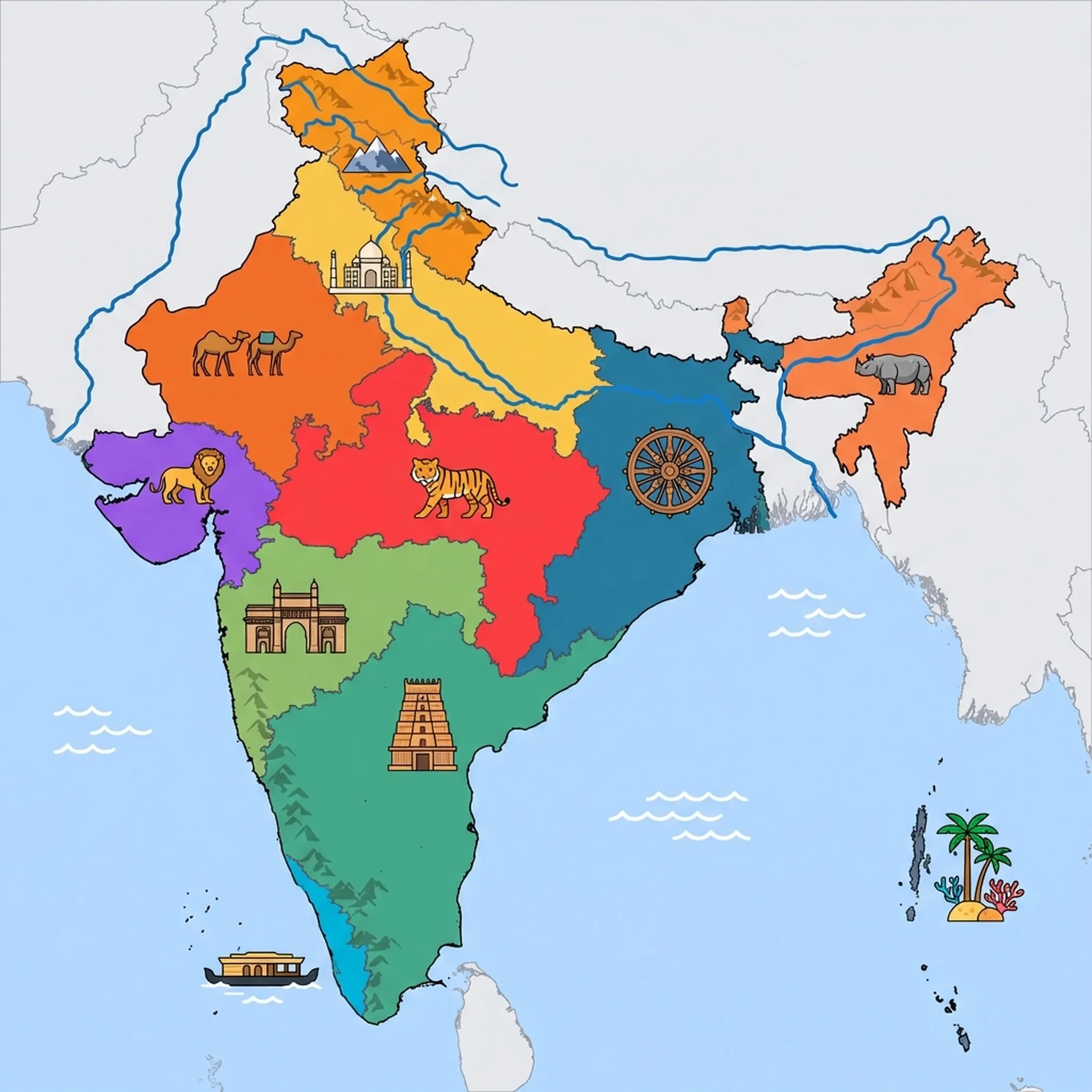
Click a region to explore
⚠️ SAFETY WARNING: Due to ethnic tensions and occasional insurgent activity, government agencies (including CA, USA, UK, and AU) advise travelers to exercise increased caution in Northeast India. Manipur currently faces civil unrest and should be avoided. Rural areas of Nagaland and borders with Myanmar also carry higher risks. However, states like Sikkim, Meghalaya, and the tourist circuits of Assam (Kaziranga) are generally stable. Families are strongly urged to consult their own government's official travel advisory before considering a trip, as circumstances and risk assessments vary.
The Northeast is the "Unexplored Paradise" of India, physically connected to the mainland by a narrow chicken's neck corridor. It feels almost like a different country, with landscapes ranging from the snowy peaks of Sikkim to the lush, rain-soaked hills of Meghalaya and the floodplains of Assam. For adventurous families, this is the ultimate off-beat destination. The culture is a mosaic of hundreds of tribes, each with unique dress, food, and festivals.
Nature is the boss here. It is one of the wettest places on earth (Cherrapunji), meaning waterfalls are spectacular. The biodiversity is immense—this is the land of the one-horned rhinoceros and the red panda. While infrastructure can be basic and roads bumpy, the warmth of the people and the pristine environment make it worth the effort. It's a place to teach children about indigenous cultures and biodiversity away from the crowds.
Key Attractions
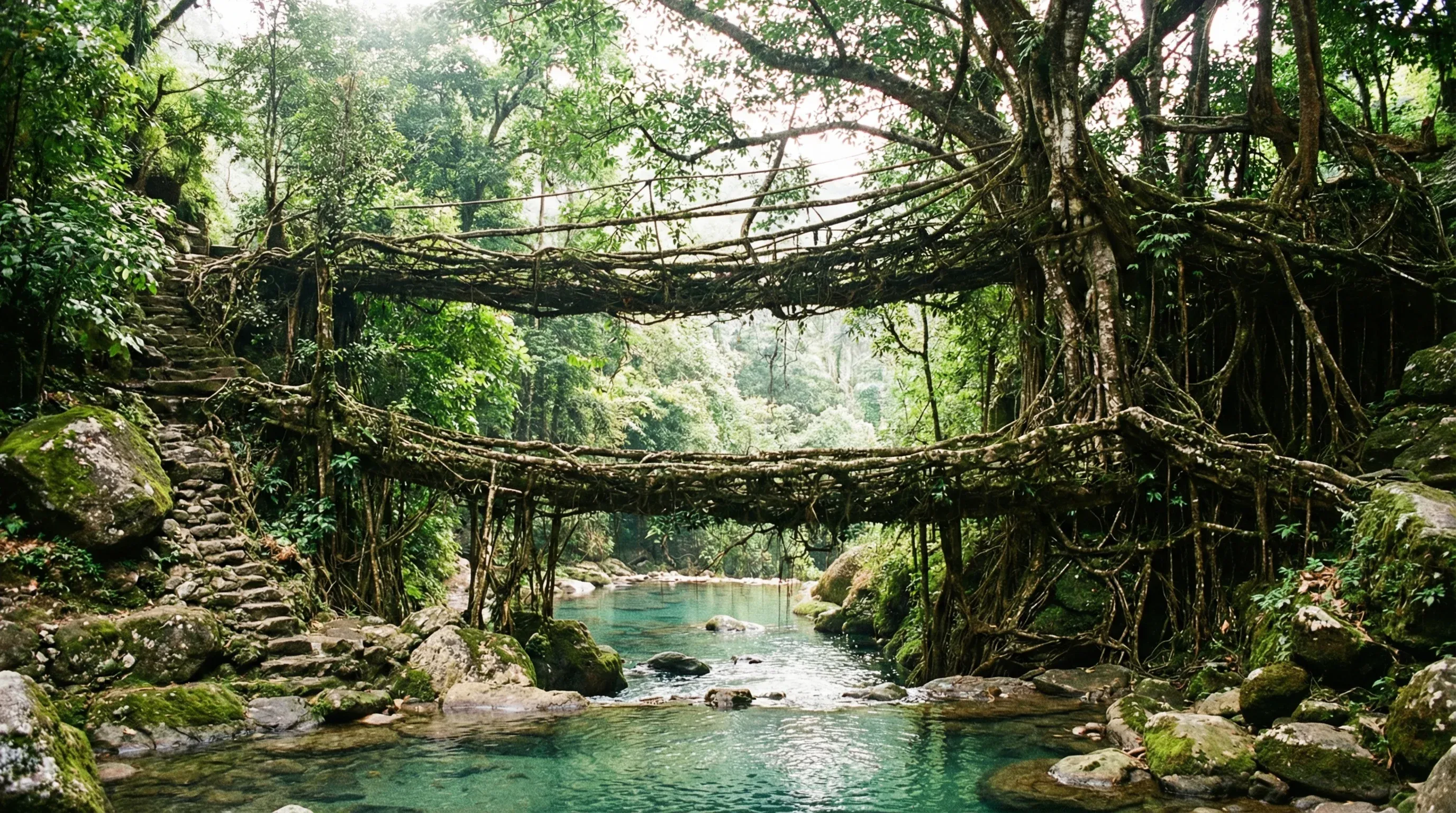
Kaziranga National Park is the star attraction, offering elephant and jeep safaris to see rhinos, elephants, and tigers in tall elephant grass. In Meghalaya, Mawlynnong Village is famous as "Asia's Cleanest Village" and features living root bridges—incredible natural structures grown by locals. The Hornbill Festival in Nagaland (December) is a vibrant explosion of tribal culture, dance, and music. In Sikkim, the Namgyal Institute of Tibetology offers deep insights into Buddhist culture.
Practical Advice
Best time is November to April. Monsoon (May-Sept) is intense and can wash out roads. Inner Line Permits (ILP) are required for Indian and foreign tourists for several states (e.g., Nagaland, Arunachal, Mizoram)—apply online in advance.
Food & Drink
Typical meal times: Early risers. Lunch 12:00 pm to 2:00 pm, Dinner 7:00 pm to 9:00 pm.
Typical meal costs: Inexpensive. A meal costs ₹400–800 (approx. $5–9.50 USD / €4.50–9 EUR).
Dietary requirements: Meat (pork/chicken/fish) is central. Bamboo shoot and fermented soy are common flavours. Vegetarians will find options (rice, dal, veggies) but variety is lower than in mainland India.
Signature dishes:
- Momos – Steamed dumplings, ubiquitous across the region and better than anywhere else in India.
- Thukpa – Noodle soup with veggies/meat, a staple in Sikkim and Arunachal.
- Khar – An Assamese dish made with raw papaya, pulses, and a unique alkali ingredient filtered from banana ashes.
Why this score?
The region is exceptionally rugged, featuring the Eastern Himalayas, dense rainforests, and unique 'living root bridges' that require significant trekking to reach. Infrastructure is sparse, and travel often involves long journeys on difficult mountain roads.
Why this score?
Advanced medical facilities are almost non-existent outside of Guwahati in Assam. In states like Nagaland or Arunachal Pradesh, healthcare is extremely basic, and language barriers can be significant for foreigners in rural areas.
Why this score?
This is India's least-visited region by international tourists due to its geographical isolation and complex permit requirements in the past. It remains a frontier for only the most intrepid travelers and niche ethnography enthusiasts.

The Northeast is budget-friendly, but transport costs can be higher due to difficult terrain requiring private vehicles. Hotels are cheap, with decent rooms for ₹2,500–4,500 (approx. $30–54 USD / €27–50 EUR). Safari costs in <a data-attraction-id="42739">Kaziranga National Park</a> are reasonable, around ₹3,000–5,000 ($36–60 USD) per jeep.

Getting Here & Around
Getting Here
- Airports – Lokpriya Gopinath Bordoloi International Airport (GAU) in Guwahati is the main hub. Bagdogra (IXB) serves Sikkim/Darjeeling.
- Train – The rail network reaches Guwahati and is expanding, but hills are mostly road-dependent.
- Driving – Essential for exploring. Roads can be narrow and landslide-prone in monsoons.
Getting Around
- Sumo/Shared Taxi – The lifeline of the hills. Tata Sumos are shared jeeps that connect towns; cheap but cramped.
- Private Car – Highly recommended for families to handle the winding roads at your own pace.
- Ferry – Used to cross the mighty Brahmaputra river to places like Majuli Island.
Nearby Airports (13 airports)
Aizawl
AJLAizawl
Dibrugarh Airport
DIBDibrugarh
Dimapur
DMUDimapur
Lokpriya Gopinath Bordoloi International Airport
GAUGuwahati
Imphal
IMFImphal
Lilabari Airport
IXILilabari
Silchar
IXSSilchar
Pasighat Airport
IXTPasighat
Jorhat
JRHJorhat
Pakyong Airport
PYGPakyong
Rupsi Airport
RUPRupsi
Shillong Airport
SHLUmroi
Tezu Airport
TEITezu
View full flight map for India →
Official Links

Packing List
Hard copies of Inner Line Permits are checked frequently at state borders.
This is one of the wettest regions on earth; rain is possible anytime.
Power cuts can be frequent in remote hill areas.
Roads are winding and long; essential for kids prone to car sickness.
You will constantly remove shoes at temples and some museums. Laces become very annoying very quickly.
Dehydration hits fast in the heat; these are essential for rapid recovery if anyone gets an upset stomach.
Stickers that attach to clothing are often easier for children than sticky sprays and creams.
Hotel rooms often have few outlets, sometimes oddly placed. A strip lets you charge all family devices at once.
Many public restrooms do not provide paper. Carry your own supply everywhere.
If travelling by overnight train, it is standard practice to chain luggage under the seat for peace of mind.

Activities & Best Times

Hiking, wildlife, outdoor exploration, ecotourism
Home to the world's largest population of one-horned rhinos in Kaziranga and the unique living root bridges of Meghalaya, offering globally unique biodiversity. Peak season aligns with the dry winter months when wildlife visibility is highest and national parks are fully accessible; monsoon flooding closes major reserves from June to September.

Urban tourism, museums, historical sites, architecture
Features a rich tapestry of over 200 indigenous tribes with distinct traditions, crafts, and the historically significant Ahom kingdom sites. Peak months feature major cultural celebrations like the Hornbill Festival and Bihu; extreme monsoon rains in summer significantly disrupt urban exploration and local markets.

Sport tourism, fitness activities, active recreation
Offers world-class high-altitude trekking routes like Goechala and Dzukou Valley, plus crystal-clear river activities in Meghalaya. Spring and autumn provide the stable weather and clear Himalayan views essential for safe trekking; winter is a cold shoulder season for high-altitude routes, while monsoon poses landslide risks.

Events, celebrations, seasonal attractions
Hornbill Festival is described as a 'world-class cultural gathering' showcasing 16+ Naga tribes - this is internationally unique and should not be rated 'marginal'.

Scenic drives, countryside tours, route-based travel
Features spectacular high-altitude drives such as the Bhalukpong-Tawang road and the scenic hills of Cherrapunji. Roads are best navigated during dry transition months for safety and visibility; heavy monsoon rains frequently cause road blockages, and deep winter can close high passes like Sela.

Beach resorts, marine activities: diving, snorkelling, kite surfing, wind surfing, sailing
While landlocked, the region offers unique river 'beaches' and lakeside recreation at Shnongpdeng and Loktak Lake with exceptional water clarity. These are best experienced in the dry winter when water levels are stable and transparent; monsoon runoff turns these waters turbid and unsafe.

Learning experiences, scientific sites, historical education
Regional science centres in Guwahati and Sikkim offer educational value for families but do not constitute standalone international travel motivators. Best visited during months with pleasant weather for combined indoor/outdoor engagement; the height of the monsoon is generally avoided due to travel logistics.

Spa retreats, wellness centers, peaceful getaways
Features authentic natural hot springs in high-altitude areas like Yumthang and Reshi, providing a rustic wellness experience. These are most restorative during the cold winter months; access is often restricted during the wet and humid monsoon season.

Amusement parks, family entertainment venues
Local amusement parks like Accoland provide regional entertainment but lack the scale and immersion of international destination theme parks. Best visited in mild, dry weather to enjoy outdoor rides; heavy summer rains make these parks less appealing for families.

Attractions (31 total)



Public Holidays & Calendar Next 12 months
Public holidays, festivals, cultural celebrations, and seasonal natural phenomena coming up in Northeast India over the next 12 months.
Loading holidays and events...

Travel Advisory
A unanimous consensus among all major international agencies indicates that travelers should exercise a high degree of caution throughout India. This assessment is driven by the significant threat of terrorism and the risk of crime, particularly against women. Furthermore, many agencies maintain 'Do Not Travel' warnings for specific border regions and states with active insurgencies.
Safety Topics
Traveller Advice (3 groups)

Exercise extreme vigilance during large religious festivals and at holy sites, which can be targets for terrorist attacks or prone to dangerous overcrowding and stampedes.

Female visitors are urged to take extra precautions due to high reports of sexual harassment and assault. It is advised to avoid traveling alone at night, use only reliable transportation services, and dress modestly to align with local cultural expectations.

Stay highly alert in public places and monitor local news for security updates. Ensure all travel documents are in order and verify if you need to complete the mandatory e-Arrival card before landing. Be aware that consular assistance may be limited in rural or remote areas.
Agency Summaries
Heightened security awareness is needed due to terrorism and crime. Extreme danger zones exist in Jammu and Kashmir and along the border with Pakistan, where landmines and conflict are risks.
Travelers should be more careful due to risks associated with crime and terrorism. Particular emphasis is placed on the risk of sexual assault and the need for special permits in various rural and border districts.
Heightened vigilance is recommended due to the persistent threat of terrorist activity and general safety concerns across the country. Specific regions near the Pakistan border and parts of the Northeast are under stricter travel bans.
Recent military activities along the border and the ongoing threat of extremism necessitate increased caution. Visitors are also warned about strict visa enforcement and legal penalties.
A high level of caution is advised nationwide because of terrorism, crime, and the potential for civil unrest. Travelers must also comply with new digital arrival registration requirements.
While most of the country is accessible, travel is discouraged near the Pakistan border and in several northeastern states due to security volatility. High risks of terrorism and sexual violence are highlighted.
Information is provided for general guidance only and does not constitute travel, safety, medical, or legal advice. Conditions may change. Users are responsible for independently verifying information before travel.