
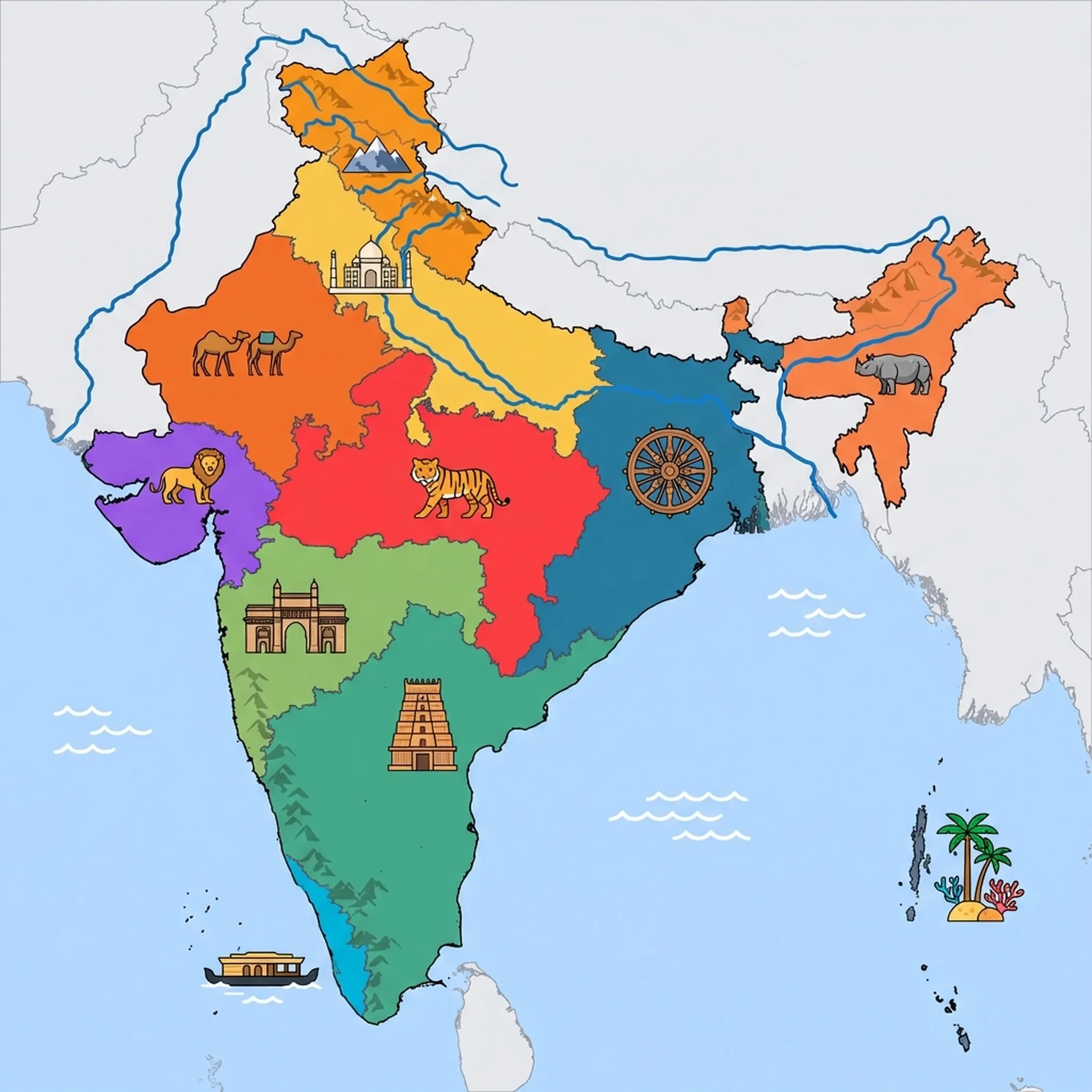
Click a region to explore
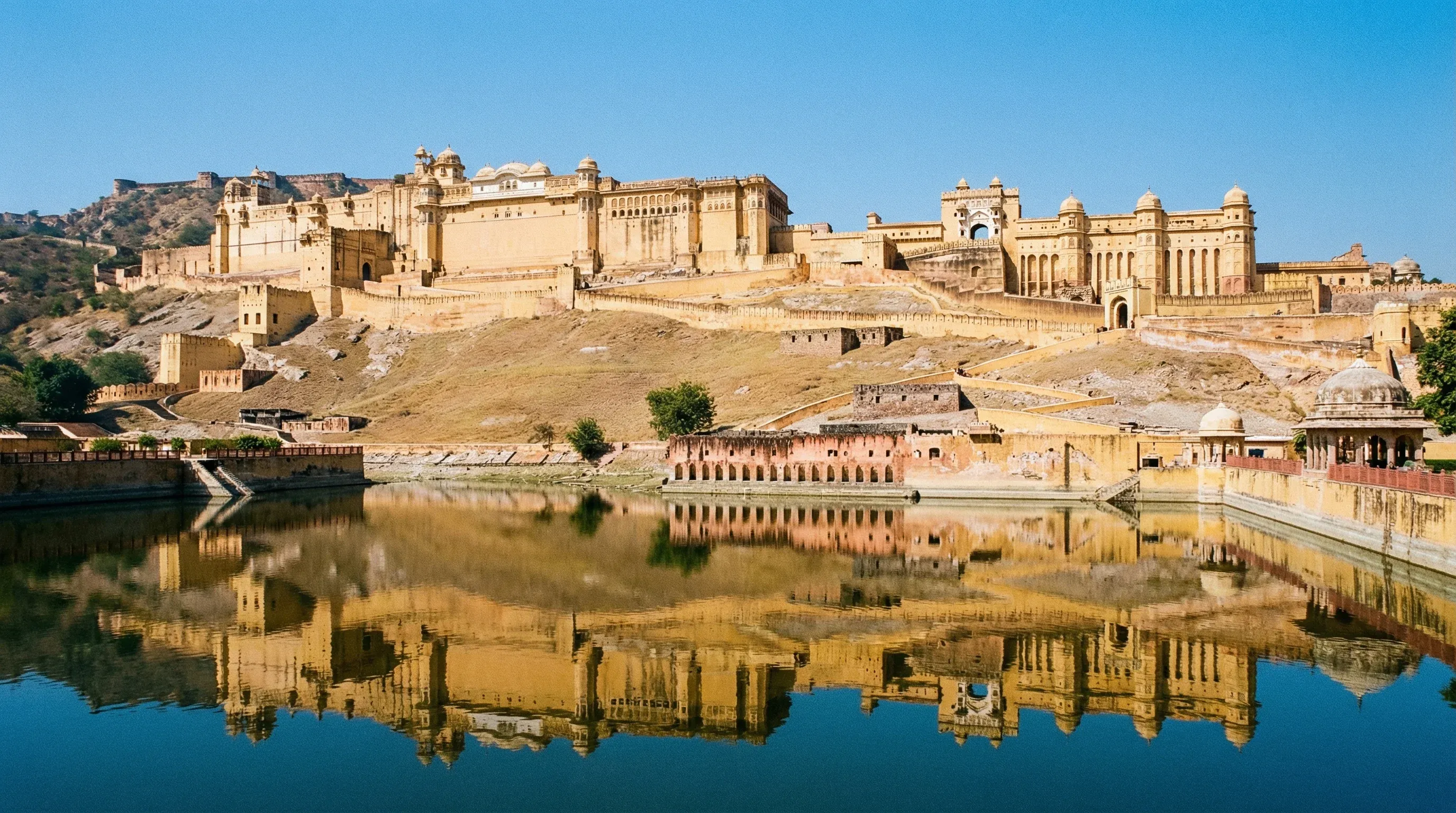
Rajasthan is the India of the imagination: a land of turbaned men, colourful saris, colossal forts, and palaces floating on lakes. For families, it is a spectacular open-air museum where history comes alive. The landscape is dominated by the golden sands of the Thar Desert in the west and the ancient Aravalli hills in the south. Every city has a colour code: Jaipur is Pink, Jodhpur is Blue, Jaisalmer is Gold, and Udaipur is White.
Kids love the 'fortress' feel of the state—exploring secret passages in Amer Fort or looking down from the ramparts of Mehrangarh Fort. The culture is incredibly hospitable and flamboyant, with puppet shows, folk music, and camel rides being standard entertainment. While it can be chaotic and dusty, the tourism infrastructure is some of the best in India, making it easier for families to navigate than other regions.
Key Attractions
Jaipur's Amer Fort is a must, where you can take a jeep up to the gates. The Jantar Mantar is a giant astronomical observatory that looks like a playground of shapes—fascinating for curious kids. In Jaisalmer, the Jaisalmer Fort is a living sandcastle where people still live, and nearby Sam Sand Dunes offer camel safaris and desert camping. Udaipur's City Palace, Udaipur towers over Lake Pichola, offering boat rides that feel like a fairytale.
Practical Advice
Strictly a winter destination (October to March). Summers (April-June) see temps hit 45°C+. Diwali (Oct/Nov) and Holi (March) are celebrated with massive enthusiasm here.
Food & Drink
Typical meal times: Lunch 1:00 pm to 3:00 pm, Dinner 8:00 pm to 10:30 pm.
Typical meal costs: Wide range. Tourist restaurants charge ₹800–1,500 (approx. $9.50–18 USD / €8.50–16 EUR). Local "dhabas" are cheaper.
Dietary requirements: Predominantly vegetarian. Spicy and rich in ghee (butter). Vegan options available but watch out for dairy/ghee in lentils.
Signature dishes:
- Dal Baati Churma – The state dish: spicy lentils, baked wheat balls, and crushed sweet wheat, all drenched in ghee.
- Gatte ki Sabzi – Gram flour (besan) dumplings cooked in a spicy yoghurt gravy.
- Laal Maas – A fiery mutton curry from Jodhpur, traditionally made with red chillies (ask for mild for kids).
Why this score?
While camel safaris in the Thar Desert and fort exploration offer a sense of adventure, the tourism experience is highly curated and comfortable. Most visitors follow a well-trodden circuit with reliable transportation and pre-arranged tours.
Why this score?
Major cities like Jaipur, Jodhpur, and Udaipur have reliable private hospitals with experience treating foreign tourists. However, medical care in the deep desert regions or rural villages is much more limited and less accessible.
Why this score?
Rajasthan is a major international draw, featuring iconic 'Instagrammable' cities like Jaipur and Udaipur. It has a highly developed luxury and boutique hotel sector that caters specifically to the high-end global market.

Rajasthan fits all pockets, from backpacker hostels to the world's most expensive palace hotels. A heritage haveli (traditional mansion) hotel costs ₹4,000–8,000 (approx. $48–95 USD / €44–88 EUR) and offers great atmosphere. Entry fees to forts are around ₹600 ($7 USD) for foreigners.

Getting Here & Around
Getting Here
- Airports – Jaipur International Airport (JAI) is the main gateway. Udaipur, Jodhpur, and Jaisalmer also have airports.
- Train – The "Palace on Wheels" is a famous luxury train, but standard rail connections like the Shatabdi Express are excellent.
- Driving – The roads are generally good, making the Jaipur-Jodhpur-Udaipur triangle a popular road trip.
Getting Around
- Auto-rickshaw/Tuk-tuk – The most fun way to see the narrow bazaar streets.
- Car – Hiring a private car and driver for the duration of the trip is the standard and most comfortable family option.
- Camel/Elephant – Used as novelty transport in places like Sam Sand Dunes or Amer Fort.
Nearby Airports (6 airports)
Nal Airport
BKBBikaner
Jaipur
JAIJaipur
Jodhpur
JDHJodhpur
Jaisalmer
JSAJaisalmer
Ajmer Airport
KQHKishangarh
Udaipur
UDRUdaipur
View full flight map for India →
Official Links

Packing List
Dry desert heat causes dehydration faster than you realize.
Useful for dust protection in open jeeps and covering heads in temples.
The desert air is extremely drying for skin.
Desert nights (Dec-Feb) get surprisingly cold (single digits °C).
You will constantly remove shoes at temples and some museums. Laces become very annoying very quickly.
Dehydration hits fast in the heat; these are essential for rapid recovery if anyone gets an upset stomach.
Stickers that attach to clothing are often easier for children than sticky sprays and creams.
Hotel rooms often have few outlets, sometimes oddly placed. A strip lets you charge all family devices at once.
Many public restrooms do not provide paper. Carry your own supply everywhere.
If travelling by overnight train, it is standard practice to chain luggage under the seat for peace of mind.

Activities & Best Times

Hiking, wildlife, outdoor exploration, ecotourism
Offers unique desert safaris, camel treks, and wildlife experiences that are world-class in scale and authenticity. Peak visitation aligns with the cooler winter months when desert exploration is safe and comfortable for families.

Urban tourism, museums, historical sites, architecture
Home to iconic UNESCO World Heritage forts and palaces offering unparalleled historical depth and architectural beauty. The extreme heat of May and June makes city exploration physically demanding, defining the clear winter peak season.

Sport tourism, fitness activities, active recreation
Features high-quality infrastructure for ziplining, desert trekking, and organized cycling routes. Outdoor activity is most enjoyable during the dry, temperate winter months.

Learning experiences, scientific sites, historical education
Notable science and natural history museums provide significant learning opportunities for families. While indoor facilities offer some protection, peak travel follows the general tourism cycle of the region.

Events, celebrations, seasonal attractions
Pushkar Camel Fair (one of the world's largest livestock fairs) and Jaipur Literature Festival (Asia's largest literary festival) are internationally significant events that attract substantial international tourism.

Scenic drives, countryside tours, route-based travel
Celebrated routes like the Desert Circuit offer stunning landscapes and accessible heritage sites for touring families. Monsoon rains in July and August can occasionally impact rural road accessibility.

Amusement parks, family entertainment venues
Features culturally-themed entertainment complexes and regional water parks that serve as popular family excursions. Best visited when temperatures are moderate, as these venues are primarily outdoor-focused.

Spa retreats, wellness centers, peaceful getaways
Includes traditional hot springs and thermal sites, though they lack the high-end spa infrastructure found in global wellness hubs. These sites are most appealing during the cold winter months (Nov-Feb).

Attractions (26 total)



Public Holidays & Calendar Next 12 months
Public holidays, festivals, cultural celebrations, and seasonal natural phenomena coming up in Rajasthan & Thar Desert over the next 12 months.
Loading holidays and events...

Travel Advisory
A unanimous consensus among all major international agencies indicates that travelers should exercise a high degree of caution throughout India. This assessment is driven by the significant threat of terrorism and the risk of crime, particularly against women. Furthermore, many agencies maintain 'Do Not Travel' warnings for specific border regions and states with active insurgencies.
Safety Topics
Traveller Advice (3 groups)

Exercise extreme vigilance during large religious festivals and at holy sites, which can be targets for terrorist attacks or prone to dangerous overcrowding and stampedes.

Female visitors are urged to take extra precautions due to high reports of sexual harassment and assault. It is advised to avoid traveling alone at night, use only reliable transportation services, and dress modestly to align with local cultural expectations.

Stay highly alert in public places and monitor local news for security updates. Ensure all travel documents are in order and verify if you need to complete the mandatory e-Arrival card before landing. Be aware that consular assistance may be limited in rural or remote areas.
Agency Summaries
Heightened security awareness is needed due to terrorism and crime. Extreme danger zones exist in Jammu and Kashmir and along the border with Pakistan, where landmines and conflict are risks.
Travelers should be more careful due to risks associated with crime and terrorism. Particular emphasis is placed on the risk of sexual assault and the need for special permits in various rural and border districts.
Heightened vigilance is recommended due to the persistent threat of terrorist activity and general safety concerns across the country. Specific regions near the Pakistan border and parts of the Northeast are under stricter travel bans.
Recent military activities along the border and the ongoing threat of extremism necessitate increased caution. Visitors are also warned about strict visa enforcement and legal penalties.
A high level of caution is advised nationwide because of terrorism, crime, and the potential for civil unrest. Travelers must also comply with new digital arrival registration requirements.
While most of the country is accessible, travel is discouraged near the Pakistan border and in several northeastern states due to security volatility. High risks of terrorism and sexual violence are highlighted.
Information is provided for general guidance only and does not constitute travel, safety, medical, or legal advice. Conditions may change. Users are responsible for independently verifying information before travel.