

Spanning the equator with over 17,000 islands, Indonesia is a destination of almost overwhelming variety and colour. It sits on the "Ring of Fire," gifting it a dramatic landscape of smoking volcanoes, crater lakes, and black sand beaches that fascinate children and adults alike. For families, the country offers a unique balance: the tourist-friendly infrastructure of Bali allows for a relaxing beach holiday, while the rugged beauty of Sumatra and Java provides genuine adventure. The culture is deeply family-oriented; children are adored everywhere, often receiving warm attention from locals that makes travel feel welcoming and safe.
Beyond the beaches, the real magic lies in the wildlife and heritage. This is one of the few places on Earth where you can see orangutans swinging in the wild, dragons stalking the brush, and monkeys ruling the temple grounds. The diverse cultures-from the Hindu festivals of Bali to the Sultanate traditions of Yogyakarta-introduce kids to a world of shadow puppets, gamelan music, and mythical legends. Whether you are trekking to a crater rim at sunrise or snorkelling over vibrant coral reefs, Indonesia promises a sensory-rich education in nature and geography.
Key Attractions
For wildlife encounters that feel like a documentary come to life, Gunung Leuser National Park in Sumatra is unmissable for trekking to see orangutans in their natural habitat. In Java, the educational Batu Secret Zoo is world-class and perfect for younger kids, while adventurous families can take a jeep tour to witness the otherworldly landscape of Bromo Tengger Semeru National Park. Further east, the brave can sail to Komodo Island (Loh Liang) to walk with the world's largest lizards.
Cultural landmarks here are equally impressive. The massive Borobudur Temple offers a history lesson in stone, where kids can explore hundreds of Buddha statues and bell-shaped stupas. In Bali, the Bali Safari and Marine Park combines conservation with entertainment, and the Besakih Great Temple provides a majestic glimpse into the island's spiritual life. For a cooler climate and space to run, the sprawling Bogor Botanical Gardens near Jakarta offer a lush, green escape from the city heat.
Practical Advice
The best time to visit is during the dry season (May to September), which makes island-hopping and trekking much easier. Visa on Arrival (VoA) is available for many nationalities, and the new "All Indonesia" app streamlines customs and health declarations. Health-wise, drink only bottled water and be cautious with ice to avoid "Bali Belly"; packing rehydration salts is wise. Traffic in major hubs like Jakarta and parts of Bali can be gridlocked, so allow extra time for travel.
Food & Drink
Typical meal times: Lunch is usually served from 12:00 pm to 2:00 pm, and dinner from 6:30 pm to 9:00 pm. In tourist areas, restaurants often stay open all day.
Typical meal costs: 40,000–120,000 IDR (approx. $2.50–7.50 USD / €2.30–6.90 EUR). Street food (warungs) can be as low as 20,000 IDR ($1.25), while resort dining can exceed 250,000 IDR ($16).
Dietary requirements: Vegetarian options are abundant, especially tofu (tahu) and tempeh dishes. Halal food is the standard across most of the country (except Hindu Bali and parts of Christian North Sumatra/Papua). Peanuts and shrimp paste are very common ingredients, so allergy sufferers must be vigilant.
Family-friendly dining: Indonesian dining is communal and relaxed. Highchairs are common in tourist restaurants but rare in local warungs. Kids usually love the noodle dishes and satay skewers.
Signature dishes:
- Nasi Goreng – The national fried rice dish, often served with a fried egg, prawn crackers (krupuk), and cucumber slices.
- Satay (Sate) – Skewers of grilled chicken or beef served with a rich, sweet peanut sauce that children usually adore.
- Gado-Gado – A salad of boiled vegetables, hard-boiled eggs, tofu, and tempeh covered in a creamy peanut dressing.
- Martabak Manis – A thick, sweet pancake stuffed with chocolate, cheese, or condensed milk-a decadent evening treat.
- Soto Ayam – A comforting, mild yellow chicken soup with noodles, often customized with lime and sweet soy sauce.
Safety
Indonesia is generally safe for families, but standard precautions apply. Be vigilant with belongings in crowded areas. When renting scooters (common in Bali), ensure you have international licenses and always wear helmets-scooter accidents are the #1 cause of tourist injury. Stick to bottled water. Be aware that currents can be strong at beaches; only swim in designated safe zones. In volcanic areas, always follow local exclusion zones and guide advice.

Indonesia is excellent value. A family of four can travel comfortably for 1,600,000–2,500,000 IDR (approx. $100–160 USD / €90–145 EUR) per day, covering mid-range family suites, private drivers, and meals. Local street food costs under 40,000 IDR ($2.50), while luxury resorts in Bali offer world-class amenities at a fraction of Western prices.
Age Suitability





Did you know? Indonesia welcomes approximately 13.6 million international visitors per year. Most visitors come from East Asia and the Pacific.

Explore Regions
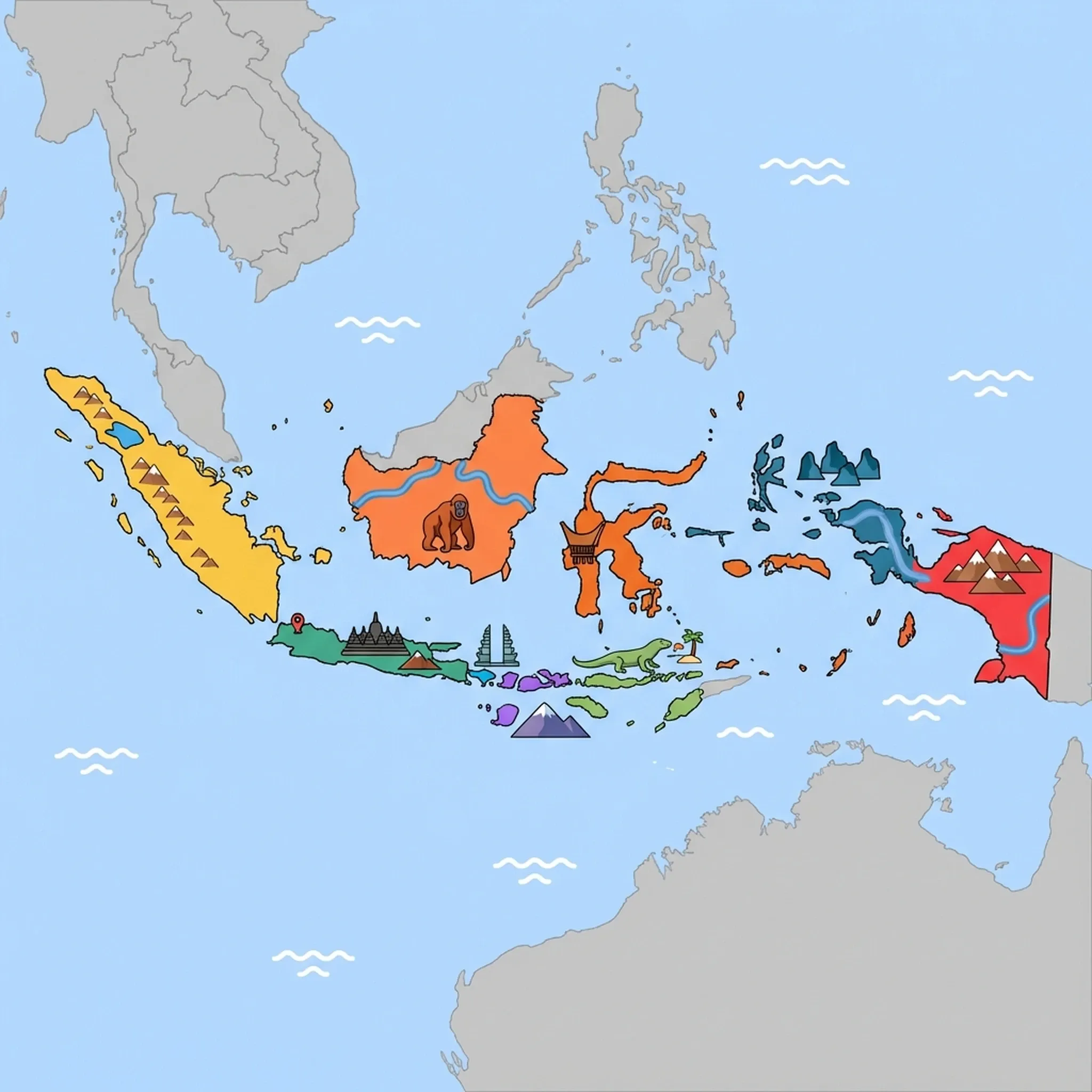
9 Regions
Bali
The Island of Gods offering surf, spirituality, and endless family adventure 🌺🌊
Borneo/Kalimantan
River odysseys and ancient rainforests home to the orangutan 🦧🌿
Java (Jakarta, Yogyakarta, Bromo)
Ancient temples and smoking volcanoes in the Ring of Fire 🌋🕌
Komodo & Flores
Home of the Dragon and islands of lost worlds 🐉🏝️
Lombok & Gili Islands
Unspoiled beaches and car-free island bliss 🐢🚲
Papua
A frontier of mist-covered mountains and living traditions 🌄🌿
Raja Ampat
The Last Paradise: Earth's richest marine reefs 🐠🏝️
Sulawesi (Toraja)
Land of heavenly kings and eternal ancestors 🐃🏚️
Sumatra (Lake Toba, Orangutans)
Volcanic lakes and jungle encounters with the red ape 🦧🌋
Click on a region marker to explore details. Use the dropdown to color regions by activity suitability.

Getting There & Around
Getting There
- By Air – Soekarno-Hatta International Airport (CGK) in Jakarta and Ngurah Rai International Airport (DPS) in Bali are the main gateways. Direct flights connect to major Asian, Australian, and Middle Eastern hubs.
- By Sea – Ferries connect Singapore and Malaysia to the Riau Islands (Batam/Bintan) and Sumatra. Fast boats run between Bali, Lombok & Gili Islands.
- Entry Requirements – Most Western families can enter with a Visa on Arrival (VoA), valid for 30 days. You must also complete the "All Indonesia" digital customs/health declaration before travel. Check your government website for the latest visa requirements, or use the IATA Travel Centre entry-requirements checker.
Getting Around
- Car Hire with Driver – The most popular family option. For 600,000–900,000 IDR (approx. $38–57 USD) per day, you get a private car and driver who navigates the chaotic traffic for you. Essential for exploring Bali and Java day trips.
- Trains – In Java, the train network (Kereta Api) is excellent, safe, and scenic. Executive class is affordable and comfortable for families travelling between Jakarta, Yogyakarta, and Surabaya.
- Ride-Hailing Apps – Grab and Gojek are ubiquitous in cities and tourist hubs. They are cheap, safe, and often easier than negotiating with local taxis.
- Domestic Flights – Necessary for hopping between major regions like Sumatra, Komodo & Flores, and Sulawesi. Major carriers include Garuda Indonesia and Citilink.

Packing List
Essential for protecting feet from sharp coral and rocky seabeds on island day trips.
Versatile as a beach towel, blanket for cold AC transport, and mandatory cover-up for temple visits.
A local lifesaver for quickly managing 'Bali Belly' or mild stomach upsets.
Crucial for boat transfers, sudden tropical downpours, and water parks.
Ferry crossings between islands (like Bali to Lombok) can be notoriously choppy.
Useful for unlit paths in rural areas and occasional power outages on smaller islands.

Activities & Best Times

Adventure & Nature
ExcellentHiking, wildlife, outdoor exploration, ecotourism
Home to the world's largest volcanic lake and one of the last habitats for Sumatran orangutans, offering world-class wildlife immersion and trekking. Peak conditions occur during the drier months of June-August, while heavy monsoon rains from October-January make jungle trails difficult and muddy.
Offers some of the world's last true wilderness experiences, from the Highland tribes of Baliem Valley to the biodiversity of Lake Sentani. The drier months between June and September are essential for trekking accessibility and clear scenic views.
Home to world-class volcanic landscapes like Bromo and Ijen, offering unique sunrise treks and crater exploration. Peak months provide the dry conditions and clear visibility essential for safe mountain trekking and optimal photography.

City & Cultural
ExcellentUrban tourism, museums, historical sites, architecture
Yogyakarta serves as a sophisticated cultural hub with the Kraton and proximity to Borobudur, while Jakarta offers high-end dining and historic quarters. The dry season is preferred to avoid the heavy tropical monsoons that can disrupt urban exploration.
Home to globally unique heritage sites including Kete Kesu and the cliff-side burial sites of Lemo and Londa. The peak period coincides with the main ceremonial season and dry weather, which is essential for visiting these outdoor cultural landmarks.
A global epicenter of living culture, centered on Ubud's world-class art museums and water palaces. While cultural activities are year-round, the lower humidity and festival calendars of the dry season offer the most authentic and comfortable experience.

Sports & Active
Very GoodSport tourism, fitness activities, active recreation
Offers exceptional jungle trekking in Gunung Leuser and volcano climbing on Mount Sibayak with established guide networks. Activity is safest and most enjoyable during the drier mid-year months, as monsoon rains create hazardous conditions on steep volcanic and jungle paths.
A globally significant destination for elite mountaineering and technical trekking, most notably expeditions to the Carstensz Pyramid. These high-altitude activities require the relatively stable weather conditions found from June to September.
Offers world-renowned trekking routes on Mount Bromo and the challenging Ijen Crater trail. Activity is concentrated in the dry months when trails are stable and safe for active families.

Beach & Sea
GoodBeach resorts, marine activities: diving, snorkelling, kite surfing, wind surfing, sailing
Nias Island offers a world-renowned surf break at Sorake Beach, while Pandan provides regional coastal recreation. The primary surf season and best water visibility align with the drier mid-year months, whereas the monsoon brings rougher seas and higher turbidity.
Home to the world-renowned Raja Ampat archipelago (Wayag and Piaynemo), offering elite marine biodiversity and snorkeling. The peak season for calm seas and high visibility is October through March, while the June-August period is often too windy for safe coastal transit.
Pangandaran and the South Coast offer scenic coastal vistas, though sea conditions can be rough for swimming. The dry season ensures safer water conditions and clearer visibility for coastal recreation.

Educational & Exploratory
GoodLearning experiences, scientific sites, historical education
Features the Toba Caldera UNESCO Global Geopark and significant natural history museums that provide deep insights into volcanic geology and regional biodiversity. While facilities are mostly indoor, travel is best during the peak tourism window when logistics and access to remote geopark sites are most reliable.
Jakarta and Yogyakarta offer significant museums and science centers like Taman Pintar that provide deep dives into Indonesian history and science. Best visited during dry periods to facilitate travel between disparate educational sites.
Provides high-quality niche learning at turtle sanctuaries and pearl discovery centers, ideal for families seeking authentic marine education. These coastal facilities are best visited when sea conditions allow for easy island-hopping and site access.

Relaxation & Wellness
GoodSpa retreats, wellness centers, peaceful getaways
The region features natural thermal springs like Sari Ater, though it lacks the concentrated wellness retreat culture found in Bali. Cooler highland temperatures in the dry season enhance the restorative experience of the hot springs.
Features several natural thermal springs like Makula' that offer restorative experiences in a cool mountain setting. While authentic and scenic, it lacks the high-end luxury spa infrastructure of destinations like Bali, with peak demand during the drier summer months.
Unique natural hot springs like Mangeruda offer restorative experiences in a volcanic setting, complementing the region's active exploration. These are best enjoyed in the slightly cooler months of June to August; peak monsoon season can lead to local flooding near thermal bath sites.

Road Trips & Scenic
GoodScenic drives, countryside tours, route-based travel
The scenic drives around Lake Toba's Samosir Island and the Karo Highlands offer dramatic volcanic landscapes and authentic village experiences. Peak visibility and road safety are best from June to August, while the heavy year-end rains increase landslide risks in mountain passes.
The Pansela and Bromo highland routes offer spectacular scenic driving opportunities through volcanic and coastal terrain. Peak months are critical for road safety and clear panoramic views over the Javanese landscape.
Features dramatic scenic drives through the Sembalun Highlands and along the rugged south coast. Optimal driving conditions and visibility occur in the dry months, whereas the monsoon brings risks of landslides and clouded vistas in the mountains.

Theme Park & Entertainment
GoodAmusement parks, family entertainment venues
Features established venues like Dunia Fantasi and Taman Mini Indonesia Indah, providing localized but large-scale family entertainment. Peak visiting coincides with international school holidays and drier weather for outdoor attractions.
Offers high-quality waterparks and unique indoor entertainment venues that cater specifically to international families. Peak demand aligns with major school holiday windows, while heavy rains in the early year can impact outdoor park operations.
Local water and amusement parks provide entertainment for domestic visitors but lack the scale and polish of international destination parks. Peak visitation occurs during school holidays in mid-year, with heavy rainfall making these outdoor venues unappealing from October onwards.

Festivals & Seasonal
GoodEvents, celebrations, seasonal attractions
The Baliem Valley Cultural Festival is described as 'spectacular and authentic display of Highland warrior traditions.' This is a major international draw for cultural tourists and represents a unique highland tribal culture experience not found elsewhere.
Nyepi (Day of Silence) is globally unique and attracts international visitors. Combined with Ubud Writers Festival and other cultural events, this merits 'good' rather than 'marginal'. The note acknowledges these are 'globally unique' and 'prestigious' events.
Hosts internationally significant events like Java Jazz and the Waisak ceremony at Borobudur. Peak months are tied strictly to the lunar calendar and event schedules for these specific cultural highlights.

Public Holidays & Calendar Next 12 months
Public holidays, festivals, cultural celebrations, and seasonal natural phenomena coming up in Indonesia over the next 12 months.
Loading holidays and events...

Climate & Weather
Bali
Show Details
| Month | Temp °C | Rain | Humidity |
|---|
Borneo/Kalimantan
Show Details
| Month | Temp °C | Rain | Humidity |
|---|
Java (Jakarta, Yogyakarta, Bromo)
Show Details
| Month | Temp °C | Rain | Humidity |
|---|
Komodo & Flores
Show Details
| Month | Temp °C | Rain | Humidity |
|---|
Lombok & Gili Islands
Show Details
| Month | Temp °C | Rain | Humidity |
|---|
Papua
Show Details
| Month | Temp °C | Rain | Humidity |
|---|

Travel Advisory
All major agencies agree that travelers should exercise a high degree of caution due to threats from terrorism, civil unrest in specific provinces, and frequent natural disasters. Increased vigilance is required, especially in crowded tourist areas and near active volcanoes.
Safety Topics
Traveller Advice (4 groups)

While not generally illegal nationwide, local culture is conservative. Travelers should be aware of regional differences in social acceptance and exercise discretion in public conduct.

Ensure passports have at least six months of validity and no damage, as entry is strictly denied otherwise. All visitors must complete a digital arrival card and, if visiting Bali, pay a mandatory provincial tourist levy.

Solo female travelers may face a higher risk of harassment or petty crime. It is recommended to use reputable taxi services and avoid walking alone in poorly lit or isolated areas at night.

Standard tourist visas and visa-on-arrival do not permit volunteering or work. Engaging in such activities can lead to arrest, fines, or deportation.
Agency Summaries
Increased vigilance is necessary because of the potential for terrorism and the frequency of natural disasters. While tourist areas are generally accessible, certain provinces in Papua are designated as 'Do Not Travel' zones due to civil unrest and armed violence.
Irish citizens should be cautious and well-prepared for travel, ensuring all entry documentation is in order. Vigilance is required regarding personal safety and the risks posed by local geological activity and social tensions.
Maintain a high level of security awareness due to the potential for terrorist activity and civil unrest. Natural hazards such as earthquakes and volcanic eruptions are common. Specific caution is advised regarding petty crime and methanol poisoning in tourist hotspots.
General travel requires high caution, but specific exclusion zones are in effect around numerous active volcanoes. There is a consistent threat of terrorism, and travelers should be aware of strict regulations regarding drugs and visa activities like volunteering.
Heightened safety and security concerns exist, including a elevated risk of terrorism and civil disturbance. Travelers should avoid specific conflict-prone regions in Papua and stay informed about volcanic and seismic activities.
Travelers should remain very vigilant throughout the country due to ongoing social and political instability alongside a persistent threat of terrorist attacks. Specific regions in Papua are under stricter warnings due to violent conflict and kidnapping risks.
Information is provided for general guidance only and does not constitute travel, safety, medical, or legal advice. Conditions may change. Users are responsible for independently verifying information before travel.