
Borneo/Kalimantan
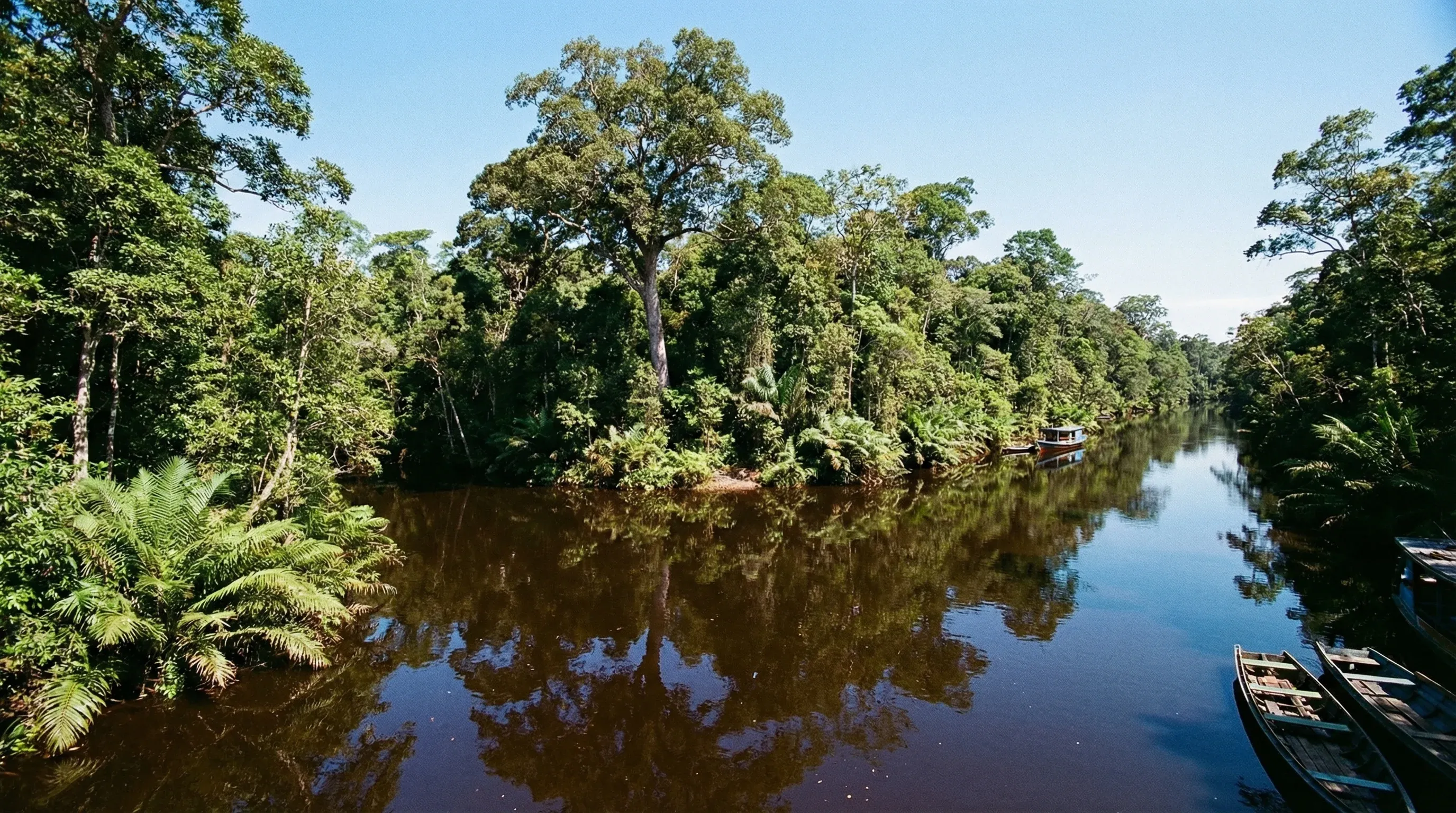
River odysseys and ancient rainforests home to the orangutan 🦧🌿
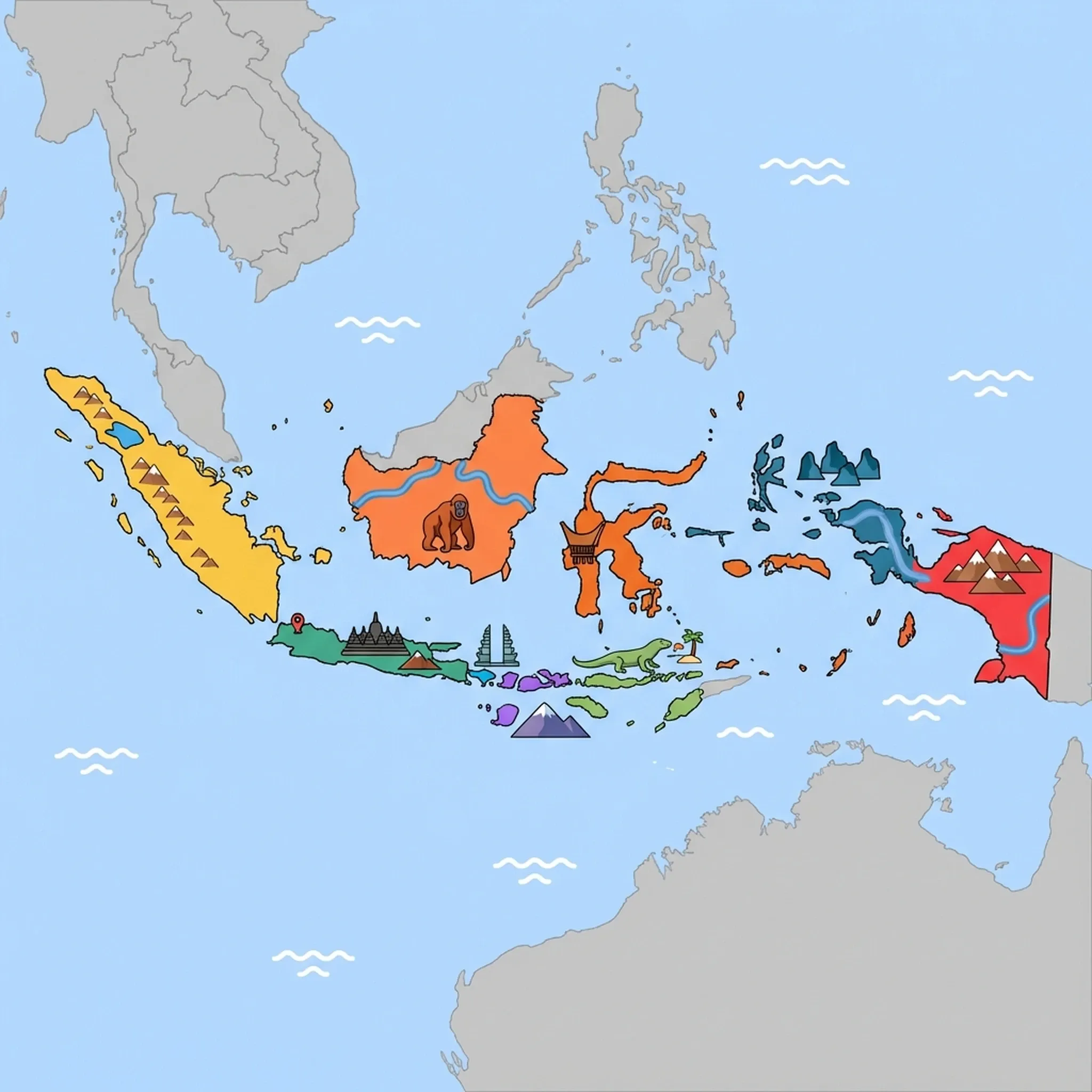
Click a region to explore
Kalimantan, the Indonesian portion of Borneo, is a destination for families seeking true adventure and wildlife encounters away from the resort crowds. The region is vast and covered in some of the world's oldest rainforests. For families, the primary draw is the opportunity to see orangutans in their natural habitat. Unlike a zoo, this is an immersive experience where you travel by river, sleeping on the boat and waking up to the sounds of the jungle. It is an educational journey that teaches children about conservation, biodiversity, and the delicate balance of our ecosystems.
Beyond the rainforest, Kalimantan offers unique cultural experiences involving the indigenous Dayak tribes and the river-based Malay cultures. In cities like Banjarmasin, daily life revolves around the waterways, with vibrant floating markets that are fascinating to explore by canoe in the early morning. While travel here requires more logistics than Bali, the reward is an authentic connection with nature that feels prehistoric and untouched.
Key Attractions
The absolute highlight for any family is Tanjung Puting National Park. Here, you can board a klotok (a traditional wooden houseboat) for a multi-day cruise. These boats serve as your floating hotel and restaurant. You will dock at Camp Leakey and other rehabilitation centers to watch semi-wild orangutans come to feeding platforms—a spectacle that allows children to see these great apes just meters away in the wild.
For families who love the ocean, the Derawan Islands off the east coast offer world-class snorkeling. Kakaban Island is particularly special because of its jellyfish lake, where non-stinging jellyfish have evolved in a landlocked marine lake; swimming amongst thousands of them is a magical, safe experience for kids. On the main island, a cruise up the Mahakam River provides a glimpse into the interior lifestyle, passing wooden villages and potentially spotting freshwater dolphins.
Practical Advice
The dry season (June to September) is the best time for orangutan tours to avoid slippery trekking paths. Malaria prophylaxis is strongly recommended for jungle visits; consult a travel doctor. Bring plenty of entertainment for boat journeys, as wifi is often non-existent.
Food & Drink
Typical meal times: Early lunch around 11:30 am to 1:00 pm, and dinner from 6:00 pm to 8:00 pm.
Typical meal costs: Street food is very cheap, approx. Rp 20,000–40,000 ($1.30–2.60 USD). A meal on a tourist klotok boat is usually included in the tour price (approx. $200–300 USD per person for a 3-day all-inclusive tour).
Dietary requirements: challenging outside of organized tours. River boat cooks can cater to vegetarians if notified in advance, but local street food relies heavily on fish and chicken stocks.
Signature dishes:
- Soto Banjar – A fragrant chicken soup spiced with cinnamon, nutmeg, and cloves, served with rice cakes (lontong) and potato perkedel.
- Patin Baubar – Catfish (patin) grilled over coconut shells/husk, marinated in sweet soy sauce and local spices.
- Amplang – Savory fish cracker snacks that are famous in Balikpapan, perfect for kids to nibble on.
Why this score?
Travel typically involves multi-day river boat journeys (klotoks) through dense jungle with limited modern amenities. Navigating the interior requires significant planning and offers a truly rugged experience far from traditional tourist trails.
Why this score?
Quality medical facilities are concentrated in major cities like Balikpapan, while the rural areas where tourists explore the jungle have only basic clinics. Emergency response in the deep rainforest is difficult and relies on slow river transportation for evacuation.
Why this score?
Tourism is primarily niche and centered around Tanjung Puting National Park for orangutan viewing, with very low visitor numbers elsewhere in the region. Most of Kalimantan remains industrial or wild, lacking the broad international appeal and infrastructure of Bali or Java.

Daily living costs are low, but the cost of tours pushes this to 'mid'. A 3-day private orangutan boat tour typically costs Rp 3,000,000–5,000,000 (approx. $195–325 USD / €180–300 EUR) per person, inclusive of meals and sleep. Urban meals are cheap, around Rp 25,000–50,000 ($1.60–3.20 USD).

Getting Here & Around
Getting Here
- Airports – Pangkalan Bun (PKN) is the entry point for Tanjung Puting. Balikpapan (BPN) and Banjarmasin (BDJ) serve the east and south respectively.
- Connecting Flights – Most flights connect via Jakarta or Surabaya. There are few direct international flights.
Getting Around
- Boat (Klotok) – The essential mode of transport for Tanjung Puting National Park. These are slow wooden boats hired for multi-day trips.
- Car – In cities like Balikpapan, taxis are available, but for overland travel between regions, distances are huge and roads can be rough.
Nearby Airports (15 airports)
Aji Pangeran Tumenggung Airport
AAPSamarinda
Syamsudin Noor
BDJBanjarmasin
Berau
BEJBerau
Sepinggan
BPNBalikpapan
Batulicin Airport
BTWBatulicin
Melalan Airport
GHSWest Kutai
Haji Muhammad Sidik Airport
HMSMuara Teweh
Rahadi Usman
KTGKetapang
Kolonel RA Bessing Airport
LNUMalinau
Pangkalanboun
PKNPangkalanbun
Tjilik Riwut
PKYPalangkaraya
Supadio
PNKPontianak
Putussibau
PSUPutussibau
H. Asan Airport
SMQSampit
Sintang
SQGSintang
View full flight map for Indonesia →

Packing List
Essential for keeping electronics safe on river boats and during sudden tropical downpours.
Useful if trekking deep into the rainforest, though often not needed for standard feeding platform walks.
Orangutans and proboscis monkeys are often high in the canopy; kids will want their own pair.
Electricity on houseboats is limited or generator-based; useful for night-time bathroom visits.
Essential for protecting feet from sharp coral and rocky seabeds on island day trips.
Versatile as a beach towel, blanket for cold AC transport, and mandatory cover-up for temple visits.
A local lifesaver for quickly managing 'Bali Belly' or mild stomach upsets.
Crucial for boat transfers, sudden tropical downpours, and water parks.
Ferry crossings between islands (like Bali to Lombok) can be notoriously choppy.
Useful for unlit paths in rural areas and occasional power outages on smaller islands.

Activities & Best Times

Hiking, wildlife, outdoor exploration, ecotourism
Home to world-class orangutan sanctuaries in Tanjung Puting and extensive jungle trekking; the dry season is essential for animal spotting and navigable trails.

Beach resorts, marine activities: diving, snorkelling, kite surfing, wind surfing, sailing
The Derawan Archipelago provides exceptional diving and marine biodiversity, but remote access becomes hazardous during the rough seas of the monsoon season.

Urban tourism, museums, historical sites, architecture
Offers unique floating markets and historic palaces like Museum Mulawarman; heavy monsoon rains often disrupt the vibrant river-based culture and outdoor exploration.

Learning experiences, scientific sites, historical education
Provides significant learning opportunities at turtle conservation sites and natural history museums, with peak nesting seasons aligning with the drier mid-year months.

Sport tourism, fitness activities, active recreation
Features major jungle trekking routes like the Cross Borneo Trek; these paths are best tackled in drier months to avoid dangerous mud and flooding.

Spa retreats, wellness centers, peaceful getaways
Natural hot springs offer restorative jungle experiences, though facilities are rustic and more suited to adventurous travelers than traditional spa-seekers.

Scenic drives, countryside tours, route-based travel
Scenic coastal drives are available, but challenging road conditions and potential for seasonal landslides require travel during the drier, more stable months.

Amusement parks, family entertainment venues
Regional waterparks serve local families but lack the international scale of major global parks; heavy rainfall significantly degrades the outdoor experience.

Attractions (14 total)



Public Holidays & Calendar Next 12 months
Public holidays, festivals, cultural celebrations, and seasonal natural phenomena coming up in Borneo/Kalimantan over the next 12 months.
Loading holidays and events...

Travel Advisory
All major agencies agree that travelers should exercise a high degree of caution due to threats from terrorism, civil unrest in specific provinces, and frequent natural disasters. Increased vigilance is required, especially in crowded tourist areas and near active volcanoes.
Safety Topics
Traveller Advice (4 groups)

While not generally illegal nationwide, local culture is conservative. Travelers should be aware of regional differences in social acceptance and exercise discretion in public conduct.

Ensure passports have at least six months of validity and no damage, as entry is strictly denied otherwise. All visitors must complete a digital arrival card and, if visiting Bali, pay a mandatory provincial tourist levy.

Solo female travelers may face a higher risk of harassment or petty crime. It is recommended to use reputable taxi services and avoid walking alone in poorly lit or isolated areas at night.

Standard tourist visas and visa-on-arrival do not permit volunteering or work. Engaging in such activities can lead to arrest, fines, or deportation.
Agency Summaries
Increased vigilance is necessary because of the potential for terrorism and the frequency of natural disasters. While tourist areas are generally accessible, certain provinces in Papua are designated as 'Do Not Travel' zones due to civil unrest and armed violence.
Irish citizens should be cautious and well-prepared for travel, ensuring all entry documentation is in order. Vigilance is required regarding personal safety and the risks posed by local geological activity and social tensions.
Maintain a high level of security awareness due to the potential for terrorist activity and civil unrest. Natural hazards such as earthquakes and volcanic eruptions are common. Specific caution is advised regarding petty crime and methanol poisoning in tourist hotspots.
General travel requires high caution, but specific exclusion zones are in effect around numerous active volcanoes. There is a consistent threat of terrorism, and travelers should be aware of strict regulations regarding drugs and visa activities like volunteering.
Heightened safety and security concerns exist, including a elevated risk of terrorism and civil disturbance. Travelers should avoid specific conflict-prone regions in Papua and stay informed about volcanic and seismic activities.
Travelers should remain very vigilant throughout the country due to ongoing social and political instability alongside a persistent threat of terrorist attacks. Specific regions in Papua are under stricter warnings due to violent conflict and kidnapping risks.
Information is provided for general guidance only and does not constitute travel, safety, medical, or legal advice. Conditions may change. Users are responsible for independently verifying information before travel.