
Komodo & Flores
Home of the Dragon and islands of lost worlds 🐉🏝️
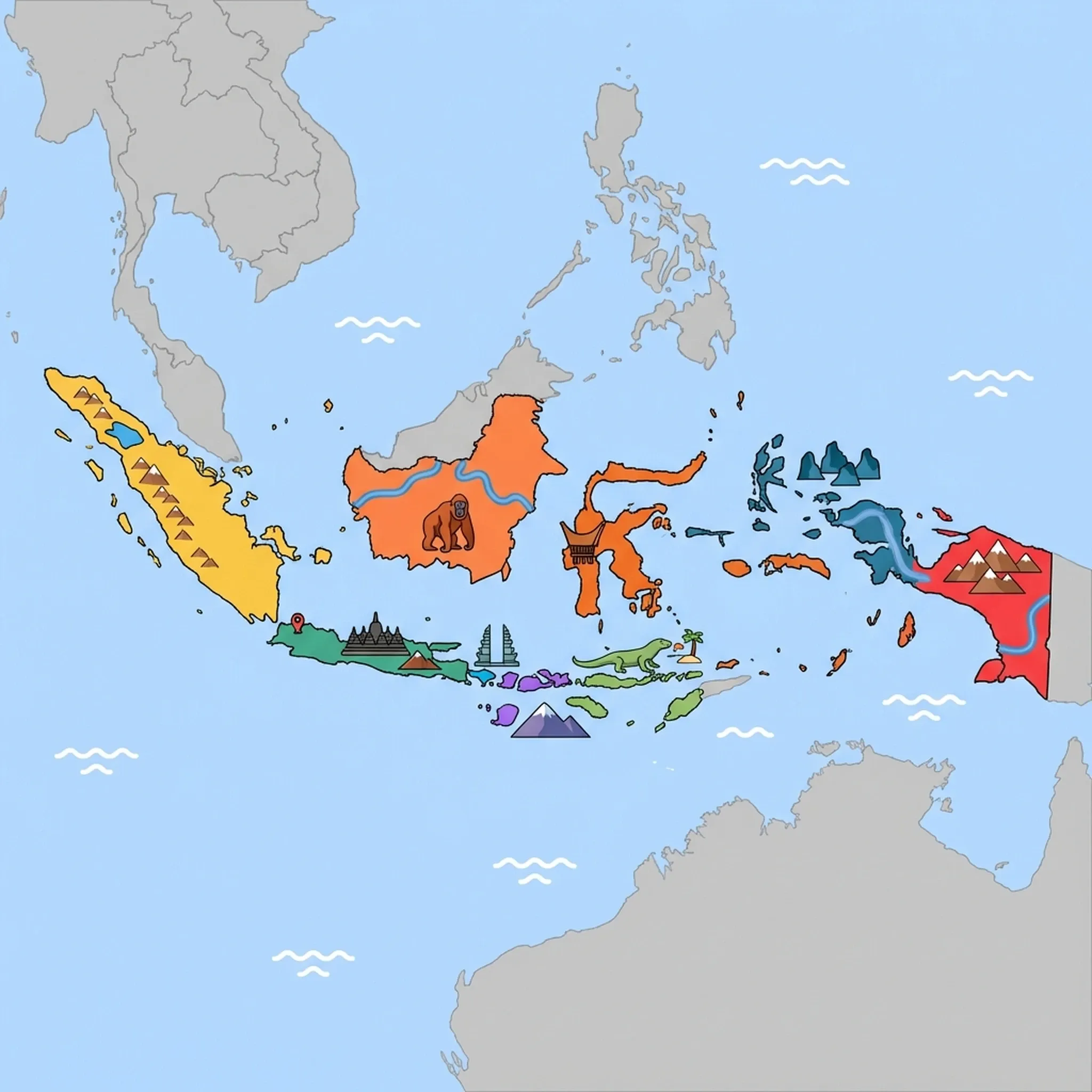
Click a region to explore
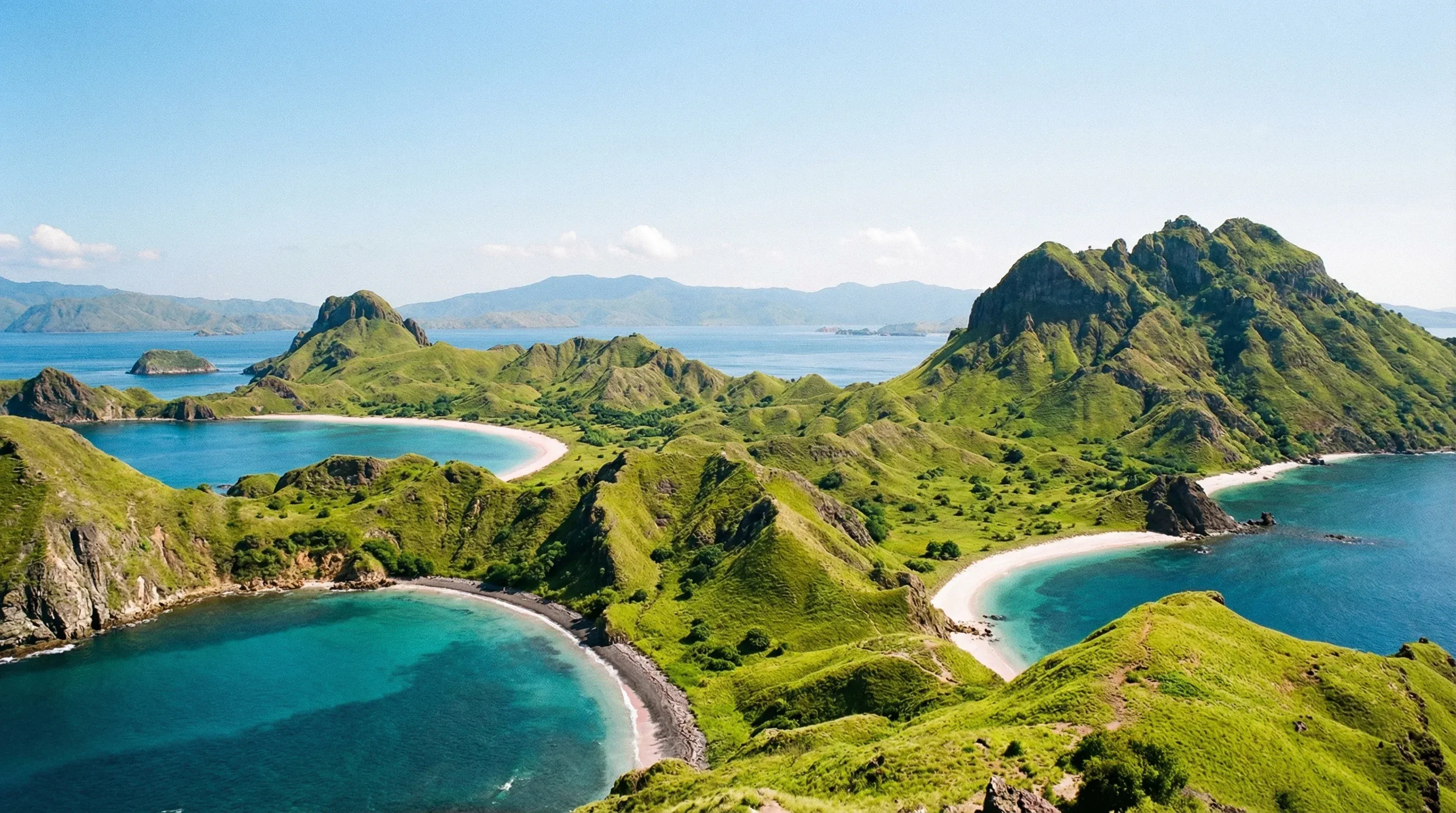
This region is the frontier of Indonesian adventure tourism, centered around the town of Labuan Bajo. The headline act is undoubtedly the Komodo Dragon, the world's largest lizard, which exists nowhere else on Earth. For children fascinated by dinosaurs or wildlife, seeing these ancient reptiles lumbering through the dry scrub of Komodo Island or Rinca Island is thrilling. The national park is not just about dragons; it protects a marine environment of startling beauty, with pink sand beaches and crystal-clear waters teeming with turtles and manta rays.
Beyond the islands, the main island of Flores offers a rugged, winding journey through traditional villages and volcanic spines. It is less developed than Bali, offering an 'expedition' feel that suits adventurous families with slightly older children. The trans-Flores highway (a winding mountain road) leads to mysterious spider-web rice fields and misty volcanoes. While the boat trips to Komodo are the main draw, the interior of Flores provides a rich cultural education in a Catholic-majority region that retains strong animist traditions.
Key Attractions
A boat trip into the national park is mandatory. Komodo Island is the most famous spot to see the dragons, usually on guided ranger walks that are safe for families. Padar Island offers the most iconic viewpoint in Indonesia—a steep hike up a staircase reveals three bays of different colored sand (white, black, and pink). It is a sweaty climb, but doable for active kids.
Inland on Flores, the Kelimutu National Park is a geological marvel. It features three crater lakes that periodically change color (from turquoise to black to red) due to chemical reactions. Seeing the sunrise here is ethereal. For a cultural deep-dive, the Wae Rebo Village involves a trek to reach unparalleled cone-shaped traditional houses, best for fit families with teens.
Practical Advice
Currents in Komodo can be very strong; ensure children wear life jackets when snorkeling. The sun is intense and shade is scarce on the islands. Labuan Bajo is the hub for supplies and medical clinics.
Food & Drink
Typical meal times: 12:00 pm to 2:00 pm for lunch, 6:30 pm to 9:00 pm for dinner.
Typical meal costs: Labuan Bajo prices are higher than average. A western meal costs Rp 100,000–200,000 (approx. $6.50–13 USD / €6–12 EUR). Local fish dishes cost Rp 60,000–100,000 ($4–6.50 USD).
Dietary requirements: Labuan Bajo has many western-friendly cafes catering to vegans. In rural Flores, options are more limited to basic rice, egg, and vegetable dishes.
Signature dishes:
- Ikan Bakar – Fresh grilled fish is the staple here, usually served with spicy sambal (ask for 'tidak pedas' for kids) and lime.
- Se'i Sapi – Smoked beef, a specialty of the Nusa Tenggara region, thinly sliced and incredibly flavorful.
- Jagung Bose – A corn and bean porridge cooked with coconut milk, a hearty traditional staple.
Why this score?
Visiting often involves living on boats, hiking in arid and steep terrain, and encountering large wild predators. The maritime nature of the region and limited terrestrial roads outside of Labuan Bajo provide a high sense of adventure.
Why this score?
Labuan Bajo has basic hospital facilities, but they are ill-equipped for serious trauma or specialized care. In the more remote parts of the archipelago, medical access is almost non-existent, requiring expensive and slow boat transfers to the mainland.
Why this score?
This region has seen rapid growth as a bucket-list destination for its unique Komodo dragons and world-class diving in the national park. Labuan Bajo has transformed into a busy hub, though visitor numbers remain lower than in Java or Bali due to its more specialized appeal.

While local food is cheap, the mandatory boat tours to see the dragons are expensive. A private speedboat day trip for a family can cost Rp 5,000,000–9,000,000 (approx. $320–580 USD / €300–540 EUR). National Park entry fees are complex and add up, roughly Rp 300,000–500,000 ($19–32 USD) per person per day including ranger fees.

Getting Here & Around
Getting Here
- Airports – Komodo Airport (LBJ) in Labuan Bajo is the main entry point, with frequent flights from Bali (DPS) and Jakarta (CGK). Ende (ENE) and Maumere (MOF) serve the east.
- Ferry – Multi-day backpacker boat trips run from Lombok to Flores, but safety standards vary; flying is recommended for families.
Getting Around
- Boat (Liveaboard/Speedboat) – The only way to see Komodo Island. Speedboats are good for day trips; liveaboards are better for a relaxed 2-3 day experience.
- Private Driver – Essential for exploring inland Flores (e.g., to Kelimutu). The roads are extremely winding ('snake road'), so a skilled local driver is safer than self-driving.
Nearby Airports (13 airports)
Haliwen Airport
ABUAtambua
Alor Island
ARDAlor Island
Bajawa Soa Airport
BJWBajawa
H Hasan Aroeboesman
ENEEnde
El Tari
KOEKupang
Labuan Bajo
LBJLabuan Bajo
Larantuka
LKALarantuka
Wunopito Airport
LWELewoleba
Wai Oti
MOFMaumere
Satar Tacik
RTGRuteng
David C. Saudale Airport
RTIRote Island
Tambolaka Airport
TMCTambolaka
Mau Hau
WGPWaingapu
View full flight map for Indonesia →

Packing List
The sun in Komodo is unforgiving and you will be snorkeling for hours; sunscreen washes off.
You need footwear that works for dry trekking on Rinca AND getting wet during boat landings.
Waters in the strait can be choppy, especially on the crossing to Padar.
The underwater world is as impressive as the dragons; you'll regret not capturing the turtles.
Essential for protecting feet from sharp coral and rocky seabeds on island day trips.
Versatile as a beach towel, blanket for cold AC transport, and mandatory cover-up for temple visits.
A local lifesaver for quickly managing 'Bali Belly' or mild stomach upsets.
Crucial for boat transfers, sudden tropical downpours, and water parks.
Ferry crossings between islands (like Bali to Lombok) can be notoriously choppy.
Useful for unlit paths in rural areas and occasional power outages on smaller islands.

Activities & Best Times

Hiking, wildlife, outdoor exploration, ecotourism
Home to the world-unique Komodo dragon and the stunning multi-colored crater lakes of Kelimutu, offering unparalleled wildlife and volcanic landscapes. Peak dry season provides optimal conditions for trekking and dragon sightings, while the peak wet season (Jan-Feb) can make remote trails and boat crossings hazardous.

Urban tourism, museums, historical sites, architecture
Features exceptionally authentic megalithic villages like Bena and the remote Wae Rebo, offering deep immersion into Ngada and Manggarai heritage. Travel is best during the cooler, drier months of mid-year, as heavy rains in early year can restrict access to high-altitude traditional villages.

Beach resorts, marine activities: diving, snorkelling, kite surfing, wind surfing, sailing
Renowned for the iconic Pink Beach and world-class snorkeling in the Komodo archipelago, though infrastructure is more rugged than typical luxury resorts. Marine visibility and boat safety are highest during the dry season, with the west monsoon (Dec-Feb) bringing rougher seas and reduced underwater clarity.

Spa retreats, wellness centers, peaceful getaways
Unique natural hot springs like Mangeruda offer restorative experiences in a volcanic setting, complementing the region's active exploration. These are best enjoyed in the slightly cooler months of June to August; peak monsoon season can lead to local flooding near thermal bath sites.

Sport tourism, fitness activities, active recreation
Offers world-class trekking routes like the Padar Island viewpoint hike and multi-day jungle treks to Wae Rebo. Peak visitation coincides with the dry season for stable footing on steep volcanic terrain, while the heavy rainfall of the wet season makes many trails muddy and unsafe for families.

Learning experiences, scientific sites, historical education
Includes the significant Liang Bua cave where 'The Hobbit' (Homo floresiensis) was discovered, providing a unique archaeological site for families. Conditions are most pleasant mid-year, while the wet season can make the descent into rural archaeological sites slippery and difficult.

Scenic drives, countryside tours, route-based travel
The Trans-Flores Highway offers a spectacular, winding journey through varied landscapes, though road conditions require experienced drivers. Peak months offer the best visibility and road safety, while the extended wet season frequently causes landslides that can block the primary artery for weeks.




Public Holidays & Calendar Next 12 months
Public holidays, festivals, cultural celebrations, and seasonal natural phenomena coming up in Komodo & Flores over the next 12 months.
Loading holidays and events...

Travel Advisory
All major agencies agree that travelers should exercise a high degree of caution due to threats from terrorism, civil unrest in specific provinces, and frequent natural disasters. Increased vigilance is required, especially in crowded tourist areas and near active volcanoes.
Safety Topics
Traveller Advice (4 groups)

While not generally illegal nationwide, local culture is conservative. Travelers should be aware of regional differences in social acceptance and exercise discretion in public conduct.

Ensure passports have at least six months of validity and no damage, as entry is strictly denied otherwise. All visitors must complete a digital arrival card and, if visiting Bali, pay a mandatory provincial tourist levy.

Solo female travelers may face a higher risk of harassment or petty crime. It is recommended to use reputable taxi services and avoid walking alone in poorly lit or isolated areas at night.

Standard tourist visas and visa-on-arrival do not permit volunteering or work. Engaging in such activities can lead to arrest, fines, or deportation.
Agency Summaries
Increased vigilance is necessary because of the potential for terrorism and the frequency of natural disasters. While tourist areas are generally accessible, certain provinces in Papua are designated as 'Do Not Travel' zones due to civil unrest and armed violence.
Irish citizens should be cautious and well-prepared for travel, ensuring all entry documentation is in order. Vigilance is required regarding personal safety and the risks posed by local geological activity and social tensions.
Maintain a high level of security awareness due to the potential for terrorist activity and civil unrest. Natural hazards such as earthquakes and volcanic eruptions are common. Specific caution is advised regarding petty crime and methanol poisoning in tourist hotspots.
General travel requires high caution, but specific exclusion zones are in effect around numerous active volcanoes. There is a consistent threat of terrorism, and travelers should be aware of strict regulations regarding drugs and visa activities like volunteering.
Heightened safety and security concerns exist, including a elevated risk of terrorism and civil disturbance. Travelers should avoid specific conflict-prone regions in Papua and stay informed about volcanic and seismic activities.
Travelers should remain very vigilant throughout the country due to ongoing social and political instability alongside a persistent threat of terrorist attacks. Specific regions in Papua are under stricter warnings due to violent conflict and kidnapping risks.
Information is provided for general guidance only and does not constitute travel, safety, medical, or legal advice. Conditions may change. Users are responsible for independently verifying information before travel.