
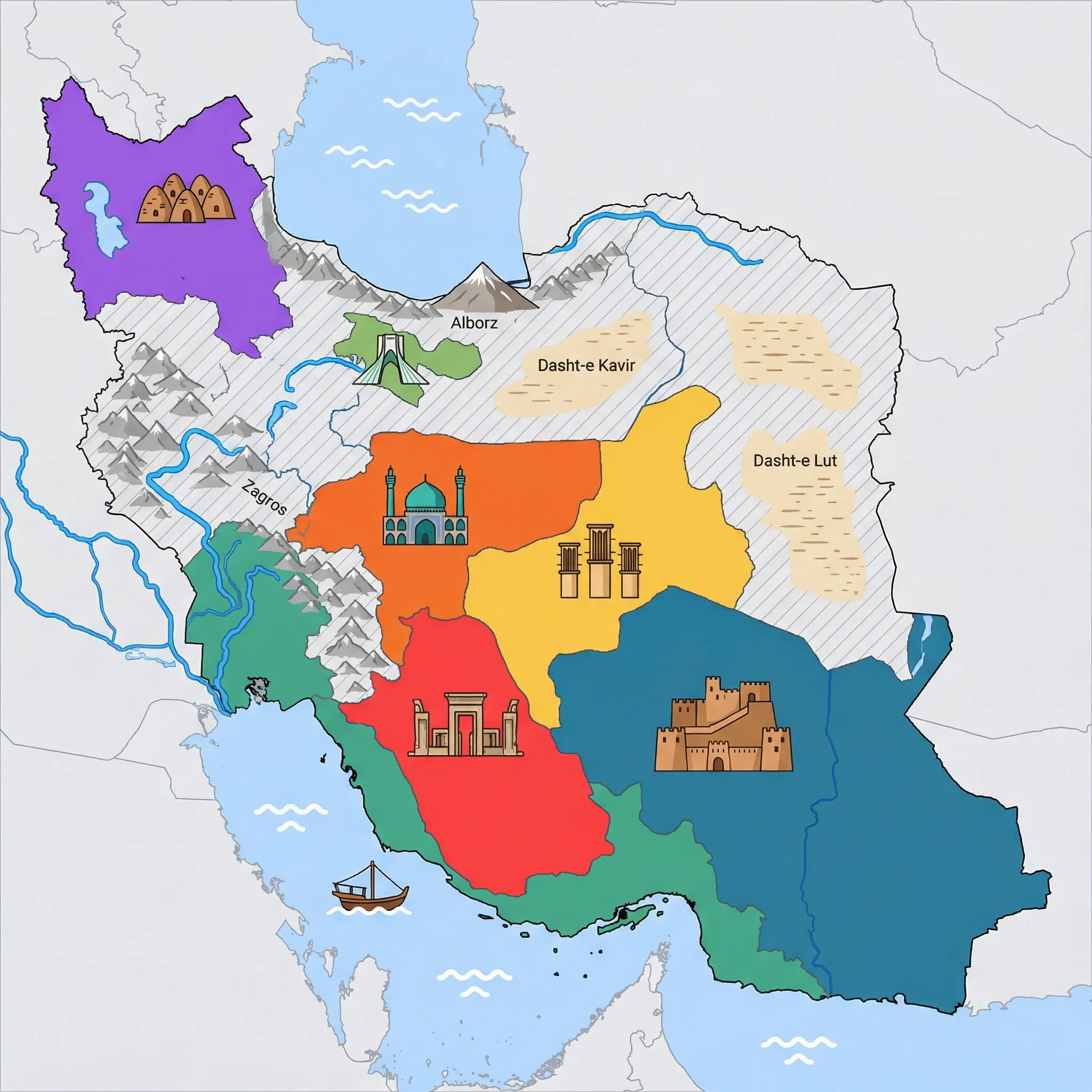
Click a region to explore
⚠️ SAFETY WARNING: Government agencies (USA, UK, Canada, NZ) advise against all travel to this region due to high risks of terrorism and kidnapping, particularly near the Pakistan and Afghanistan borders. Sistan-Baluchestan is considered extremely dangerous. Stick only to Kerman city if visiting; avoid all travel to Sistan-Baluchestan Province entirely. Families are strongly urged to consult their own government's official travel advisory before considering a trip, as circumstances and risk assessments vary.
Overview
Kerman serves as the gateway to the sensory overload of the southeastern deserts. For families who love nature and geology, this region feels like visiting another planet. The landscape is dominated by the Dasht-e Lut, one of the hottest places on Earth, yet the high altitude of Kerman city itself makes the climate surprisingly moderate. The culture here is deeply influenced by the desert environment, seen in the ingenious architecture designed to capture wind and water.
This is a destination for the adventurous family. It is less polished than Isfahan or Shiraz, but it offers raw, dramatic beauty. The night skies in the desert camps are unparalleled, offering a view of the Milky Way that children raised in cities may never have seen. The history here is ancient, with mud-brick citadels that look like movie sets, allowing kids to imagine the days of Silk Road caravans passing through these very gates.
Key Attractions
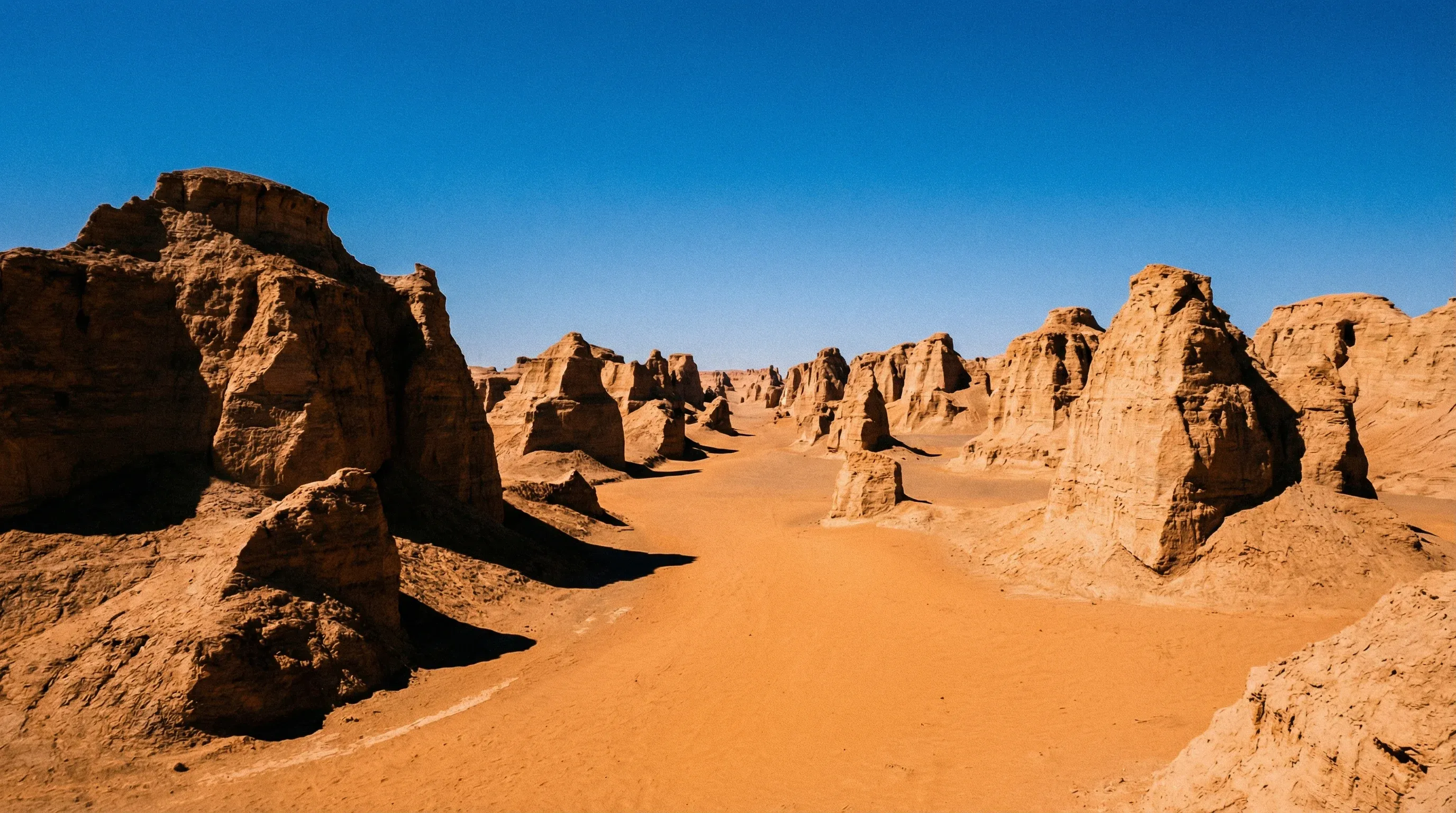
The absolute highlight for adventurous older children is a trip to the Shahdad Kaluts (Lut Desert). These massive natural sandcastles (yardangs) rise from the flat desert floor, creating a surreal maze that is best visited at sunset. Note: Only visit with a certified guide due to the extreme environment. Closer to civilization, the Shazdeh Garden in Mahan is a miracle of engineering—a lush, tiered garden with fountains flowing right in the middle of a bone-dry desert, perfect for a family picnic.
For history buffs, Arg-e Rayen is a magnificent mud-brick citadel that serves as a great alternative to the famous Bam citadel (which is still being restored). It is well-preserved and allows kids to explore the maze of alleys, watchtowers, and governor's quarters. In Kerman city, the Ganjali Khan Complex features a wax museum inside an old bathhouse, which effectively visualizes daily life in ancient times for younger visitors.
Practical Advice
The best time to visit is late autumn to early spring. Avoid summer entirely as temperatures in the desert areas can be dangerous. Distances here are vast, so prepare for long car rides with plenty of snacks and entertainment for children. Hiring a driver-guide is essential for safety and navigation.
Food & Drink
Typical meal times: Lunch 1:00 pm to 3:00 pm; Dinner 8:00 pm to 10:00 pm.
Typical meal costs: Meals are very cheap. A family feast costs 3,000,000–6,000,000 IRR (approx. $6–12 USD / €5.50–11 EUR).
Dietary requirements: The region uses a lot of dairy (kashk) and meat. Vegetarians may find options limited to eggplant dishes and breads.
Signature dishes:
- Boz Ghormeh – A rich, hearty stew made from goat meat, chickpeas, whey (kashk), and garlic; very filling and savory.
- Kolompeh – A traditional cookie filled with minced dates and walnuts, spiced with cardamom—an excellent energy snack for kids.
- Zireh Polow – Rice steamed with cumin, a spice native to the Kerman region, often served with chicken.
Why this score?
The region is home to the Lut Desert and its Kaluts, offering some of the most rugged and extreme desert landscapes on earth. Travelers face significant environmental challenges, including record-breaking heat and remote off-road navigation, making it a high-tier destination for serious adventure seekers.
Why this score?
While Kerman city has functional public and private hospitals, medical infrastructure becomes extremely sparse and basic as one moves toward the Lut Desert or the southeastern borders. Emergency response times in the remote desert regions are long, and specialized care for foreigners is limited outside the main urban center.
Why this score?
This region is an emerging niche destination primarily visited by intrepid travelers seeking the Lut Desert or the Citadel of Bam. Despite its archaeological significance, its proximity to sensitive border zones and extreme climate keeps international visitor numbers very low relative to the rest of the country.

Kerman is one of the cheaper regions in Iran. Accommodation is limited but affordable; a good traditional hotel room costs 10,000,000–18,000,000 IRR (approx. $20–36 USD / €18–33 EUR). Private drivers for day trips to the desert are reasonably priced, often costing around 15,000,000–25,000,000 IRR (approx. $30–50 USD / €28–46 EUR) for a full day.

Getting Here & Around
Getting Here
- Airports – Kerman Airport (KER) has daily flights from Tehran. This is the safest and quickest way to arrive.
- Train – There is a sleeper train from Tehran to Kerman, which takes about 14–15 hours. It's a long journey but comfortable enough for families who book a private 4-berth compartment.
- Bus – Long-distance buses run from Yazd and Shiraz, but the distances are significant (5+ hours).
Getting Around
- Private Driver – This is the only recommended way to see the Shahdad Kaluts and surrounding sites like Mahan and Rayen. Self-driving is not recommended due to the remote nature of the roads.
- Taxi – Within Kerman city, taxis are plentiful and cheap for getting between the bazaar and hotels.
Nearby Airports (7 airports)
Zabol Airport
ACZZabol
Iranshahr Airport
IHRIranshahr
Jiroft Airport
JYRJiroft
Kerman
KERKerman
Sirjan Airport
SYJSirjan
Zahedan
ZAHZahedan
Chah Bahar
ZBRChah Bahar
View full flight map for Iran →

Packing List
Desert camps often have limited electricity, and it's essential for navigating at night.
The desert air is extremely dry and will crack skin and lips very quickly.
Fine dust and sand in the air can be irritating to children's eyes.
Long days out in the desert mean no access to charging points for phones or cameras.
International credit/debit cards (Visa/Mastercard) do NOT work in Iran. You must bring enough cash for the entire trip.
Social media (Instagram, WhatsApp, Facebook) and many news sites are blocked. Install a reliable VPN before arrival.
Mandatory for all females aged ~9 and up in public areas. A loose tunic (manteau) covering hips and a scarf are required.
Most public restrooms are squat toilets with a hose (bidet) but no paper. Carry your own supply.
You will remove shoes frequently at mosques, shrines, and traditional restaurants. Laces become a hassle.

Activities & Best Times

Hiking, wildlife, outdoor exploration, ecotourism
The UNESCO-listed Lut Desert and its iconic Kaluts offer a world-class wilderness experience for sophisticated families seeking authenticity. Peak months provide manageable temperatures for exploring the surreal geology, while summer months are dangerously hot as this is one of the world's warmest environments.

Urban tourism, museums, historical sites, architecture
Home to the monumental Arg-e Bam and Shazdeh Garden, the region offers world-class UNESCO heritage sites and authentic Persian urban culture. Spring and autumn are the peak seasons for enjoying the oasis gardens and historic citadels before the intense heat of the summer sun.

Beach resorts, marine activities: diving, snorkelling, kite surfing, wind surfing, sailing
Darak Beach, where desert dunes meet the Arabian Sea, provides a unique and authentic coastal experience for adventurous families. The peak winter months offer a pleasant escape with moderate humidity and comfortable air temperatures compared to the oppressive heat of the summer monsoon season.

Learning experiences, scientific sites, historical education
The UNESCO-listed Shahr-e Sukhteh (Burnt City) is an internationally significant archaeological site offering profound insights into prehistoric civilization. Optimal visiting conditions are during the cooler months as the site is highly exposed to the desert elements.

Spa retreats, wellness centers, peaceful getaways
Authentic Persian wellness experiences are available at the historic Ganjali Khan Bathhouse and the therapeutic hot springs of Jooshan. These thermal activities are most restorative and popular with international travelers during the cool winter and autumn months.

Scenic drives, countryside tours, route-based travel
Iconic routes through the Kaluts and the heritage circuit between Kerman and Rayen offer spectacular scenery and well-maintained road infrastructure. These drives are best enjoyed in late autumn and early spring when visibility is high and the extreme desert heat is absent.

Sport tourism, fitness activities, active recreation
High-altitude trekking on Mount Hezar and desert cycling near Shahdad provide challenging infrastructure for active travelers. The transitional spring and autumn seasons offer the thermal balance necessary for strenuous physical activity in this rugged, arid terrain.

Attractions (16 total)



Public Holidays & Calendar Next 12 months
Public holidays, festivals, cultural celebrations, and seasonal natural phenomena coming up in Kerman & Southeast over the next 12 months.
Loading holidays and events...

Travel Advisory
Extreme security risks are present across the country due to ongoing military conflict, the high likelihood of arbitrary detention of foreigners, and significant civil unrest. All major travel agencies unanimously advise against any travel.
Safety Topics
Traveller Advice (4 groups)

Anyone currently in the country should remain indoors in a reinforced structure, maintain a supply of food and water, and monitor international news as airspace and borders may close without notice.

Same-sex relations are criminalized and can result in severe legal penalties, including the death penalty.

Media professionals face an elevated risk of being charged with espionage or security-related offenses, which may lead to prolonged detention or capital punishment.

Strict dress codes are enforced by law; women and girls over age ten are required to wear headscarves in public and in identification photos.
Agency Summaries
Travel is strongly discouraged due to extreme risks of terrorism, civil disturbance, kidnapping, and the arbitrary imprisonment of foreign citizens. The government has no diplomatic presence in Iran and cannot provide emergency services.
Authorities advise against any travel to Iran due to active military operations and strikes across the nation. Individuals currently in the country should remain in secure locations and should not expect assisted departure from the government.
New Zealanders are advised to exit the country immediately if possible. The situation is characterized by military strikes, volatile civil unrest, and the risk of disappearing or being detained without cause.
The security environment is highly unstable due to ongoing military conflict, civil unrest, and the severe threat of arbitrary detention. Consular assistance is extremely limited as embassy operations are currently suspended.
The government warns against all travel due to heightened regional tensions and military activity. British and dual nationals are at an exceptionally high risk of being arrested or detained on baseless charges.
A highest-level alert is in place following air strikes on major cities. Citizens are urged to avoid all travel, shelter in place if already present, and stay away from military installations.
Information is provided for general guidance only and does not constitute travel, safety, medical, or legal advice. Conditions may change. Users are responsible for independently verifying information before travel.