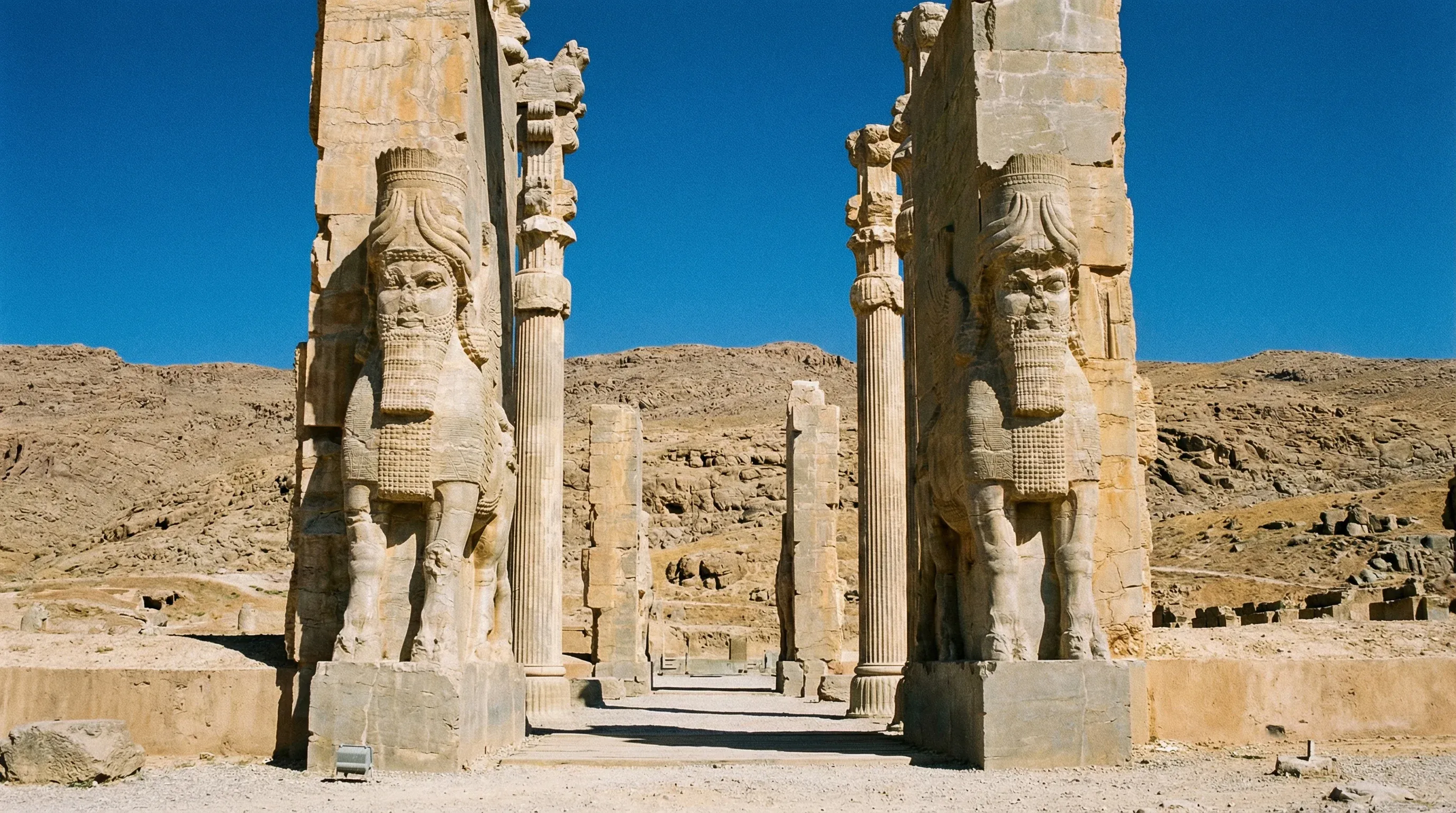

Shiraz & Persepolis
The city of poetry, roses, and ancient empires 🌹🏛️
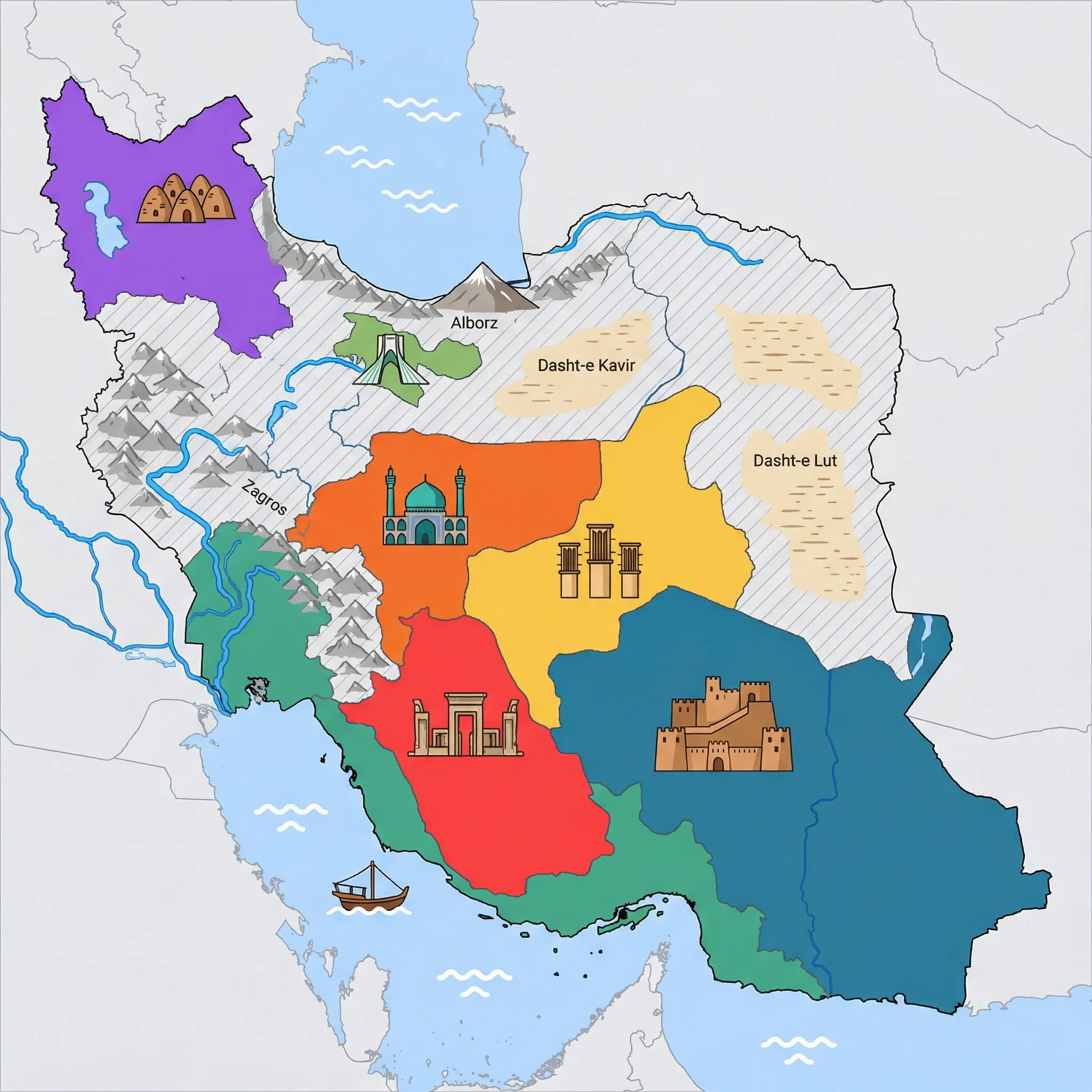
Click a region to explore
⚠️ SAFETY WARNING: While Shiraz is a major cultural hub, government agencies (USA, UK, CA, AU) advise against all travel to Iran due to the risk of arbitrary detention. Shiraz generally carries the standard country-level advisory, but travelers should be cautious of any political gatherings. Families are strongly urged to consult their own government's official travel advisory before considering a trip, as circumstances and risk assessments vary.
Overview
Shiraz is synonymous with sophistication, poetry, and wine (historically, though now non-alcoholic). For families, it offers a relaxed pace compared to Tehran. The city is famous for its gardens, which are designed as earthly paradises with fountains, cypress trees, and endless flowers. It is a place to slow down. The locals are known for their hospitality and laid-back attitude. Culturally, this is the best place to introduce children to the depth of Persian history, primarily through the lens of the Achaemenid Empire.
The city layout is manageable, and the air is generally cleaner than the capital. Spring is spectacular when the orange blossoms (Baharnaranj) scent the entire city. Beyond the city limits lies the crown jewel of Iranian tourism: Persepolis. Seeing these massive ruins provides a tangible connection to history books, bringing the ancient world of Cyrus and Darius to life for students of all ages.
Key Attractions
No trip is complete without visiting Persepolis. These 2,500-year-old ruins are massive; hiring a guide who can tell stories about the bas-reliefs (showing people bringing gifts from all over the world) will keep kids engaged. Nearby, the Naqsh-e Rostam necropolis features giant crosses carved high into the cliff face—the tombs of kings—which look like something out of an adventure movie.
Inside Shiraz, the Nasir al-Mulk Mosque is best visited early in the morning. Sunlight streams through stained glass, painting the floor in rainbows—a perfect photo op. The Eram Garden is a botanical wonderland perfect for running around, while the Tomb of Hafez (Hafezieh) is a cultural experience where you can see locals reciting poetry to the tomb. It’s a beautiful, respectful atmosphere that teaches children about the reverence for art in Persian culture.
Practical Advice
Best time to visit: April and May are peak season due to the pleasant weather and blooming gardens. October is also lovely. Persepolis has no shade—bring hats, sunscreen, and plenty of water, and try to go early morning or late afternoon to avoid the midday sun.
Food & Drink
Typical meal times: Lunch 1:00 pm to 3:30 pm; Dinner 8:30 pm to 11:00 pm.
Typical meal costs: A family meal costs 4,000,000–8,000,000 IRR (approx. $8–16 USD / €7.50–15 EUR).
Dietary requirements: Shiraz has excellent fresh produce. Salads are common (Shirazi Salad), and fresh fruit juices are everywhere.
Signature dishes:
- Kalam Polow Shirazi – A unique pilaf made with cabbage, aromatic herbs (tarragon, dill, basil), and small meatballs. It's savory and much tastier than it sounds!
- Faloodeh – An ancient frozen dessert made of thin vermicelli noodles frozen with rose water and syrup, usually served with a splash of lime juice. The best place to try it is near the Citadel.
- Salad Shirazi – A simple, refreshing salad of finely chopped cucumber, tomato, and onion with dried mint and sour grape juice (ab-ghooreh).
Why this score?
The region offers moderate adventure through the Zagros Mountains and rural nomadic routes, but most tourists remain on the well-paved Achaemenid Heritage Route. It is largely a destination of historical exploration and garden visits rather than physically demanding wilderness expeditions.
Why this score?
Shiraz is renowned as the medical capital of southern Iran, specifically famous for its high-quality eye surgeries and organ transplants. It has a well-developed private healthcare sector with many doctors who have trained abroad, providing a relatively high standard of care for international visitors.
Why this score?
Shiraz is a global cultural heavyweight due to Persepolis and the tombs of Hafez and Saadi, making it a mandatory stop for any cultural tour of Iran. It maintains a steady flow of international visitors, though total numbers are constrained by broader national tourism trends, placing it in the moderate global category.

Shiraz is very tourist-friendly and offers good value. Entry to Persepolis is slightly higher than other sites but still less than 5,000,000 IRR (approx. $10 USD / €9 EUR). A nice hotel room costs around 15,000,000–25,000,000 IRR (approx. $30–50 USD / €28–46 EUR). Ice cream and street snacks are incredibly cheap, often under $1 USD.

Getting Here & Around
Getting Here
- Airports – Shiraz International Airport (SYZ) is the main entry point for the south, with international connections to Istanbul and Dubai.
- Bus – VIP buses connect Shiraz to Isfahan (6–7 hours) and Yazd (6 hours). The roads are good and the scenery is mountainous.
- Car – Driving from Isfahan creates a classic "Golden Triangle" route, passing through historic mountain passes.
Getting Around
- Taxi/Snapp – Ride-hailing apps are the easiest way to get around the city. Prices are very low.
- Driver for Persepolis – To visit Persepolis and Naqsh-e Rostam, you must hire a taxi or private driver for the half-day trip (approx. 60km outside the city).
- Metro – Shiraz has a clean, modern metro system, though it has limited lines and may not connect all tourist sites.
Nearby Airports (2 airports)
Lar Airport
LRRLar
Shiraz Shahid Dastghaib International
SYZShiraz
View full flight map for Iran →

Packing List
Persepolis is an exposed stone complex with zero shade; the sun is relentless.
Bringing a translation of Hafez to read at his tomb enhances the experience significantly.
Heat in the stone ruins can be stifling for children.
Essential for internet access as most social media is blocked.
International credit/debit cards (Visa/Mastercard) do NOT work in Iran. You must bring enough cash for the entire trip.
Social media (Instagram, WhatsApp, Facebook) and many news sites are blocked. Install a reliable VPN before arrival.
Mandatory for all females aged ~9 and up in public areas. A loose tunic (manteau) covering hips and a scarf are required.
Most public restrooms are squat toilets with a hose (bidet) but no paper. Carry your own supply.
You will remove shoes frequently at mosques, shrines, and traditional restaurants. Laces become a hassle.
Long bus or car journeys between cities can drain devices, and outlets aren't always accessible on the go.

Activities & Best Times

Urban tourism, museums, historical sites, architecture
Home to UNESCO-listed Persepolis and Pasargadae, the region offers world-class archaeological sites and the iconic Persian garden culture of Shiraz. Peak spring months (April-May) are legendary for the scent of orange blossoms and mild temperatures, while summer heat exceeding 40°C is prohibitive for sightseeing.

Hiking, wildlife, outdoor exploration, ecotourism
Features unique natural phenomena like the seasonal pink Maharloo Lake and the Zagros Mountains' Bamu National Park. Spring and autumn offer the best conditions for trekking Mount Derak, whereas summer's extreme aridity and winter's high rainfall limit comfortable exploration.

Spa retreats, wellness centers, peaceful getaways
The historic Vakil Bath and regional hot springs like Ab-e Garm-e Dezhkord offer authentic, culturally rich restorative experiences. These are best enjoyed when the city's famous gardens are in bloom during spring or in the crisp, clear air of autumn.

Scenic drives, countryside tours, route-based travel
The Achaemenid and Sassanid Heritage Routes offer spectacular drives through high-plateau landscapes and ancient ruins. Driving visibility is best in the dry autumn and spring, while summer heat makes frequent stops at unshaded ruins challenging.

Sport tourism, fitness activities, active recreation
Established infrastructure exists for cycling from Shiraz to Persepolis and hiking well-marked trails on Mount Derak. Activity is concentrated in the mild shoulder seasons to avoid the physical strain of desert heat or winter mountain rains.

Learning experiences, scientific sites, historical education
The University’s Natural History and Medical History museums provide high-quality specialized learning but are secondary to the city's main cultural attractions. Visiting is most comfortable during the general peak tourism windows for the region.

Events, celebrations, seasonal attractions
Nowruz (March) and Shiraz Day (May) offer profound cultural immersion, though international families should be aware of domestic holiday crowds. Outside these windows, the region lacks the major recurring international events required for a higher rating.

Winter sports, ski resorts, snow activities
Sepidan and Pooladkaf provide a rare opportunity for skiing in the southern Zagros, though infrastructure is modest by international standards. The season is short, typically peaking in January and February when high-altitude snow is most reliable.

Amusement parks, family entertainment venues
Local water parks and Luna Park offer family entertainment primarily for the domestic market, lacking the world-class scale of major international hubs. They are best visited in the warm but not extreme months.

Attractions (16 total)



Public Holidays & Calendar Next 12 months
Public holidays, festivals, cultural celebrations, and seasonal natural phenomena coming up in Shiraz & Persepolis over the next 12 months.
Loading holidays and events...

Travel Advisory
Extreme security risks are present across the country due to ongoing military conflict, the high likelihood of arbitrary detention of foreigners, and significant civil unrest. All major travel agencies unanimously advise against any travel.
Safety Topics
Traveller Advice (4 groups)

Anyone currently in the country should remain indoors in a reinforced structure, maintain a supply of food and water, and monitor international news as airspace and borders may close without notice.

Same-sex relations are criminalized and can result in severe legal penalties, including the death penalty.

Media professionals face an elevated risk of being charged with espionage or security-related offenses, which may lead to prolonged detention or capital punishment.

Strict dress codes are enforced by law; women and girls over age ten are required to wear headscarves in public and in identification photos.
Agency Summaries
Travel is strongly discouraged due to extreme risks of terrorism, civil disturbance, kidnapping, and the arbitrary imprisonment of foreign citizens. The government has no diplomatic presence in Iran and cannot provide emergency services.
Authorities advise against any travel to Iran due to active military operations and strikes across the nation. Individuals currently in the country should remain in secure locations and should not expect assisted departure from the government.
New Zealanders are advised to exit the country immediately if possible. The situation is characterized by military strikes, volatile civil unrest, and the risk of disappearing or being detained without cause.
The security environment is highly unstable due to ongoing military conflict, civil unrest, and the severe threat of arbitrary detention. Consular assistance is extremely limited as embassy operations are currently suspended.
The government warns against all travel due to heightened regional tensions and military activity. British and dual nationals are at an exceptionally high risk of being arrested or detained on baseless charges.
A highest-level alert is in place following air strikes on major cities. Citizens are urged to avoid all travel, shelter in place if already present, and stay away from military installations.
Information is provided for general guidance only and does not constitute travel, safety, medical, or legal advice. Conditions may change. Users are responsible for independently verifying information before travel.