
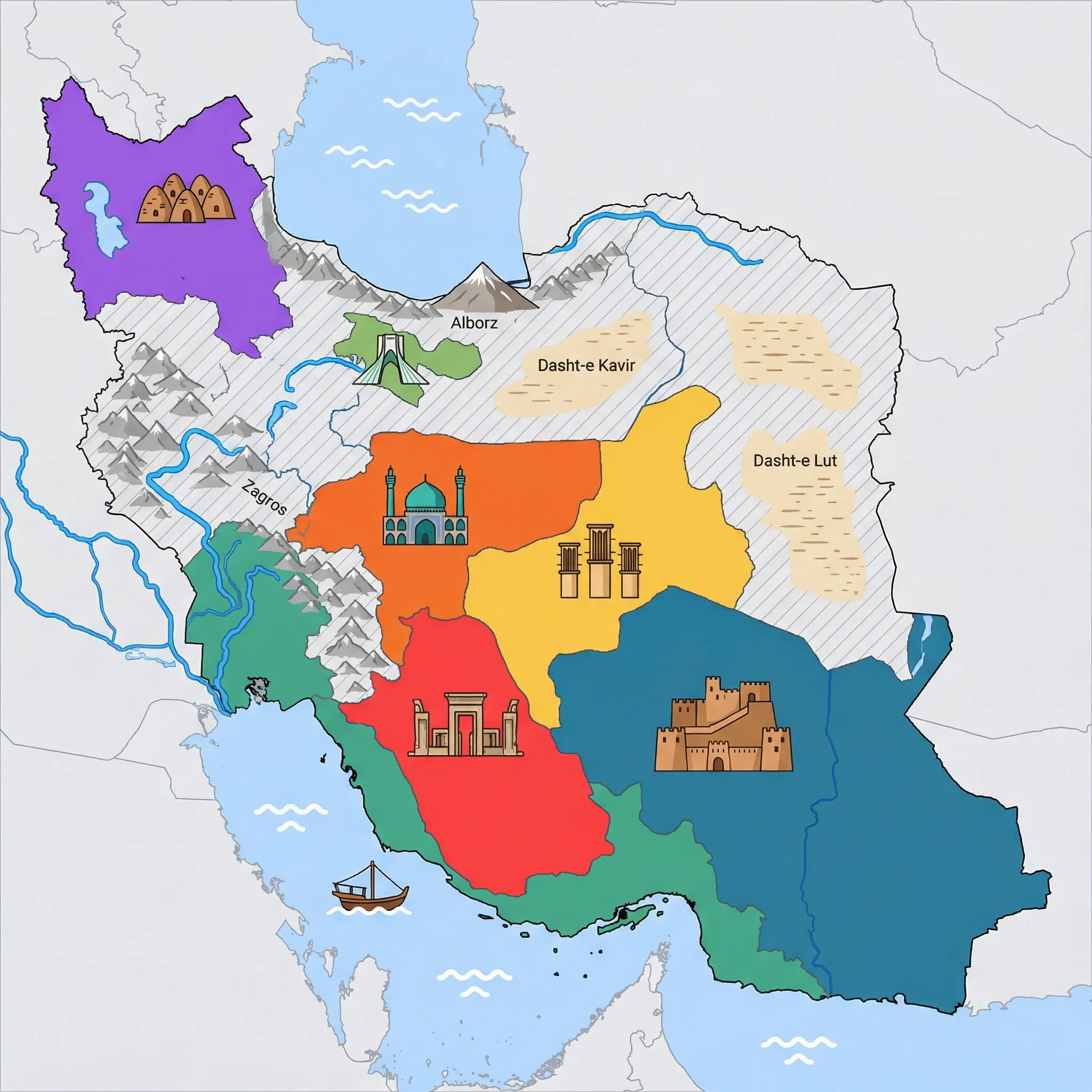
Click a region to explore
⚠️ SAFETY WARNING: Tehran carries the standard high-risk advisory for Iran (Level 3/4 - Do Not Travel). As the political center, it is the most likely location for protests, and Western governments warn of the risk of arbitrary detention. Avoid all demonstrations, government buildings, and photography of sensitive sites. If you choose to visit, maintain a low profile. Families are strongly urged to consult their own government's official travel advisory before considering a trip, as circumstances and risk assessments vary.
Overview
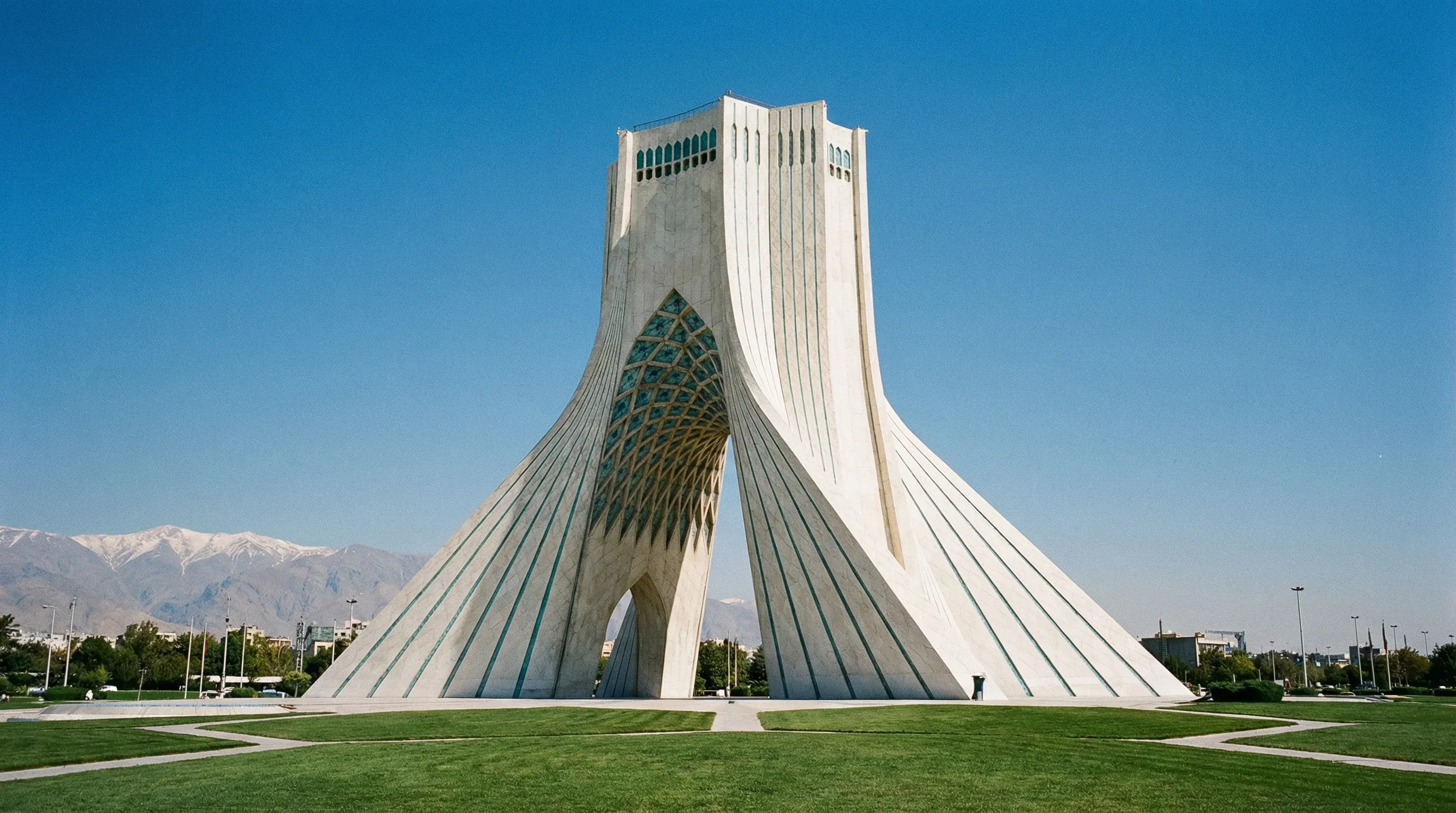
Tehran is a chaotic, crowded, but undeniable metropolis. While many tourists skip it to head south, the capital holds the country's best museums and royal palaces. For families, Tehran offers a mix of urban excitement and nature. The northern part of the city climbs up the Alborz mountains, meaning you can be in the bustling city center one minute and riding a ski lift the next. It is the modern face of Iran, with trendy cafes, art galleries, and modern parks.
The traffic is legendary and the pollution can be an issue, but the cultural payoffs are huge. The museums here hold the treasures of Persia's past empires. It is also the best place to see modern Iranian life—teenagers hanging out in parks, families hiking on weekends, and the vibrant contemporary art scene.
Key Attractions
The Golestan Palace is a UNESCO site that dazzles children with its walls covered in tiny mirrors—it's like walking inside a diamond. It's located near the Grand Bazaar, allowing for a dual visit. For a view of the whole sprawl, the Milad Tower is the sixth-tallest tower in the world; the observation deck is thrilling for kids.
To escape the smog, head north to Darband or Tochal. You can take a telecabin (gondola) from the city edge all the way up to ski resorts at nearly 4,000m. Even in summer, it's cool up there. The National Museum of Iran is essential for history lovers, housing artifacts from 100,000 years ago, including the famous Salt Men mummies which fascinate older kids.
Practical Advice
Best time to visit: The Persian New Year (Nowruz) in late March is actually the best time for Tehran. The locals leave for vacation, so the air is clean and the traffic vanishes. Otherwise, spring and autumn are best.
Food & Drink
Typical meal times: Lunch 12:30 pm to 3:30 pm; Dinner 8:00 pm to 11:00 pm.
Typical meal costs: Tehran is the most expensive city in Iran. A nice family dinner costs 8,000,000–15,000,000 IRR (approx. $16–30 USD / €15–28 EUR).
Dietary requirements: Tehran has the most diverse food scene. You can find vegetarian cafes, fast food (pizza/burgers), and international options easier here than anywhere else.
Signature dishes:
- Chelo Kabab Barg – The king of kebabs; a skewer of pounded lamb fillet served with saffron rice, grilled tomato, and butter.
- Ghormeh Sabzi – The national dish; a dark green herb stew with kidney beans and dried limes. It has a unique sour/savory flavor.
- Tahchin – A "rice cake" made with yogurt, saffron, egg, and chicken, baked until it has a crispy golden crust.
Why this score?
Tehran offers a unique urban-adventure mix, with 4,000-meter peaks like Mount Tochal accessible directly from the city via cable car. Nearby skiing at Dizin and hiking in Darband provide significant outdoor challenges for families, though the city itself is a densely developed metropolis.
Why this score?
Tehran hosts the country's most advanced medical facilities, including specialized private hospitals like Pars and Atieh that frequently cater to diplomatic staff and international residents. It is the only region in the country where English-speaking medical professionals and Western-standard specialized care are widely and consistently available.
Why this score?
As the primary international gateway and capital, Tehran handles the highest volume of foreign arrivals in Iran for both business and leisure. While it lacks the 'resort' feel of major global hubs, its 67 major attractions and role as a transport nexus ensure a constant presence of international visitors.

Tehran is pricier than the provinces. A boutique hotel room in the north can cost 30,000,000–50,000,000 IRR (approx. $60–100 USD / €55–90 EUR). However, public transport is pennies. Entrance fees to museums are standardized for foreigners, usually around 1,000,000–2,000,000 IRR ($2–4 USD).

Getting Here & Around
Getting Here
- Airports – Imam Khomeini International Airport (IKA) is the main international gateway, about 45km south of the city. Mehrabad Airport (THR) inside the city handles domestic flights.
- Bus – Tehran is the central hub for all bus lines in Iran. The terminals (West, South, East) are massive.
- Train – The central railway station connects to Tabriz, Mashhad, Isfahan, and the south.
Getting Around
- Metro – Tehran's metro is clean, cheap, and the fastest way to beat traffic. It has women-only carriages (optional) and covers most tourist areas including Golestan Palace.
- Snapp/Taxi – Essential for reaching northern areas not served by metro. Prices are higher than other cities but still cheap globally.
Nearby Airports (2 airports)
Imam Khomeini
IKATehran
Mehrabad International
THRTehran
View full flight map for Iran →
Official Links

Packing List
Tehran's air quality can be very poor, especially in winter. Sensitive groups need protection.
Absolutely critical for accessing WhatsApp, Instagram, and maps.
North Tehran is trendy; if visiting upscale cafes/restaurants, locals dress smartly.
Google Maps can be glitchy; apps like Maps.me or organic maps work better offline.
International credit/debit cards (Visa/Mastercard) do NOT work in Iran. You must bring enough cash for the entire trip.
Social media (Instagram, WhatsApp, Facebook) and many news sites are blocked. Install a reliable VPN before arrival.
Mandatory for all females aged ~9 and up in public areas. A loose tunic (manteau) covering hips and a scarf are required.
Most public restrooms are squat toilets with a hose (bidet) but no paper. Carry your own supply.
You will remove shoes frequently at mosques, shrines, and traditional restaurants. Laces become a hassle.
Long bus or car journeys between cities can drain devices, and outlets aren't always accessible on the go.

Activities & Best Times

Hiking, wildlife, outdoor exploration, ecotourism
The Alborz mountain range and Lar National Park provide rugged trekking and high-altitude wilderness just outside the metropolis. Higher elevations remain pleasant in summer when the city is hot, but winter snow makes many trails inaccessible to families.

Urban tourism, museums, historical sites, architecture
Tehran offers deep historical layers from Qajar palaces like Golestan to sophisticated modern art museums. Spring and autumn provide ideal walking weather, while summer heat and winter smog significantly degrade the urban experience.

Winter sports, ski resorts, snow activities
High-altitude resorts like Dizin and Shemshak offer excellent dry powder and long seasons that rival European resorts for vertical drop. Tochal is uniquely accessible via one of the world's longest gondola lifts directly from the city's edge.

Sport tourism, fitness activities, active recreation
Tehran is a premier destination for rock climbing and technical hiking, with Darband and Darakeh serving as world-class gateways to the Alborz. Optimal conditions occur during the shoulder seasons when temperatures are moderate for strenuous activity.

Learning experiences, scientific sites, historical education
The Tehran Book Garden is a massive, world-class facility dedicated to science and literacy that serves as a primary motivator for families. Visitation mirrors the city's general cultural peak when travel logistics and urban air quality are most favorable.
Spa retreats, wellness centers, peaceful getaways
Historic bathhouses offer an authentic Persian spa experience, focusing on traditional massage and thermal culture rather than modern luxury. These indoor facilities are year-round, but more pleasant when the city's external environment is not extremely hot.

Scenic drives, countryside tours, route-based travel
The Chalus Road (Road 59) is internationally celebrated as one of the most scenic mountain drives in Asia, carving through the Alborz to the Caspian Sea. Winter driving is often dangerous or impossible due to heavy snow and frequent pass closures.

Amusement parks, family entertainment venues
Modern facilities like Opark provide high-quality aquatic entertainment that meets international safety and design standards. Seasonal operation is strictly tied to the warm months, with summer being popular despite the heat due to evening availability.

Beach resorts, marine activities: diving, snorkelling, kite surfing, wind surfing, sailing
Chitgar Lake provides artificial beach recreation for locals but lacks the marine biodiversity or scale of international sea resorts. It is strictly a summer destination for leisure seeking and water-based cooling.

Events, celebrations, seasonal attractions
Nowruz (Persian New Year) in late March is the region's most significant cultural event, though the city often empties as locals travel. While authentic, international families may find some services limited during the peak holiday fortnight.

Attractions (23 total)



Public Holidays & Calendar Next 12 months
Public holidays, festivals, cultural celebrations, and seasonal natural phenomena coming up in Tehran over the next 12 months.
Loading holidays and events...

Travel Advisory
Extreme security risks are present across the country due to ongoing military conflict, the high likelihood of arbitrary detention of foreigners, and significant civil unrest. All major travel agencies unanimously advise against any travel.
Safety Topics
Traveller Advice (4 groups)

Anyone currently in the country should remain indoors in a reinforced structure, maintain a supply of food and water, and monitor international news as airspace and borders may close without notice.

Same-sex relations are criminalized and can result in severe legal penalties, including the death penalty.
Media professionals face an elevated risk of being charged with espionage or security-related offenses, which may lead to prolonged detention or capital punishment.

Strict dress codes are enforced by law; women and girls over age ten are required to wear headscarves in public and in identification photos.
Agency Summaries
Travel is strongly discouraged due to extreme risks of terrorism, civil disturbance, kidnapping, and the arbitrary imprisonment of foreign citizens. The government has no diplomatic presence in Iran and cannot provide emergency services.
Authorities advise against any travel to Iran due to active military operations and strikes across the nation. Individuals currently in the country should remain in secure locations and should not expect assisted departure from the government.
New Zealanders are advised to exit the country immediately if possible. The situation is characterized by military strikes, volatile civil unrest, and the risk of disappearing or being detained without cause.
The security environment is highly unstable due to ongoing military conflict, civil unrest, and the severe threat of arbitrary detention. Consular assistance is extremely limited as embassy operations are currently suspended.
The government warns against all travel due to heightened regional tensions and military activity. British and dual nationals are at an exceptionally high risk of being arrested or detained on baseless charges.
A highest-level alert is in place following air strikes on major cities. Citizens are urged to avoid all travel, shelter in place if already present, and stay away from military installations.
Information is provided for general guidance only and does not constitute travel, safety, medical, or legal advice. Conditions may change. Users are responsible for independently verifying information before travel.