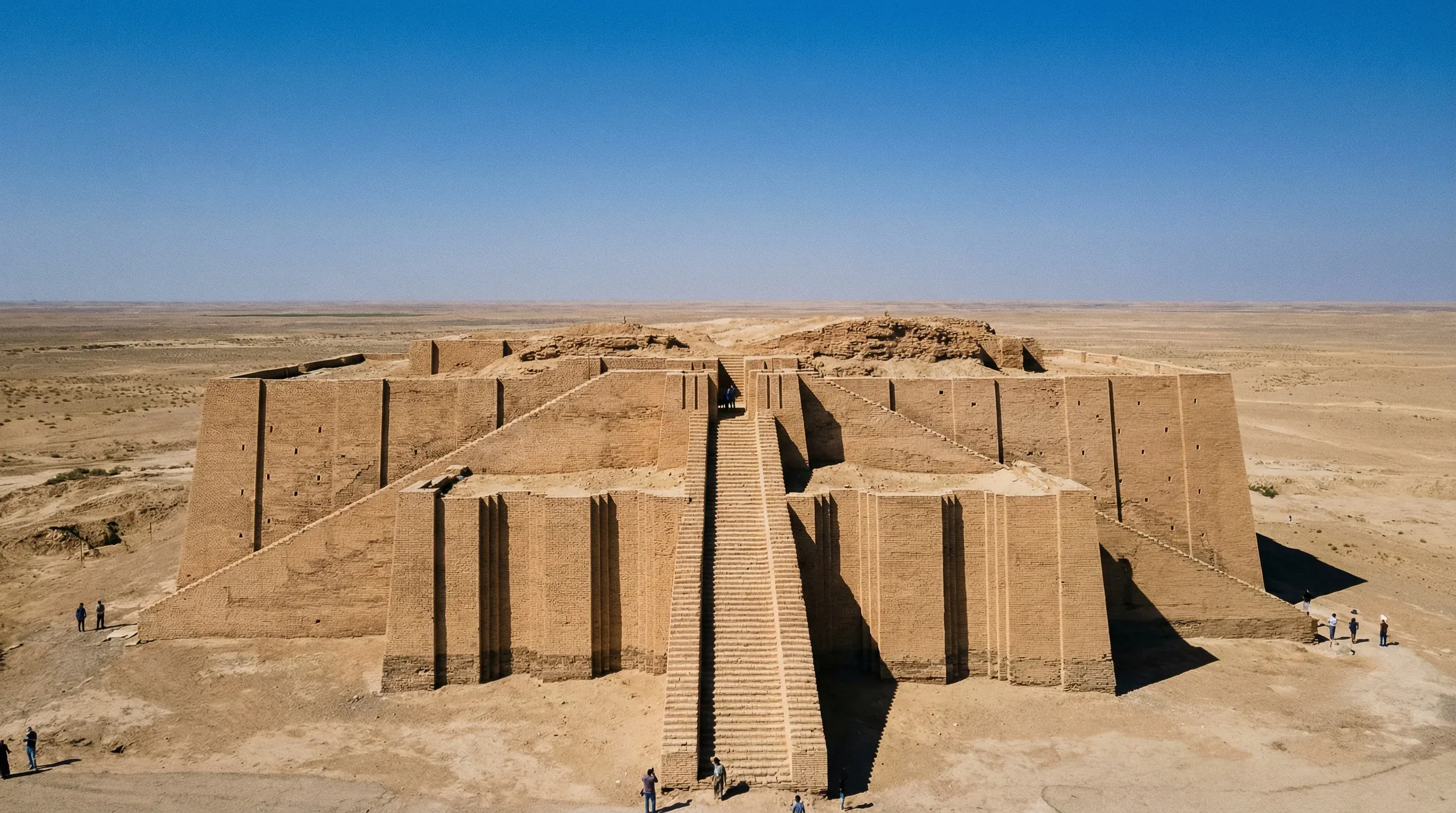

Ancient sites (Babylon, Ur)
Where history began: explore the legendary Cradle of Civilization 🏺
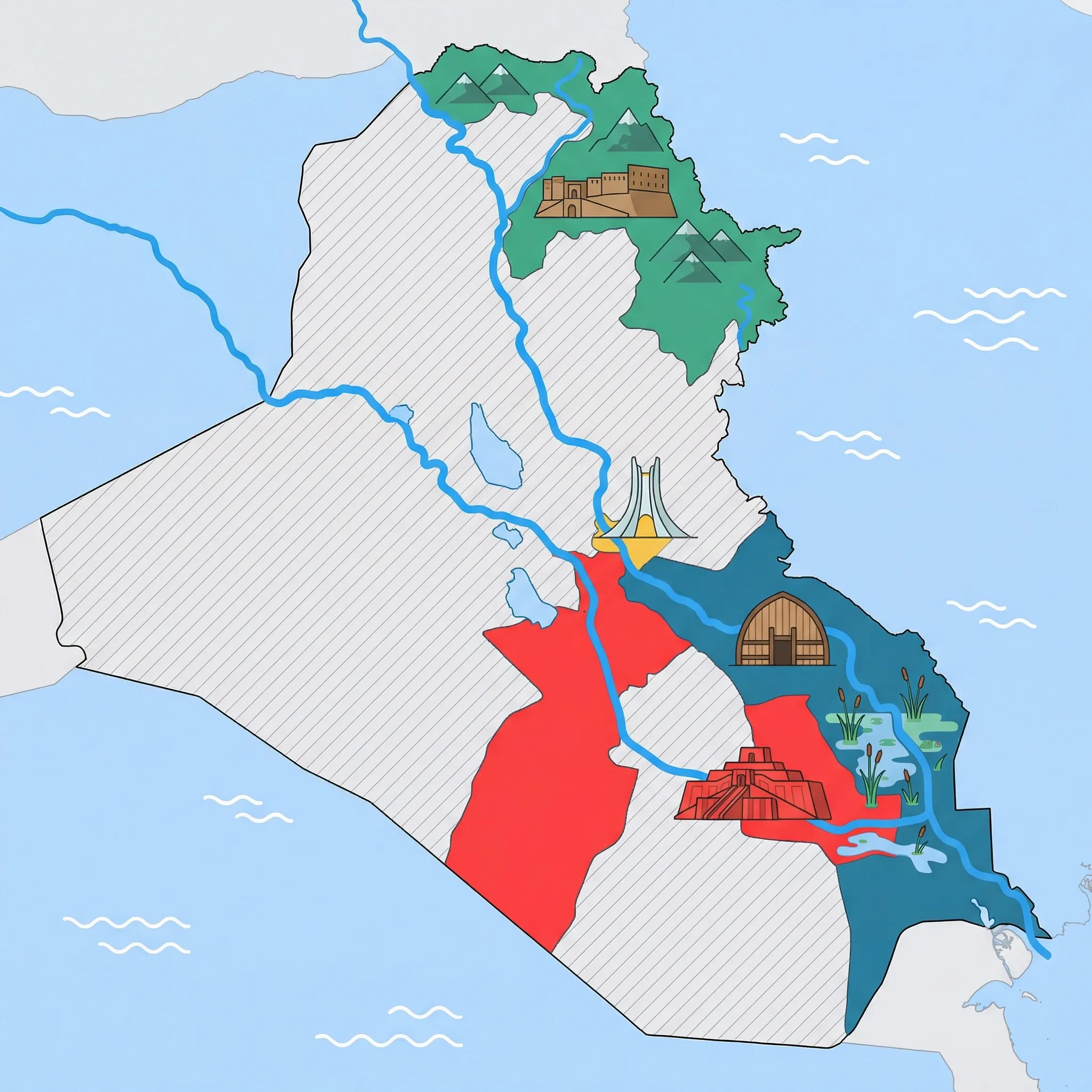
Click a region to explore
⚠️ SAFETY WARNING: Due to the unpredictable security situation, kidnapping risks, and the presence of armed groups, government agencies (including CA, USA, UK, AU, IE, NZ) advise travelers to avoid all travel to this region. The security environment in Babil and Dhi Qar governorates remains volatile. Families are strongly urged to consult their own government's official travel advisory before considering a trip, as circumstances and risk assessments vary.
For those who do visit with specialized security arrangements, the ancient sites of Babylon and Ur offer an unparalleled journey into the deep past. This is the Cradle of Civilization, where writing, law, and urban life first emerged. The landscape is dominated by the slow-moving Euphrates River and vast, dusty plains that hide thousands of years of history. While the infrastructure is developing, the sheer magnitude of seeing these biblical locations in person is a powerful educational experience for older children interested in history.
The atmosphere here is quiet and profound. Unlike bustling European ruins, you may find you are the only visitors at these massive archaeological sites. The weather plays a major role in the experience; the sun can be relentless, so visits are best planned for the cooler winter months when the desert climate is mild and pleasant for walking around the extensive excavation zones.
Key Attractions
The crown jewel is the Ancient City of Babylon. Families can walk through the processional way and see the Lion of Babylon statue, a symbol that has stood for millennia. Although much was reconstructed in the 20th century, the scale of the walls and the maze-like ruins ignite the imagination of young explorers. Further south, the Great Ziggurat of Ur is one of the best-preserved ziggurats in the world. Its massive staircase is awe-inspiring, and climbing it offers panoramic views of the surrounding desert. Nearby, the Mesopotamian Marshes (Al-Ahwar) provide a stark contrast with their lush reed beds and water buffalo, offering a glimpse into a way of life that has existed since Sumerian times.
Practical Advice
Best time to visit: November to March is essential to avoid the blistering summer heat (often exceeding 50°C/122°F). Early mornings are best for site visits.
Logistics: There is very little shade at the ruins. Bring hats, plenty of water, and sturdy walking shoes. Bathroom facilities at archaeological sites can be basic or non-existent, so plan accordingly.
Food & Drink
Typical meal times: Lunch is the main meal, usually served from 1:00 pm to 3:00 pm. Dinner is eaten late, typically from 8:00 pm onwards.
Typical meal costs: A hearty local meal costs around 15,000–25,000 IQD (approx. $11–19 USD / €10–18 EUR) per person. Prices in tourist hotels will be higher.
Dietary requirements: Iraqi cuisine relies heavily on meat (lamb and chicken) and wheat. Vegetarians can rely on fresh salads, hummus, and grilled vegetables, but vegan options are rare. Traces of nuts are common.
Signature dishes:
- Masgouf – The national dish of seasoned carp grilled efficiently over an open fire, often served with pickles and flatbread.
- Tepsi Baytinijan – A comforting casserole of aubergine, tomato, potato, and meatballs, mild enough for children.
- Kleicha – Date-filled cookies often flavored with cardamom and rose water, perfect for a quick energy boost.
Why this score?
Visiting these sites involves navigating harsh desert environments with minimal shade and limited on-site facilities. The logistical challenge of reaching Nasiriyah or Hillah, combined with the rugged nature of the archaeological terrain, makes for a notable adventure that requires significant planning and resilience.
Why this score?
Medical facilities in the surrounding provinces of Babil and Dhi Qar are basic and primarily serve the local population with limited resources. Foreigners would face significant language barriers and a lack of specialized trauma or emergency care, likely necessitating transport back to Baghdad for serious issues.
Why this score?
While these sites represent the cradle of civilization and are UNESCO World Heritage sites, international visitor numbers remain extremely low due to decades of conflict and limited tourism infrastructure. Most visitors are specialized archaeological tour groups or domestic travelers, with very few independent foreign families visiting these remote desert ruins.

While local food and entry fees are low (entry to Babylon is often approx. 25,000 IQD / $19 USD / €17 EUR for foreigners), the total trip cost is high due to the necessity of private security, drivers, and guides. Mid-range hotels in nearby cities like Hillah or Nasiriyah cost around 65,000–100,000 IQD (approx. $50–75 USD / €45–70 EUR) per night.

Getting Here & Around
Getting Here
- Airports – Baghdad International Airport (BGW) is the primary entry point, followed by a road transfer (approx. 2 hours to Babylon). Basra International Airport (BSR) is closer to Ur (approx. 2.5 hours).
- Car – Travel between sites almost exclusively requires a private vehicle with a security escort or a trusted local guide/driver due to checkpoints.
Getting Around
- Car – Private drivers are the only viable option for families. Self-driving is not recommended due to complex checkpoints and road conditions.
- Walking – Once at the sites like the Ancient City of Babylon, walking is the only way to explore. Distances are large, and terrain is uneven.
Nearby Airports (1 airport)
Al Najaf International Airport
NJFAl-Najaf
View full flight map for Iraq →

Packing List
Sudden dust storms are common; useful for protection and modesty.
Dehydration happens quickly in the dry heat, even in winter.
GPS signals can be unreliable or blocked near sensitive areas.
Power outages are frequent in hotels and rural areas.
Power cuts are frequent and daily, even in hotels; keep devices charged.
Street lighting can be sporadic and power outages may leave areas in darkness.
Essential for cultural respect and entering the many religious shrines.
Dust is ubiquitous and public bathroom facilities may lack soap/water.
International ATMs are rare/unreliable; you must bring cash to exchange.
Cities are noisy with generators, traffic, and calls to prayer at all hours.

Activities & Best Times

Urban tourism, museums, historical sites, architecture
Home to iconic UNESCO World Heritage sites like Babylon and the Ziggurat of Ur, this region offers globally significant archaeological depth for sophisticated travelers. Visitation peaks in spring and autumn when temperatures are mild enough for the extensive walking required to explore these vast open-air ruins.

Hiking, wildlife, outdoor exploration, ecotourism
The Mesopotamian Marshes provide a unique, authentic wetland ecosystem for birdwatching and cultural immersion into the Ma'dan lifestyle. Winter is the optimal period for wildlife viewing and avoiding the extreme humidity and heat that characterize the region from late spring through early autumn.

Amusement parks, family entertainment venues
Babylon Fun City offers a localized entertainment option for families, though it lacks the international scale and quality found at major global theme park destinations. Use is highly seasonal, as the intense desert summer heat renders outdoor amusement facilities practically unusable for most of the year.




Public Holidays & Calendar Next 12 months
Public holidays, festivals, cultural celebrations, and seasonal natural phenomena coming up in Ancient sites (Babylon, Ur) over the next 12 months.
Loading holidays and events...

Travel Advisory
All major agencies maintain their highest possible warning level for Iraq. Travel is extremely dangerous due to ongoing regional conflict, terrorism, and kidnapping. Foreigners are advised to leave immediately or shelter in place.
Safety Topics
Traveller Advice (6 groups)

Homosexual acts are not explicitly criminalized by national law but are often prosecuted under morality and indecency statutes. Public displays of affection are highly risky and social hostility is extreme.

Travellers should depart the country immediately while commercial options exist. If departure is not possible, stay in secure accommodation, remain away from windows, and maintain a supply of food, water, and essential medication.

Religious sites and large gatherings for festivals are frequent targets for terrorist attacks. Security near shrines is heavy, but the threat of large-scale bombings remains critical.

Conservative dress is necessary throughout the country. Women may face harassment or unwanted attention, and should avoid travelling alone, especially after dark.

Media personnel are at high risk of injury, detention, or death in active conflict zones. Accreditation does not guarantee safety, and journalists may be targeted by militant groups.

International aid workers face extreme risks of targeted kidnapping and violence. Security protocols must be strictly followed, and professional security coordination is essential for those remaining in the country.
Agency Summaries
Global Affairs Canada advises against any travel to Iraq because of the volatile security environment, the possibility of armed conflict, and the danger of terrorist activity. Airspace in the region is currently closed.
The U.S. Department of State has issued a country-wide 'Do Not Travel' order due to kidnapping, terrorism, civil unrest, and armed conflict. Non-emergency government personnel were ordered to depart the country on March 2, 2026.
Smartraveller recommends that Australians do not visit Iraq under any circumstances. The safety situation is extremely dangerous due to the high threat of terrorism, ongoing conflict, and volatile social unrest.
Ireland strongly advises against all travel to Iraq due to the critical security situation. Citizens currently in the country should consider leaving while safe routes are available or shelter in place if air travel is disrupted.
SafeTravel maintains a 'Do Not Travel' warning for all of Iraq, including the Kurdistan Region. New Zealanders are warned of extreme risks from military strikes, terrorism, and organized crime.
The Foreign, Commonwealth & Development Office advises against all travel to both Federal Iraq and the Kurdistan Region. This follows a recent escalation in regional hostilities and a high risk of further unpredictable events.
Information is provided for general guidance only and does not constitute travel, safety, medical, or legal advice. Conditions may change. Users are responsible for independently verifying information before travel.