
Basra & South
Where the Tigris meets the Euphrates: marshes, legends, and waterways 🛶
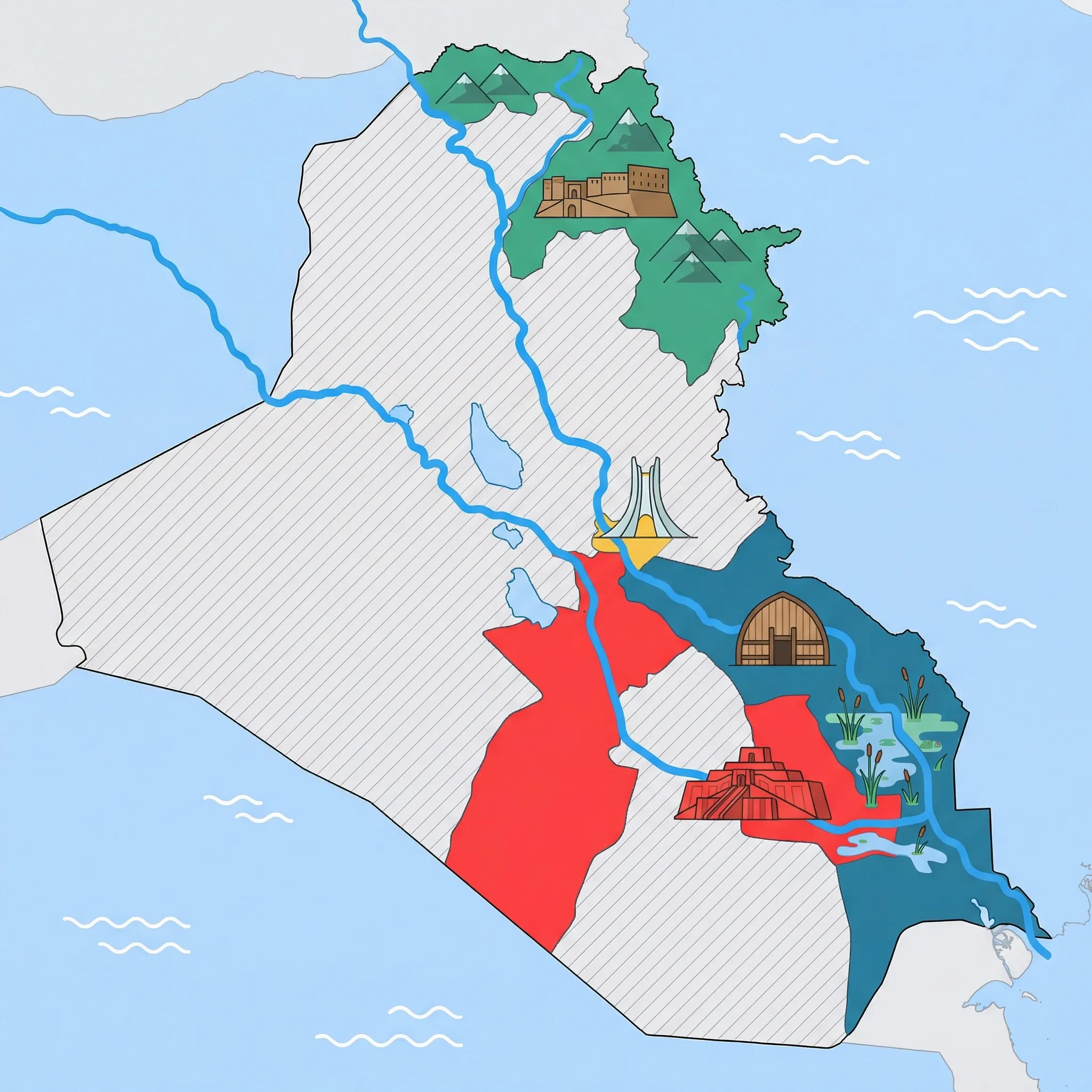
Click a region to explore
⚠️ SAFETY WARNING: Due to militia activity, the risk of civil unrest, and potential kidnapping, government agencies (including CA, USA, UK, AU, IE, NZ) advise travelers to avoid all travel to Basra and southern Iraq. The security situation is fragile. Families are strongly urged to consult their own government's official travel advisory before considering a trip, as circumstances and risk assessments vary.
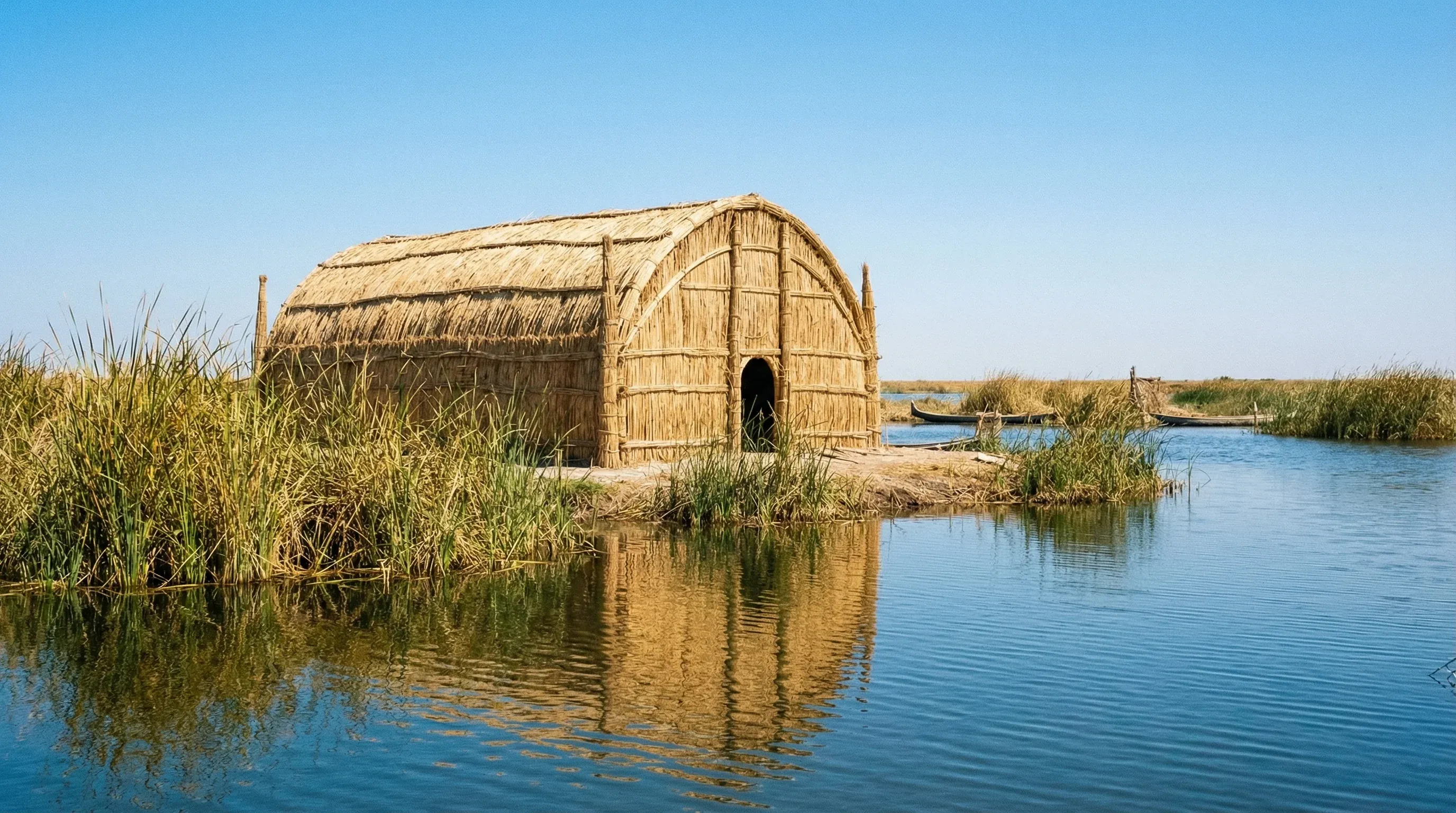
Southern Iraq offers a landscape unlike anywhere else in the Middle East. This is a water-world where the great Tigris and Euphrates rivers merge to flow into the Persian Gulf. The region is famous for its vast date palm groves and the unique culture of the Marsh Arabs. For families, the highlight is undoubtedly the wetlands, a UNESCO World Heritage site that feels like stepping into a different time. The pace of life here is slower than in Baghdad, and the connection to the water is central to local identity.
Basra itself is a historic port city with a mix of Ottoman architecture and modern oil-industry development. It can be extremely humid and hot, but the hospitality of the south ('Karram al-Janoub') is famous throughout the Arab world. Visitors are often treated with overwhelming generosity.
Key Attractions
The absolute must-do is a boat trip into Central Marshes (Chibaish). Families can hire a traditional 'mashoof' canoe to glide through the reeds, spotting kingfishers, herons, and water buffalo cooling off in the water. It is a magical, peaceful experience for children. In the city, the Basrah Museum is excellent; housed in a former palace of Saddam Hussein, it now displays ancient Sumerian artifacts, turning a symbol of tyranny into one of culture. Nearby, the confluence of the rivers at Al-Qurnah is traditionally cited as the site of the Garden of Eden.
Practical Advice
Best time to visit: Winter (December-February) is the only comfortable time. Summer temperatures and humidity are dangerous for children.
Logistics: Malaria risk exists in the marshes; bring suitable insect repellent. Modesty in dress is strictly observed here.
Food & Drink
Typical meal times: Lunch is 1:00 pm to 3:00 pm. Dinner is often late, around 8:00 pm to 10:00 pm.
Typical meal costs: Seafood meals are premium. Expect to pay 20,000–40,000 IQD (approx. $15–30 USD / €14–28 EUR) for a good fish dinner. Simple kebabs cost much less.
Dietary requirements: This is the best region for pescatarians due to the abundance of fresh river and sea fish. Gluten-free options are limited to rice dishes.
Signature dishes:
- Mutabbaq Simach – Fried fish (often Pomfret/Zubeidi) served on top of spiced yellow rice with raisins and dried lime.
- Geymar Arab – The thick, clotted cream made from water buffalo milk in the marshes, a breakfast delicacy.
- Datli – Sweet, syrup-soaked fritters often sold by street vendors, popular with kids.
Why this score?
Exploring the vast marshes by traditional canoe and staying in reed houses represents a significant off-the-beaten-path adventure. The remote, water-based terrain and extreme summer temperatures create a challenging environment that is very different from developed tourism regions.
Why this score?
Basra city has functional hospitals that serve the oil industry and local population, but quality is inconsistent and access for foreigners is limited. In the rural marshlands, medical infrastructure is almost non-existent, requiring long travel times to reach even basic clinical care.
Why this score?
The southern region and its unique Mesopotamian Marshes are visited by a very small number of eco-tourists and intrepid explorers annually. Beyond the industrial port of Basra, the area lacks the hotels and services necessary to support a significant international tourism flow.

Basra is an oil city, so prices for accommodation can be higher than expected. A business-standard hotel costs 100,000–160,000 IQD (approx. $75–120 USD / €70–110 EUR). A boat tour in the marshes typically costs 50,000–80,000 IQD (approx. $38–60 USD / €35–55 EUR) for a private boat for the family for 1-2 hours.

Getting Here & Around
Getting Here
- Airports – Basra International Airport (BSR) has connections to Dubai and Istanbul.
- Train – The night train from Baghdad is a classic journey, though slow and basic in comfort.
- Car – The drive from Baghdad takes 6-7 hours but passes through numerous security checkpoints.
Getting Around
- Boat – Essential for the The Ahwar of Southern Iraq (Mesopotamian Marshes). Negotiate prices with boatmen at the Chibaish quay.
- Taxi – Taxis are the main way to move around Basra city. Agree on the fare before getting in.
Nearby Airports (1 airport)
Basrah International
BSRBasra
View full flight map for Iraq →

Packing List
Mosquitoes are prevalent in the marshlands and near waterways.
The marshes are a world-class birdwatching destination.
Essential for keeping electronics dry during canoe trips.
Humidity in Basra is extreme; synthetic fabrics become uncomfortable.
Power cuts are frequent and daily, even in hotels; keep devices charged.
Street lighting can be sporadic and power outages may leave areas in darkness.
Essential for cultural respect and entering the many religious shrines.
Dust is ubiquitous and public bathroom facilities may lack soap/water.
International ATMs are rare/unreliable; you must bring cash to exchange.
Cities are noisy with generators, traffic, and calls to prayer at all hours.

Activities & Best Times

Hiking, wildlife, outdoor exploration, ecotourism
The Mesopotamian Marshes are a UNESCO World Heritage site offering a unique, authentic ecosystem for birdwatching and traditional cultural immersion. Peak visitation occurs during the mild winter when migratory bird populations are highest and temperatures allow for long boat excursions.

Urban tourism, museums, historical sites, architecture
Basra offers a distinctive heritage including the Basrah Museum in a former palace and the historic Shatt al-Arab waterway. These cultural sites are best explored in the cool season to avoid the severe summer heat which restricts outdoor urban exploration.

Beach resorts, marine activities: diving, snorkelling, kite surfing, wind surfing, sailing
Waterfront recreation is limited to the Shatt al-Arab riverbanks and the freshwater marshes rather than traditional marine beaches. Visitation is only viable during the cooler winter months when humidity and extreme heat are manageable.

Learning experiences, scientific sites, historical education
The region hosts university-linked science museums and historically significant sites like the Tree of Knowledge. While informative, these facilities are supplementary attractions rather than primary international travel motivators.

Scenic drives, countryside tours, route-based travel
Scenic routes through the marshes and along the river offer unique landscapes, though travel is hampered by limited tourist infrastructure. Driving conditions and visibility are most favorable during the dry, cooler winter period.

Sport tourism, fitness activities, active recreation
Active pursuits are primarily limited to marsh boating and local water parks, lacking specialized international sport venues. These activities are physically pleasant only during the mild winter months before the extreme summer heat begins.

Amusement parks, family entertainment venues
Local amusement parks like Basra Land cater to regional families but lack the world-class infrastructure sought by international travelers. Operations and outdoor comfort are strictly seasonal, aligning with the pleasant temperatures of the winter months.

Attractions (8 total)



Public Holidays & Calendar Next 12 months
Public holidays, festivals, cultural celebrations, and seasonal natural phenomena coming up in Basra & South over the next 12 months.
Loading holidays and events...

Travel Advisory
All major agencies maintain their highest possible warning level for Iraq. Travel is extremely dangerous due to ongoing regional conflict, terrorism, and kidnapping. Foreigners are advised to leave immediately or shelter in place.
Safety Topics
Traveller Advice (6 groups)

Homosexual acts are not explicitly criminalized by national law but are often prosecuted under morality and indecency statutes. Public displays of affection are highly risky and social hostility is extreme.

Travellers should depart the country immediately while commercial options exist. If departure is not possible, stay in secure accommodation, remain away from windows, and maintain a supply of food, water, and essential medication.

Religious sites and large gatherings for festivals are frequent targets for terrorist attacks. Security near shrines is heavy, but the threat of large-scale bombings remains critical.

Conservative dress is necessary throughout the country. Women may face harassment or unwanted attention, and should avoid travelling alone, especially after dark.

Media personnel are at high risk of injury, detention, or death in active conflict zones. Accreditation does not guarantee safety, and journalists may be targeted by militant groups.

International aid workers face extreme risks of targeted kidnapping and violence. Security protocols must be strictly followed, and professional security coordination is essential for those remaining in the country.
Agency Summaries
Global Affairs Canada advises against any travel to Iraq because of the volatile security environment, the possibility of armed conflict, and the danger of terrorist activity. Airspace in the region is currently closed.
The U.S. Department of State has issued a country-wide 'Do Not Travel' order due to kidnapping, terrorism, civil unrest, and armed conflict. Non-emergency government personnel were ordered to depart the country on March 2, 2026.
Smartraveller recommends that Australians do not visit Iraq under any circumstances. The safety situation is extremely dangerous due to the high threat of terrorism, ongoing conflict, and volatile social unrest.
Ireland strongly advises against all travel to Iraq due to the critical security situation. Citizens currently in the country should consider leaving while safe routes are available or shelter in place if air travel is disrupted.
SafeTravel maintains a 'Do Not Travel' warning for all of Iraq, including the Kurdistan Region. New Zealanders are warned of extreme risks from military strikes, terrorism, and organized crime.
The Foreign, Commonwealth & Development Office advises against all travel to both Federal Iraq and the Kurdistan Region. This follows a recent escalation in regional hostilities and a high risk of further unpredictable events.
Information is provided for general guidance only and does not constitute travel, safety, medical, or legal advice. Conditions may change. Users are responsible for independently verifying information before travel.