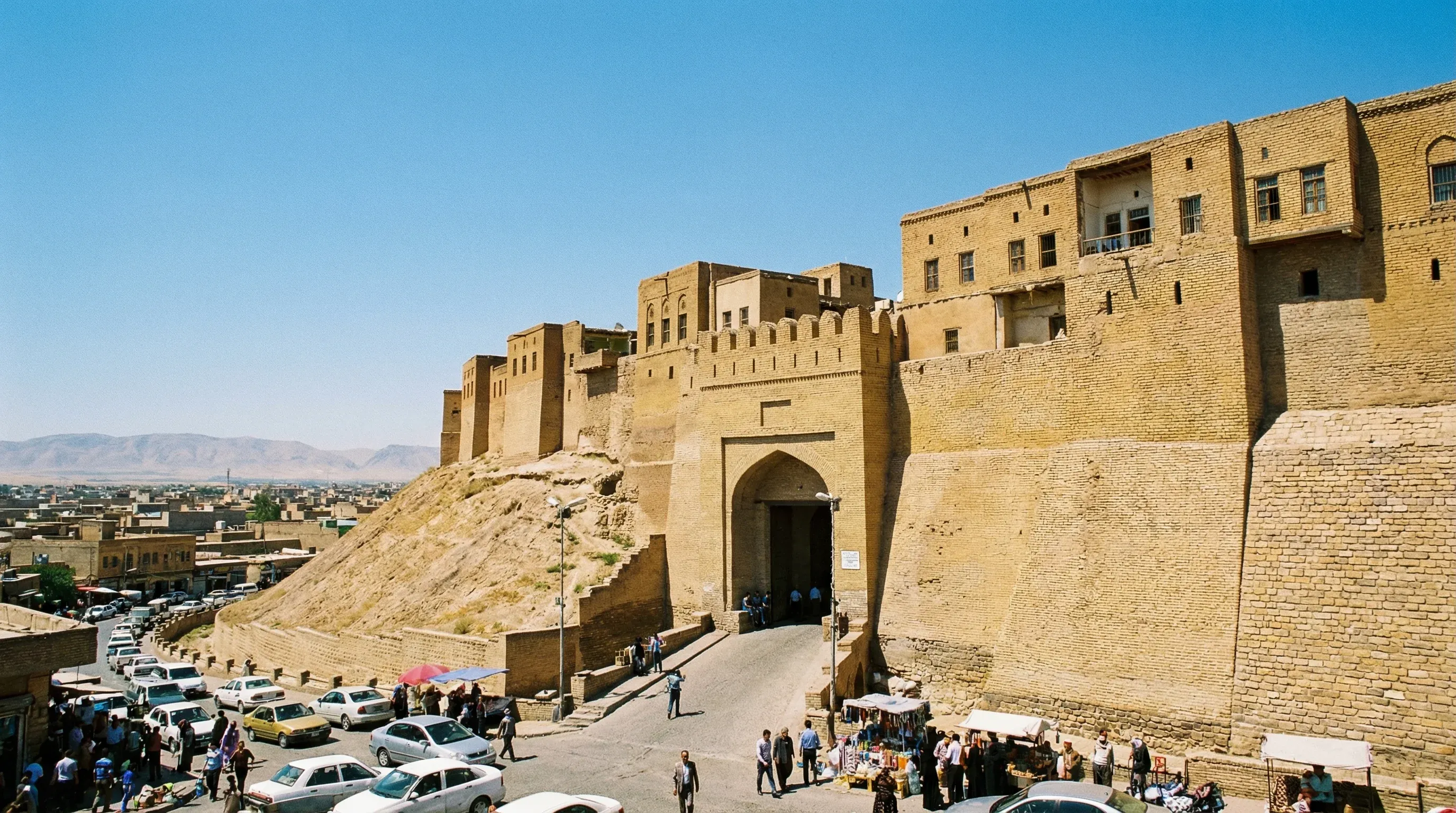

Kurdistan Region (Erbil, Sulaymaniyah)
Mountains, myths, and warm hospitality in the Zagros peaks 🏔️
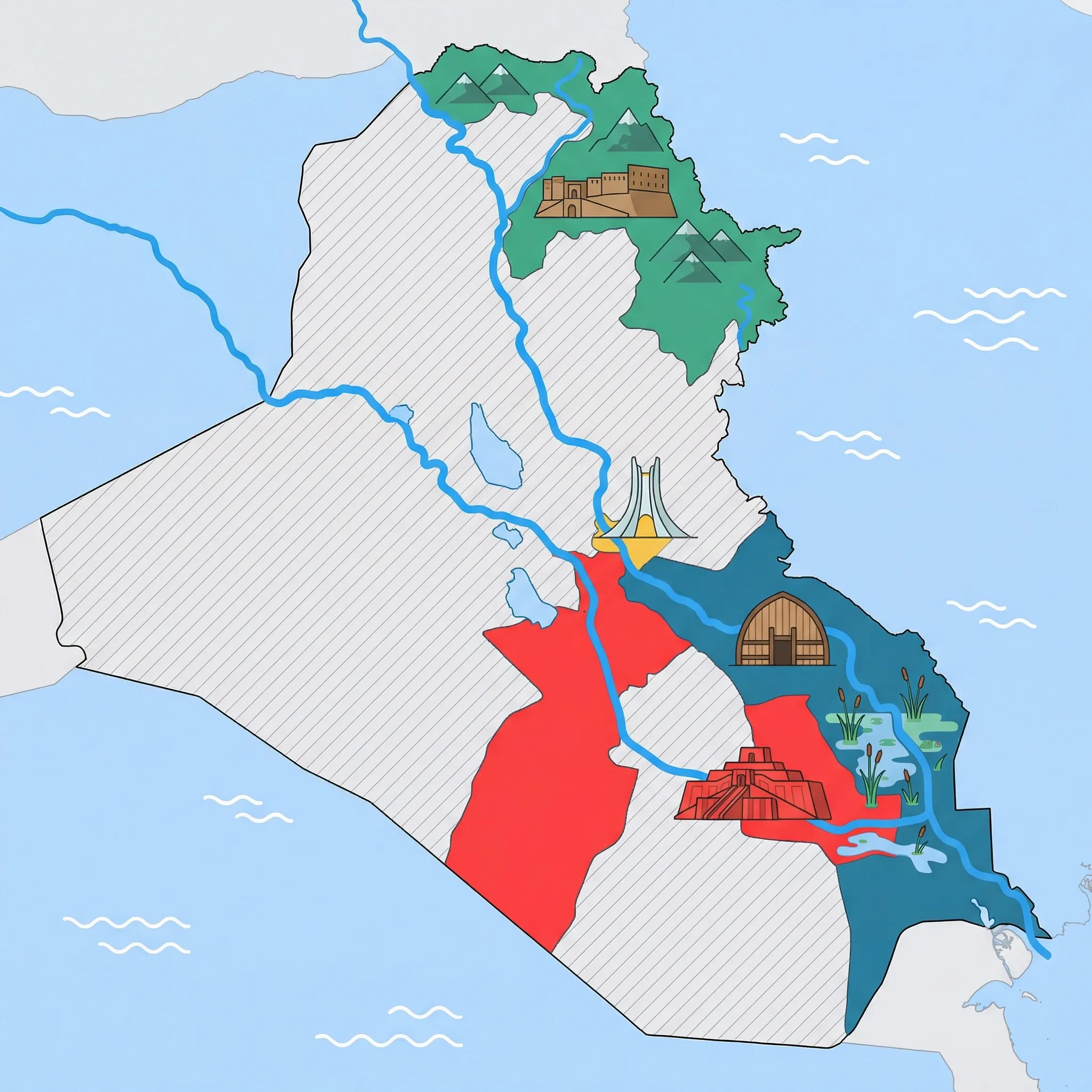
Click a region to explore
⚠️ SAFETY WARNING: While safer than federal Iraq, government agencies (including UK, USA, CA, AU) advise travelers to reconsider travel to the Kurdistan Region due to regional volatility. Special caution is advised near the borders with Turkey and Iran due to military operations. Families are strongly urged to consult their own government's official travel advisory before considering a trip, as circumstances and risk assessments vary.
The Kurdistan Region is widely considered the tourism hub of the country, offering a dramatic change of scenery with its snow-capped mountains, deep canyons, and four distinct seasons. It is generally safe, stable, and very welcoming to Western families. The infrastructure here is more developed for tourism, with modern malls, cable cars, and mountain resorts sitting alongside ancient history. The culture is Kurdish, distinct in language and tradition from the south, known for its mountain heritage and picnic culture.
Families love this region for the outdoor opportunities. Unlike the flat plains of the south, here you can drive up winding roads to cool mountain retreats. The cities of Erbil and Sulaymaniyah are modern and walkable in many areas, with plenty of green spaces and family-friendly cafes.
Key Attractions
Start in Erbil at the Erbil Citadel, a UNESCO site claiming to be the oldest continuously inhabited settlement in the world; kids love the textile museum and buying souvenirs in the bazar below. For relaxation, Sami Abdulrahman Park is immense, with playgrounds, lakes, and miniature trains. Nature lovers should head out of the city to Gali Ali Bag Waterfall, a dramatic cascade featured on the currency, or drive to Dukan Lake for boating and picnics. In Sulaymaniyah, the Amna Suraka (Red Security Museum) is powerful but perhaps better for older teenagers due to its somber history.
Practical Advice
Best time to visit: March for the Newroz (New Year) festivals, or April-May for green mountains and wildflowers. Winters are cold and snowy.
Logistics: Visa rules often differ here; many Western nationalities get a visa-on-arrival at Erbil airport (check current rules). Roads are good but mountain passes can be twisty.
Food & Drink
Typical meal times: Lunch is 12:30 pm to 2:30 pm. Dinner is usually 7:00 pm to 9:30 pm.
Typical meal costs: A family meal is good value. Expect 12,000–20,000 IQD (approx. $9–15 USD / €8–14 EUR) per person for a full kebab spread.
Dietary requirements: Vegetarian options are decent, with plenty of fresh salads, grilled tomatoes, and nan (bread). Yogurt and cheese are staples.
Signature dishes:
- Kurdish Kebab – Minced lamb grilled on skewers, usually served with mountains of fresh herbs, onion, and flatbread.
- Yaprakh – The Kurdish version of Dolma; vine leaves stuffed with meat and rice, often served with a side of yogurt.
- Kubba – Dumplings made of bulgur or rice dough stuffed with spiced meat, boiled or fried.
Why this score?
The region is defined by the rugged Zagros Mountains, offering genuine wilderness experiences such as canyoning and high-altitude hiking. While the cities are modernizing, the surrounding rural and mountainous areas remain wild and require self-sufficiency from visiting families.
Why this score?
Erbil and Sulaymaniyah have some of the most modern private healthcare facilities in Iraq, often staffed by international doctors or locals trained abroad. While they provide decent care for most situations, they still lack the scale and international accreditation found in top-tier global medical destinations.
Why this score?
This is the most visited region of Iraq for international tourists, benefiting from a relatively stable security environment and a more open visa policy. It draws a mix of regional domestic tourists and a growing number of international hikers and cultural travelers interested in the Citadels and Zagros Mountains.

Costs are moderate. A modern 4-star hotel in Erbil ranges from 90,000–150,000 IQD (approx. $70–115 USD / €65–105 EUR). Transport is affordable, with cross-city taxi rides costing around 5,000 IQD (approx. $3.80 USD / €3.50 EUR). Entry fees to parks and museums are often nominal or free.

Getting Here & Around
Getting Here
- Airports – Erbil International Airport (EBL) and Sulaymaniyah International Airport (ISU) are well-connected to Europe and the Middle East.
- Car – You can drive from Turkey (Ibrahim Khalil border), but it can be busy. Driving from Baghdad involves crossing internal checkpoints.
Getting Around
- Car – Hiring a car or driver is the best way to reach mountain sites like Gali Ali Bag Waterfall.
- Taxi – Taxis are cheap and plentiful in Erbil. Careem is also available.
- Cable Car – The Teleferique acts as transport to the top of Korek Mountain resort.
Nearby Airports (3 airports)
Erbil Intl
EBLErbil
Sulaymaniyah International Airport
ISUSulaimaniyah
Kirkuk AB
KIKKirkuk
View full flight map for Iraq →

Packing List
Essential for exploring the rocky trails and mountain resorts.
Evenings in the mountains are chilly, even in spring/summer.
Roads to waterfalls and resorts are very winding and steep.
Plugs can vary (Type G and Type C are both found in hotels).
Power cuts are frequent and daily, even in hotels; keep devices charged.
Street lighting can be sporadic and power outages may leave areas in darkness.
Essential for cultural respect and entering the many religious shrines.
Dust is ubiquitous and public bathroom facilities may lack soap/water.
International ATMs are rare/unreliable; you must bring cash to exchange.
Cities are noisy with generators, traffic, and calls to prayer at all hours.

Activities & Best Times

Hiking, wildlife, outdoor exploration, ecotourism
Features the spectacular Zagros Mountains and nature reserves like Barzan, offering deep immersion in rugged landscapes. Peak conditions occur in spring when the mountains are lush and green before the extreme heat of the Mesopotamian summer.

Urban tourism, museums, historical sites, architecture
Home to the UNESCO-listed Erbil Citadel and the culturally vibrant city of Sulaymaniyah, providing authentic Middle Eastern urban heritage. The most comfortable periods for exploring historic quarters are the temperate months of spring and autumn.

Events, celebrations, seasonal attractions
Newroz (Kurdish New Year) is one of the most significant cultural festivals in the Middle East, celebrated by 300+ million people globally. Kurdistan's Newroz celebrations in March are internationally notable, draw regional tourists, and feature large-scale public events. This is a genuine seasonal tourism draw deserving 'good' rating.

Scenic drives, countryside tours, route-based travel
The historic Hamilton Road and Hawraman Valley offer world-class scenic driving through dramatic mountain passes and canyons. Driving conditions are best in mid-season to avoid winter mountain snow and the severe 40C+ temperatures of July and August.

Sport tourism, fitness activities, active recreation
Offers established hiking routes like the Zagros Mountain Trail and modern facilities at Korek Mountain Resort. Activity is highly seasonal, peaking during the mildest months when mountain trails are most accessible for trekking and climbing.

Learning experiences, scientific sites, historical education
Contains significant historical sites like the Amna Suraka museum, offering unique insights into Kurdish history and resilience. While educationally profound, these sites are typically side-activities rather than primary international travel motivators.

Spa retreats, wellness centers, peaceful getaways
Traditional hammams like Hammam Jalli provide an authentic cultural wellness experience, though the region lacks high-end international spa resorts. Visitors typically enjoy these facilities as part of a broader cultural tour during the milder seasons.
Amusement parks, family entertainment venues
Features regional attractions like the Pank Resort alpine coaster and various water parks, though they lack the scale of global theme park destinations. Visitation is strongest during temperate school holiday periods.

Attractions (18 total)



Public Holidays & Calendar Next 12 months
Public holidays, festivals, cultural celebrations, and seasonal natural phenomena coming up in Kurdistan Region (Erbil, Sulaymaniyah) over the next 12 months.
Loading holidays and events...

Travel Advisory
All major agencies maintain their highest possible warning level for Iraq. Travel is extremely dangerous due to ongoing regional conflict, terrorism, and kidnapping. Foreigners are advised to leave immediately or shelter in place.
Safety Topics
Traveller Advice (6 groups)

Homosexual acts are not explicitly criminalized by national law but are often prosecuted under morality and indecency statutes. Public displays of affection are highly risky and social hostility is extreme.

Travellers should depart the country immediately while commercial options exist. If departure is not possible, stay in secure accommodation, remain away from windows, and maintain a supply of food, water, and essential medication.

Religious sites and large gatherings for festivals are frequent targets for terrorist attacks. Security near shrines is heavy, but the threat of large-scale bombings remains critical.

Conservative dress is necessary throughout the country. Women may face harassment or unwanted attention, and should avoid travelling alone, especially after dark.

Media personnel are at high risk of injury, detention, or death in active conflict zones. Accreditation does not guarantee safety, and journalists may be targeted by militant groups.
International aid workers face extreme risks of targeted kidnapping and violence. Security protocols must be strictly followed, and professional security coordination is essential for those remaining in the country.
Agency Summaries
Global Affairs Canada advises against any travel to Iraq because of the volatile security environment, the possibility of armed conflict, and the danger of terrorist activity. Airspace in the region is currently closed.
The U.S. Department of State has issued a country-wide 'Do Not Travel' order due to kidnapping, terrorism, civil unrest, and armed conflict. Non-emergency government personnel were ordered to depart the country on March 2, 2026.
Smartraveller recommends that Australians do not visit Iraq under any circumstances. The safety situation is extremely dangerous due to the high threat of terrorism, ongoing conflict, and volatile social unrest.
Ireland strongly advises against all travel to Iraq due to the critical security situation. Citizens currently in the country should consider leaving while safe routes are available or shelter in place if air travel is disrupted.
SafeTravel maintains a 'Do Not Travel' warning for all of Iraq, including the Kurdistan Region. New Zealanders are warned of extreme risks from military strikes, terrorism, and organized crime.
The Foreign, Commonwealth & Development Office advises against all travel to both Federal Iraq and the Kurdistan Region. This follows a recent escalation in regional hostilities and a high risk of further unpredictable events.
Information is provided for general guidance only and does not constitute travel, safety, medical, or legal advice. Conditions may change. Users are responsible for independently verifying information before travel.