
West & Connemara
Wild mountains, white sands, and the true Irish spirit 🏔️🎻
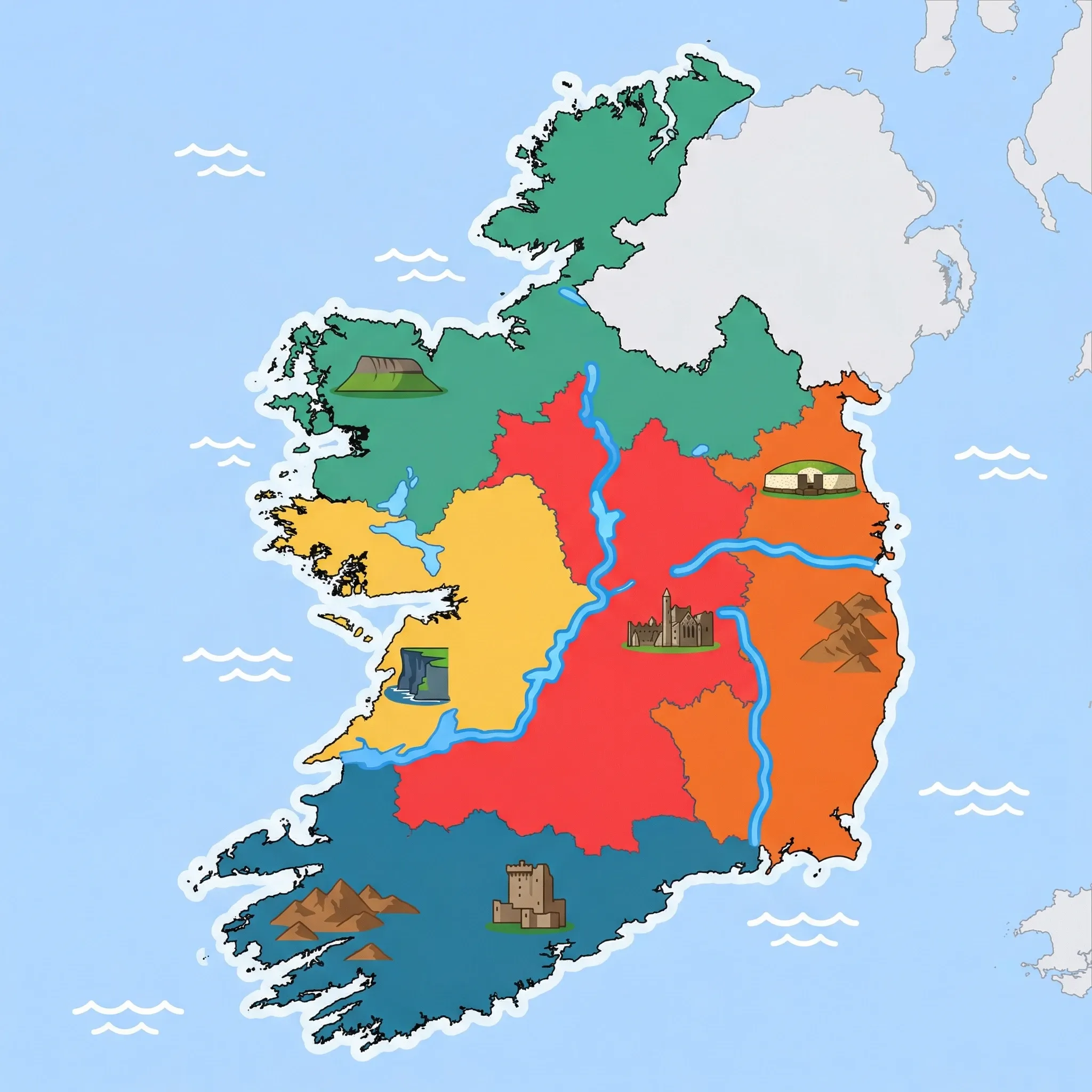
Click a region to explore
The West & Connemara is the Ireland of postcards—rugged, wild, and incredibly atmospheric. For families, this region offers a sense of true adventure. The landscape is dominated by the Twelve Bens mountain range, vast russet-coloured bogs, and an intricate coastline of white sand beaches and turquoise waters that look tropical on a sunny day (though the temperature will remind you otherwise!). This is a Gaeltacht (Irish-speaking) area, so children will hear the native language spoken in shops and see it on road signs, adding a layer of cultural immersion to the trip.
Galway City serves as the bohemian gateway to the region—a place of buskers, festivals, and medieval streets that feel safe and exciting for kids. But the real magic lies west of the city in Connemara. It is a playground for nature-loving families: sheep roam freely across the roads (a constant source of amusement for kids), and the beaches, such as Dog's Bay, are made of crushed seashells. The weather here is wild and changeable; watching rain clouds sweep across the valleys is part of the experience. It is a place to disconnect from screens and reconnect with the elements.
Key Attractions
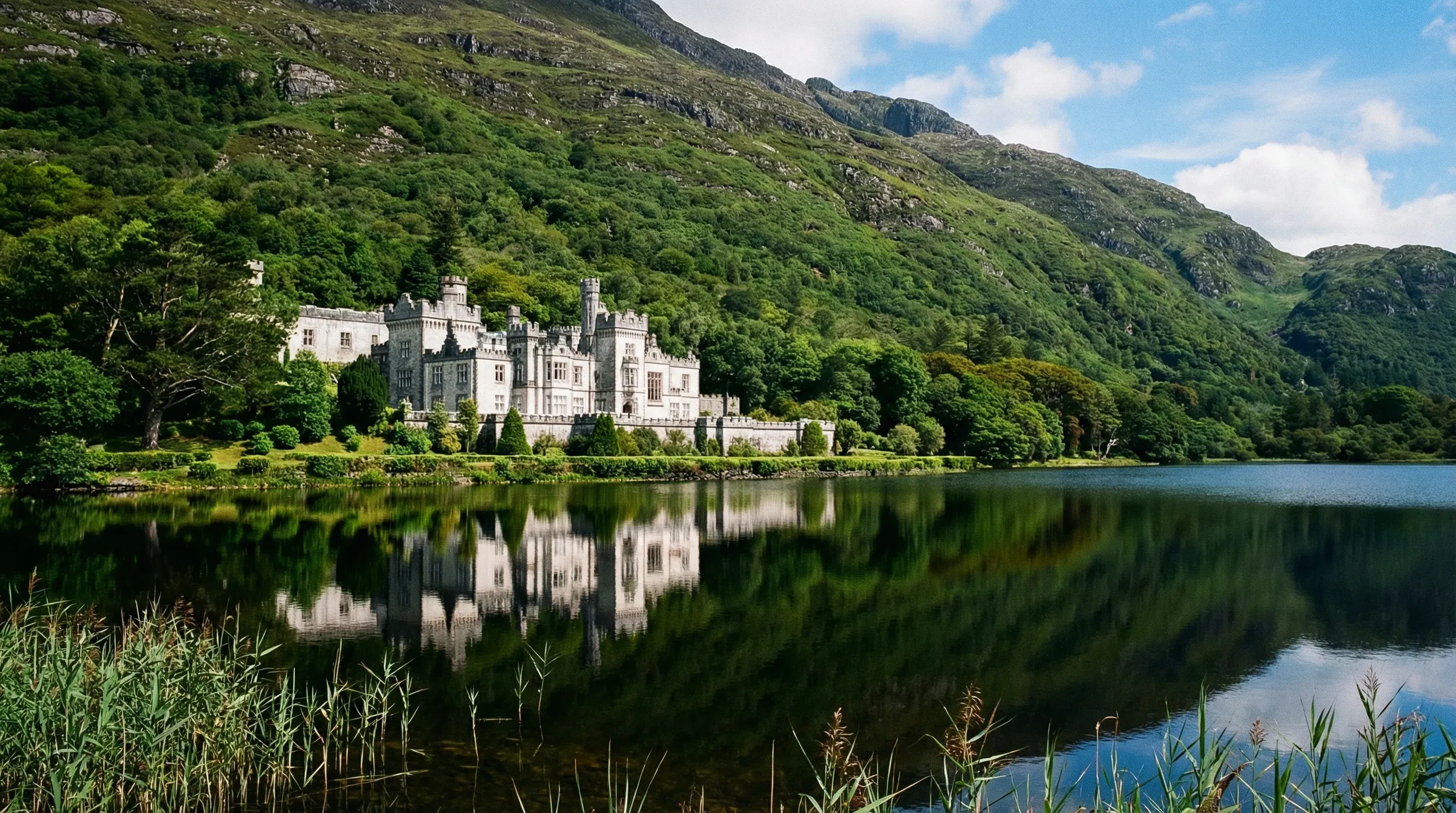
The crown jewel is Kylemore Abbey & Victorian Walled Garden. While the history of the nuns and the castle is fascinating, families particularly love the shuttle bus ride to the walled gardens and the woodland trails. Nearby, Connemara National Park offers one of the best family hikes in Ireland: the Diamond Hill loop. The lower trails are boardwalked and accessible, offering stunning views without a grueling climb.
In Galway City, the Galway Atlantaquaria is the National Aquarium of Ireland and a perfect rainy-day rescue. It focuses on native species, allowing kids to hold starfish and learn about the Atlantic ecosystem right outside the door. If you venture offshore to the Aran Islands, Dún Aonghasa is a prehistoric fort perched on a 100-metre cliff edge—thrilling and terrifying in equal measure (hold hands tight!). For a unique perspective on the landscape, a boat tour of Killary Fjord reveals the dramatic mountains rising straight from the sea.
Practical Advice
Connemara roads are narrow and winding; allow double the time GPS suggests. The Galway International Arts Festival in July is spectacular but drives accommodation prices up. Waterproof gear is non-negotiable here—not just water-resistant, but fully waterproof.
Food & Drink
Typical meal times: Lunch 12:30 pm to 2:30 pm. Dinner 6:00 pm to 9:00 pm. Galway City has a vibrant late-food scene, but rural Connemara kitchens close earlier.
Typical meal costs: Galway City is pricey, comparable to Dublin. Rural Connemara is mid-range. Dinner for four: €65–100 (approx. $70–110 USD / £55–85 GBP). Seafood chowder is a cheap, filling lunch option.
Dietary requirements: Galway City is a haven for vegans and foodies. In rural Connemara, options are simpler but fresh produce is high quality. Gluten-free options are widely understood.
Signature dishes:
- Connemara Lamb – The mountain herbs and heather the sheep eat give this meat a unique, sweet flavour protected by EU status.
- Seafood Chowder – A creamy soup packed with smoked haddock, salmon, and mussels, served with brown bread. Every pub has its own secret recipe.
- Galway Oysters – World-famous native oysters, best tasted at the festivals or city seafood bars (adventurous kids might try one!).
Why this score?
The region offers genuine ruggedness in the Twelve Bens mountains and the remote, boggy landscapes of the Connemara interior. While trails are generally marked, the weather can be unpredictable and the terrain is significantly more challenging than the eastern part of the country.
Why this score?
Galway City hosts a major university teaching hospital that serves as the primary medical hub for the entire west of Ireland. Facilities are modern and well-equipped to handle tourists, though rural areas in the far west may be a significant drive from these central services.
Why this score?
Connemara is a well-known international destination celebrated for its 'wild' Irish aesthetic and Gaelic culture. Galway City acts as a major hub, supporting significant flows of tourists visiting Kylemore Abbey and the Aran Islands throughout the peak season.

Galway City in summer is high-cost, with hotels reaching €250+ (approx. $270 USD / £215 GBP). However, staying in B&Bs or holiday cottages in Connemara offers better value, typically €120–160 (approx. $130–175 USD / £100–135 GBP) per night. Pub food is generally good value.

Getting Here & Around
Getting Here
- Bus/Train – Regular trains run from Dublin Heuston to Galway City (2.5 hours). Citylink and GoBus offer express coaches from Dublin Airport.
- Driving – Essential for exploring Connemara. The drive from Dublin is highway (M6) until Galway, then narrow regional roads.
- Ferry – Ferries to the Aran Islands depart from Rossaveal (bus connection available from Galway City).
Getting Around
- Car – The only practical way to see the "loops" of Connemara and reach beaches like Dog's Bay.
- Walking – Galway City is entirely walkable. Connemara National Park is best explored on foot.
- Bicycle – Cycling the quiet bog roads is popular, and bike hire is available in Clifden and on the Aran Islands.
Nearby Airports (2 airports)
Donegal
CFNDonegal
Knock
NOCKnock
View full flight map for Ireland →
Official Links

Packing List
The roads in Connemara and the ferry to Aran Islands can be very winding and choppy.
Atlantic gusts will blow standard caps away immediately.
The Atlantic is cold even in summer; kids last much longer in the water with neoprene.
Ticks are present in the long grasses and bracken of the National Park.
Essential for walking on narrow rural roads which often lack sidewalks/pavements.
Ticks are common in tall grass and national parks like Killarney; useful for hikers.
Rain often blows sideways; a jacket alone won't keep legs dry during outdoor walks.
Supermarket trolleys and some older parking meters require €1 or €2 coins to operate.

Activities & Best Times

Hiking, wildlife, outdoor exploration, ecotourism
Connemara National Park and the Twelve Bens offer a raw, world-class Atlantic wilderness experience perfect for hiking and wildlife spotting. Peak summer provides the essential daylight and milder weather needed to navigate the rugged, often boggy terrain safely.

Sport tourism, fitness activities, active recreation
Features exceptional adventure centers and recognized trekking routes like the Western Way and Diamond Hill. The infrastructure supports diverse active tourism, which is most accessible during the drier and more stable weather of late spring and summer.

Urban tourism, museums, historical sites, architecture
Gaelic culture and heritage sites like Kylemore Abbey are regionally distinctive and nationally important, but lack the international cultural significance of truly 'very_good' destinations. Good rating appropriately reflects authentic cultural experiences without overstating global importance.

Scenic drives, countryside tours, route-based travel
Includes world-famous scenic stretches like the Wild Atlantic Way and the Sky Road, offering spectacular coastal vistas. Peak months provide the clear visibility and longer days necessary to fully appreciate the dramatic Atlantic landscapes.

Beach resorts, marine activities: diving, snorkelling, kite surfing, wind surfing, sailing
Notes explicitly state 'Atlantic waters remain cool year-round' and 'limited swimming season'. This makes beaches scenic but unsuitable for traditional beach holidays. 'Good' overstates suitability when water temperature is a limiting factor.

Learning experiences, scientific sites, historical education
Features localized but high-quality learning at the Galway Atlantaquaria and Clifden Station House Museum. These sites serve as excellent supplementary activities for families rather than primary travel motivators.

Events, celebrations, seasonal attractions
Anchored by the world-class Galway International Arts Festival in July and the Oyster Festival in September. Outside these major international event windows, the regional festival scene is more local and seasonal in nature.

Amusement parks, family entertainment venues
Offers regional family entertainment at Leisureland and Killary Water Park, which are suitable for local recreation but lack international destination status. These facilities operate primarily during the summer school holiday window.

Attractions (17 total)



Public Holidays & Calendar Next 12 months
Public holidays, festivals, cultural celebrations, and seasonal natural phenomena coming up in West & Connemara over the next 12 months.
Loading holidays and events...

Travel Advisory
The majority of major agencies agree that Ireland is a safe destination requiring only standard safety awareness. No significant elevated risks are reported across the country.
Safety Topics
Traveller Advice (3 groups)

Ireland is considered an inclusive and safe environment for sexual and gender minorities, with strong legal protections and a generally welcoming public atmosphere.

The country is generally safe for solo female travellers. Standard precautions should be taken when walking alone at night in less-frequented or poorly lit areas.

Maintain standard safety vigilance, especially in crowded tourist areas and public transport hubs where petty theft is more frequent. Keep digital copies of travel documents and monitor local media for news on protests.
Agency Summaries
Ireland is overall safe, but visitors should be wary of petty crime, especially in Dublin. There is a slight increase in rental car break-ins at scenic locations and a risk of protests in urban centers.
Visitors should maintain standard safety levels. Awareness of potential for civil unrest and the general threat of terrorism in Europe is recommended, although Ireland has no recent history of attacks.
Travellers should maintain standard safety awareness as they would in their home country. While generally safe, petty crime like theft and bag snatching occurs, particularly in major cities and tourist spots.
No specific travel restrictions are in place. Visitors should ensure they have proper insurance and be aware of local laws. Cross-border travel to Northern Ireland may involve different entry requirements.
Standard safety measures are recommended. Travellers are advised to monitor local alerts and enroll in security notification programs. Immigration officials may request proof of travel intent and sufficient funds at the border.
Information is provided for general guidance only and does not constitute travel, safety, medical, or legal advice. Conditions may change. Users are responsible for independently verifying information before travel.