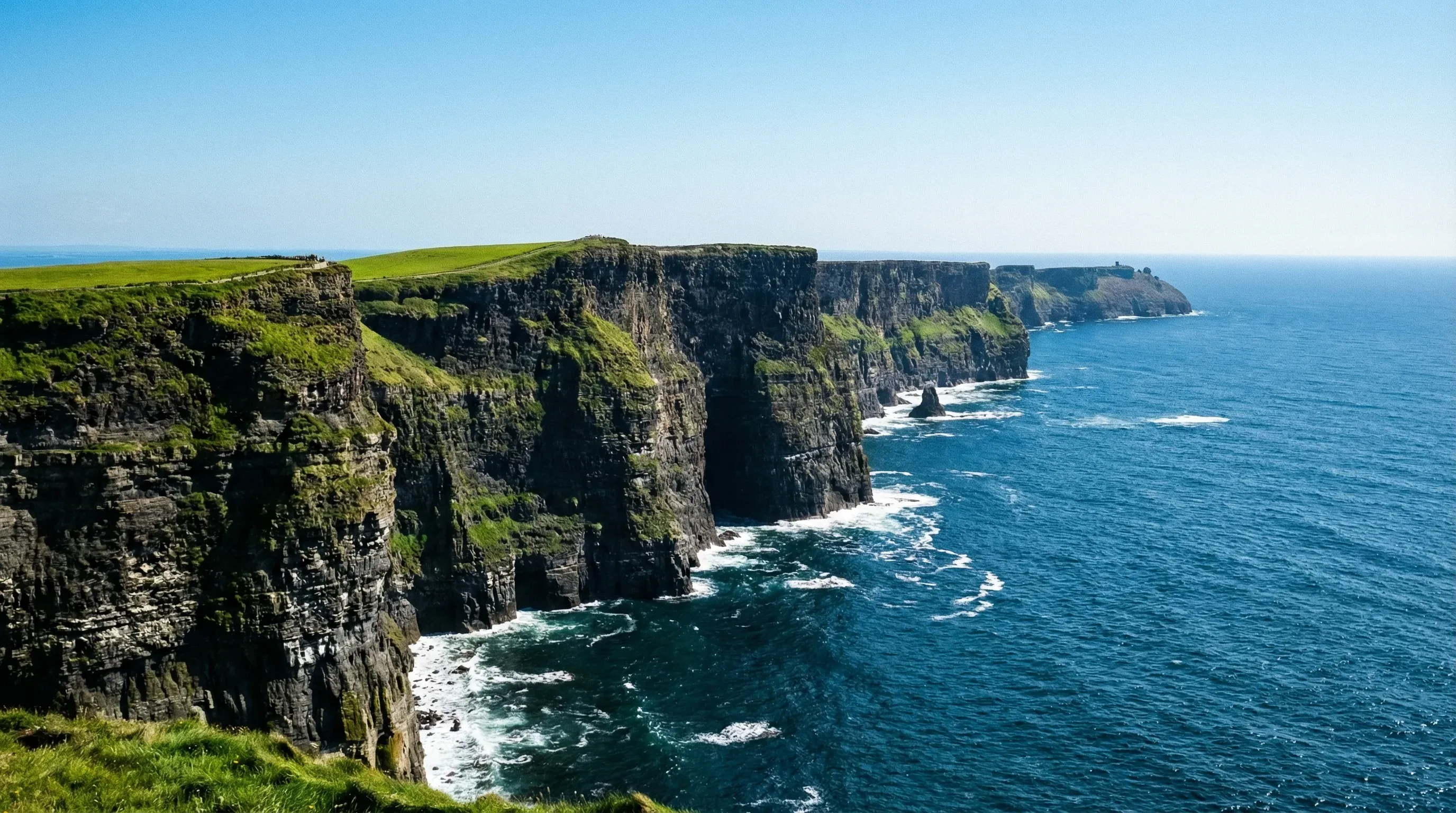

Wild Atlantic Way North (Clare, Galway, Cliffs of Moher)
Lunar landscapes, soaring cliffs, and underground secrets 🦅🎻
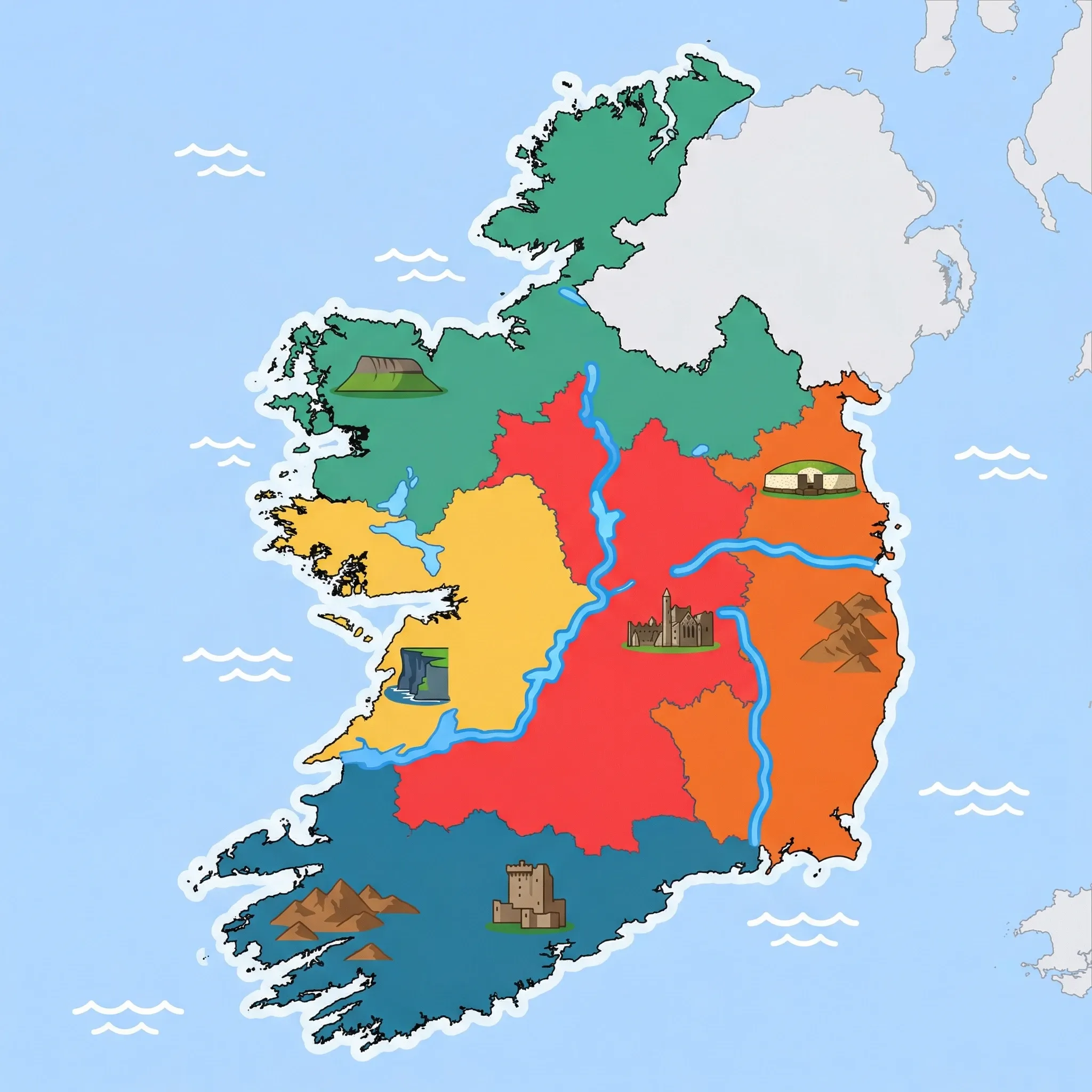
Click a region to explore
The Wild Atlantic Way North, centering on County Clare and The Burren, offers families one of the most unique geological playgrounds on earth. The landscape here looks like the surface of the moon: vast pavements of grey limestone (The Burren) stretching as far as the eye can see, dotted with rare wildflowers and ancient tombs. It is a place that sparks children's imagination—it feels ancient, alien, and wild. Yet, it is also deeply welcoming, known as the spiritual home of traditional Irish music, which spills out of pubs in villages like Doolin and warms up even the wettest evenings.
For families, this region strikes a balance between high-octane sightseeing and relaxed exploration. The coastline is dramatic, characterized by the sheer drop of the cliffs and the surfer-friendly waves of Lahinch. Inland, the "underground" Burren offers a network of caves that are perfect for adventure. The culture is heavily focused on heritage and folk traditions; attractions here often involve storytelling, music, and seeing how people lived in centuries past. It is a tactile region where kids can touch 300-million-year-old fossils, hold birds of prey, and climb over ancient stone forts.
Key Attractions
The headline act is undoubtedly the Cliffs of Moher. To make it family-friendly, visit in the evening to avoid the worst crowds, and ensure you stay behind the safety walls. Nearby, the Aillwee Burren Experience is fantastic for kids; it combines a guided cave tour (easy for beginners) with a Birds of Prey centre where you can see eagles and owls fly right over your head.
For a full day of history, Bunratty Castle & Folk Park is unmatched. It is a living museum with a 15th-century castle and a reconstructed village complete with thatched cottages, farm animals, and actors in costume baking bread—immersive and educational. Deep in the rocky landscape, Poulnabrone Dolmen is a Neolithic tomb that makes for a quick but impressive stop; it’s a great photo op that puts the ancient history of the region into perspective. In the evenings, the village of Doolin Village is the place to be for family-friendly music sessions.
Practical Advice
The Atlantic wind here is powerful—care is needed with car doors and cliff edges. This region is very popular, so accommodation in coastal villages like Doolin books out months ahead. The area is compact, making it easy to base yourself in one spot for 3-4 days without excessive driving.
Food & Drink
Typical meal times: Lunch 12:00 pm to 2:30 pm. Dinner 5:30 pm to 9:00 pm. Pubs serve food all day in summer.
Typical meal costs: Mid-to-high in tourist hubs. Expect to pay €60–90 (approx. $65–100 USD / £50–75 GBP) for a family meal. "Gastro-pub" food is the standard here, offering high quality at reasonable prices.
Dietary requirements: The Burren has a strong "slow food" movement. Local cheeses, smoked fish, and organic veg are abundant. Vegetarian options are excellent; gluten-free is widely catered for.
Signature dishes:
- Burren Smoked Salmon – The region is famous for its smokehouses. The fish is oak-smoked and silky, often served as a starter or on open brown bread sandwiches.
- St. Tola Goat Cheese – A world-class local cheese made near Ennistymon. You will find it deep-fried in salads or on pizzas throughout the county.
- Seafood Platters – With the Atlantic on the doorstep, crab claws and mussels are staples in Doolin and Lahinch.
Why this score?
The Burren’s unique karst limestone landscape offers interesting exploration and caves, while the coast provides surfing and cliff-side walking. It strikes a balance between accessible tourist sites and moderately challenging natural environments.
Why this score?
Medical needs are met by regional hospitals in Ennis and the proximity to major facilities in Limerick and Galway. The high volume of tourists means local clinics are accustomed to treating international visitors, though emergency response times can vary in more isolated coastal pockets.
Why this score?
Anchored by the Cliffs of Moher, which attract over 1.5 million visitors annually, this region is a staple of Irish tourism itineraries. The high concentration of visitors in Doolin and the Burren ensures a robust tourism infrastructure despite the rural setting.

While premier sights like the Cliffs of Moher charge admission (book online for better rates), many natural sites like <a data-attraction-id="41966">Poulnabrone Dolmen</a> are free. Accommodation ranges from luxury castle hotels to reasonably priced B&Bs (€110–160 / approx. $120–175 USD / £95–135 GBP).

Getting Here & Around
Getting Here
- Airports – Shannon Airport (SNN) is the local hub, located just 20 minutes from Bunratty Castle & Folk Park and 1 hour from the cliffs.
- Driving – About 2.5–3 hours from Dublin via the M7/M18.
- Ferry – The Tarbert-Killimer car ferry connects this region to Kerry (South), saving a long drive through Limerick.
Getting Around
- Car – Essential for freedom. The roads around the coast and The Burren National Park are scenic but can be narrow.
- Bus – Public buses connect Ennis, Lahinch, and the Cliffs, but frequency can be low for families on a schedule.
- Walking – The Burren Way offers marked trails, but sturdy boots are needed for the uneven limestone.
Nearby Airports (1 airport)
Shannon
SNNShannon
View full flight map for Ireland →
Official Links

Packing List
The limestone pavement (karst) is uneven, slippery when wet, and full of crevices.
The beaches at Fanore or Lahinch have consistent breezes perfect for kite flying.
Soft raincoats often soak through; you need a proper shell for the Atlantic spray.
Mobile signal can vanish in the valleys of the Burren.
Essential for walking on narrow rural roads which often lack sidewalks/pavements.
Ticks are common in tall grass and national parks like Killarney; useful for hikers.
Rain often blows sideways; a jacket alone won't keep legs dry during outdoor walks.
Supermarket trolleys and some older parking meters require €1 or €2 coins to operate.
Back roads and coastal drives are extremely twisty and can unsettle little stomachs.

Activities & Best Times

Hiking, wildlife, outdoor exploration, ecotourism
The Burren's unique karst landscape and the iconic Cliffs of Moher offer world-class hiking and geological exploration. Peak season provides necessary daylight and manageable trail conditions, while winter months are frequently too wet and windy for safe coastal exploration.

Urban tourism, museums, historical sites, architecture
Galway city and Bunratty Castle are significant cultural assets, but do not reach the global cultural dominance required for 'excellent'. That tier should be reserved for cities with multiple UNESCO sites and internationally renowned cultural institutions.

Sport tourism, fitness activities, active recreation
Renowned for world-class Atlantic surfing at Lahinch and extensive dedicated routes like the Burren Way for cycling and trekking. Optimal conditions occur during the warmer, drier months; the Atlantic winter brings extreme swells and conditions only suitable for elite professionals.

Learning experiences, scientific sites, historical education
Significant geological and marine learning opportunities exist at the Burren Aillwee Experience and the Cliffs of Moher Atlantic Edge. Facilities are best experienced during the main tourism season when all educational programs and tours are fully operational.

Events, celebrations, seasonal attractions
Home to the internationally significant Galway Arts Festival in July and the Oyster Festival in September, attracting sophisticated global audiences. Outside of these key event windows and the festive December period, the international festival scene is relatively quiet.

Spa retreats, wellness centers, peaceful getaways
Offers unique, authentic wellness experiences through traditional seaweed baths and the historic spa heritage of Lisdoonvarna. While some facilities are year-round, the restorative appeal is highest when the surrounding coastal scenery is accessible and pleasant.

Scenic drives, countryside tours, route-based travel
The Wild Atlantic Way and Sky Road offer spectacular coastal driving vistas that are globally celebrated. Peak months provide the visibility and daylight needed to enjoy the scenery, while winter driving is often hampered by mist, heavy rain, and early darkness.

Beach resorts, marine activities: diving, snorkelling, kite surfing, wind surfing, sailing
Notes acknowledge 'Atlantic waters are cold outside summer months'. Lahinch and the Cliffs offer dramatic maritime scenery but limited swimming comfort. International beach holiday standards require warm, swimmable waters for 'good' rating.
Amusement parks, family entertainment venues
Regional adventure and water parks provide entertainment for families, though they are secondary to the region's natural draws. Peak visit times align with school holidays when seasonal outdoor elements of centers like Wildlands are fully open.

Attractions (20 total)



Public Holidays & Calendar Next 12 months
Public holidays, festivals, cultural celebrations, and seasonal natural phenomena coming up in Wild Atlantic Way North (Clare, Galway, Cliffs of Moher) over the next 12 months.
Loading holidays and events...

Travel Advisory
The majority of major agencies agree that Ireland is a safe destination requiring only standard safety awareness. No significant elevated risks are reported across the country.
Safety Topics
Traveller Advice (3 groups)

Ireland is considered an inclusive and safe environment for sexual and gender minorities, with strong legal protections and a generally welcoming public atmosphere.

The country is generally safe for solo female travellers. Standard precautions should be taken when walking alone at night in less-frequented or poorly lit areas.

Maintain standard safety vigilance, especially in crowded tourist areas and public transport hubs where petty theft is more frequent. Keep digital copies of travel documents and monitor local media for news on protests.
Agency Summaries
Ireland is overall safe, but visitors should be wary of petty crime, especially in Dublin. There is a slight increase in rental car break-ins at scenic locations and a risk of protests in urban centers.
Visitors should maintain standard safety levels. Awareness of potential for civil unrest and the general threat of terrorism in Europe is recommended, although Ireland has no recent history of attacks.
Travellers should maintain standard safety awareness as they would in their home country. While generally safe, petty crime like theft and bag snatching occurs, particularly in major cities and tourist spots.
No specific travel restrictions are in place. Visitors should ensure they have proper insurance and be aware of local laws. Cross-border travel to Northern Ireland may involve different entry requirements.
Standard safety measures are recommended. Travellers are advised to monitor local alerts and enroll in security notification programs. Immigration officials may request proof of travel intent and sufficient funds at the border.
Information is provided for general guidance only and does not constitute travel, safety, medical, or legal advice. Conditions may change. Users are responsible for independently verifying information before travel.