

⚠️ SAFETY WARNING: Due to active armed conflict, missile launches, and civil unrest, government agencies (including CA, USA, UK, AU, IE, NZ) advise travelers to reconsider or avoid all travel to Israel. The security environment is extremely volatile, and airspace closures have been reported. Families are strongly urged to consult their own government's official travel advisory before considering a trip, as circumstances and risk assessments vary.
Overview
Israel is a land of dramatic contrasts packed into a small geographical area. For families, this means travel times are short, yet the scenery changes rapidly from the green, rolling hills of Galilee & North to the stark, majestic deserts of Southern Israel (Negev, Dead Sea & Eilat). The country is deeply family-oriented; children are cherished in Israeli culture and are welcome virtually everywhere, from high-end restaurants to late-night wedding celebrations. While the political situation requires vigilance, the day-to-day rhythm of life is vibrant, warm, and outwardly social.
Culturally, Israel is a mosaic of traditions. Families can experience the solemn spirituality of the Western Wall, the chaotic energy of the Carmel Market, and the relaxed, secular beach culture of Tel Aviv all in one trip. The climate allows for year-round travel, though summers can be intensely hot. Whether you are exploring the underwater worlds of the Red Sea or walking through tunnels carved thousands of years ago, the country offers an educational and adventurous playground for children of all ages.
Key Attractions
No family trip to Israel is complete without visiting Jerusalem. The Jerusalem Biblical Zoo is a world-class attraction focusing on animals mentioned in the Bible, beautifully set in a tiered valley. For a hands-on history lesson, walk the ramparts of the Jerusalem Walls National Park or explore the astonishing Church of the Holy Sepulchre, where the atmosphere is thick with centuries of devotion. Just outside the city, the Mini Israel park allows kids to feel like giants while walking around detailed miniatures of the country's landmarks.
Heading to the coast, Tel Aviv & Coast offers a lighter pace. Wander the ancient alleyways of Old Jaffa, a port city with thousands of years of history, before relaxing in the sprawling Yarkon Park (Ganei Yehoshua), which features botanical gardens and playgrounds. In the north, the Gan HaShlosha National Park (Sahne) is famous for its natural warm water pools that are perfect for swimming year-round. For families venturing south, Ein Bokek Beach provides safe access to the Dead Sea, allowing you to experience the unique sensation of weightlessness in the lowest place on Earth.
Safety
Given the current L3/Do Not Travel advisory, safety is the primary concern. In normal times, street crime is low, but the current conflict creates significant risks from rocket fire and terrorism. Families in the region must be familiar with the "Red Alert" siren system and know the location of the nearest bomb shelter at all times. Public gatherings and border areas should be strictly avoided. Follow the instructions of the Home Front Command immediately during any alert.
Practical Advice
Best time to visit: Spring (April–May) and Autumn (September–October) offer the most pleasant weather. Summers are scorching, especially in the south. Shabbat: From Friday afternoon to Saturday evening, public transport (trains and most buses) ceases, and many businesses close. Plan your travel logistics accordingly.
Food & Drink
Typical meal times: Lunch is usually eaten between 12:00 pm and 3:00 pm. Dinner is a social affair, typically starting from 7:30 pm to 9:30 pm, though restaurants stay open late.
Typical meal costs: ₪60–120 (approx. $16–33 USD / €15–30 EUR) for a casual sit-down meal. Street food is cheaper, around ₪25–45 (approx. $7–12 USD / €6–11 EUR).
Dietary requirements: Israel is a paradise for vegetarians and vegans. Due to kosher laws separating meat and milk, dairy-free options are standard at meat restaurants, and meat-free options are standard at dairy restaurants. Allergen awareness is generally high.
Family-friendly dining: Children are welcome everywhere. Highchairs are universally available, and kid-sized portions of schnitzel or pasta are common staples on almost every menu.
Signature dishes:
- Falafel – Deep-fried chickpea balls served in a pita with salad and tahini, the ultimate fast food.
- Shakshuka – Eggs poached in a spicy tomato and pepper sauce, a breakfast classic often eaten for dinner too.
- Schnitzel – Breaded and fried chicken breast, widely considered the unofficial national dish for children.
- Sabich – A pita stuffed with fried eggplant, hard-boiled egg, salad, and mango pickle (amba).
- Malabi – A creamy milk (or coconut milk) pudding topped with rosewater syrup and crushed nuts.

Israel is one of the more expensive destinations in the Middle East. A family of four can expect to spend around ₪800–1,200 (approx. $220–330 USD / €200–300 EUR) per day for mid-range accommodation, meals, and attractions. Supermarket prices and street food help keep costs down, but sit-down restaurants and car hire are comparable to Western Europe.
Age Suitability





Did you know? Israel welcomes approximately 961,000 international visitors per year. Most visitors come from Europe.
Explore Regions
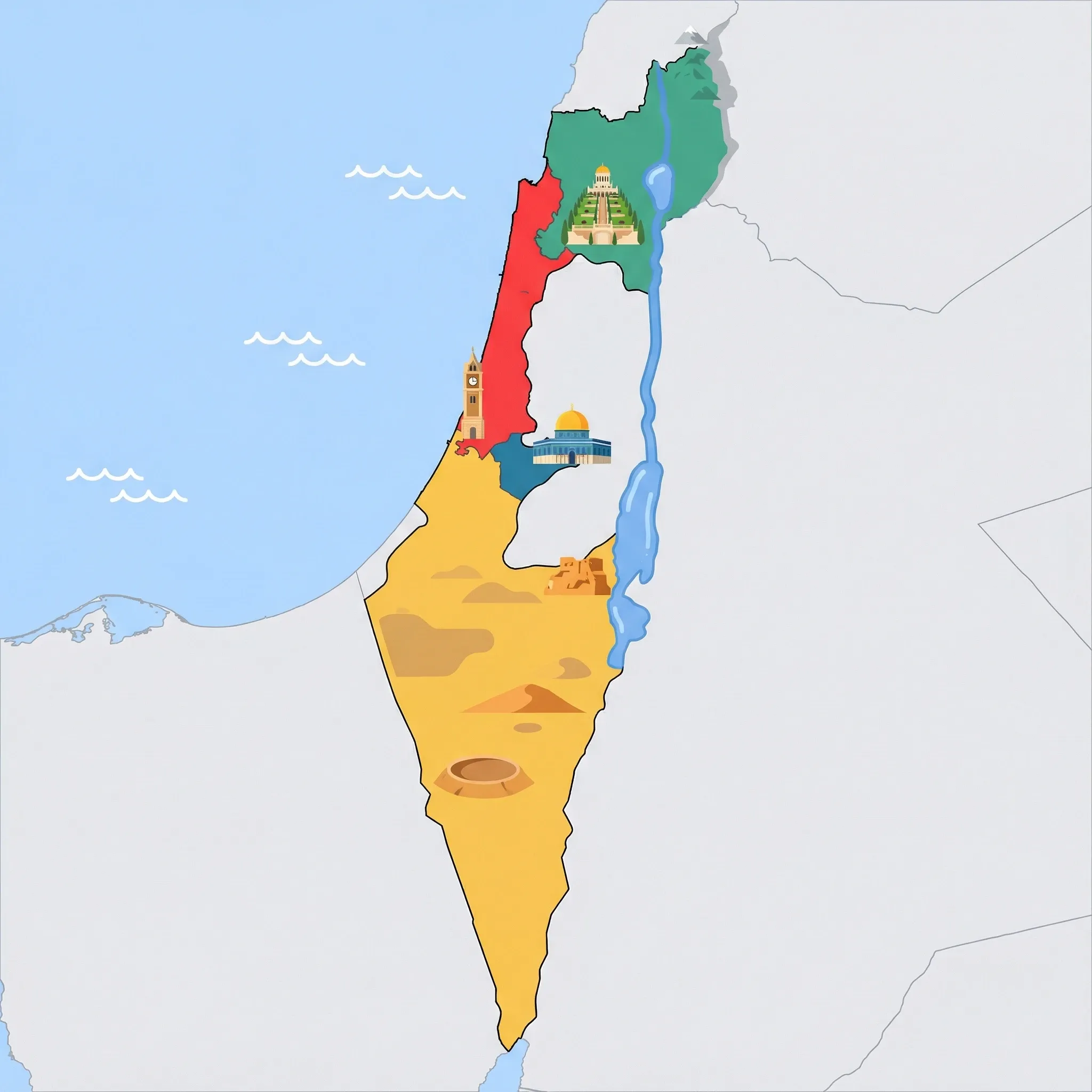
4 Regions
Galilee & North
Ancient history, waterfalls, and outdoor adventures 🌿
Jerusalem
A journey through time in the Holy City 🕌🕍⛪
Southern Israel (Negev, Dead Sea & Eilat)
Desert stars, floating waters, and coral reefs 🐪🐠☀️
Tel Aviv & Coast
Sun, sand, and non-stop energy 🏖️🏙️🚲
Click on a region marker to explore details. Use the dropdown to color regions by activity suitability.

Getting There & Around
Getting There
- By Air – Ben Gurion Airport (TLV) is the main international hub, located between Tel Aviv and Jerusalem. ⚠️ Note: Airspace is currently reported closed to civilian traffic due to conflict; check flight status immediately before travel.
- By Land – Border crossings exist with Jordan (Allenby Bridge, Jordan River, Yitzhak Rabin) and Egypt (Taba). Crossings can be subject to unannounced closures or long security delays.
- Entry Requirements – Visitors from the US, UK, and EU typically receive a free 3-month tourist visa on arrival (issued as a paper slip, not a stamp). Check your government website for the latest visa requirements, or use the IATA Travel Centre entry-requirements checker.
Getting Around
- Trains – Israel Railways connects major coastal cities and Jerusalem efficiently. It is comfortable and safe, but note that trains do not run during Shabbat (Friday afternoon to Saturday evening).
- Buses – The primary mode of transport for locations not served by rail. You must use a Rav-Kav card or a transport app to pay; cash is not accepted on board.
- Car Hire – Essential for exploring the Galilee & North or the Negev desert. Driving is on the right. Be aware that traffic in Tel Aviv and Jerusalem can be heavy.
- Sheruts – Shared taxi vans that run along fixed routes. Uniquely, some Sheruts operate during Shabbat when other public transport is down.

Packing List
Essential for women and girls to cover shoulders/knees instantly when entering holy sites.
Dead Sea salt crystals are razor-sharp and can cut feet; Eilat beaches are also rocky.
Useful for sun protection and respecting local norms at more conservative beaches or springs.
Old City Jerusalem is full of stairs and cobblestones where strollers are impossible to use.
Summer heat is intense; a wet cooling towel is a lifesaver for children hiking or walking.
The high salinity of the Dead Sea can sting sensitive skin; aloe helps soothe it immediately.

Activities & Best Times

Adventure & Nature
ExcellentHiking, wildlife, outdoor exploration, ecotourism
Home to the world-class Hula Valley bird migration and the dramatic landscapes of the Golan Heights and Banias Nature Reserve. Peak seasons avoid the oppressive mid-summer heat and the wettest winter weeks, focusing on spring blooms and autumn migrations.
The Negev features unique erosion craters (Makhteshim) and Timna Park's dramatic desert geology, providing internationally significant hiking and wildlife experiences. Extreme desert temperatures and flash flood risks make late spring through early autumn unsuitable for wilderness immersion.
Home to the world-class Ramat Gan Safari and scenic coastal trails like the Alexander River. Best visited during the spring bloom or autumn when temperatures are comfortable for outdoor exploration.

City & Cultural
ExcellentUrban tourism, museums, historical sites, architecture
A vibrant mix of UNESCO-listed Bauhaus architecture, the ancient port of Jaffa, and high-caliber art museums. Sophisticated travelers enjoy the world-class culinary scene and nightlife, best experienced in mild weather.
A globally peerless destination for heritage, featuring the Old City, Western Wall, and the Israel Museum. Peak demand centers on major religious and cultural festivals in spring and autumn; summer is busy but hot, while winter brings cold, rainy conditions.
Features the UNESCO-listed Old City of Acre and the deeply authentic religious heritage of Nazareth and Safed. Mild spring and autumn weather is ideal for exploring dense historic quarters, whereas mid-summer humidity makes urban walking uncomfortable.

Beach & Sea
Very GoodBeach resorts, marine activities: diving, snorkelling, kite surfing, wind surfing, sailing
Eilat offers world-class Red Sea diving with coral reef access comparable to Sharm el-Sheikh. While not Caribbean-level 'excellent', it exceeds standard 'good' beach destinations and warrants 'very_good' rating.
Features well-maintained urban beaches in Tel Aviv and the unique historical setting of Caesarea's coastal park. Peak months avoid the peak summer humidity and jellyfish swarms common in July while maintaining warm sea temperatures.
Offers unique coastal grottoes at Rosh HaNikra and family-friendly swimming at Achziv and the Sea of Galilee. High summer provides optimal water temperatures, while winter months are too cool for aquatic recreation.

Sports & Active
Very GoodSport tourism, fitness activities, active recreation
Offers high-quality infrastructure for cycling and walking, including the Yarkon River route and coastal sections of the Israel National Trail. Peak activity occurs during the temperate spring and autumn seasons.
Jerusalem features established active infrastructure including the Jerusalem Trail and the Jerusalem Zipline for adventurous families. Activity levels peak during the mild spring and autumn months, as summer heat makes strenuous activity difficult.
Boasts internationally recognized hiking routes like the Jesus Trail and Yam L'Yam, plus active kayaking on the Jordan River. Optimal conditions for these physically demanding activities occur during the dry, moderate shoulder seasons to avoid heat stroke or muddy trails.

Educational & Exploratory
GoodLearning experiences, scientific sites, historical education
The Steinhardt Museum of Natural History and Eretz Israel Museum offer sophisticated, destination-level learning experiences. Ideal for families seeking intellectual engagement in a modern museum environment.
Home to world-class facilities like the Bloomfield Science Museum and Gottesman Family Israel Aquarium, which serve as destination-level learning centers. These indoor attractions are most comfortable during the peak spring and autumn tourism windows.
MadaTech in Haifa and the Hula Nature Reserve's discovery center offer high-quality, destination-level learning experiences. Peak visitation aligns with the optimal weather for outdoor archaeological sites and natural history exhibits.

Festivals & Seasonal
GoodEvents, celebrations, seasonal attractions
Tel Aviv Pride draws 500,000+ international visitors annually and is one of the world's largest Pride events. This exceeds 'marginal' threshold and should be upgraded to 'good' with proper festival attraction evidence added.
Host to internationally significant events like the Safed Klezmer Festival (August), Nazareth's Christmas celebrations, and the autumn bird migration. These specific windows provide unique cultural and natural spectacles that draw sophisticated travelers.
Hosts internationally significant religious and cultural events like the Holy Fire Ceremony and the Jerusalem March. Suitability is highly concentrated around the specific dates of these world-class ceremonies in spring and autumn.

Relaxation & Wellness
GoodSpa retreats, wellness centers, peaceful getaways
The Dead Sea is a globally unique wellness destination known for mineral-rich mud and hyper-saline waters with therapeutic properties. In summer, the sea water becomes uncomfortably hot and the ambient temperature makes outdoor relaxation and spa treatments difficult.
Natural hot springs at Hamei Gaash provide a regional wellness experience, primarily attractive during the cooler winter months. It lacks the destination-spa scale found in major international wellness hubs.
Centered on the historic thermal springs of Tiberias and Hamat Gader, which have been used for healing since Roman times. These hot spring experiences are best enjoyed during the cooler months, as the high summer ambient heat makes thermal bathing unappealing.

Road Trips & Scenic
GoodScenic drives, countryside tours, route-based travel
Offers iconic scenic drives through the Judean Mountains and the dramatic descent to the Dead Sea. Driving conditions are optimal in the clear, mild months of spring and autumn; winter rains and summer desert heat present significant challenges.
Features spectacular driving routes including the Sea of Galilee loop and the high-altitude roads of the Golan Heights. Spring is particularly rewarding for scenic driving as the landscape is vibrant green with abundant wildflowers.
Iconic routes like the Route 90 Dead Sea highway and Route 40 through the Ramon Crater offer spectacular desert vistas. Travel is best in transitional months when visibility is high and vehicle occupants can comfortably exit at scenic lookouts without extreme heat.

Theme Park & Entertainment
GoodAmusement parks, family entertainment venues
Hosts the country's primary amusement and water parks, which are popular regional draws for families. Operational peak coincides with the hot summer months when water parks like Shefayim are most appealing.
Features high-quality family venues such as Mini Israel and the indoor Magic Kass theme park. Peak visitation aligns with international and domestic school holiday windows when facilities are fully operational and family demand is high.
Strong selection of major regional water parks like Gai Beach and Aqua Kef that cater well to families. These facilities are strictly seasonal, peaking during the hot summer school holidays and closing during the cooler, wetter half of the year.

Ski & Snow
MarginalWinter sports, ski resorts, snow activities

Public Holidays & Calendar Next 12 months
Public holidays, festivals, cultural celebrations, and seasonal natural phenomena coming up in Israel over the next 12 months.
Loading holidays and events...
Climate & Weather
Galilee & North
Show Details
| Month | Temp °C | Rain | Humidity |
|---|
Jerusalem
Show Details
| Month | Temp °C | Rain | Humidity |
|---|
Southern Israel (Negev, Dead Sea & Eilat)
Show Details
| Month | Temp °C | Rain | Humidity |
|---|
Tel Aviv & Coast
Show Details
| Month | Temp °C | Rain | Humidity |
|---|

Travel Advisory
The vast majority of international agencies now advise against all travel to Israel due to active armed conflict, regular military operations, and a highly unstable security situation. Most governments have raised their warnings to the maximum possible level, urging those already in the country to seek immediate shelter and prepare for evacuation as soon as commercial or safe land routes are available.
Safety Topics
Traveller Advice (3 groups)

Operational safety is severely compromised in border areas and Gaza. Coordination with military authorities is essential, but even with clearance, risks of falling debris and active combat are extremely high.

Ensure you have a secondary power source for communication and keep a stock of essential medications and emergency food supplies. Identify the nearest reinforced or underground shelter immediately upon arrival if you are already in the country.

Extreme vigilance is required when operating near military infrastructure or border zones. Conventional press markings may not provide protection in areas of active missile fire or drone activity.
Agency Summaries
British authorities strongly discourage any travel to the region as regional tensions and military actions pose significant risks. UK nationals currently present are advised to shelter in place and stay informed through local media regarding evacuation routes and commercial flight availability.
Australia has implemented its maximum travel warning, citing armed conflict and the potential for rapid security deterioration. Citizens should prioritize personal safety, find underground shelter if sirens sound, and monitor the National Emergency Portal for immediate safety updates.
United States officials recommend that citizens re-evaluate plans to visit because of civil unrest and the threat of terrorism. There is a higher 'Do Not Travel' warning for Gaza and specific border regions. Personnel have limited movement within the country due to unpredictable security incidents.
The Canadian government has raised its warning to the highest level, advising citizens to avoid all visits due to active military operations and the volatile security environment. Canadians on the ground are urged to stay in secure locations and prepare to depart when commercial options become viable.
New Zealand has designated the entire region as a 'Do Not Travel' zone due to the heightened risk of military strikes and unpredictable violence. Travelers are warned that standard insurance often fails to cover incidents arising from active warfare or civil unrest in these areas.
Ireland advises against all travel to the area following recent regional escalations and missile strikes. Irish citizens in the country should minimize all movement, stay away from military sites, and register with the embassy immediately to receive crisis updates.
Information is provided for general guidance only and does not constitute travel, safety, medical, or legal advice. Conditions may change. Users are responsible for independently verifying information before travel.