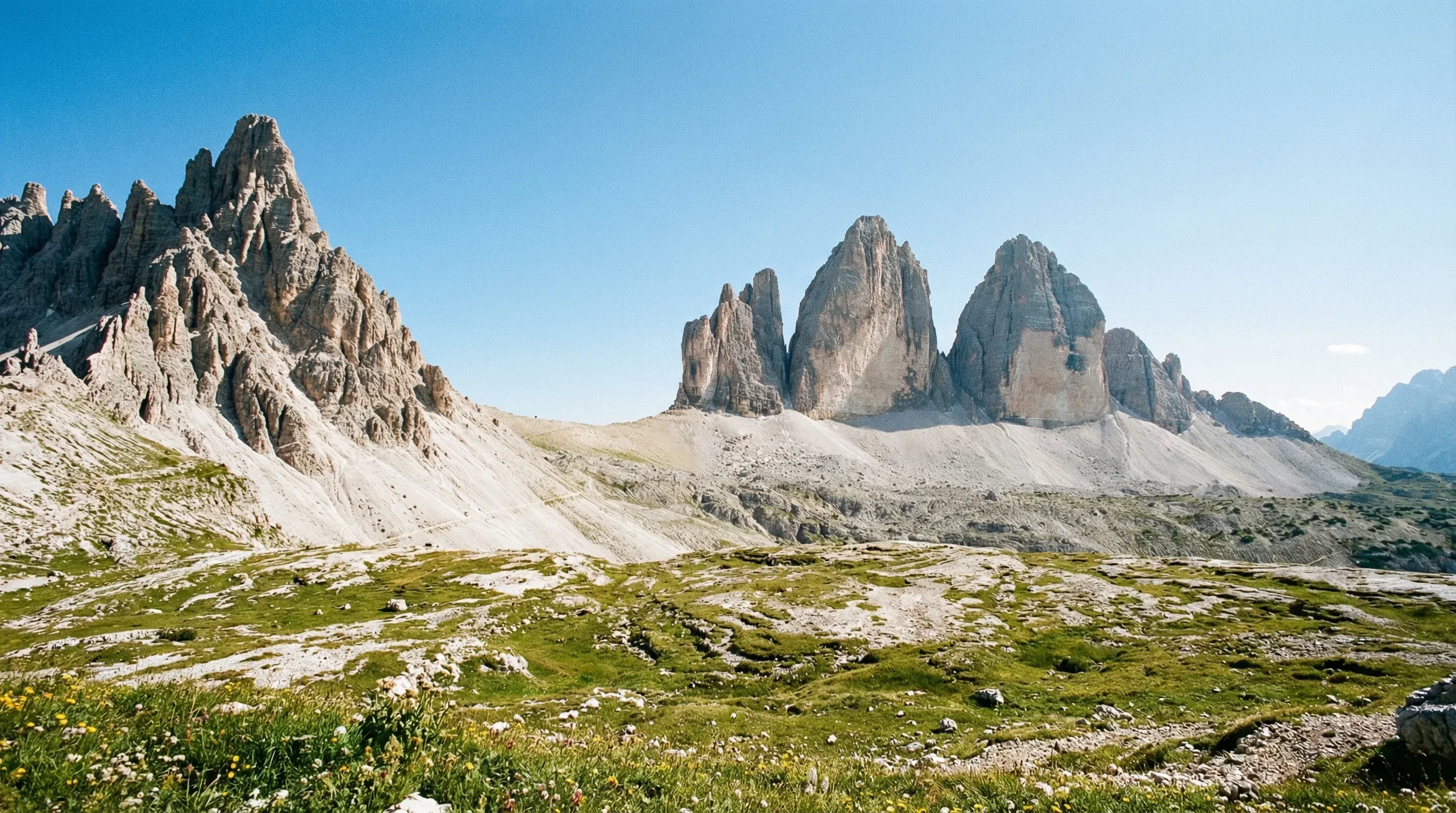

Dolomites & South Tyrol
majestic peaks and mythical legends in Italy's alpine playground 🏔️🌲
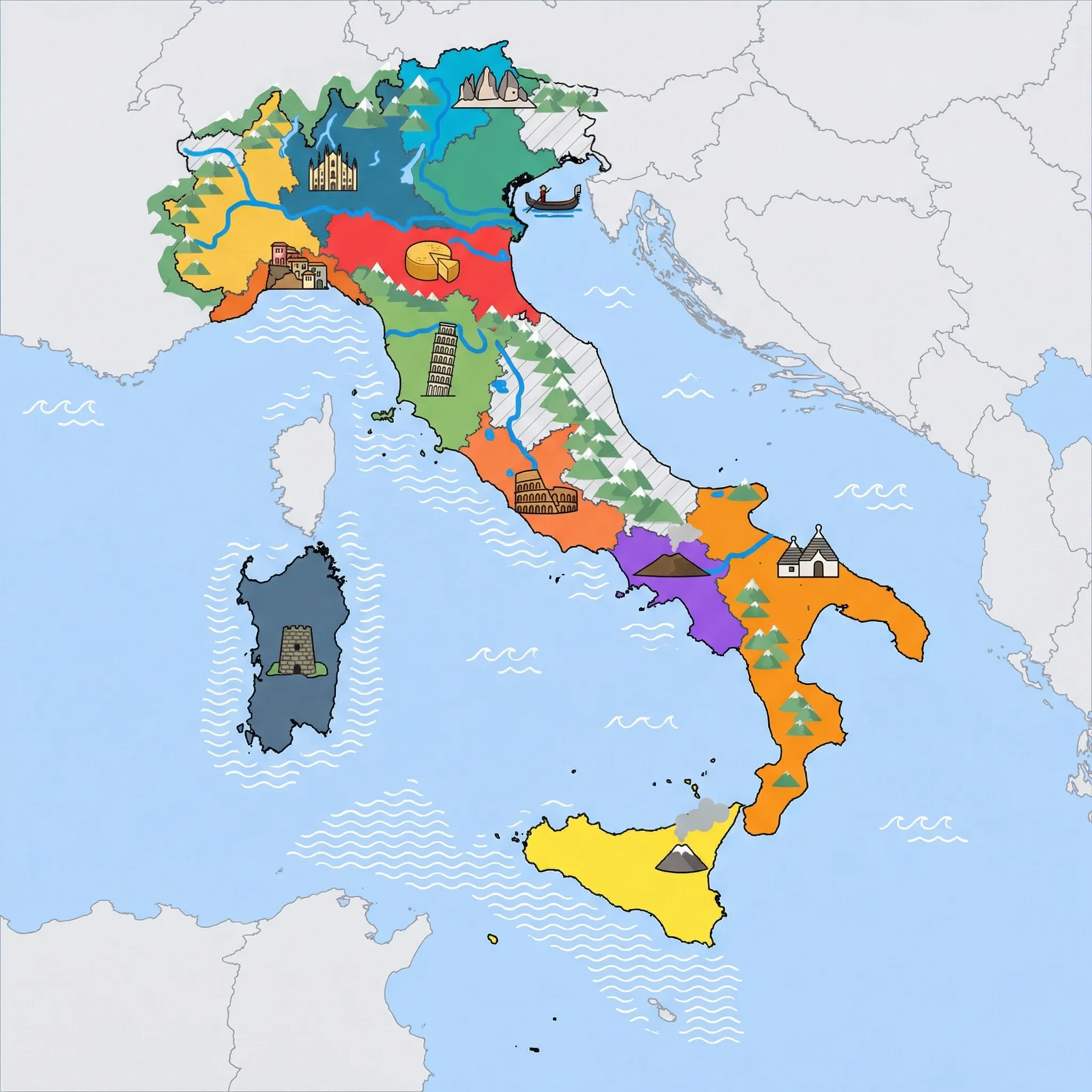
Click a region to explore
The Dolomites & South Tyrol region is a unique cultural hybrid where Italian zest meets Tyrolean tradition, set against some of the most dramatic mountain scenery in the world. For families, this is arguably the most kid-friendly region in Italy due to its immaculate infrastructure, safe environment, and abundance of outdoor activities designed specifically for children. The landscape is defined by the jagged, pale limestone peaks of the Dolomites, which turn a magical shade of pink at sunset (the Enrosadira). Below these peaks lie rolling green pastures, crystal-clear lakes, and fairytale villages with wooden balconies overflowing with geraniums.
Unlike the chaotic cities further south, South Tyrol operates with clockwork efficiency. Public transport is exceptional, streets are pristine, and facilities for babies and toddlers are widespread. In winter, it is a skiing mecca with top-tier ski schools; in summer, it transforms into a hiking paradise where cable cars whisk families up to high-altitude playgrounds without the sweat. The region is steeped in legends of dwarfs and princesses, adding a layer of magic to every forest walk.
Key Attractions
The crown jewel for families is the Alpe di Siusi, Europe's largest high-altitude alpine meadow. It offers flat, stroller-friendly paths and horse-drawn carriage rides that feel pulled straight from a storybook. For a mix of history and hands-on fun, the ArcheoParc Schnals allows kids to experience Stone Age life where Ötzi the Iceman was found, offering archery and bread-baking workshops. Nature lovers must visit the Lago di Braies, an iconic alpine lake with wooden rowboats that make for unforgettable family photos. Further south, the MART - Museum of Modern and Contemporary Art of Trento and Rovereto provides excellent workshops for children, proving that art galleries can be fun for all ages.
Practical Advice
The best time to visit is June to September for hiking or December to March for snow sports. Avoid November and May, as many cable cars close for maintenance. Book accommodation well in advance, especially family-run "Garni" (B&Bs) or farm stays (Agriturismo), which often let kids help with animals.
Food & Drink
Typical meal times: Lunch is served strictly between 12:00 pm and 2:00 pm. Dinner is earlier than in the rest of Italy, typically 6:30 pm to 8:30 pm.
Typical meal costs: A hearty mountain meal costs €60–100 (approx. $65–110 USD / £50–85 GBP) for a family of four. Mountain huts (Rifugi) offer good value.
Dietary requirements: Excellent. Vegetarian options are standard, and due to high awareness of celiac disease in Italy, gluten-free options are widely available even in mountain huts.
Signature dishes:
- Canederli (Knödel) – Large bread dumplings often flavored with speck (cured ham), spinach, or cheese, served in broth or with melted butter.
- Schlutzkrapfen – Rye pasta ravioli filled with spinach and ricotta, topped with parmesan and chives.
- Kaiserschmarrn – A shredded, fluffy pancake caramelized with sugar and served with cranberry jam—a guaranteed hit with children.
Why this score?
The region offers world-class alpine adventures, including via ferrata, technical climbing, and extensive backcountry skiing. While trails are well-marked and cable cars provide easy access, the rugged limestone terrain and high altitudes offer genuine mountain challenges.
Why this score?
The region benefits from the high standards of the Trentino-Alto Adige health system, which is among Italy's best. Hospitals in Bolzano and Trento are excellent, and mountain rescue services (CNSAS) are world-renowned for efficiency and expertise.
Why this score?
While a massive draw for European skiers and hikers, it ranks slightly below Italy's big three cities in total international volume. It is a premier global mountain destination with iconic spots like Alpe di Siusi and Cortina d'Ampezzo attracting millions annually.

One of Italy's more expensive regions, comparable to Austria or Switzerland. A 3-star family hotel averages €180–300 (approx. $195–325 USD / £155–255 GBP) per night in high season. Lift passes add significantly to the cost, though children often get discounts. Restaurant prices are fair for the high quality.

Getting Here & Around
Getting Here
- Airports – Verona (VRN) is the closest major gateway, about 1.5–2 hours away. Innsbruck (INN) in Austria is also very convenient, just 1 hour from the border.
- Train – The main rail line from Verona to Munich stops at Trento and Bolzano. High-speed trains connect Bolzano to Rome and Milan.
- Driving – The A22 Brenner Motorway is the main artery. It is a stunning drive but can get congested on summer weekends.
Getting Around
- Public Transport – Exceptional. The "South Tyrol Guest Pass" (often free with hotels) covers all regional trains and buses.
- Car – Useful for reaching remote trailheads, but the winding mountain roads require confident driving.
- Cable Cars – Essential for families. They connect valley towns to high-altitude plateaus like Alpe di Siusi effortlessly.
Nearby Airports (1 airport)
Bolzano
BZOBolzano
View full flight map for Italy →
Official Links

Packing List
Strollers struggle on many gravel mountain paths and root-filled forest trails
The sun at high altitude burns quickly, even in cooler weather
Ticks are common in the long grass and forests of the lower Dolomites
Mandatory in many hotel and public swimming pools across the region
Strict dress codes in churches (St. Peter's, St. Mark's) require covered shoulders and knees even in summer heat.
Tiger mosquitoes (zanzare) are aggressive and common in summer, especially in the Po Valley, Venice, and lake areas.
Older Italian sockets use a unique vertical 3-pin row that standard 2-pin European plugs often don't fit.
Rome and other cities have 'nasoni' (public fountains) dispensing fresh, cold, free drinking water throughout the streets.
Small-wheeled umbrella strollers often break on cobblestones (sanpietrini); a carrier is better for Venice's many bridges.

Activities & Best Times

Hiking, wildlife, outdoor exploration, ecotourism
Home to the UNESCO-listed Dolomites and numerous world-class wildlife parks, providing families with authentic immersion in Alpine wilderness and rural culture. Peak summer offers the best access to high-altitude trails, while transitional months may have snow or mud limiting exploration.

Urban tourism, museums, historical sites, architecture
Only 3 attractions in database, with one science museum (Ötzi). The 'fascinating cultural crossroads' claim is not supported by globally significant cultural institutions. The South Tyrolean heritage is notable but not at the 'very_good' level internationally. Downgrade to 'good' unless major attractions are added.

Learning experiences, scientific sites, historical education
Features the MUSE Science Museum, a destination-level educational facility that offers world-class interactive learning for families. While museums are indoor, the overall educational experience is best during the warmer months when sites like ArcheoParc are fully operational.

Sport tourism, fitness activities, active recreation
Boasts internationally recognized adventure parks and specialized outdoor centers designed for organized mountain sports and high-rope activities. The infrastructure is most safely and reliably accessible during the stable weather of the peak summer mountain season.
Amusement parks, family entertainment venues
Offers sophisticated, mountain-integrated family entertainment including the major Terme Merano aquatic complex and alpine coasters. Peak visitation aligns with summer school holidays, though thermal facilities provide a high-quality retreat during the December festive season.

Attractions (38 total)



Public Holidays & Calendar Next 12 months
Public holidays, festivals, cultural celebrations, and seasonal natural phenomena coming up in Dolomites & South Tyrol over the next 12 months.
Loading holidays and events...

Travel Advisory
The international community is divided on Italy's risk profile. While half of the major agencies maintain a baseline safety rating, several key partners have elevated their warnings to L1 due to an increased threat of terrorism and security complexities surrounding the 2026 Winter Olympics. Visitors should exercise higher vigilance than usual.
Safety Topics
Agency Summaries
Heightened caution is advised due to the risk of terrorism. Extremist groups continue to plan attacks against public spaces, transit hubs, and tourist locations. Travelers should also be aware of new domestic laws affecting international surrogacy arrangements.
Travellers should remain highly vigilant in Italy due to a persistent threat of terrorism. Heightened security and potential for civil unrest are expected in Northern Italy during the 2026 Winter Olympics. Petty crime remains a significant concern in all major tourist hubs.
Standard safety awareness is recommended. Be particularly careful with personal belongings in tourist areas and on trains to avoid theft. Extra crowds and security will be present in Milan and Verona for the 2026 Winter Paralympics.
Take typical safety measures while traveling. Monitor local news for strike information and maintain awareness of your surroundings in urban centers to prevent petty theft.
There are elevated security concerns in Italy compared to New Zealand, primarily due to the threat of terrorism and the potential for civil unrest. Travelers should stay informed via local media and maintain high vigilance in public areas.
Most visits to Italy are safe, though travelers should watch for pickpockets in crowded cities and on public transport. Be prepared for increased security and travel disruptions during major sporting events in early 2026. A general threat of terrorism exists.
Information is provided for general guidance only and does not constitute travel, safety, medical, or legal advice. Conditions may change. Users are responsible for independently verifying information before travel.