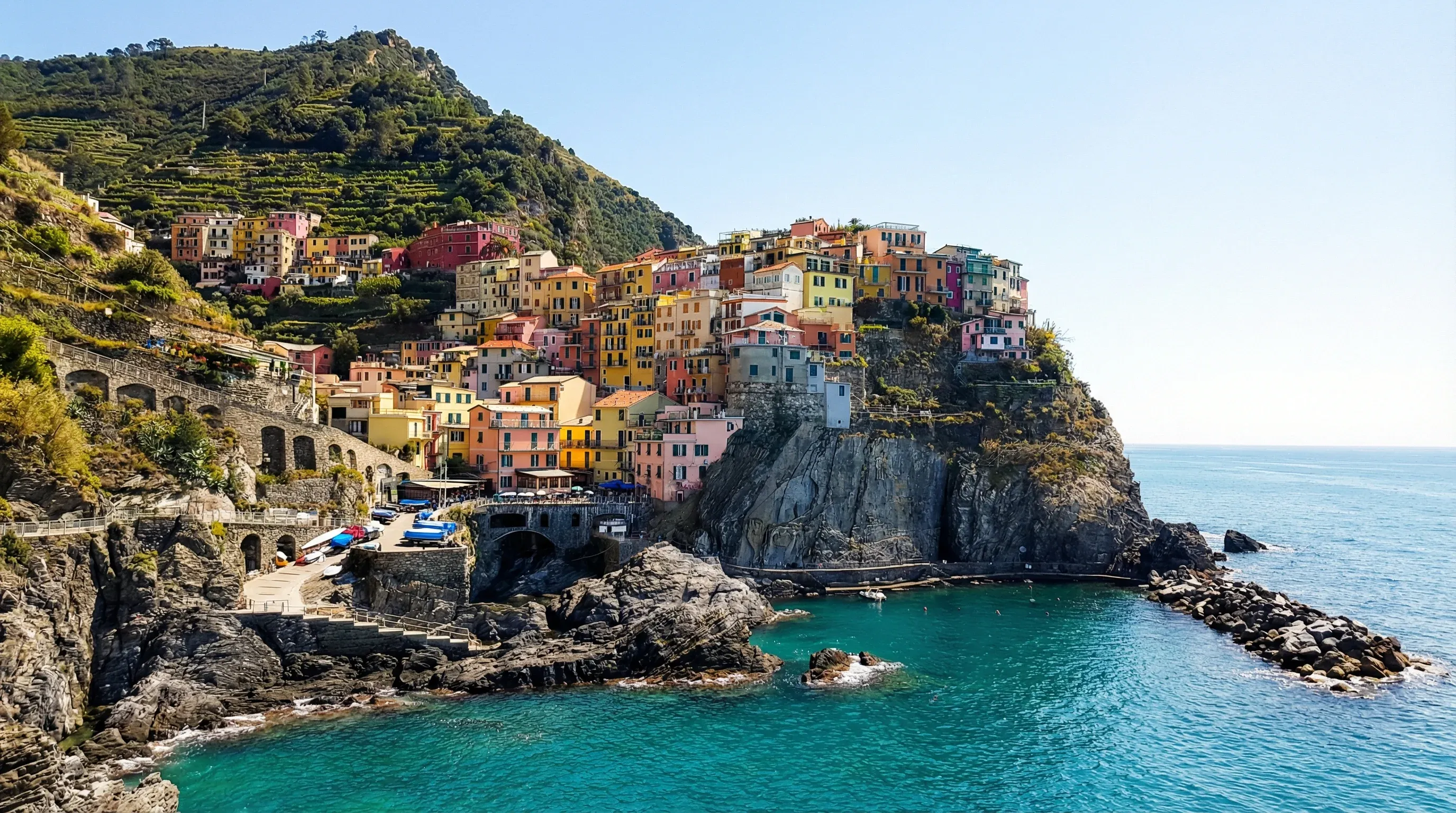

Liguria (Cinque Terre, Genoa)
Colorful vertical villages and the home of pesto 🌿🏘️🌊
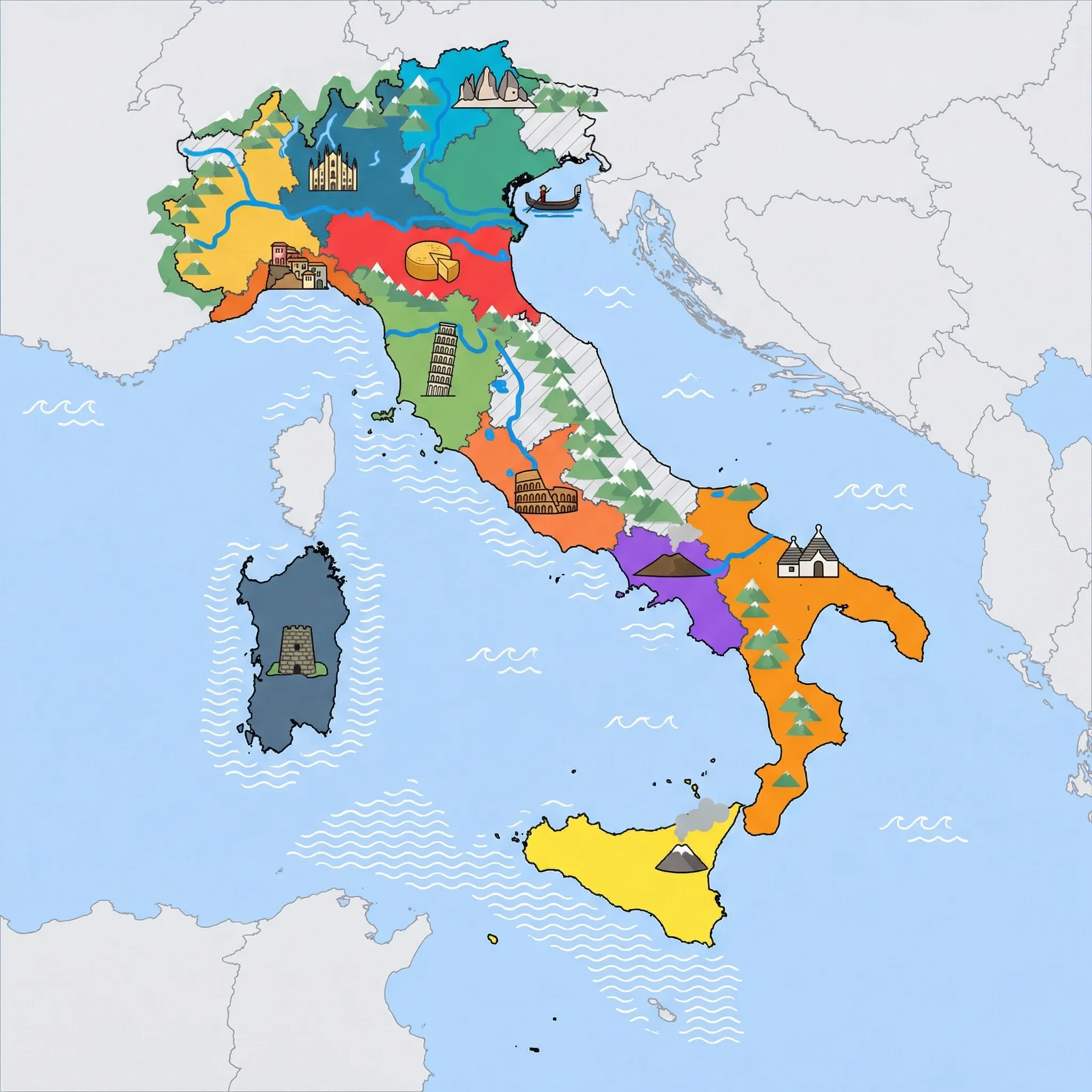
Click a region to explore
Liguria, the Italian Riviera, is a slender arch of land that offers a visually stunning experience for families. The region is defined by the contrast between the slate-grey mountains and the turquoise Ligurian Sea. It is famous for the Cinque Terre—five brightly colored fishing villages clinging to the cliffs—and the historic port city of Genoa. For families, Liguria is an adventure; it's not about wide, flat resorts, but about exploring hidden coves, riding trains through coastal tunnels, and discovering secret alleyways (caruggi).
Genoa is often overlooked but is fantastic for kids, home to a revitalized old port area designed by Renzo Piano. The region's geography means space is at a premium; beaches are often small coves with pebbles rather than endless sand (though sandy spots exist). This makes it better suited for families with school-age children who can handle steps and rocky terrain rather than those with strollers. The climate is notoriously mild, making it a great destination even in spring or autumn when the southern heat is too intense.
Key Attractions
The Aquarium of Genoa is a non-negotiable stop; it's vast, educational, and fascinating for all ages. In the Cinque Terre, the village of Monterosso is the most family-friendly, boasting the Fegina Beach, which is sandy and spacious. Active families should hike parts of the Cinque Terre National Park trails (check which are open/easy). For a magical, quieter beach day, the Baia del Silenzio in Sestri Levante offers calm, shallow waters protected by a bay, perfect for younger swimmers. A boat trip to San Fruttuoso Beach to see the submerged Christ of the Abyss statue (visible from the surface) is an unforgettable adventure.
Practical Advice
Avoid driving in the Cinque Terre; parking is limited, expensive, and far from the centers. Use the train. The peak summer months (July-August) can be uncomfortably crowded in the famous villages. Consider staying in Levanto or Sestri Levante and taking the train in for day trips.
Food & Drink
Typical meal times: Lunch 12:30 pm to 2:30 pm. Dinner 7:30 pm to 9:30 pm. Focaccerias are open all day for snacks.
Typical meal costs: Higher than average due to high demand and limited space. A family dinner costs €80–130 (approx. $85–140 USD / £70–110 GBP). Takeaway focaccia is a cheap lunch alternative.
Dietary requirements: Pesto is king here, so check for nuts (pine nuts/walnuts) and dairy (parmesan/pecorino). Seafood is ubiquitous.
Signature dishes:
- Pesto Genovese – The world-famous sauce of basil, pine nuts, garlic, cheese, and olive oil, usually served with Trofie pasta.
- Focaccia – Oily, salty, and incredibly soft flatbread. The "Focaccia di Recco" variant is filled with melted cheese and is a must-try.
- Farinata – A savory, gluten-free pancake made from chickpea flour, baked in large copper pans.
Why this score?
Hiking the steep, narrow coastal paths between villages offers physical exertion and stunning cliffside views. However, the trails are heavily managed and crowded, and the presence of frequent train and ferry links reduces the sense of remote adventure.
Why this score?
Genoa is home to the San Martino Hospital, one of the largest and most specialized medical facilities in Italy. Even in the smaller coastal towns, the infrastructure for treating tourists is well-established, though language barriers may exist in tiny villages.
Why this score?
The Cinque Terre is a global bucket-list destination that experiences extreme overtourism during peak months. Combined with the major port city of Genoa and the glamour of Portofino, the region maintains a very high international profile.

Accommodation is expensive for the size provided. Expect to pay €150–250 (approx. $160–270 USD / £130–215 GBP) for a modest family room in peak season. Dining can be pricey in tourist hotspots like Portofino, but Genoa offers good value street food.

Getting Here & Around
Getting Here
- Airports – Genoa (GOA) is the local airport. Pisa (PSA) and Nice (NCE) in France are good alternatives, both about 2 hours away by train.
- Train – The coastal rail line is excellent. Intercity trains connect Genoa to Milan and Rome.
- Driving – The A10 and A12 motorways are engineering marvels of tunnels and bridges, but traffic jams are frequent in summer.
Getting Around
- Train – The "Cinque Terre Express" is the lifeline of the region, hopping between villages in minutes. It is far better than driving.
- Ferry – Boats connect the villages and Portofino Regional Natural Park. Highly recommended for the views.
- Walking – Be prepared for stairs. Many villages are vertical, and strollers are a challenge in Cinque Terre.
Nearby Airports (1 airport)
Genova Sestri
GOAGenoa
View full flight map for Italy →
Official Links

Packing List
Strollers are nearly useless in the stepped streets of Cinque Terre
Ferries along the coast can be surprisingly choppy
Many beaches are pebbles or rocks, which can hurt little feet
Strict dress codes in churches (St. Peter's, St. Mark's) require covered shoulders and knees even in summer heat.
Tiger mosquitoes (zanzare) are aggressive and common in summer, especially in the Po Valley, Venice, and lake areas.
Older Italian sockets use a unique vertical 3-pin row that standard 2-pin European plugs often don't fit.
Rome and other cities have 'nasoni' (public fountains) dispensing fresh, cold, free drinking water throughout the streets.
Small-wheeled umbrella strollers often break on cobblestones (sanpietrini); a carrier is better for Venice's many bridges.

Activities & Best Times

Hiking, wildlife, outdoor exploration, ecotourism
The Cinque Terre and Portofino National Parks provide globally unique coastal hiking trails and dramatic terraced landscapes for active families. While summer is popular, spring and September offer the best trail conditions before heavy autumn rains and winter maintenance lead to trail closures.

Urban tourism, museums, historical sites, architecture
Genoa's UNESCO-listed Palazzi dei Rolli and the iconic architecture of the Cinque Terre offer a world-class blend of maritime history and vibrant urban culture. Late spring and early autumn provide the most comfortable climate for exploring the narrow caruggi and coastal piazzas without the extreme heat of mid-summer.

Beach resorts, marine activities: diving, snorkelling, kite surfing, wind surfing, sailing
Iconic locations like San Fruttuoso and the Baia del Silenzio offer crystal-clear waters and an authentic, high-end Italian Riviera atmosphere. The season is strictly defined by Mediterranean water temperatures, with peak demand and facilities open from June through September.

Sport tourism, fitness activities, active recreation
The region offers high-quality sea kayaking in Portofino and specialized adventure parks like Genova Righi that cater to active travelers. Infrastructure is most reliable and accessible during the drier, warmer months when specialized outdoor centers are fully operational.

Amusement parks, family entertainment venues
Le Caravelle Water Park is a major regional attraction providing high-quality aquatic entertainment for families on the Riviera. These parks are purely seasonal and only suitable during the hot summer window, closing completely for the remainder of the year.

Learning experiences, scientific sites, historical education
The Aquarium of Genoa is an internationally significant facility for marine education and conservation. While a standalone draw, the region's overall educational profile is limited to this primary institution, which serves as an excellent all-weather option during the main tourist seasons.

Attractions (27 total)



Public Holidays & Calendar Next 12 months
Public holidays, festivals, cultural celebrations, and seasonal natural phenomena coming up in Liguria (Cinque Terre, Genoa) over the next 12 months.
Loading holidays and events...

Travel Advisory
The international community is divided on Italy's risk profile. While half of the major agencies maintain a baseline safety rating, several key partners have elevated their warnings to L1 due to an increased threat of terrorism and security complexities surrounding the 2026 Winter Olympics. Visitors should exercise higher vigilance than usual.
Safety Topics
Agency Summaries
Heightened caution is advised due to the risk of terrorism. Extremist groups continue to plan attacks against public spaces, transit hubs, and tourist locations. Travelers should also be aware of new domestic laws affecting international surrogacy arrangements.
Travellers should remain highly vigilant in Italy due to a persistent threat of terrorism. Heightened security and potential for civil unrest are expected in Northern Italy during the 2026 Winter Olympics. Petty crime remains a significant concern in all major tourist hubs.
Standard safety awareness is recommended. Be particularly careful with personal belongings in tourist areas and on trains to avoid theft. Extra crowds and security will be present in Milan and Verona for the 2026 Winter Paralympics.
Take typical safety measures while traveling. Monitor local news for strike information and maintain awareness of your surroundings in urban centers to prevent petty theft.
There are elevated security concerns in Italy compared to New Zealand, primarily due to the threat of terrorism and the potential for civil unrest. Travelers should stay informed via local media and maintain high vigilance in public areas.
Most visits to Italy are safe, though travelers should watch for pickpockets in crowded cities and on public transport. Be prepared for increased security and travel disruptions during major sporting events in early 2026. A general threat of terrorism exists.
Information is provided for general guidance only and does not constitute travel, safety, medical, or legal advice. Conditions may change. Users are responsible for independently verifying information before travel.