
Puglia & Southern Italy
Cone-shaped houses, olive groves, and two seas 🫒🏠🌊
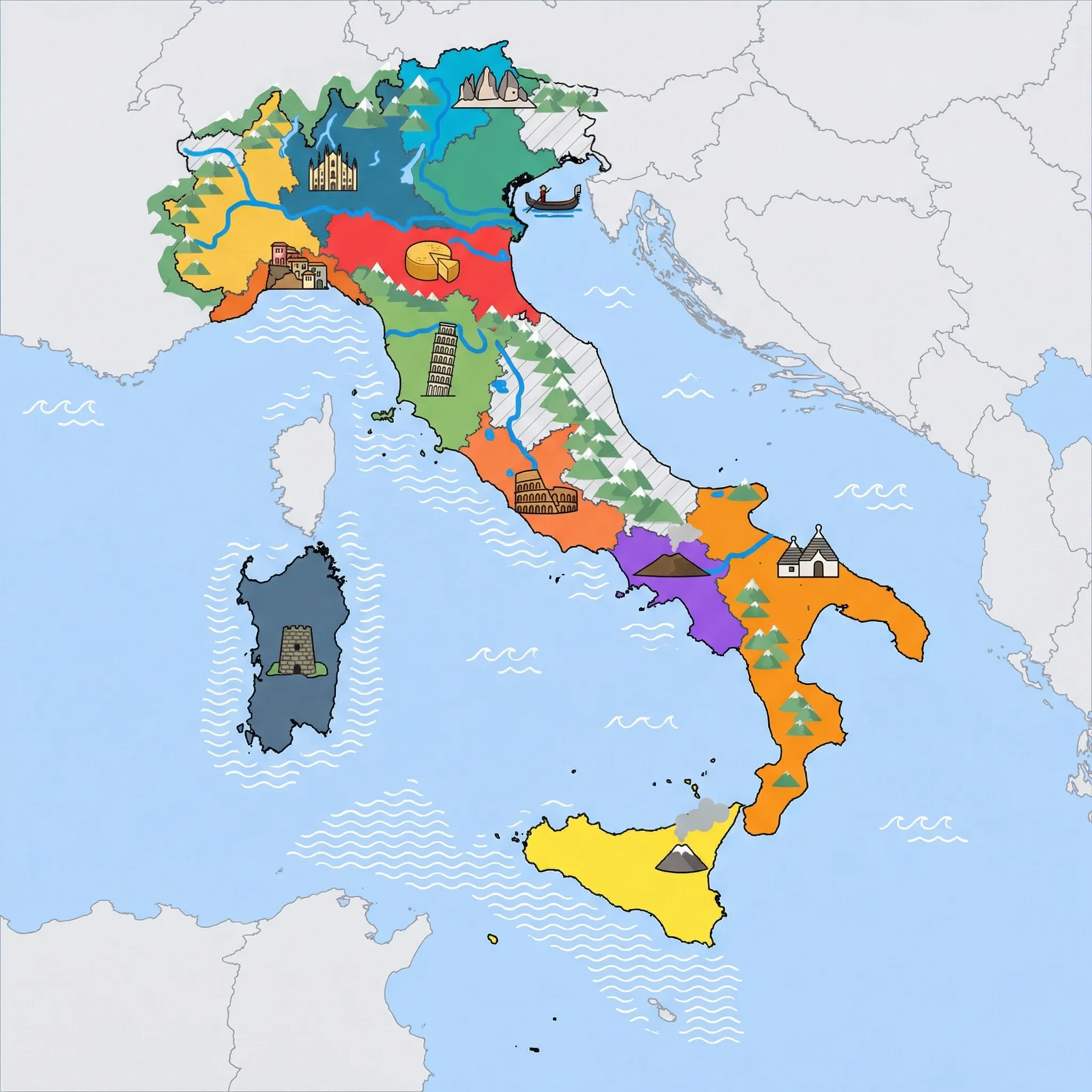
Click a region to explore
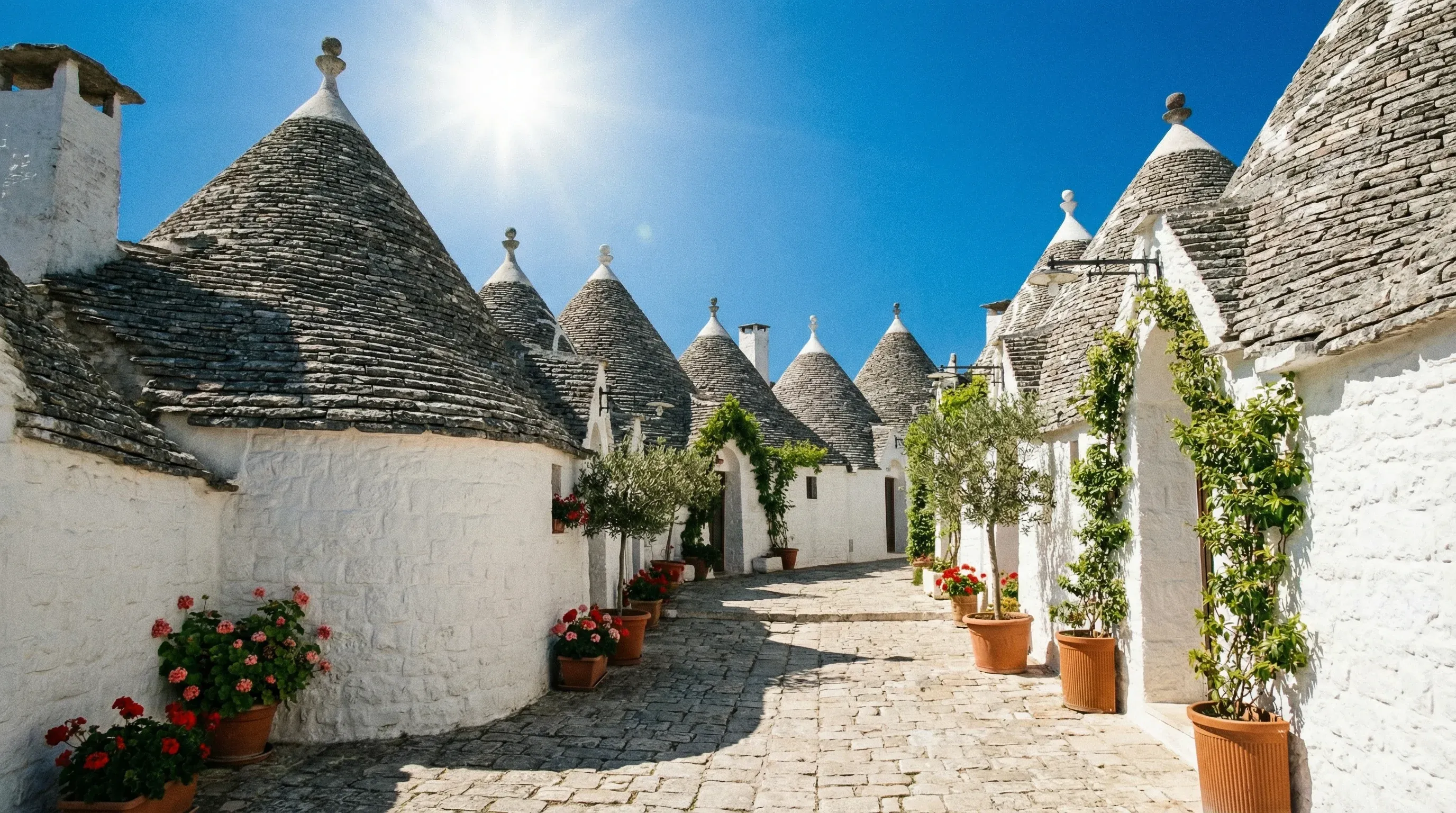
Puglia has rapidly become a family favorite for those seeking an authentic Italian summer experience without the pretension of the north. The landscape is a patchwork of ancient olive groves (some trees are 2,000 years old) and dry-stone walls, bordered by two seas: the Adriatic and the Ionian. The region is famous for its unique architecture, most notably the "Trulli"—white, cone-roofed houses that look like they were built for gnomes or fairies. Kids absolutely love staying in them, and many have been converted into holiday rentals.
The vibe here is "slow travel." Life revolves around long lunches, afternoon siestas, and late evenings in the piazza. The coastline ranges from the dramatic white cliffs of the Gargano in the north to the "Maldives of Salento" in the south, where the water is shallow and turquoise. Just across the regional border lies Matera, one of the oldest continuously inhabited cities in the world, where houses are carved directly into the rock face—a sight that feels like walking onto a movie set.
Key Attractions
The Castel del Monte is a UNESCO site and a mathematical mystery; its perfect octagonal shape fascinates children and adults alike. For a full day of fun, Zoosafari Fasano is one of the largest wildlife parks in Italy, featuring a drive-through safari and an amusement park (Fasanolandia). While technically in Basilicata, the Sassi di Matera is an essential stop when visiting Puglia; exploring its cave dwellings is a unique history lesson. Nature-loving families should head to the Gargano National Park for cool forests and dramatic coastal boat tours.
Practical Advice
A car is absolutely essential here; public transport is sporadic. August is incredibly crowded with Italian tourists and very hot (often 35°C+). June and September are perfect. Siesta is taken seriously; shops and restaurants close from 1:30 pm to 5:00 pm.
Food & Drink
Typical meal times: Lunch 1:00 pm to 2:30 pm. Dinner is late, starting 8:30 pm or 9:00 pm. Children are welcome everywhere late at night.
Typical meal costs: Very affordable. This is the breadbasket of Italy. A family meal costs €50–90 (approx. $55–100 USD / £40–75 GBP). Wine and water are often very cheap.
Dietary requirements: The local diet, "Cucina Povera" (peasant kitchen), relies heavily on vegetables, fava beans, and chicory, making it a paradise for vegetarians.
Signature dishes:
- Orecchiette con Cime di Rapa – "Little ear" pasta served with broccoli rabe, garlic, and anchovies (optional).
- Panzerotti – Fried dough pockets filled with tomato and mozzarella—careful, the filling is molten hot!
- Focaccia Barese – Thick, oily focaccia topped with cherry tomatoes and olives.
Why this score?
The region's adventure appeal lies in its limestone caves, coastal grottoes, and the rugged Gargano Peninsula. However, the terrain is mostly rolling hills and olive groves, making it more suitable for easy cycling and swimming than extreme sports.
Why this score?
Cities like Bari and Lecce have solid medical facilities that are capable of handling emergencies for foreign tourists. While generally good, the healthcare infrastructure in the deep south is often perceived as slightly less efficient than the Italian national average in the north.
Why this score?
Puglia has seen a surge in popularity over the last decade, particularly with the rise of Alberobello and Polignano a Mare. While well-known to Europeans, it still receives fewer long-haul international visitors than Central or Northern Italy.

One of the best value regions in Italy. Accommodation, even in unique Trulli houses, is often cheaper than standard hotels in the north. Expect to pay €80–140 (approx. $85–150 USD / £70–120 GBP) per night. Food is plentiful and inexpensive.

Getting Here & Around
Getting Here
- Airports – Bari (BRI) and Brindisi (BDS) are the two main airports, well-served by budget airlines.
- Driving – The A14 motorway runs down the Adriatic coast to Bari. It is a long drive from Northern Italy (8+ hours from Milan).
- Train – High-speed trains connect Rome to Bari in about 4 hours.
Getting Around
- Car – Mandatory for exploring the Alta Murgia National Park and finding hidden beaches.
- Train – Local trains (Ferrovie del Sud Est) are slow and old-fashioned, though scenic. Not reliable for tight schedules.
Nearby Airports (6 airports)
Casale
BDSBrindisi
Bari Airport
BRIBari
Crotone
CRVCrotone
Gino Lisa
FOGFoggia
Reggio Calabria
REGReggio Calabria
Lamezia Terme
SUFLamezia-Terme
View full flight map for Italy →
Official Links

Packing List
Many of the most beautiful coves (like Polignano a Mare) are rocky
Remote beaches often lack cafes; bring your own drinks and focaccia
The region can be windy (it has two winds: Tramontana and Scirocco)
Strict dress codes in churches (St. Peter's, St. Mark's) require covered shoulders and knees even in summer heat.
Tiger mosquitoes (zanzare) are aggressive and common in summer, especially in the Po Valley, Venice, and lake areas.
Older Italian sockets use a unique vertical 3-pin row that standard 2-pin European plugs often don't fit.
Rome and other cities have 'nasoni' (public fountains) dispensing fresh, cold, free drinking water throughout the streets.
Small-wheeled umbrella strollers often break on cobblestones (sanpietrini); a carrier is better for Venice's many bridges.

Activities & Best Times

Urban tourism, museums, historical sites, architecture
Boasting world-class heritage sites like the Sassi di Matera and Castel del Monte, the region is a premier cultural destination. Discerning travelers prefer the mild temperatures of spring and autumn, as summer heat can be oppressive and winter sees reduced services in historic quarters.

Hiking, wildlife, outdoor exploration, ecotourism
The region offers diverse nature experiences from the rugged forests of Gargano National Park to the deep limestone caves of Castellana. Late spring and early autumn provide ideal hiking temperatures, whereas the intense summer heat in July and August can make outdoor exploration strenuous.

Beach resorts, marine activities: diving, snorkelling, kite surfing, wind surfing, sailing
Puglia features iconic limestone coastal spots like Lama Monachile and Baia delle Zagare with clear Adriatic and Ionian waters. Peak swimming occurs from June to September when sea temperatures are highest, while shoulder months offer quieter beaches but cooler water.

Sport tourism, fitness activities, active recreation
Specialized infrastructure including major adventure parks and coastal activity centers support active family travel. May, June, and September offer the most comfortable conditions for physical activity before and after the peak Mediterranean summer heat.

Amusement parks, family entertainment venues
The region hosts several significant water and amusement parks, such as Acquapark Egnazia, which are highly popular for family entertainment. These facilities are strictly seasonal, operating primarily during the hot summer months of July and August with limited opening in June and September.

Attractions (19 total)



Public Holidays & Calendar Next 12 months
Public holidays, festivals, cultural celebrations, and seasonal natural phenomena coming up in Puglia & Southern Italy over the next 12 months.
Loading holidays and events...

Travel Advisory
The international community is divided on Italy's risk profile. While half of the major agencies maintain a baseline safety rating, several key partners have elevated their warnings to L1 due to an increased threat of terrorism and security complexities surrounding the 2026 Winter Olympics. Visitors should exercise higher vigilance than usual.
Safety Topics
Agency Summaries
Heightened caution is advised due to the risk of terrorism. Extremist groups continue to plan attacks against public spaces, transit hubs, and tourist locations. Travelers should also be aware of new domestic laws affecting international surrogacy arrangements.
Travellers should remain highly vigilant in Italy due to a persistent threat of terrorism. Heightened security and potential for civil unrest are expected in Northern Italy during the 2026 Winter Olympics. Petty crime remains a significant concern in all major tourist hubs.
Standard safety awareness is recommended. Be particularly careful with personal belongings in tourist areas and on trains to avoid theft. Extra crowds and security will be present in Milan and Verona for the 2026 Winter Paralympics.
Take typical safety measures while traveling. Monitor local news for strike information and maintain awareness of your surroundings in urban centers to prevent petty theft.
There are elevated security concerns in Italy compared to New Zealand, primarily due to the threat of terrorism and the potential for civil unrest. Travelers should stay informed via local media and maintain high vigilance in public areas.
Most visits to Italy are safe, though travelers should watch for pickpockets in crowded cities and on public transport. Be prepared for increased security and travel disruptions during major sporting events in early 2026. A general threat of terrorism exists.
Information is provided for general guidance only and does not constitute travel, safety, medical, or legal advice. Conditions may change. Users are responsible for independently verifying information before travel.