
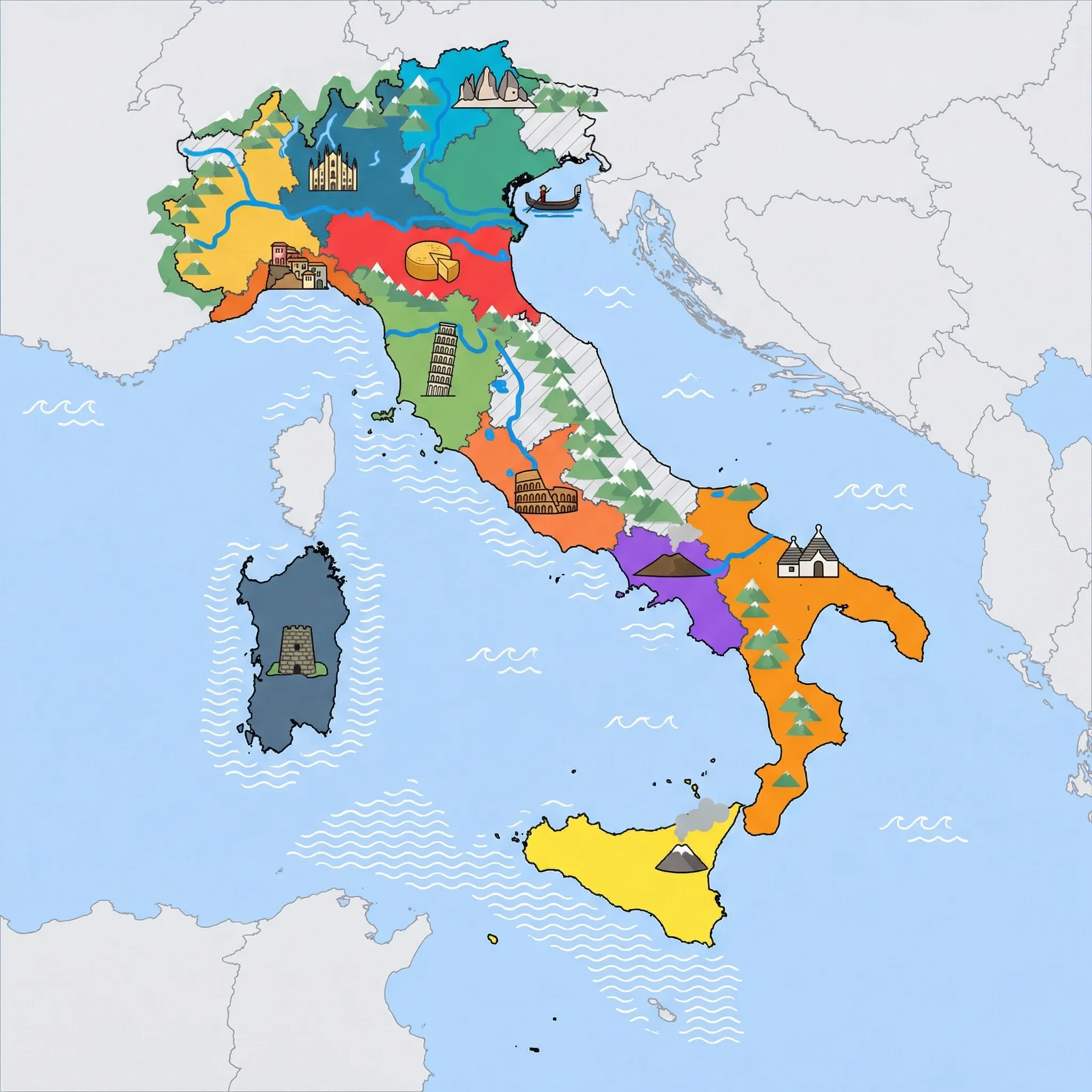
Click a region to explore
Rome is a city that needs no introduction, but for families, it can be overwhelming without a plan. It is a giant open-air museum where you can turn a corner and bump into a 2,000-year-old temple. The energy is frantic, the noise level is high, and the traffic is notorious, but the sheer scale of history is awe-inspiring for kids. Beyond the city, the Lazio region offers green hills, volcanic lakes, and papal villas that provide a welcome respite from the urban hustle.
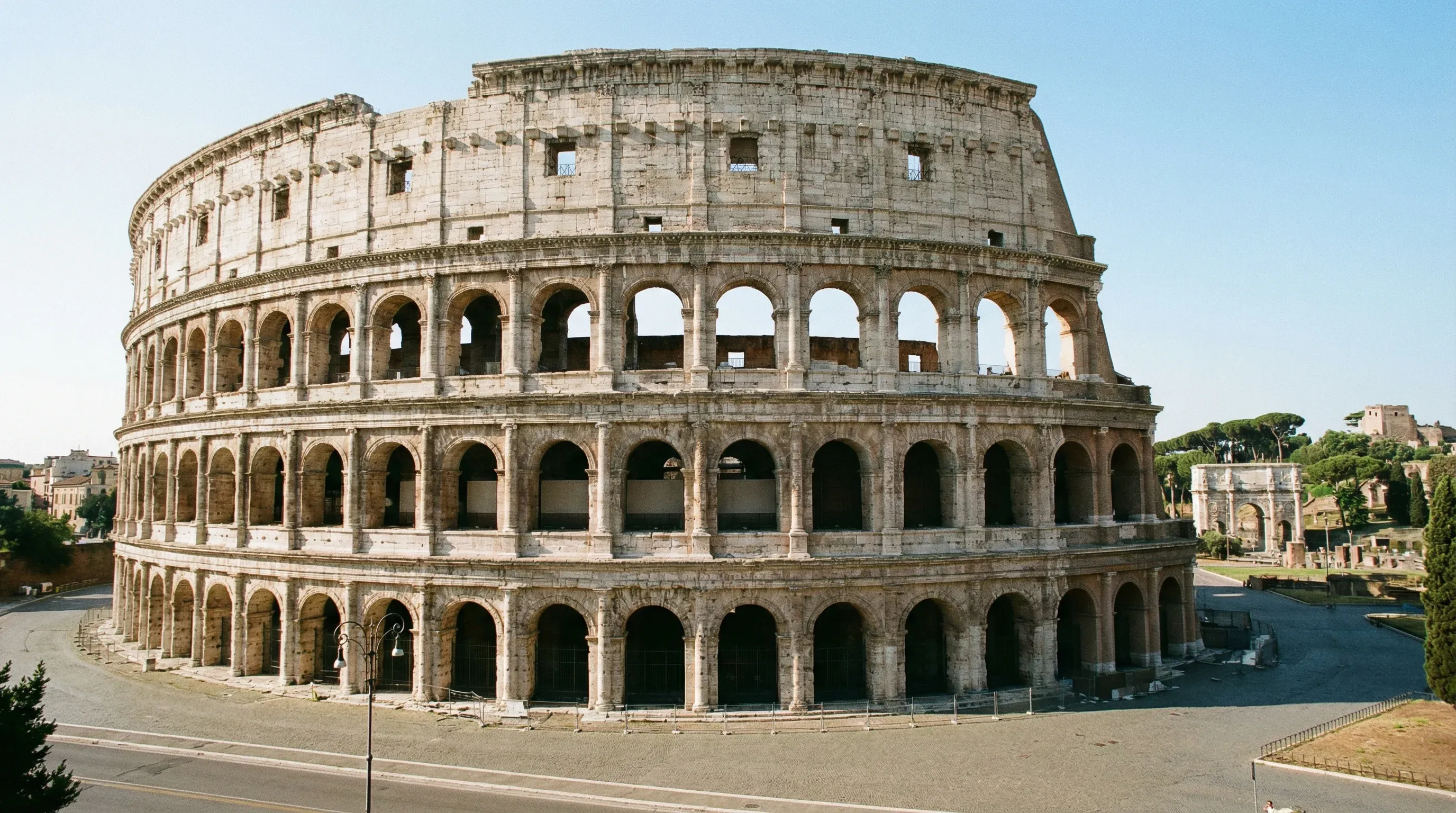
The key to enjoying Rome with kids is to mix the "heavy" history with fun. For every church, plan a gelato stop. For every museum, plan a run-around in a park. The Villa Borghese is the city's green lung, where you can rent family bikes or rowboats. Rome is also surprisingly green, with pine trees providing shade over ancient ruins. Teenagers often love the gruesome history of the Colosseum and the Catacombs, while younger kids are happy chasing pigeons in the vast piazzas.
Key Attractions
The Roman Forum is the heart of ancient Rome; it's a ruinous maze where kids can imagine being Roman citizens. Just outside the center, the Bioparco di Roma (Children's Farm) in Villa Borghese is one of Europe's oldest zoos and a great break from stones and statues. For a full day of adrenaline, MagicLand near Valmontone is a major theme park with rollercoasters and water rides. History buffs should not miss Ostia Antica Archaeological Park—it's like a mini-Pompeii but much closer to Rome, shadier, and less crowded, allowing kids to explore ancient shops and toilets freely.
Practical Advice
Avoid July and August if possible—Rome becomes an oven. Wear comfortable shoes; the cobblestones (sampietrini) are brutal on feet and strollers. Water fountains (nasoni) are everywhere and provide free, cold drinking water, so bring refillable bottles.
Food & Drink
Typical meal times: Lunch 1:00 pm to 3:00 pm. Dinner 8:00 pm to 10:30 pm. Restaurants near major sites open earlier for tourists but are often lower quality.
Typical meal costs: Varies wildly. Tourist traps are expensive; neighborhood trattorias are reasonable. Family meal: €70–130 (approx. $75–140 USD / £60–110 GBP).
Dietary requirements: Good. Roman pasta dishes are simple. "Suppli" (fried rice balls) are a common vegetarian snack. Gluten-free options are widely available in pharmacies and supermarkets.
Signature dishes:
- Pasta alla Carbonara – Spaghetti with eggs, pecorino cheese, guanciale (cured pork jowl), and black pepper. No cream!
- Pizza al Taglio – Rectangular pizza sold by weight, sliced with scissors. Perfect for a quick lunch.
- Maritozzo – A sweet, soft bun split open and filled to the brim with whipped cream.
Why this score?
Tourism in Lazio is overwhelmingly focused on urban exploration and historical sites. Beyond some mild hiking in the Castelli Romani or coastal activities at Ostia, the region offers very little for the dedicated adventure traveler.
Why this score?
As Italy's capital, Rome boasts numerous world-class hospitals and specialized clinics, many with staff experienced in treating diplomats and international tourists. The Gemelli University Hospital is one of the most prestigious in the country.
Why this score?
Rome is one of the world's most visited cities, serving as a global magnet for history, religion, and culture. The sheer volume of international tourists visiting the Colosseum and Vatican City places this region at the top of the global popularity scale.

Rome fits all budgets. You can stay in luxury near the Spanish Steps or budget near Termini. City tax is high (€6+ per person/night). Many sights (Pantheon, St Peter's Basilica) are free or low cost, though the Colosseum and Vatican are expensive.

Getting Here & Around
Getting Here
- Airports – Fiumicino (FCO) is the main international hub. Ciampino (CIA) serves budget airlines. Both are connected to the city by bus and train.
- Train – Rome Termini is the central hub for Italy. High-speed trains arrive from Florence, Naples, and Milan constantly.
- Driving – Do not drive into Rome. The traffic is legendary and the ZTL zones carry heavy fines.
Getting Around
- Public Transport – Buses and trams are cheap but often crowded and unreliable. The Metro (Lines A, B, C) is faster but has limited coverage of the historic center.
- Walking – The only way to see the Roman Forum and historic piazzas. Prepare for 15,000+ steps a day.
- Train – Regional trains connect to Civita di Bagnoregio and Ostia easily.
Nearby Airports (2 airports)
Ciampino
CIARome
Fiumicino
FCORome
View full flight map for Italy →
Official Links

Packing List
Rome is full of 'nasoni' fountains dispensing free, cold, clean water
Using GPS maps in the winding streets drains phone batteries quickly
Cobblestones destroy flimsy umbrella strollers; you need big wheels
Strict dress codes in churches (St. Peter's, St. Mark's) require covered shoulders and knees even in summer heat.
Tiger mosquitoes (zanzare) are aggressive and common in summer, especially in the Po Valley, Venice, and lake areas.
Older Italian sockets use a unique vertical 3-pin row that standard 2-pin European plugs often don't fit.
Small-wheeled umbrella strollers often break on cobblestones (sanpietrini); a carrier is better for Venice's many bridges.

Activities & Best Times

Urban tourism, museums, historical sites, architecture
Home to globally iconic sites like the Colosseum and Vatican City, offering unparalleled historical depth and authentic Italian urban culture. Peak periods offer ideal walking weather, while summer and late autumn are manageable despite heat or rain due to high-quality indoor museum infrastructure.

Hiking, wildlife, outdoor exploration, ecotourism
Features diverse landscapes from the volcanic lakes of Albano to the formal gardens of Villa Borghese and Ninfa, providing high-quality outdoor immersion. Best visited in late spring and early autumn when the Mediterranean vegetation is lush and trail conditions are optimal.

Beach resorts, marine activities: diving, snorkelling, kite surfing, wind surfing, sailing
Coastal gems like Sperlonga and Sabaudia offer clean waters and Blue Flag beaches that are popular with discerning domestic travelers. The season is strictly limited to the warm summer months when water temperatures and beach club services are at their peak.

Sport tourism, fitness activities, active recreation
Outdoor adventure facilities like Flying in the Sky and various adventure parks provide structured active tourism for families. These are best experienced in the mild transition months, as summer heat can be intense and winter precipitation makes equipment operation difficult.
Amusement parks, family entertainment venues
Significant regional parks like MagicLand and Cinecittà World provide high-quality family entertainment with international production standards. Peak summer months align with full park operations and aquatic features, while winter months see reduced schedules and closures.

Learning experiences, scientific sites, historical education
Specialized facilities like Zoomarine and the Bolsena Aquarium offer educational insights into marine life, though they function primarily as commercial attractions. Best visited during the spring school tour season when educational programming is most active.

Attractions (29 total)



Public Holidays & Calendar Next 12 months
Public holidays, festivals, cultural celebrations, and seasonal natural phenomena coming up in Rome & Lazio over the next 12 months.
Loading holidays and events...

Travel Advisory
The international community is divided on Italy's risk profile. While half of the major agencies maintain a baseline safety rating, several key partners have elevated their warnings to L1 due to an increased threat of terrorism and security complexities surrounding the 2026 Winter Olympics. Visitors should exercise higher vigilance than usual.
Safety Topics
Agency Summaries
Heightened caution is advised due to the risk of terrorism. Extremist groups continue to plan attacks against public spaces, transit hubs, and tourist locations. Travelers should also be aware of new domestic laws affecting international surrogacy arrangements.
Travellers should remain highly vigilant in Italy due to a persistent threat of terrorism. Heightened security and potential for civil unrest are expected in Northern Italy during the 2026 Winter Olympics. Petty crime remains a significant concern in all major tourist hubs.
Standard safety awareness is recommended. Be particularly careful with personal belongings in tourist areas and on trains to avoid theft. Extra crowds and security will be present in Milan and Verona for the 2026 Winter Paralympics.
Take typical safety measures while traveling. Monitor local news for strike information and maintain awareness of your surroundings in urban centers to prevent petty theft.
There are elevated security concerns in Italy compared to New Zealand, primarily due to the threat of terrorism and the potential for civil unrest. Travelers should stay informed via local media and maintain high vigilance in public areas.
Most visits to Italy are safe, though travelers should watch for pickpockets in crowded cities and on public transport. Be prepared for increased security and travel disruptions during major sporting events in early 2026. A general threat of terrorism exists.
Information is provided for general guidance only and does not constitute travel, safety, medical, or legal advice. Conditions may change. Users are responsible for independently verifying information before travel.