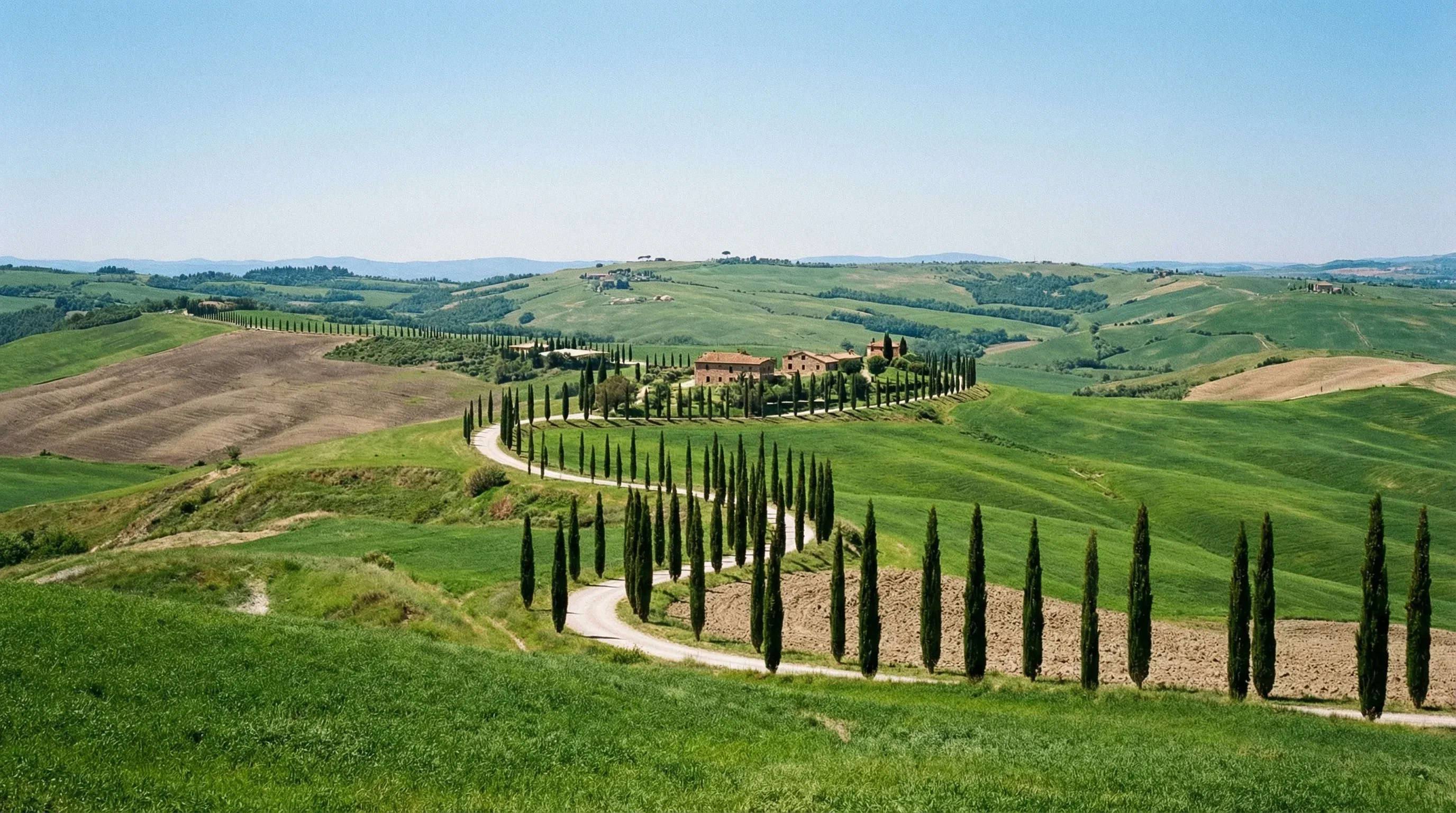

Tuscany (Florence, Siena, Chianti)
Rolling hills, Renaissance art, and the world's most famous tower 🎨🍷🌲
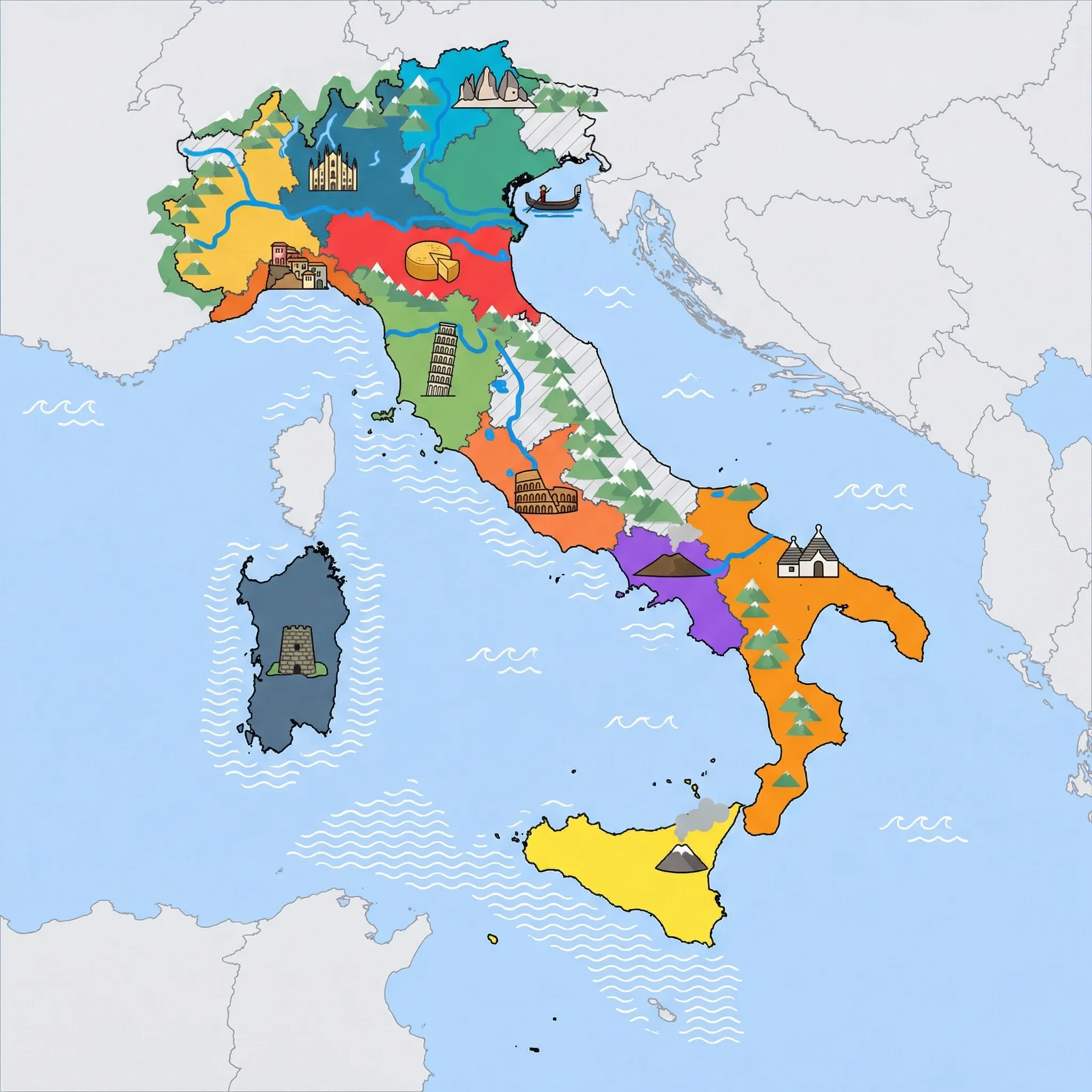
Click a region to explore
Tuscany is arguably the most famous region in Italy, and for good reason. It combines the sophistication of the Renaissance with the rustic charm of the countryside. For families, the best way to experience Tuscany is usually "Agriturismo" style—staying on a working farm with a pool, using it as a base to explore the cities. Florence can be crowded and hot, but it is unmissable. The smaller walled cities like Lucca (where you can cycle on top of the walls) and Siena (with its massive shell-shaped piazza) are often more relaxing for younger children.
The landscape itself is an attraction; even a drive through the Chianti region or Val d'Orcia is stunning, though the winding roads can test those prone to car sickness. Tuscany also has a coastline; while not as dramatic as Sardinia, the beaches of Versilia offer organized bathing establishments with plenty of facilities for families.
Key Attractions
The Leaning Tower of Pisa is the one sight every child wants to see; climbing it is permitted for kids over 8. In Florence, the Boboli Gardens behind Palazzo Pitti are a vast, green escape with grottos and statues, perfect after a museum visit. For a break from culture, Cavallino Matto is a pine-forest theme park on the coast that is very family-oriented. Historic Centre of San Gimignano is known as "Medieval Manhattan" due to its towers and has a world-champion gelato shop in the main square. The Cattedrale di Santa Maria del Fiore (Duomo) in Florence is visually stunning, and climbing the dome offers an adventurous workout.
Practical Advice
Book Uffizi and Accademia (David statue) tickets weeks in advance. In Florence, carry a stroller but be prepared to lift it over curbs. If renting a villa, check that the pool is fenced (not standard in Italy) if you have toddlers.
Food & Drink
Typical meal times: Lunch 12:30 pm to 2:30 pm. Dinner 7:30 pm to 9:30 pm.
Typical meal costs: Moderate to High. Florence is pricey; countryside villages are better value. Family meal: €70–130 (approx. $75–140 USD / £60–110 GBP).
Dietary requirements: "Ribollita" and "Pappa al Pomodoro" are naturally vegetarian/vegan. Tuscany is famous for steak, but pasta options are endless. Gluten-free is widely understood.
Signature dishes:
- Bistecca alla Fiorentina – A massive T-bone steak grilled over wood fire, usually shared by the whole table.
- Pappa al Pomodoro – A thick, comforting tomato and bread soup—very kid-friendly.
- Cantucci – Hard almond biscuits meant to be dipped in Vin Santo (sweet wine) for adults, or milk for kids.
Why this score?
While famous for its beautiful rolling landscapes, Tuscany is highly developed for agriculture and tourism. Adventure is mostly limited to cycling and soft hiking through vineyards, as the terrain lacks the ruggedness of the Alps or the southern islands.
Why this score?
Tuscany has an excellent public healthcare system, with Florence serving as a major center for medical excellence. The region is well-prepared for international tourists, with many private clinics and hospitals offering English-speaking services.
Why this score?
Tuscany is a global brand that represents the quintessence of Italian tourism. Florence, the Leaning Tower of Pisa, and the Chianti vineyards attract a massive, constant stream of international visitors from every corner of the globe.

Tuscany is a premium destination. Farm stays (Agriturismo) with pools are expensive in summer, often €200–400 ($215–430 USD) per night for a family apartment. Eating out in main piazzas attracts a 'tourist tax' on prices; walk two streets back for better value.

Getting Here & Around
Getting Here
- Airports – Florence (FLR) is close to the city but small. Pisa (PSA) is the main international hub for the region.
- Train – Florence Santa Maria Novella is a major high-speed hub, 1.5 hours from Rome and Milan.
- Driving – A car is best for the countryside (Chianti/Val d'Orcia). The A1 motorway connects the main cities.
Getting Around
- Train – Efficient for moving between Florence, Pisa, and Lucca. Cheap and frequent.
- Car – Essential for villa stays. Be terrified of ZTL (restricted traffic) zones in every town; cameras will fine you instantly.
- Cycling – Lucca's city walls are a safe, flat loop perfect for family cycling.
Nearby Airports (2 airports)
Peretola
FLRFlorence
Pisa International Airport
PSAPisa
View full flight map for Italy →
Official Links

Packing List
The rolling hills offer long-distance views and wildlife spotting
Countryside villas are often surrounded by vegetation and mosquitoes
Most villas have pools but don't provide toys; buying locally is pricey
Strict dress codes in churches (St. Peter's, St. Mark's) require covered shoulders and knees even in summer heat.
Tiger mosquitoes (zanzare) are aggressive and common in summer, especially in the Po Valley, Venice, and lake areas.
Older Italian sockets use a unique vertical 3-pin row that standard 2-pin European plugs often don't fit.
Rome and other cities have 'nasoni' (public fountains) dispensing fresh, cold, free drinking water throughout the streets.
Small-wheeled umbrella strollers often break on cobblestones (sanpietrini); a carrier is better for Venice's many bridges.

Activities & Best Times

Urban tourism, museums, historical sites, architecture
Home to unparalleled Renaissance heritage and world-leading galleries like the Uffizi, this region is a global benchmark for cultural tourism. May, June, September, and October provide the ideal climate for walking historic centers, whereas the height of summer can be oppressively hot and crowded.

Hiking, wildlife, outdoor exploration, ecotourism
Extensive adventure parks and rural farm experiences like Fattoria di Maiano provide authentic engagement with the Tuscan landscape for active families. Late spring and early autumn offer the most comfortable temperatures for exploration, avoiding the intense heat of July and August.

Beach resorts, marine activities: diving, snorkelling, kite surfing, wind surfing, sailing
Iconic beach clubs in Forte dei Marmi and Viareggio offer a sophisticated Mediterranean seaside experience with high-end facilities. Peak summer provides the necessary warmth for swimming, while the coastal infrastructure largely shuts down during the cold, wet winter months.

Sport tourism, fitness activities, active recreation
Multiple major adventure and activity centers utilize the region's varied terrain for organized outdoor sports and climbing. Activity is most pleasant during the mild shoulder seasons, as winter precipitation and cold temperatures make outdoor facilities less appealing.
Amusement parks, family entertainment venues
Features unique, culturally-rooted attractions like Pinocchio Park alongside major water parks that offer high-quality family entertainment. These venues are highly seasonal, with peak operations and visitor demand centered on the warm summer school holiday period.

Learning experiences, scientific sites, historical education
Specialized facilities like the Livorno Aquarium and the University of Pisa's natural history collections provide meaningful scientific engagement for families. While these are quality institutions, they serve more as secondary activities to the region's dominant cultural narrative.

Attractions (34 total)



Public Holidays & Calendar Next 12 months
Public holidays, festivals, cultural celebrations, and seasonal natural phenomena coming up in Tuscany (Florence, Siena, Chianti) over the next 12 months.
Loading holidays and events...

Travel Advisory
The international community is divided on Italy's risk profile. While half of the major agencies maintain a baseline safety rating, several key partners have elevated their warnings to L1 due to an increased threat of terrorism and security complexities surrounding the 2026 Winter Olympics. Visitors should exercise higher vigilance than usual.
Safety Topics
Agency Summaries
Heightened caution is advised due to the risk of terrorism. Extremist groups continue to plan attacks against public spaces, transit hubs, and tourist locations. Travelers should also be aware of new domestic laws affecting international surrogacy arrangements.
Travellers should remain highly vigilant in Italy due to a persistent threat of terrorism. Heightened security and potential for civil unrest are expected in Northern Italy during the 2026 Winter Olympics. Petty crime remains a significant concern in all major tourist hubs.
Standard safety awareness is recommended. Be particularly careful with personal belongings in tourist areas and on trains to avoid theft. Extra crowds and security will be present in Milan and Verona for the 2026 Winter Paralympics.
Take typical safety measures while traveling. Monitor local news for strike information and maintain awareness of your surroundings in urban centers to prevent petty theft.
There are elevated security concerns in Italy compared to New Zealand, primarily due to the threat of terrorism and the potential for civil unrest. Travelers should stay informed via local media and maintain high vigilance in public areas.
Most visits to Italy are safe, though travelers should watch for pickpockets in crowded cities and on public transport. Be prepared for increased security and travel disruptions during major sporting events in early 2026. A general threat of terrorism exists.
Information is provided for general guidance only and does not constitute travel, safety, medical, or legal advice. Conditions may change. Users are responsible for independently verifying information before travel.