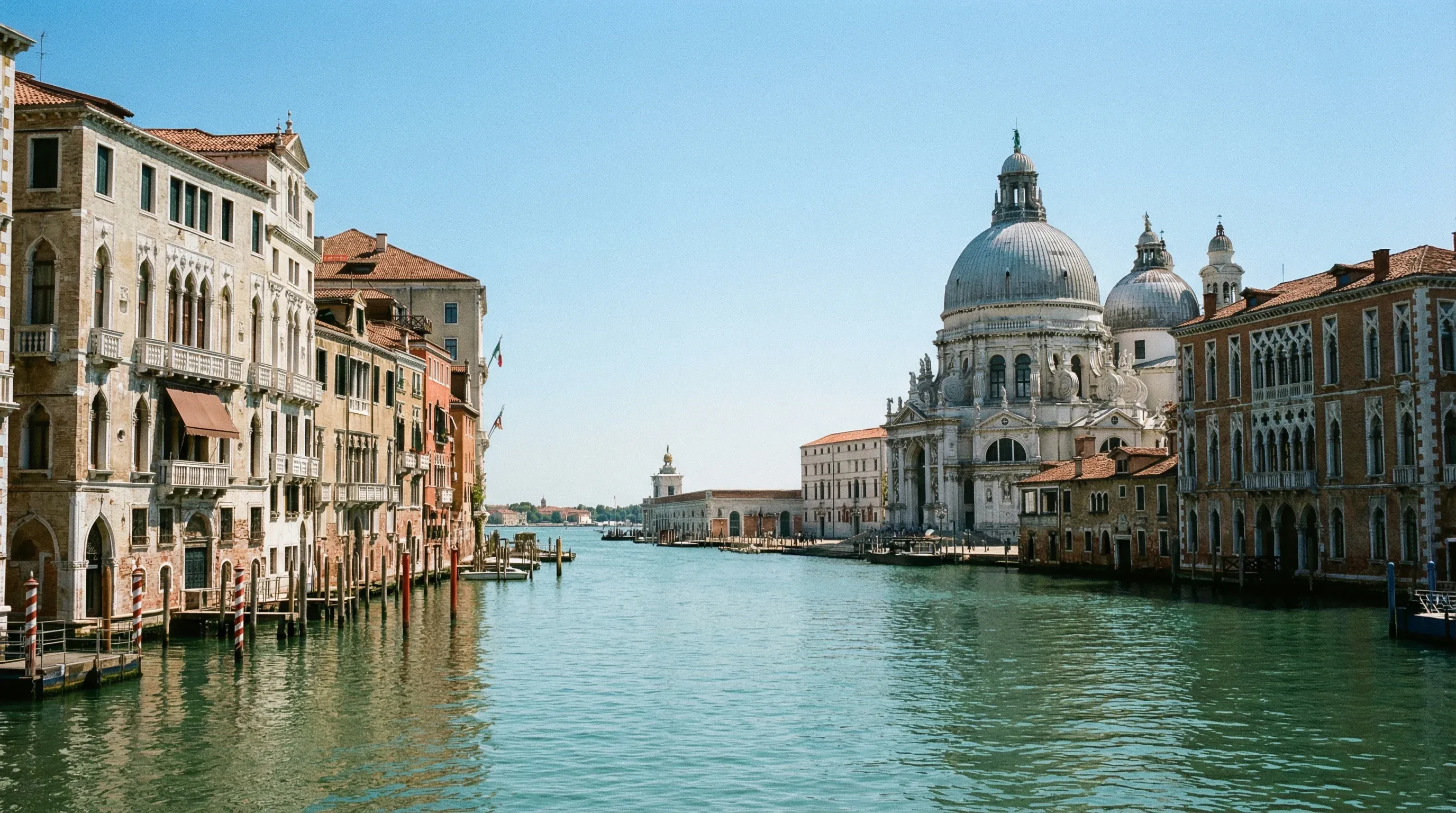

Venice & Veneto
A floating city, glass blowers, and Romeo's home 🎭🛶🦁
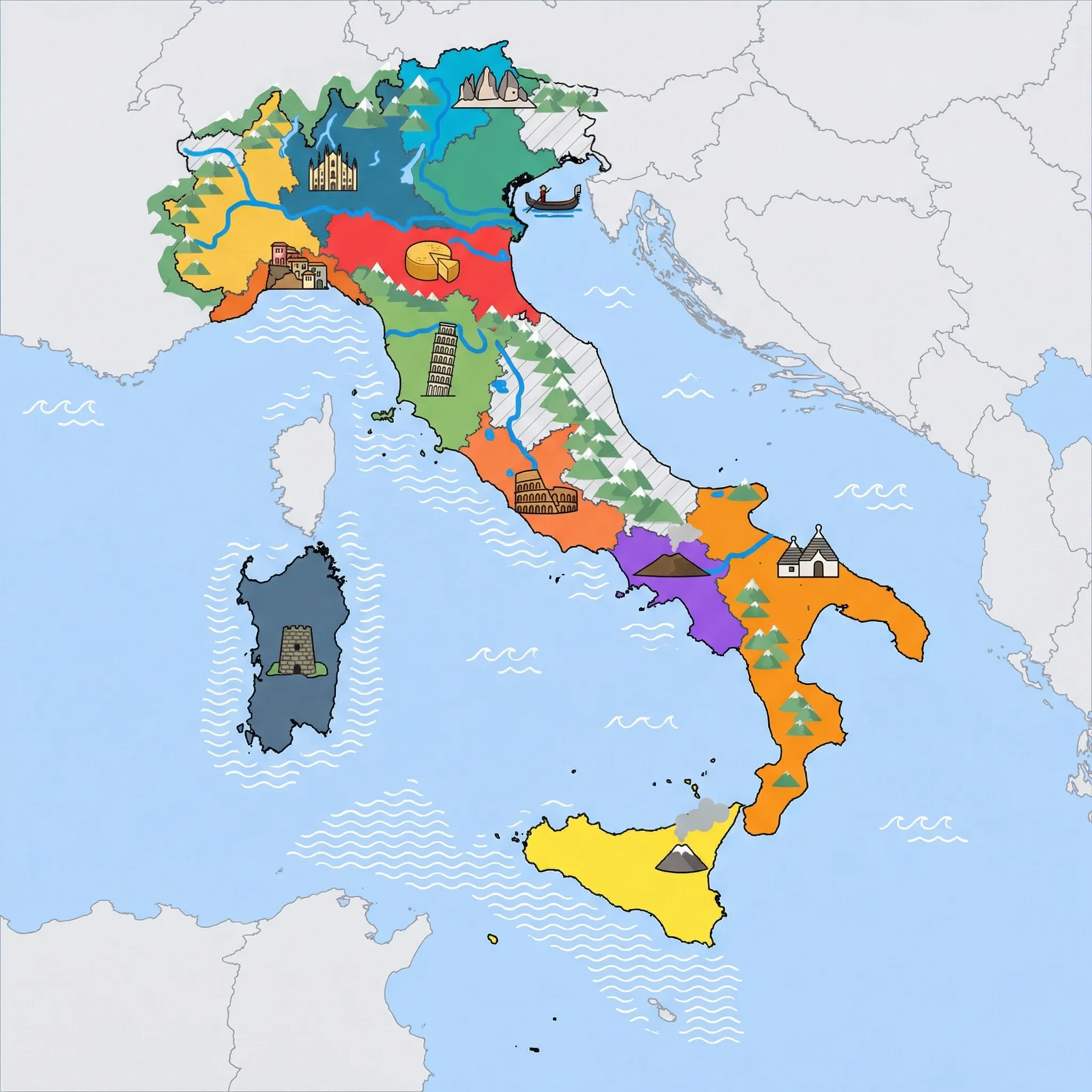
Click a region to explore
Venice is a city that defies logic, and children are quick to embrace its magic. A city built entirely on water, with no cars, is the ultimate playground. Taking the Vaporetto (water bus) is an adventure in itself. While Venice can be crowded, escaping to the islands of Murano (to see glass blowing) or Burano (with its brightly colored houses) offers a breather. Beyond Venice, the Veneto region is rich in attractions. Verona is famous for its Roman Arena and Romeo & Juliet history, while Lake Garda (on the western border) offers theme parks and nature.
Venice requires planning: there are hundreds of bridges with steps, making strollers a nightmare. A baby carrier is essential. The city is also prone to "Acqua Alta" (high water) in autumn/winter, which can be fun with rubber boots but disruptive. The region offers a mix of intense culture and pure fun, with some of Italy's best theme parks located near Lake Garda.
Key Attractions
In Venice, the Doge's Palace offers a "Secret Itineraries" tour that takes you through hidden cells and torture chambers—thrilling for older kids. A visit to a glass factory on Murano is mesmerizing. In Verona, the Arena di Verona is a massive Roman amphitheater that is better preserved than the Colosseum. For pure entertainment, Gardaland Resort (on the Veneto side of Garda) is Italy's number one amusement park. The Parco Natura Viva is a great safari park near Verona. The Orto Botanico di Padova is the world's oldest academic botanical garden and a UNESCO site.
Practical Advice
Venice is extremely expensive. Stay in Mestre (on the mainland) and take the train in to save money. In Venice, avoid sitting at cafes in St. Mark's Square unless you want to pay €10 for a coffee. Bathrooms are hard to find and cost money; carry coins.
Food & Drink
Typical meal times: Lunch 12:30 pm to 2:30 pm. Dinner 7:30 pm to 9:30 pm. "Cicchetti" bars (tapas) are open all day.
Typical meal costs: High in Venice; Mid elsewhere. A sit-down dinner in Venice for a family: €100–180 (approx. $110–195 USD / £85–155 GBP). Standing at the bar saves money.
Dietary requirements: Seafood is dominant. Polenta is a gluten-free staple. Vegetarian options are available but limited in traditional seafood places.
Signature dishes:
- Cicchetti – Small snacks (toasts with toppings, fried meatballs) served in "Bacaro" bars, perfect for grazing.
- Risi e Bisi – A soup-like risotto with fresh peas, a spring classic.
- Tiramisu – The world-famous coffee-soaked dessert originated in the Veneto region (Treviso).
Why this score?
The core tourism of Veneto is focused on its historical cities and the flat Venetian Lagoon. While the northern edge of the region touches the Dolomites, the primary tourist experience is urban and highly developed, offering very little physical adventure.
Why this score?
The Veneto region is known for having one of Italy's most efficient healthcare systems. Cities like Padua and Verona are home to world-renowned medical universities and hospitals, providing top-tier care accessible to foreign visitors.
Why this score?
Venice is an iconic global destination with extreme tourist density, drawing millions of international visitors to its canals. When combined with the high visitor counts of Verona and the Adriatic beaches, the region ranks among the world's top travel zones.

Venice is luxury pricing. Hotels are small and expensive. Gondola rides are fixed price (approx. €80-90 / $85-95 USD for 30 mins). Verona and the mainland are significantly cheaper ('Mid' level).

Getting Here & Around
Getting Here
- Airports – Venice Marco Polo (VCE) is the main hub, connected by water bus to the city. Treviso (TSF) serves budget airlines. Verona (VRN) is convenient for the west.
- Train – Venice Santa Lucia station is right on the Grand Canal. High-speed trains arrive from Milan, Rome, and Florence.
- Driving – Do not drive to Venice. Parking at Piazzale Roma is incredibly expensive.
Getting Around
- Water Bus (Vaporetto) – The bus system of Venice. Expensive (€9.50 single), so buy a 24/48h pass.
- Walking – The only way to see Venice's backstreets. Get lost; it's part of the fun.
- Train – Excellent regional trains connect Venice, Padua, and Verona cheaply.
Nearby Airports (3 airports)
Treviso Airport
TSFVenice
Venice Marco Polo Airport
VCEVenice
Verona Villafranca Airport
VRNVerona
View full flight map for Italy →
Official Links

Packing List
Venice has over 400 bridges, most with steps; strollers are a nightmare
High tides (Acqua Alta) flood the streets; disposable boots sold locally rip easily
GPS signals often fail in the narrow alleyways; a paper map is a fun backup
Strict dress codes in churches (St. Peter's, St. Mark's) require covered shoulders and knees even in summer heat.
Tiger mosquitoes (zanzare) are aggressive and common in summer, especially in the Po Valley, Venice, and lake areas.
Older Italian sockets use a unique vertical 3-pin row that standard 2-pin European plugs often don't fit.
Rome and other cities have 'nasoni' (public fountains) dispensing fresh, cold, free drinking water throughout the streets.
Small-wheeled umbrella strollers often break on cobblestones (sanpietrini); a carrier is better for Venice's many bridges.

Activities & Best Times

Urban tourism, museums, historical sites, architecture
Venice and Verona offer world-class historic sites and authentic Italian urban heritage that are global benchmarks for culture. Peak seasons avoid the high flood risks of late autumn and the extreme dampness of winter while offering pleasant walking conditions.

Hiking, wildlife, outdoor exploration, ecotourism
The region features a sophisticated blend of lagoon ecosystems for kayaking and high-quality wildlife parks such as Parco Natura Viva. Ideal in spring and autumn when temperatures are optimal for wildlife viewing and outdoor immersion without the peak summer heat.
Amusement parks, family entertainment venues
Home to Gardaland, one of Europe's premier destination theme parks with high-quality themed experiences suitable for international families. Peak months align with full operating schedules and school holiday periods, while winter sees most parks closed.

Sport tourism, fitness activities, active recreation
Features solid infrastructure for specialized activities like lagoon kayaking and forest adventure parks. Peak months provide the most stable weather and comfortable conditions for physical exertion in the outdoors.
Beach resorts, marine activities: diving, snorkelling, kite surfing, wind surfing, sailing
Lido di Jesolo and Adriatic resorts are well-organized but lack the natural beauty and international recognition of Sardinia, Sicily, or southern Italian beaches. These are functional resort beaches, not destination beaches. International calibration suggests 'marginal' is more appropriate.

Learning experiences, scientific sites, historical education
Includes secondary educational sites like Gardaland SEA LIFE and the Adriatic Zoology Museum which provide niche learning opportunities. While high quality, they are typically supplementary to the region's broader cultural offerings.

Attractions (33 total)



Public Holidays & Calendar Next 12 months
Public holidays, festivals, cultural celebrations, and seasonal natural phenomena coming up in Venice & Veneto over the next 12 months.
Loading holidays and events...

Travel Advisory
The international community is divided on Italy's risk profile. While half of the major agencies maintain a baseline safety rating, several key partners have elevated their warnings to L1 due to an increased threat of terrorism and security complexities surrounding the 2026 Winter Olympics. Visitors should exercise higher vigilance than usual.
Safety Topics
Agency Summaries
Heightened caution is advised due to the risk of terrorism. Extremist groups continue to plan attacks against public spaces, transit hubs, and tourist locations. Travelers should also be aware of new domestic laws affecting international surrogacy arrangements.
Travellers should remain highly vigilant in Italy due to a persistent threat of terrorism. Heightened security and potential for civil unrest are expected in Northern Italy during the 2026 Winter Olympics. Petty crime remains a significant concern in all major tourist hubs.
Standard safety awareness is recommended. Be particularly careful with personal belongings in tourist areas and on trains to avoid theft. Extra crowds and security will be present in Milan and Verona for the 2026 Winter Paralympics.
Take typical safety measures while traveling. Monitor local news for strike information and maintain awareness of your surroundings in urban centers to prevent petty theft.
There are elevated security concerns in Italy compared to New Zealand, primarily due to the threat of terrorism and the potential for civil unrest. Travelers should stay informed via local media and maintain high vigilance in public areas.
Most visits to Italy are safe, though travelers should watch for pickpockets in crowded cities and on public transport. Be prepared for increased security and travel disruptions during major sporting events in early 2026. A general threat of terrorism exists.
Information is provided for general guidance only and does not constitute travel, safety, medical, or legal advice. Conditions may change. Users are responsible for independently verifying information before travel.