
Abidjan
The pulsing heart of West African culture and lagoons 🇨🇮✨
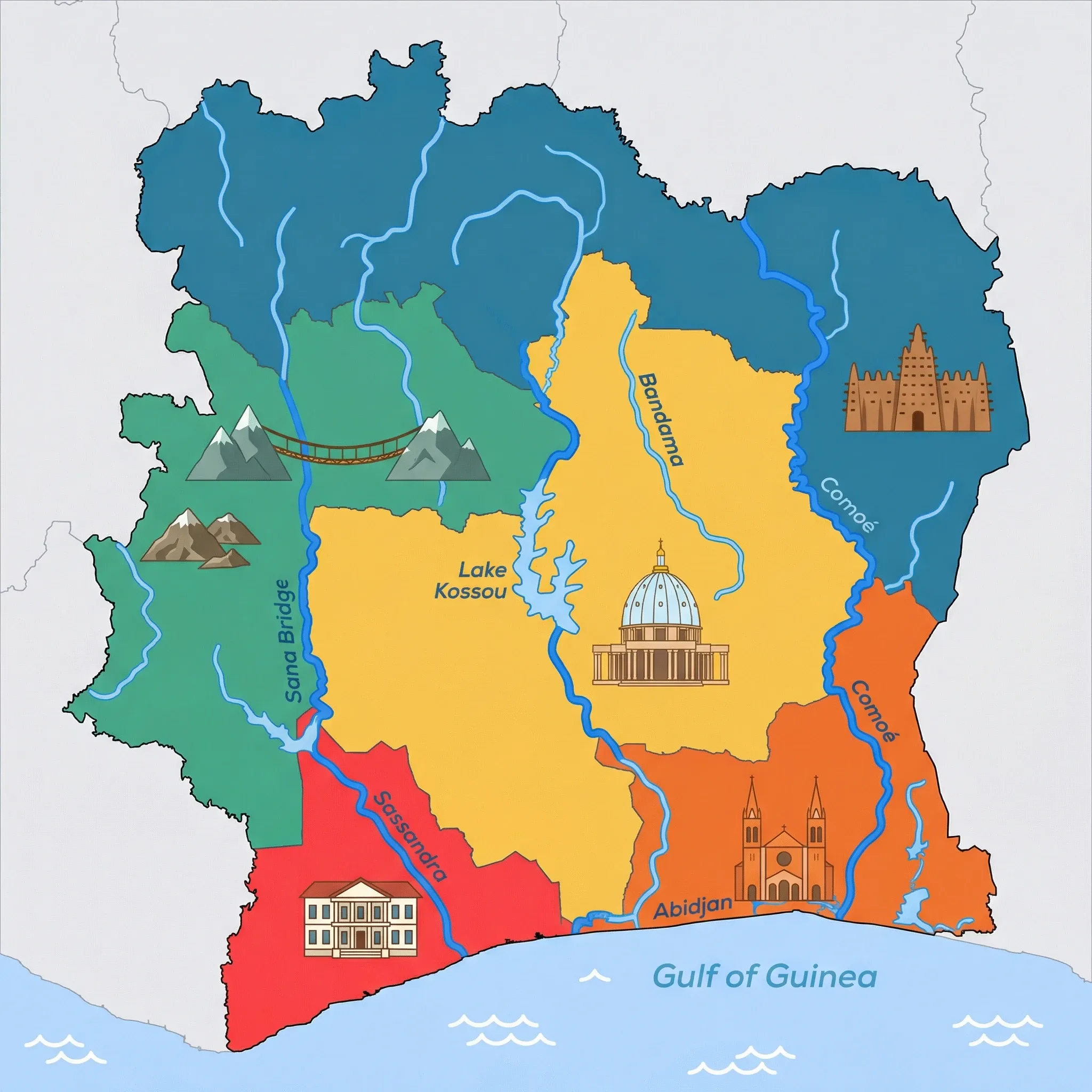
Click a region to explore
Abidjan is not just a city; it is a sensory experience that defines modern West Africa. Often called the "Manhattan of the Tropics" or the "Pearl of the Lagoons," this sprawling metropolis is the economic engine of Côte d'Ivoire and a fascinating playground for adventurous families. Geographically, the city is unique, built on converging peninsulas and islands surrounding the massive Ébrié Lagoon, connected by long, scenic bridges that offer stunning views of the skyline, especially at sunset. While it is a bustling urban center, the tropical greenery of Cocody and the refreshing breeze off the lagoon soften the frenetic pace, making it an exciting introduction to Ivorian culture.
For families, Abidjan offers a blend of modern comfort and traditional discovery. You can start your day in an air-conditioned mall in Marcory and end it bargaining for masks in a bustling artisan market. The city is the perfect place to introduce children to the concept of "Maquis"—open-air restaurants that serve as the social hubs of the country. While the traffic can be heavy and the humidity high, the warmth of the Ivorian people (known for their hospitality or "Akwaba") makes the city welcoming. It is a place where skyscrapers sit alongside colonial villas, and where the smell of roasting cacao often wafts through the port district, reminding visitors that they are in the world's cocoa capital.
Key Attractions
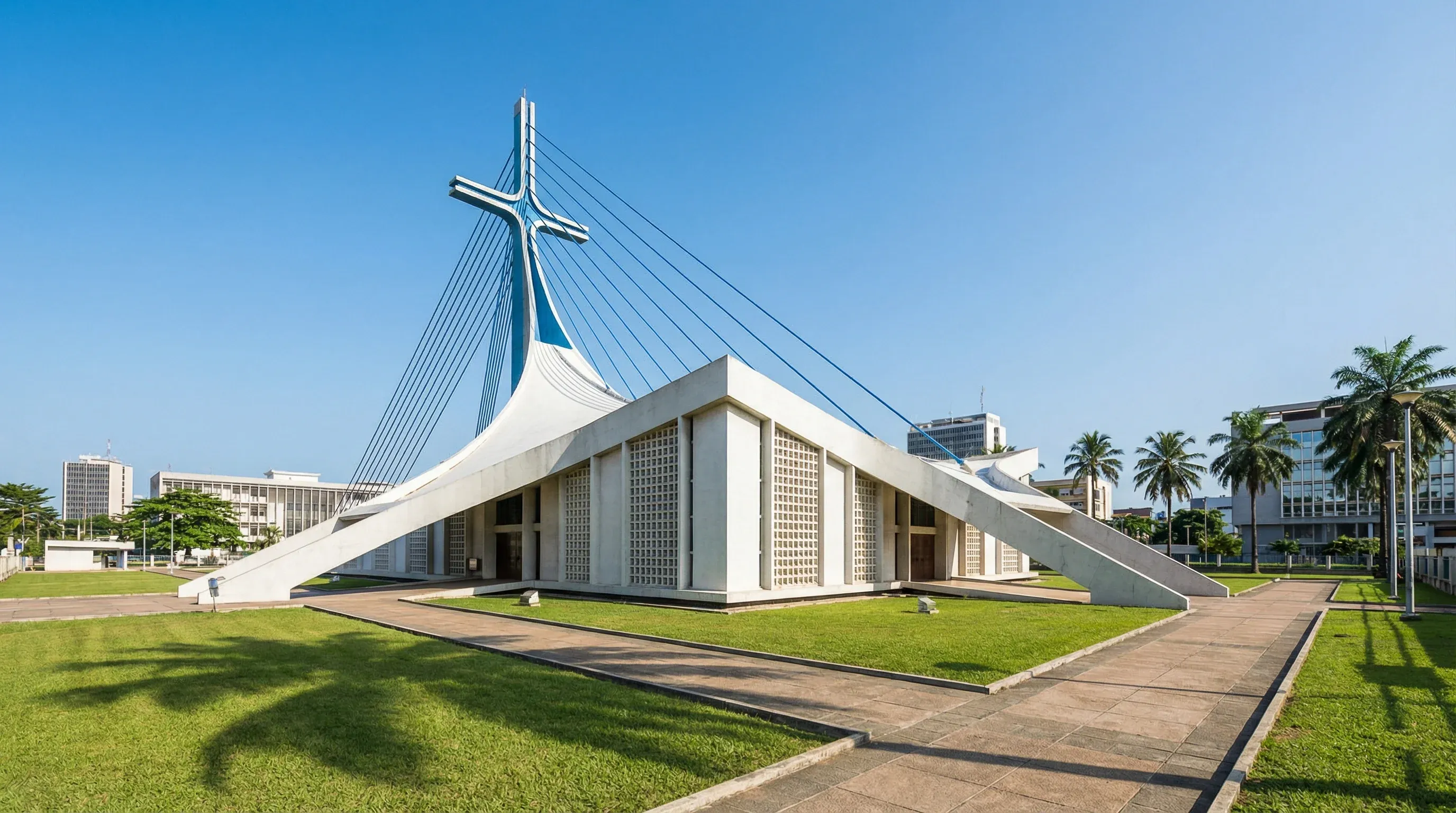
Abidjan has several landmarks that captivate both children and adults. The most iconic is St. Paul's Cathedral, a futuristic structure designed by Italian architect Aldo Spiritos. Its massive suspended roof and stunning stained glass windows depicting African life are visually arresting, and kids will be amazed by the sheer scale of the building. For a deep dive into local history, the Musée des Civilisations de Côte d'Ivoire is essential. It houses a vast collection of traditional masks, statues, and royal artifacts that tell the stories of the diverse ethnic groups of the country, offering a fantastic educational opportunity. If the city noise gets too much, a trip to the Jardin Botanique de Bingerville on the outskirts offers a lush, green escape where children can run freely among exotic tropical trees and plants.
Practical Advice
The best time to visit is during the dry season, from December to March, when the humidity is lower and rain is less frequent. Abidjan is a malaria zone, so prophylaxis and insect repellent are non-negotiable for families. Traffic in Abidjan can be gridlocked during rush hours (7:00 am–9:00 am and 5:00 pm–8:00 pm), so plan your movements around these times. French is the primary language; downloading a translation app or carrying a phrasebook is highly recommended as English is not widely spoken by taxi drivers or market vendors.
Food & Drink
Typical meal times: Lunch is the main affair, typically served from 12:00 pm to 2:30 pm. Dinner is eaten later, usually between 7:30 pm and 9:30 pm.
Typical meal costs: Street food or a simple "maquis" meal costs 2,000–5,000 XOF (approx. $3.30–8.25 USD / €3–7.50 EUR). A mid-range restaurant meal ranges from 10,000–20,000 XOF (approx. $16.50–33 USD / €15–30 EUR).
Dietary requirements: Vegetarians can find options like alloco (fried plantains) and vegetable sauces, but meat and fish are central to Ivorian cuisine. Peanuts and shellfish are common ingredients, so those with severe allergies must be extremely cautious and carry translated allergy cards.
Signature dishes:
- Attiéké – A fermented cassava couscous that is the national staple, lighter than wheat couscous and slightly sour, usually served with grilled fish and onions.
- Alloco – Fried plantain chunks served with a spicy tomato and onion sauce; a sweet and savory favorite that children almost always love.
- Garba – A popular street food version of attiéké served with fried tuna and chopped chilies (ask for "sans piment" for kids).
- Kedjenou – A slow-cooked, spicy stew of chicken and vegetables prepared in a sealed terracotta pot (canary), tender and flavorful.
Why this score?
The region is largely a dense urban metropolis with established infrastructure and paved roads throughout the main districts. While Parc National du Banco offers a rainforest experience, it is highly accessible and lacks the rugged isolation associated with higher adventure scores.
Why this score?
Abidjan offers the best healthcare in the country, including private clinics like PISAM that are accustomed to treating expatriates. However, services are basic compared to international standards, and language barriers can be a significant hurdle for non-French speakers.
Why this score?
As Ivory Coast's economic heart and primary international gateway, Abidjan receives the highest volume of foreign visitors, though many are business travelers. While it boasts iconic landmarks like St. Paul's Cathedral and the Banco rainforest, it remains a regional hub rather than a global vacation destination.

Abidjan is one of the most expensive cities in West Africa, though still affordable by Western standards. A comfortable family hotel in a safe district like Cocody costs 60,000–120,000 XOF (approx. $100–200 USD / €90–180 EUR) per night. Supermarket goods, especially imported French brands, can be pricey. Local transport and food are very cheap.
Family Travel Notice
Ensure children are up-to-date on all vaccinations, including yellow fever and polio, and be aware that pediatric medical services are limited outside the commercial capital.

Getting Here & Around
Getting Here
- Airports – Félix-Houphouët-Boigny International Airport (ABJ) is the main gateway, located in Port-Bouët. It receives direct flights from Paris, Brussels, Dubai, and major African hubs.
- Driving – Abidjan is the terminus of the coastal highway from Ghana and the main roads from the north.
- Bus – Large, comfortable coaches connect Abidjan to all major Ivorian cities like Yamoussoukro and San-Pédro.
Getting Around
- Taxi – The orange taxis are metered (or price-negotiated) and can access all parts of the city. They are the safest option for families.
- Woro-woro – These are shared communal taxis (colors vary by neighborhood: yellow for Cocody, green for Koumassi). They follow fixed routes and are very cheap but often crowded and not recommended for tourists with small children.
- Boats – Public ferries and private lagoon shuttles connect the Plateau district to areas like Blockhauss and Cocody, offering a scenic way to beat the traffic.
Nearby Airports (1 airport)
Abidjan Felix Houphouet Boigny International
ABJAbidjan
View full flight map for Ivory Coast →
Official Links

Packing List
English is rarely spoken outside luxury hotels; essential for taxis and markets.
Malaria is a year-round risk in the lagoon areas.
Humidity remains high even in the shade; useful for walking tours.
Power fluctuations are common and can damage sensitive electronics.
Mandatory for entry; you will be refused entry without the original physical card.
English is rarely spoken outside international hotels; basic French is essential for daily interactions.
Power outages can occur, and voltage fluctuations may damage sensitive electronics.
The heat and humidity are intense; keeps water cold during long excursions.
Sudden tropical downpours are common, and lagoon boat trips are a highlight.

Activities & Best Times

Hiking, wildlife, outdoor exploration, ecotourism
Boasts the unique urban primary rainforest of Parc National du Banco and high-quality agritourism at Domaine Bini. Best visited during dry windows to avoid the heavy monsoon rains that can make forest trails muddy and inaccessible.

Beach resorts, marine activities: diving, snorkelling, kite surfing, wind surfing, sailing
Features upscale beach clubs in Assinie-Mafia and the historic shores of Grand-Bassam, offering a sophisticated coastal escape. Peak conditions occur during the main dry season when the Atlantic is calmest and sunshine is most consistent.

Urban tourism, museums, historical sites, architecture
While Abidjan is an important West African cultural hub with contemporary art galleries and St. Paul's Cathedral, it lacks the UNESCO heritage density or globally significant cultural institutions to justify 'very_good' under international calibration standards. Regional importance should be rated 'good.'

Scenic drives, countryside tours, route-based travel
Offers scenic coastal drives to the historic colonial capital of Grand-Bassam and the stylish resort area of Assinie. The dry season ensures clear visibility and safe driving conditions for these popular regional routes.

Sport tourism, fitness activities, active recreation
Provides designated hiking and cycling routes within Parc National du Banco and family-friendly recreation at Doraville. Optimal conditions for trail-based sports occur during the dry months when infrastructure is most usable.

Learning experiences, scientific sites, historical education
The Museum of Natural History offers specialized insights into local ecology, though it lacks the scale of a primary international educational draw. Best visited in conjunction with other city sights during the dry seasons.
Amusement parks, family entertainment venues
Limited to regional family entertainment centers like Funny Land which serve local weekend crowds and provide basic amusement options. Peak visitation aligns with the major school holidays when conditions are driest.




Public Holidays & Calendar Next 12 months
Public holidays, festivals, cultural celebrations, and seasonal natural phenomena coming up in Abidjan over the next 12 months.
Loading holidays and events...

Travel Advisory
A unanimous consensus among major international agencies suggests that travellers should exercise a high degree of vigilance. While the general safety situation allows for travel, significant risks from violent crime and terrorism persist, especially in the northern border regions which are subject to more severe restrictions.
Safety Topics
Traveller Advice (5 groups)

Ensure children are up-to-date on all vaccinations, including yellow fever and polio, and be aware that pediatric medical services are limited outside the commercial capital.

Personnel working near the northern borders with Mali and Burkina Faso should follow strict security protocols due to the elevated risk of kidnapping by extremist groups.

Discretion is recommended as social and legal attitudes toward sexual orientation may be more conservative than those in many Western countries.

Solo female travellers should take additional security precautions, particularly when moving around at night or in less populated urban areas.

Travellers should maintain high personal security awareness, avoid displaying expensive items, and stay informed through local news about potential protests or safety incidents.
Agency Summaries
Visitors should maintain a high level of security awareness and monitor local developments closely, particularly during periods of political sensitivity.
New Zealanders are advised to exercise increased caution throughout Côte d'Ivoire due to terrorism, violent crime, and the possibility of civil unrest.
The UK advises against all travel to northern border areas and Comoé National Park due to terrorism and kidnapping risks. Standard safety measures apply elsewhere.
Australians should exercise a high degree of caution across the country, primarily due to violent crime threats and the potential for civil disturbance.
Travellers should remain highly vigilant due to prevalent crime and the threat of terrorism. Significant regional warnings are in place for areas bordering Mali and Burkina Faso.
Increased caution is recommended due to crime, terrorism, civil unrest, and health risks. The northern border region remains under a strict 'Do Not Travel' advisory.
Information is provided for general guidance only and does not constitute travel, safety, medical, or legal advice. Conditions may change. Users are responsible for independently verifying information before travel.