
Comoé NP & North
Ancient mud mosques and savannah horizons 🦁🕌
Click a region to explore
⚠️ SAFETY WARNING: Due to the threat of terrorism and kidnapping from neighboring Sahel countries, government agencies (including CA, USA, and UK) advise travelers to exercise a high degree of caution or reconsider travel to the northern border regions. Specifically, areas within 40km of the Mali and Burkina Faso borders are often designated as "Do Not Travel" zones. Travel to Comoé National Park and Korhogo should only be undertaken with reputable organized tour operators, and families are strongly urged to consult their own government's official travel advisory before planning a trip, as security situations can shift rapidly.
For families who choose to visit with professional guidance, the North of Côte d'Ivoire offers a landscape and culture entirely distinct from the tropical south. This is the land of the Senufo people, characterized by dry savannahs, baobab trees, and distinctive mud-brick architecture. It feels like the gateway to the Sahel. The pace of life here is slower, the air is drier, and the traditions are deeply rooted. It is a region of weavers, bead makers, and ancient rituals, offering a profound cultural education for older children interested in history and anthropology.
The region is dominated by wide horizons and golden grasses. Unlike the chaotic energy of Abidjan, the north is quiet and rhythmic. The primary cultural hub is Korhogo, famous for its cloth weavers and the sacred Poro society rites (though these are secret, their influence is visible). While wildlife populations were depleted during past conflicts, conservation efforts are bringing life back to the parks, making it a destination for those seeking a raw, unpolished African experience rather than a polished safari.
Key Attractions
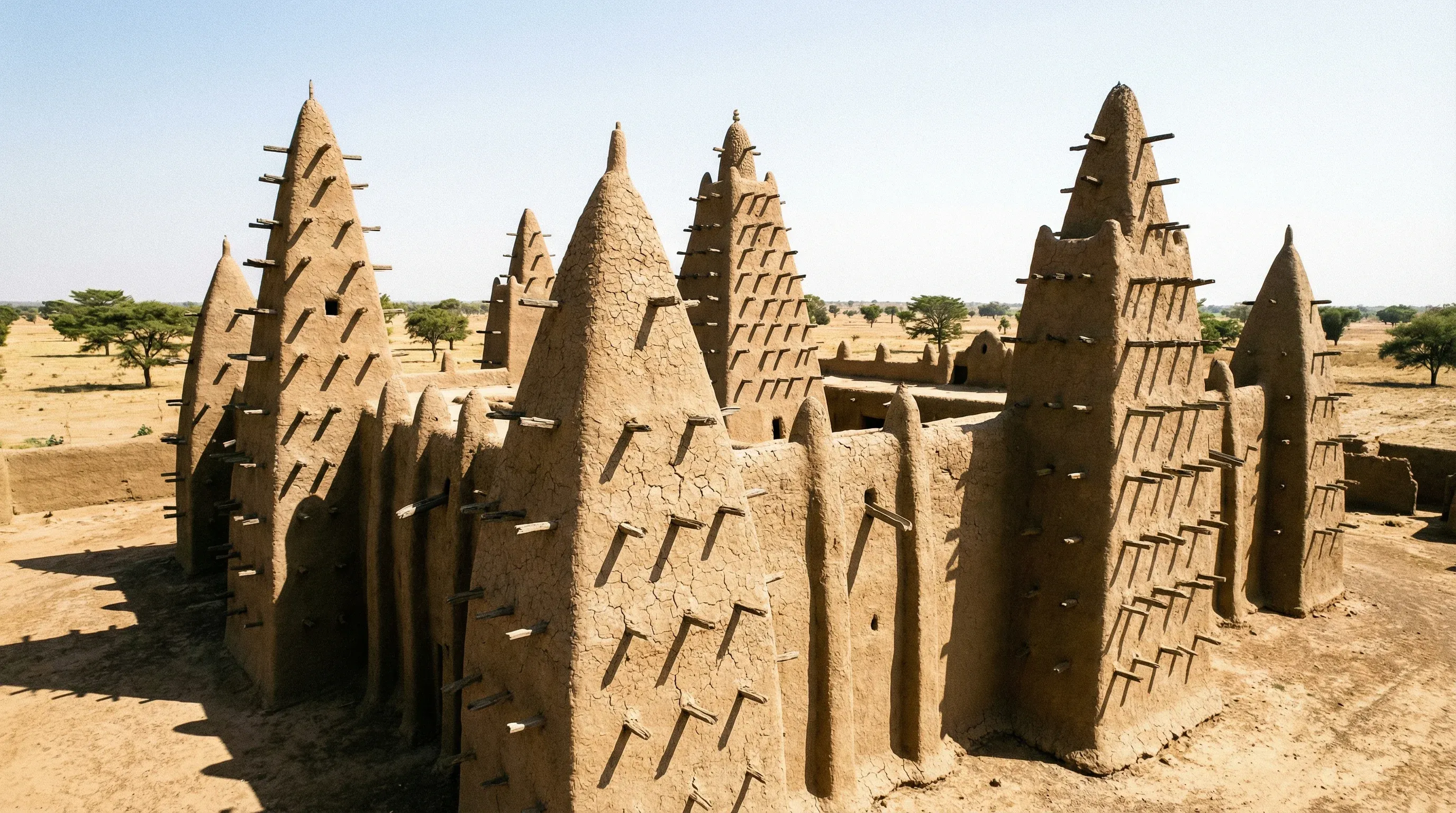
The crown jewel of the region's nature is Comoé National Park. As the largest protected area in West Africa, it is a UNESCO World Heritage site featuring the Comoé River, gallery forests, and savannah. While wildlife densities are lower than in East Africa, lucky families might spot elephants, hippos, and various antelope species. The park is best visited with expert guides who know the safe and animal-rich zones. Culturally, the Grand Mosque of Kong is a masterpiece of Sudanese-style mud architecture. Its conical towers and wooden supports are iconic, looking like a sandcastle brought to life; it provides a tangible link to the ancient trade routes that once crisscrossed this area.
Practical Advice
The best time to visit is the dry season (November to March). Avoid the rainy season when dirt roads in the park become impassable. The Harmattan wind blows from December to February, bringing dust from the Sahara; this can be difficult for children with asthma. Accommodation in the north is more basic than in Abidjan. Always travel in a convoy or with a local guide who understands the current security landscape.
Food & Drink
Typical meal times: Lunch is usually 12:00 pm to 2:00 pm, and dinner is 7:00 pm to 9:00 pm.
Typical meal costs: Prices are lower here than in the south. A meal in a local maquis costs 1,500–4,000 XOF (approx. $2.50–6.50 USD / €2.30–6 EUR). Hotel dining will be around 8,000–12,000 XOF (approx. $13–20 USD / €12–18 EUR).
Dietary requirements: Options are more limited than in the capital. Rice, yams, and millet are staples. Vegetarians will rely heavily on yam chips and plain rice with sauce (ensure no meat stock was used).
Signature dishes:
- Kabato – A corn or cassava dough staple of the north, often served with a leaf-based sauce.
- Foutou Igname – Pounded yam, a heavy and filling side dish served with light soups.
- Shea Butter cooking – Unlike the palm oil of the south, northern dishes often use locally produced shea butter, giving food a distinct, nutty flavor.
Why this score?
The vast savannah of Comoé National Park and the traditional Senufo heartland offer a rugged, off-the-beaten-path experience. Visiting requires significant planning, long-distance travel on varied road conditions, and a willingness to engage with limited infrastructure.
Why this score?
Medical facilities in the northern savannah are very limited and primarily cater to basic local needs. In the event of a serious emergency, a long and difficult evacuation to Abidjan would be necessary as specialized care is virtually non-existent.
Why this score?
The northern region is very remote and sees few international tourists, primarily attracting niche cultural travelers and researchers. Its distance from the coast and historical security concerns near the borders keep visitor numbers extremely low compared to the south.

The cost of living in the north is significantly lower than in Abidjan. Hotel rooms in Korhogo generally range from 25,000–50,000 XOF (approx. $40–80 USD / €38–75 EUR). However, the cost of hiring a private 4x4 and driver—which is essential for safety and access to the park—adds a significant expense, typically 60,000–100,000 XOF (approx. $100–165 USD / €90–150 EUR) per day plus fuel.
Family Travel Notice
Ensure children are up-to-date on all vaccinations, including yellow fever and polio, and be aware that pediatric medical services are limited outside the commercial capital.

Getting Here & Around
Getting Here
- Airports – Air Côte d'Ivoire flies daily from Abidjan to Korhogo Airport (HGO), which is the safest and fastest way to reach the north (approx. 1.5 hours).
- Driving – The drive from Abidjan to Korhogo takes 7–9 hours on paved but occasionally potholed roads. It is a long journey for children.
Getting Around
- Car – A 4x4 vehicle is absolutely essential for visiting Comoé National Park and navigating rural roads.
- Organized Tours – Due to safety advisories, hiring a car with a knowledgeable local driver/guide is the only recommended method for families.
Nearby Airports (2 airports)
Korhogo
HGOKorhogo
Odienne Airport
KEOOdienne
View full flight map for Ivory Coast →

Packing List
The Harmattan wind (Dec-Feb) creates very dusty air that can irritate lungs.
The extremely dry air can cause nosebleeds in children used to humidity.
Wildlife in Comoé is shyer and more dispersed; good optics are essential.
The dry northern climate dries out skin very quickly compared to the coast.
Mandatory for entry; you will be refused entry without the original physical card.
English is rarely spoken outside international hotels; basic French is essential for daily interactions.
Power outages can occur, and voltage fluctuations may damage sensitive electronics.
The heat and humidity are intense; keeps water cold during long excursions.
Sudden tropical downpours are common, and lagoon boat trips are a highlight.
Air conditioning is not guaranteed in smaller shops or restaurants; helps manage the humidity.

Activities & Best Times

Hiking, wildlife, outdoor exploration, ecotourism
Comoé National Park offers a raw, authentic West African savannah experience for intrepid families seeking immersion in one of the continent's largest protected areas. Visitation peaks in the height of the dry season (Jan-Mar) when wildlife is easiest to spot at receding water holes; most tracks become impassable during the peak rains.

Urban tourism, museums, historical sites, architecture
The UNESCO Sudanese mosques are significant heritage, but this represents a single cluster of sites rather than the comprehensive cultural destination density required for 'very_good.' The rating should reflect nationally significant but not internationally outstanding status.

Scenic drives, countryside tours, route-based travel
Named circuits like the Sudanic Mosque Route offer scenic transit through traditional landscapes, though road conditions require robust preparation. Travel is best during the dry season to ensure accessibility on unpaved secondary routes that link the historic mosques and weaver villages.

Sport tourism, fitness activities, active recreation
The inselbergs of Korhogo and Niangbo provide unique hiking and cycling opportunities with panoramic views of the northern plains. Strenuous activity is only recommended during the brief cooler window of Dec-Jan; the following months bring extreme heat and humidity that make physical exertion uncomfortable.




Public Holidays & Calendar Next 12 months
Public holidays, festivals, cultural celebrations, and seasonal natural phenomena coming up in Comoé NP & North over the next 12 months.
Loading holidays and events...

Travel Advisory
A unanimous consensus among major international agencies suggests that travellers should exercise a high degree of vigilance. While the general safety situation allows for travel, significant risks from violent crime and terrorism persist, especially in the northern border regions which are subject to more severe restrictions.
Safety Topics
Traveller Advice (5 groups)

Ensure children are up-to-date on all vaccinations, including yellow fever and polio, and be aware that pediatric medical services are limited outside the commercial capital.

Personnel working near the northern borders with Mali and Burkina Faso should follow strict security protocols due to the elevated risk of kidnapping by extremist groups.

Discretion is recommended as social and legal attitudes toward sexual orientation may be more conservative than those in many Western countries.

Solo female travellers should take additional security precautions, particularly when moving around at night or in less populated urban areas.

Travellers should maintain high personal security awareness, avoid displaying expensive items, and stay informed through local news about potential protests or safety incidents.
Agency Summaries
Visitors should maintain a high level of security awareness and monitor local developments closely, particularly during periods of political sensitivity.
New Zealanders are advised to exercise increased caution throughout Côte d'Ivoire due to terrorism, violent crime, and the possibility of civil unrest.
The UK advises against all travel to northern border areas and Comoé National Park due to terrorism and kidnapping risks. Standard safety measures apply elsewhere.
Australians should exercise a high degree of caution across the country, primarily due to violent crime threats and the potential for civil disturbance.
Travellers should remain highly vigilant due to prevalent crime and the threat of terrorism. Significant regional warnings are in place for areas bordering Mali and Burkina Faso.
Increased caution is recommended due to crime, terrorism, civil unrest, and health risks. The northern border region remains under a strict 'Do Not Travel' advisory.
Information is provided for general guidance only and does not constitute travel, safety, medical, or legal advice. Conditions may change. Users are responsible for independently verifying information before travel.