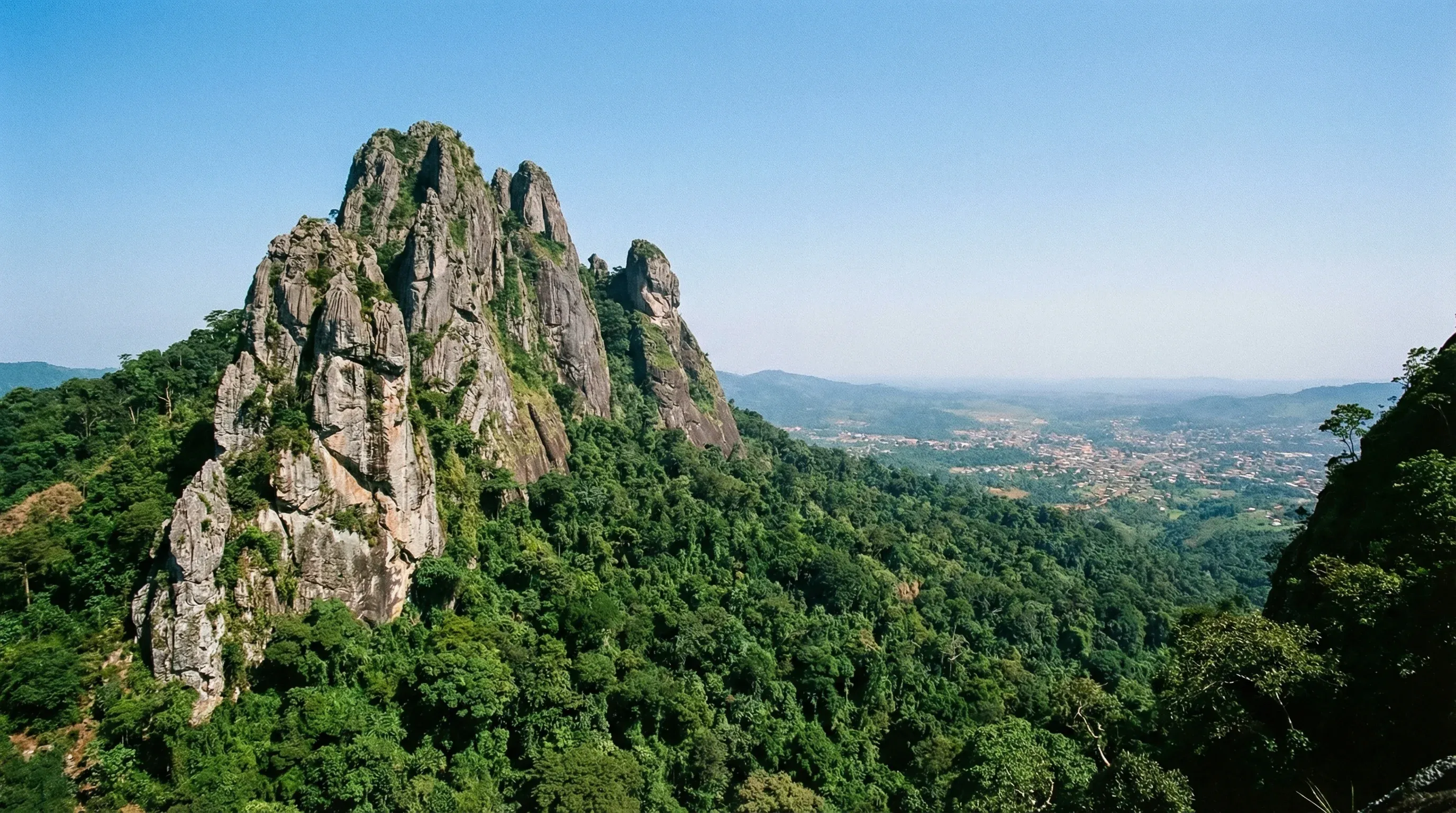

Man & Western Mountains
Misty mountains and sacred monkeys ⛰️🐒
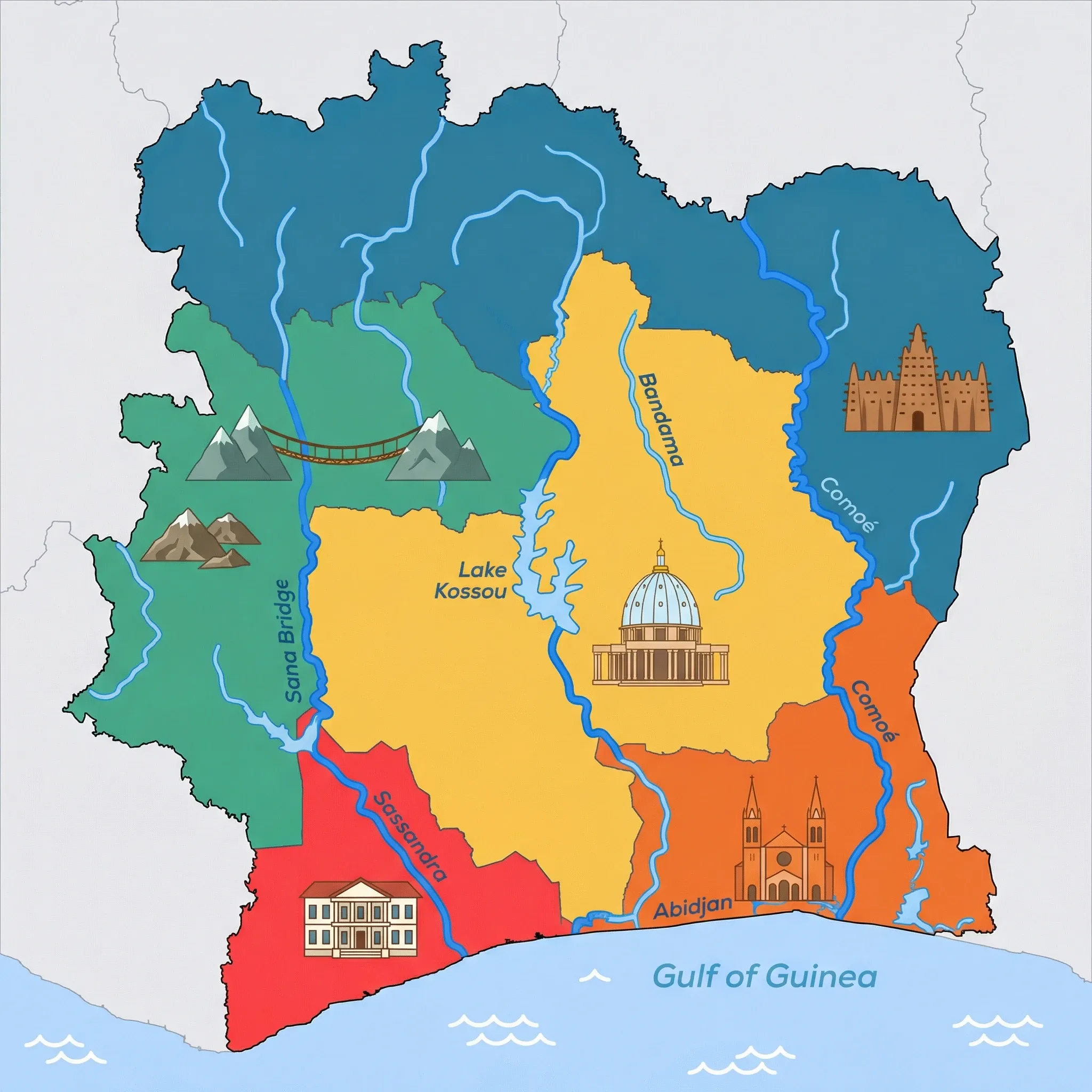
Click a region to explore
⚠️ SAFETY WARNING: Due to the proximity to the Liberian and Guinean borders and a history of instability, government agencies (including the US and UK) advise exercising increased caution in this region. Travel within 40km of the western borders is often discouraged. Families should stick to the main tourist areas around Man and Danané, avoid night driving due to poor road conditions and crime risk, and check current security reports before departing. Consulting your government's specific travel advisory for the "Dix-Huit Montagnes" region is strongly recommended.
For families that make the journey, the West is arguably the most beautiful part of Côte d'Ivoire. This is a land of rolling green hills, waterfalls, and morning mist that clings to the peaks—a refreshing change from the coastal humidity. The region is home to the Dan (or Yacouba) people, famous for their mesmerizing mask dances and stilt walkers. For children, the landscape feels like an adventure movie. The terrain is perfect for hiking, with trails that are challenging but accessible for active older kids.
The atmosphere in Man is more rural and relaxed than the capital. The cooler climate (thanks to the altitude) makes outdoor activities much more pleasant. This is where you come to connect with nature and folklore. From the sacred forests where monkeys are treated as ancestors to the creeper bridges made of vines that span rivers, the region offers a tangible connection to ancient traditions. It is an eco-tourism destination in the making, ideal for families who don't mind trading luxury for breathtaking scenery and cultural depth.
Key Attractions
The immediate hit for children is the Sacred Monkey Forest of Gbepleu. Here, Mona monkeys live in the trees and are considered sacred totems by the locals; they are tame enough to come down and take bananas from your hand, which is a magical experience for kids. For active families, a hike toward La Dent de Man (The Tooth of Man) offers incredible views. While climbing the rock itself requires gear, the surrounding trails are scenic. A short drive away is the famous Cascade de Man, a beautiful waterfall surrounded by a bamboo forest where locals go to swim and picnic—a perfect spot to cool off. The more ambitious might consider the Mount Nimba Strict Nature Reserve, a UNESCO site, though access is strictly controlled and difficult.
Practical Advice
The roads to Man from Abidjan have been improved but can still be long and winding; families prone to motion sickness should prepare accordingly. The best time to visit is during the Festival of Masks (usually November/December), though accommodation fills up fast. Basic French is essential here. Be respectful of local customs, especially regarding sacred sites and masks—always ask permission before taking photos.
Food & Drink
Typical meal times: Standard times apply (Lunch 12:00 pm–2:00 pm, Dinner 7:00 pm–9:00 pm).
Typical meal costs: Very affordable. A hearty local meal is 1,500–3,500 XOF (approx. $2.50–5.75 USD / €2.30–5.30 EUR). Western-style hotel food is around 6,000–10,000 XOF (approx. $10–16.50 USD / €9–15 EUR).
Dietary requirements: The diet is heavily based on rice and cassava. "Sauce Graine" (palm nut soup) is very common. Vegetarians will find excellent tropical fruit (avocados, bananas, papayas) but few dedicated main courses in restaurants.
Signature dishes:
- Riz Sauce Feuille – Rice served with a nutritious, dark green leaf sauce (potato leaves or cassava leaves), often cooked with red oil.
- Foutou Banane – The sweet variety of mashed plantain, particularly good in this region where plantains grow abundantly.
- Wild Honey – The region produces excellent natural honey, often sold in repurposed bottles on the roadside.
Why this score?
The region features misty peaks, waterfalls, and famous liana vine bridges that require a good level of physical fitness and a spirit of adventure. The terrain is rugged and the infrastructure for tourists is minimal, providing an authentic and challenging mountain experience.
Why this score?
Healthcare in the western mountains is rudimentary, with small hospitals in Man that lack the resources for complex international patient care. Travelers are advised to carry comprehensive kits and prepare for medical transport to Abidjan if serious issues arise.
Why this score?
Despite its stunning scenery, the western highland region remains an emerging destination with very few foreign visitors annually. It is primarily frequented by dedicated hikers and those interested in the unique Dan culture, far from the main tourist circuits.

The West is an inexpensive region for travelers. Accommodation is simple but cheap, with decent family rooms costing 20,000–45,000 XOF (approx. $33–75 USD / €30–68 EUR). Food and entrance fees to natural sites are negligible. The main cost will be the flight to get there or the fuel for a long drive.
Family Travel Notice
Ensure children are up-to-date on all vaccinations, including yellow fever and polio, and be aware that pediatric medical services are limited outside the commercial capital.

Getting Here & Around
Getting Here
- Airports – Air Côte d'Ivoire operates flights to Man Airport (MJC). This is highly recommended to avoid the 8+ hour drive from Abidjan.
- Driving – The road from Abidjan passes through Yamoussoukro and Daloa. While the road is paved, segments can be degraded. Travel only by day.
Getting Around
- Taxi/Moto – In Man, moto-taxis are common but unsafe for families. Regular taxis are available.
- Walking – Many attractions like the waterfall and monkey forest are best reached by a hired vehicle, then explored on foot.
Nearby Airports (1 airport)
Man
MJCMan
View full flight map for Ivory Coast →

Packing List
The terrain is hilly, rocky, and often muddy; sandals are insufficient for the trails.
The roads in the mountainous region are winding and can be rough.
Man is significantly cooler than the coast, especially in the evenings.
Forest areas have dense insect populations; spray alone often isn't enough.
Mandatory for entry; you will be refused entry without the original physical card.
English is rarely spoken outside international hotels; basic French is essential for daily interactions.
Power outages can occur, and voltage fluctuations may damage sensitive electronics.
The heat and humidity are intense; keeps water cold during long excursions.
Sudden tropical downpours are common, and lagoon boat trips are a highlight.
Air conditioning is not guaranteed in smaller shops or restaurants; helps manage the humidity.

Activities & Best Times

Hiking, wildlife, outdoor exploration, ecotourism
Offers unique highland trekking to the Dent de Man and Mount Tonkoui, providing a rare mountainous landscape within West Africa. Peak visits occur during the dry season (Dec-Feb) for optimal trail safety and panoramic visibility, while heavy rains from June to October make mountain paths treacherous.

Urban tourism, museums, historical sites, architecture
Home to the fascinating Dan (Yacouba) culture, famous for the sacred monkey forest and traditional liana bridges near Danané. Travelers visit in the dry months to access remote villages and witness mask ceremonies; accessibility is severely limited during the peak monsoon season.

Scenic drives, countryside tours, route-based travel
The 'Route des Montagnes' is one of the most scenic drives in the country, winding through mist-covered peaks and lush valleys. Driving conditions are best in the dry season when dirt spurs to viewpoints are stable, whereas the rainy season brings significant risk of washouts and mud.

Sport tourism, fitness activities, active recreation
The region serves as the country's primary hub for technical hiking and trail running, with established routes up Mount Tonkpi and Nimba. Peak months align with the dry season to ensure safe footing on steep gradients, while the humid rainy months are avoided due to extreme trail degradation.




Public Holidays & Calendar Next 12 months
Public holidays, festivals, cultural celebrations, and seasonal natural phenomena coming up in Man & Western Mountains over the next 12 months.
Loading holidays and events...

Travel Advisory
A unanimous consensus among major international agencies suggests that travellers should exercise a high degree of vigilance. While the general safety situation allows for travel, significant risks from violent crime and terrorism persist, especially in the northern border regions which are subject to more severe restrictions.
Safety Topics
Traveller Advice (5 groups)

Ensure children are up-to-date on all vaccinations, including yellow fever and polio, and be aware that pediatric medical services are limited outside the commercial capital.

Personnel working near the northern borders with Mali and Burkina Faso should follow strict security protocols due to the elevated risk of kidnapping by extremist groups.

Discretion is recommended as social and legal attitudes toward sexual orientation may be more conservative than those in many Western countries.

Solo female travellers should take additional security precautions, particularly when moving around at night or in less populated urban areas.

Travellers should maintain high personal security awareness, avoid displaying expensive items, and stay informed through local news about potential protests or safety incidents.
Agency Summaries
Visitors should maintain a high level of security awareness and monitor local developments closely, particularly during periods of political sensitivity.
New Zealanders are advised to exercise increased caution throughout Côte d'Ivoire due to terrorism, violent crime, and the possibility of civil unrest.
The UK advises against all travel to northern border areas and Comoé National Park due to terrorism and kidnapping risks. Standard safety measures apply elsewhere.
Australians should exercise a high degree of caution across the country, primarily due to violent crime threats and the potential for civil disturbance.
Travellers should remain highly vigilant due to prevalent crime and the threat of terrorism. Significant regional warnings are in place for areas bordering Mali and Burkina Faso.
Increased caution is recommended due to crime, terrorism, civil unrest, and health risks. The northern border region remains under a strict 'Do Not Travel' advisory.
Information is provided for general guidance only and does not constitute travel, safety, medical, or legal advice. Conditions may change. Users are responsible for independently verifying information before travel.