
Yamoussoukro & Central
The quiet capital of giants and crocodiles 🐊⛪
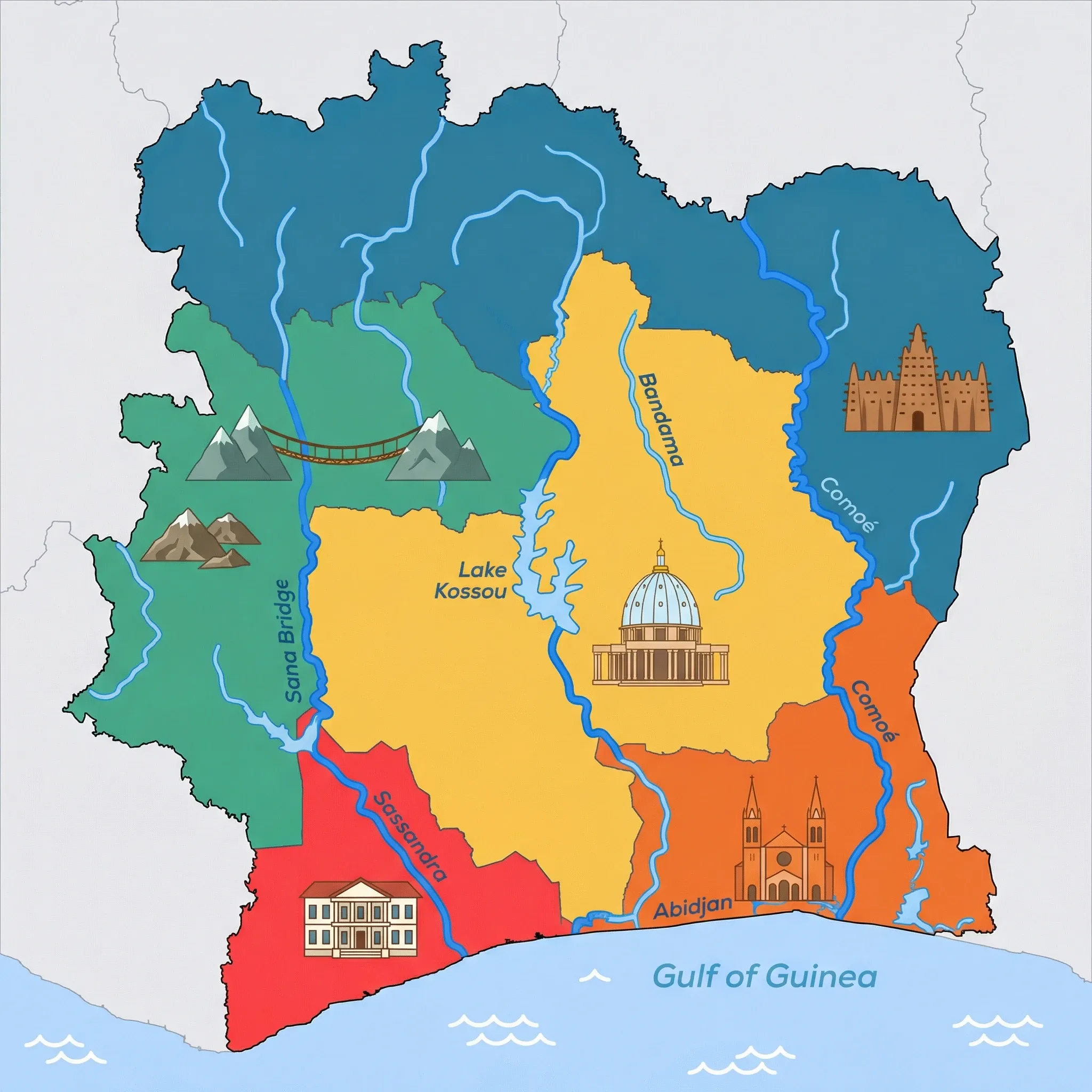
Click a region to explore
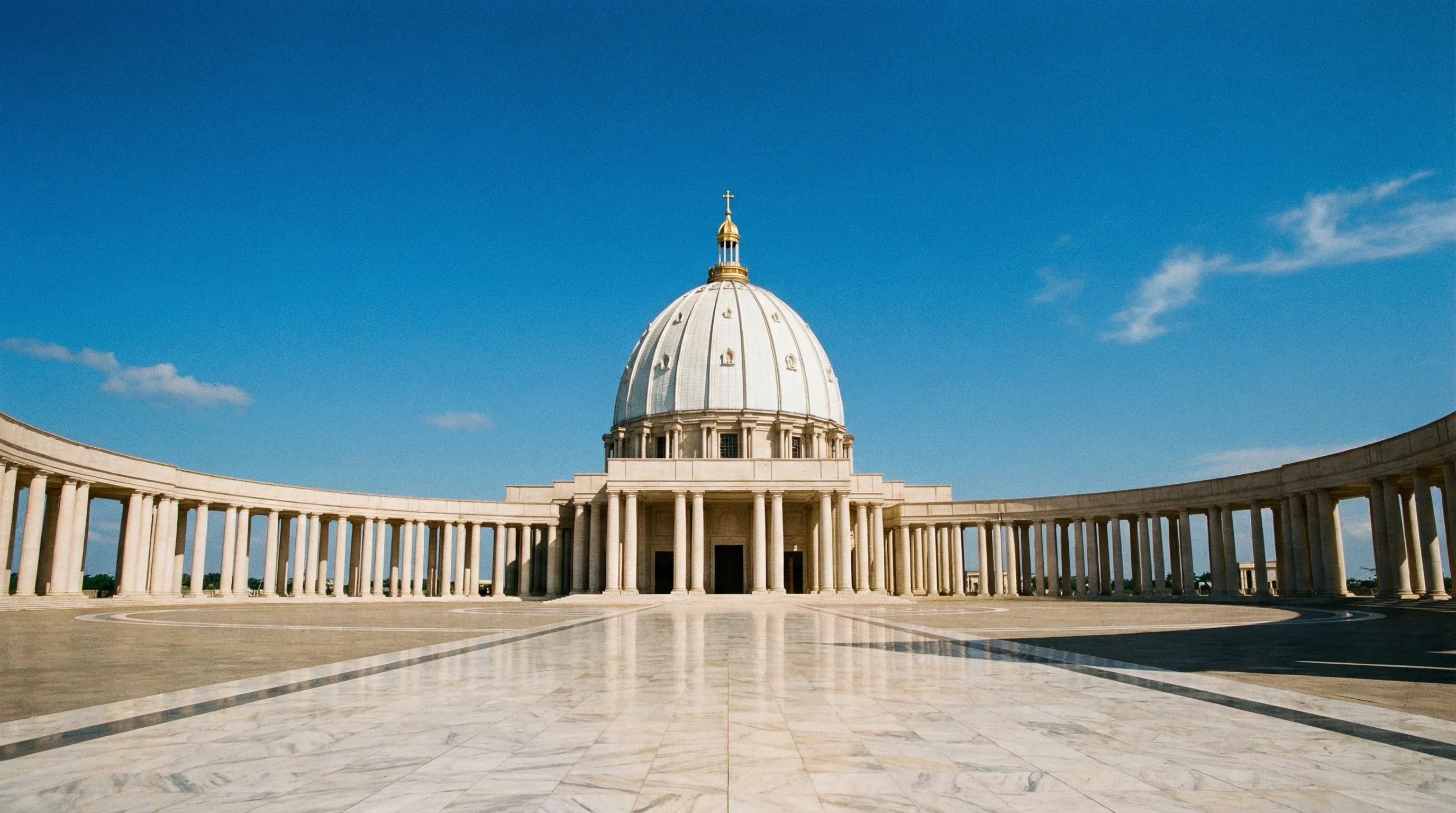
Yamoussoukro is one of the most unusual capital cities in the world. Purpose-built by the country's first president, Félix Houphouët-Boigny, in his home village, it is a place of massive scale and quiet emptiness. For families coming from the chaos of Abidjan, the wide, traffic-free boulevards and manicured gardens feel incredibly peaceful. The city is dominated by the Basilica of Our Lady of Peace, the largest church in the world (surpassing St. Peter's in Rome). Seeing this colossal dome rising out of the African savannah is a sight your children will never forget.
The region is the heartland of the Baoulé people. Beyond the grandiose monuments, the surrounding area is rich in craft traditions. The nearby village of Bomizambo is famous for its weavers, where you can watch complex patterns being created on traditional looms. The landscape is a transition zone between forest and savannah, offering green vistas and lakes. It is a very safe, manageable destination for families, with none of the stress of a major metropolis. The pace is slow, the roads are excellent, and the history is palpable.
Key Attractions
The Basilica of Our Lady of Peace is the absolute must-see. Its stained glass windows are breathtaking, and the sheer size of the plaza (which can hold hundreds of thousands of people) is humbling. Kids can take the elevator to the gallery for a view, but remember it is a religious site requiring modest dress. Another major hit for children is the Presidential Palace lake, home to the "Sacred Crocodiles." Every afternoon around 5:00 pm, the wardens feed these massive reptiles with live chickens—a spectacle that is terrifying and fascinating in equal measure (viewed safely from behind a barrier). For a nature break, a trip to Lake Kossou offers scenery and a look at the hydroelectric dam that powers much of the country.
Practical Advice
Yamoussoukro is a 3-hour drive from Abidjan on a good highway, making it an easy overnight trip. The city is very spread out, so walking between attractions is impossible; you will need a car or taxi. The sun here can be intense due to the lack of tall buildings for shade, so hats and hydration are key. Visiting the Basilica requires shoulders and knees to be covered, so pack scarves or sarongs for the family.
Food & Drink
Typical meal times: Lunch 12:00 pm to 2:30 pm. Dinner is quieter here, usually 7:00 pm to 9:00 pm.
Typical meal costs: Moderate. A nice hotel buffet or dinner costs 10,000–18,000 XOF (approx. $16.50–30 USD / €15–27 EUR). Local spots (Maquis) serve meals for 3,000–6,000 XOF (approx. $5–10 USD / €4.50–9 EUR).
Dietary requirements: Similar to the rest of the country, but the Baoulé region is famous for its yams and chicken. It is relatively easy to find simple grilled chicken and salads for picky eaters.
Signature dishes:
- Kedjenou de Poulet – This region is the home of Kedjenou; spicy, slow-cooked chicken stewed in its own juices with vegetables.
- Foutou Banane – Smooth, mashed plantain dumplings, the standard accompaniment to Kedjenou.
- Bandama Fish – Freshwater fish (often Tilapia or Carp) from the nearby lake and river, usually grilled or in a clear pepper soup.
Why this score?
Yamoussoukro is characterized by its massive, wide boulevards and planned urban layout, which makes it very easy to navigate. The primary activities, like visiting the Basilica or watching the sacred crocodiles, are low-effort and occur in a controlled environment.
Why this score?
As the political capital, Yamoussoukro has better-than-average hospitals for the region, but they still lag behind the private facilities found in Abidjan. Basic emergency stabilization is possible, but English-speaking staff and specialized equipment are limited.
Why this score?
The political capital is a common stop for tourists visiting the world-famous Basilica of Our Lady of Peace. While it is a significant national landmark, the city often serves as a short stopover rather than a multi-day destination, resulting in moderate visitor numbers.

Yamoussoukro offers good value. While the top hotel (Hotel Président) charges Abidjan-level prices (approx. 70,000–100,000 XOF / $115–165 USD / €105–150 EUR), there are many mid-range guesthouses for 25,000–40,000 XOF (approx. $40–65 USD / €38–60 EUR). Entry to the <a data-attraction-id="22933">Basilica</a> has a fee for foreigners (approx. 2,000–5,000 XOF).
Family Travel Notice
Ensure children are up-to-date on all vaccinations, including yellow fever and polio, and be aware that pediatric medical services are limited outside the commercial capital.

Getting Here & Around
Getting Here
- Driving – The Autoroute du Nord connects Abidjan to Yamoussoukro. It is the best road in the country and takes about 2.5 to 3 hours.
- Bus – Comfortable, air-conditioned buses (like UTB) run hourly from Abidjan. It is a safe and reliable option.
Getting Around
- Taxi – Taxis are white with green and orange stripes. They are cheap and essential because the distances between the Basilica, the Hotel Président, and the crocodiles are vast.
- Car – Self-driving is easier here than in Abidjan due to the wide, empty roads.
Nearby Airports (1 airport)
Bouake
BYKBouake
View full flight map for Ivory Coast →

Packing List
Strict dress codes enforce covered shoulders/knees to enter the Basilica.
Useful for seeing the crocodiles closely from the safety of the bridge.
The city has vast open plazas with absolutely no shade.
Mandatory for entry; you will be refused entry without the original physical card.
English is rarely spoken outside international hotels; basic French is essential for daily interactions.
Power outages can occur, and voltage fluctuations may damage sensitive electronics.
The heat and humidity are intense; keeps water cold during long excursions.
Sudden tropical downpours are common, and lagoon boat trips are a highlight.
Air conditioning is not guaranteed in smaller shops or restaurants; helps manage the humidity.

Activities & Best Times

Urban tourism, museums, historical sites, architecture
Home to the record-breaking Basilica of Our Lady of Peace, the city provides a unique architectural and political history experience that is internationally distinctive. Peak months coincide with the dry season, offering comfortable conditions for visiting monuments, while the monsoon period (June-September) brings high humidity and heavy rains.

Hiking, wildlife, outdoor exploration, ecotourism
The region features authentic wildlife encounters at the N'Zi Wildlife Reserve and the famous sacred crocodiles of Lake Kossou. The dry months of December to February are optimal for wildlife viewing, whereas the heavy rainy season from April to October can make bush tracks impassable for families.

Scenic drives, countryside tours, route-based travel
The Baoulé Artisan Route offers a scenic cultural drive through traditional craft villages, providing an authentic look at local weaving and pottery. It is best explored during the height of the dry season to ensure safe driving conditions on rural roads and to guarantee access to artisan workshops.




Public Holidays & Calendar Next 12 months
Public holidays, festivals, cultural celebrations, and seasonal natural phenomena coming up in Yamoussoukro & Central over the next 12 months.
Loading holidays and events...

Travel Advisory
A unanimous consensus among major international agencies suggests that travellers should exercise a high degree of vigilance. While the general safety situation allows for travel, significant risks from violent crime and terrorism persist, especially in the northern border regions which are subject to more severe restrictions.
Safety Topics
Traveller Advice (5 groups)

Ensure children are up-to-date on all vaccinations, including yellow fever and polio, and be aware that pediatric medical services are limited outside the commercial capital.

Personnel working near the northern borders with Mali and Burkina Faso should follow strict security protocols due to the elevated risk of kidnapping by extremist groups.

Discretion is recommended as social and legal attitudes toward sexual orientation may be more conservative than those in many Western countries.

Solo female travellers should take additional security precautions, particularly when moving around at night or in less populated urban areas.

Travellers should maintain high personal security awareness, avoid displaying expensive items, and stay informed through local news about potential protests or safety incidents.
Agency Summaries
Visitors should maintain a high level of security awareness and monitor local developments closely, particularly during periods of political sensitivity.
New Zealanders are advised to exercise increased caution throughout Côte d'Ivoire due to terrorism, violent crime, and the possibility of civil unrest.
The UK advises against all travel to northern border areas and Comoé National Park due to terrorism and kidnapping risks. Standard safety measures apply elsewhere.
Australians should exercise a high degree of caution across the country, primarily due to violent crime threats and the potential for civil disturbance.
Travellers should remain highly vigilant due to prevalent crime and the threat of terrorism. Significant regional warnings are in place for areas bordering Mali and Burkina Faso.
Increased caution is recommended due to crime, terrorism, civil unrest, and health risks. The northern border region remains under a strict 'Do Not Travel' advisory.
Information is provided for general guidance only and does not constitute travel, safety, medical, or legal advice. Conditions may change. Users are responsible for independently verifying information before travel.