
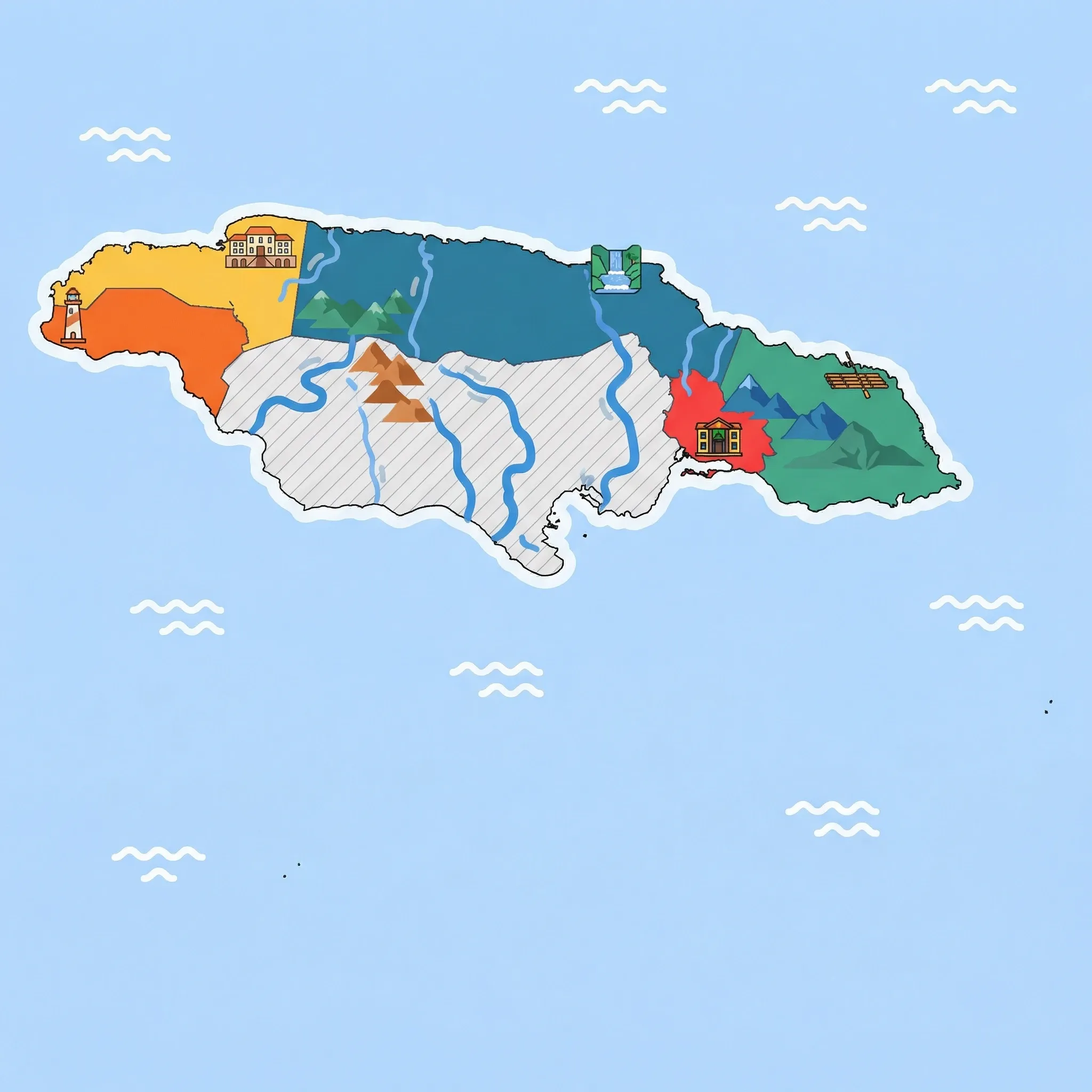
Click a region to explore
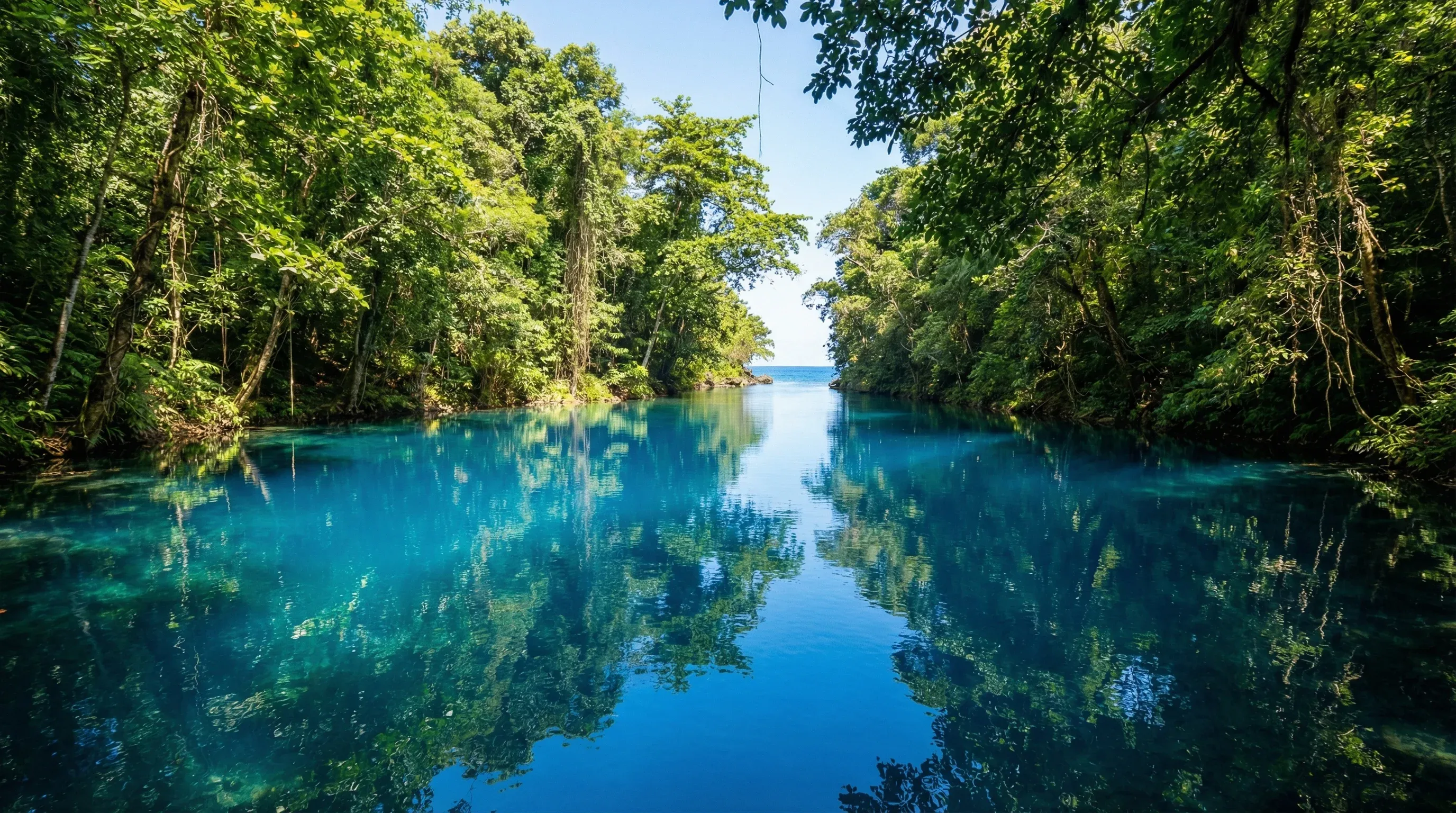
Port Antonio and the parish of Portland are often described as Jamaica's most beautiful region. It receives the most rainfall on the island, resulting in a landscape that is vibrant, verdant, and teeming with life. For families who love nature and quiet, this is paradise. There are no high-rise hotels or crowded beaches here. Instead, you'll find small eco-lodges, private villas, and beaches that look like they've been plucked from a movie set (Frenchman's Cove and the Blue Lagoon are highlights). The vibe is incredibly laid-back and community-focused.
This region is also the cradle of jerk cuisine and home to the Windward Maroons, communities of escaped enslaved people who fought for and won their freedom centuries ago. Visiting Moore Town allows families to learn about this powerful history firsthand. The Rio Grande river offers one of the most relaxing experiences in the Caribbean: bamboo rafting. Unlike the party rafts elsewhere, this is a serene drift through the rainforest valley, often poling past locals washing clothes or fishing in the river. It's a gentle adventure suitable for even small children and grandparents.
Key Attractions
The Blue and John Crow Mountains National Park dominates the skyline here. While the peak is a challenging hike, the lower trails and waterfalls (like Reach Falls) are accessible and magical for families, offering natural swimming pools surrounded by ferns. A visit to Moore Town provides a unique cultural lesson; meeting the Colonel of the Maroons and hearing the stories of Nanny (Jamaica's only National Heroine) is an inspiring history lesson. While not a specific "attraction" with a gate, the Blue Lagoon is iconic—a mix of fresh and saltwater that glows an iridescent blue, perfect for a refreshing dip.
Practical Advice
Port Antonio is harder to reach than other regions, which keeps the crowds away. The roads can be potholed and winding. It rains here frequently—often short, heavy bursts—so pack flexible attitudes and rain gear. This region is best for families who are comfortable entertaining themselves and don't need a kids' club to be happy.
Food & Drink
Typical meal times: Relaxed island time applies. Lunch 12:00 pm to 3:00 pm. Dinner 6:30 pm to 9:00 pm.
Typical meal costs: Generally cheaper than MoBay. A great seafood dinner might cost JMD 2,500–4,500 (approx. $16–29 USD / €15–27 EUR). Boston Jerk Centre offers meals for under JMD 2,000 (approx. $13 USD / €12 EUR).
Dietary requirements: Fresh produce is abundant. You will find plenty of breadfruit, yams, and bananas. Vegetarians will eat well here, though the famous jerk pork is obviously meat-heavy.
Signature dishes:
- Boston Jerk Pork – This is the birthplace of jerk. The meat is smoked in open pits over pimento wood and is spicier and more authentic here than anywhere else.
- Busso – A soup made from the Busso snail, a delicacy found mainly in the rivers of Portland.
- Crayfish – Freshwater shrimp caught in the local Rio Grande, often curried or simmered in coconut milk (Run Down).
Why this score?
The area features some of Jamaica's most pristine and rugged landscapes, including deep rainforests and the Rio Grande valley. It offers more authentic, off-the-beaten-path experiences like bamboo rafting and hiking through less-developed jungle terrain.
Why this score?
Medical facilities in Portland are basic, with the local public hospital providing limited services. Serious medical emergencies usually necessitate a long and difficult drive over the mountains to Kingston's superior hospitals.
Why this score?
This region remains a niche destination due to its relative isolation from the main international airports and lack of large-scale development. It attracts fewer visitors than the north coast, appealing mainly to eco-tourists and luxury travelers seeking seclusion.

Port Antonio offers excellent value for money. While exclusive villas like Geejam are luxury priced, there are many family guesthouses and eco-cottages for JMD 12,000–20,000 (approx. $75–130 USD / €70–120 EUR) per night. Attraction fees are lower here; Reach Falls and rafting are affordable compared to the big commercial parks in Ocho Rios.

Getting Here & Around
Getting Here
- Driving – The drive from Kingston takes about 2.5 to 3 hours through the winding Junction road or the new coastal highway from St. Thomas. From Ocho Rios, it is about a 2-hour drive east.
- Airports – Kingston (KIN) is the closest major international airport. There is a small airfield (Ken Jones Aerodrome) for charter flights.
- Bus – Knutsford Express has a route to Port Antonio from Kingston and Ocho Rios, offering a comfortable and safe journey for families.
Getting Around
- Taxi – Route taxis are the lifeblood of Portland. They are cheap and frequent, running between town, the beaches, and Boston Bay.
- Private Driver – For families, hiring a driver for the day is recommended to reach spots like Reach Falls or Moore Town which are off the main road.
- Walking – Port Antonio town is walkable, but the best beaches and villas are spread out along the coast for miles.
No airports in this region. See the country flight map for nearby connections.
Official Links

Packing List
Portland is the wettest parish; sudden tropical showers are common even on sunny days.
The lush rainforest vegetation means more mosquitoes, especially near the rivers.
Humidity is high, so cotton towels take forever to dry; essential for beach hopping.
Essential for keeping cameras dry while rafting on the Rio Grande.
Essential for climbing Dunn's River Falls and protecting feet on rocky seabeds.
Allows you to take photos while bamboo rafting or swimming without risking your device.
Sand flies (midges) on beaches can be persistent, especially at sunrise and sunset.
Keeps drinks cold in the tropical heat and reduces single-use plastic waste.
Rental gear can be scratched or ill-fitting for kids; bring your own for the best views.

Activities & Best Times

Hiking, wildlife, outdoor exploration, ecotourism
The region offers lush, authentic jungle experiences including Rio Grande rafting and Blue Mountain treks. Peak months provide the best trail conditions, while the heavy autumn rains (Oct-Nov) make mountain paths and river activities seasonally difficult.

Urban tourism, museums, historical sites, architecture
Home to the unique Maroon heritage sites like Moore Town, offering deep historical immersion for sophisticated families. Visiting is best during the drier winter months to fully experience outdoor cultural settlements and historic townships.

Sport tourism, fitness activities, active recreation
Features internationally recognized bamboo rafting and world-class downhill mountain biking from the Blue Mountains. Safety on rivers and trails is optimal from December to April, with shoulder months seeing higher humidity and localized rain.

Beach resorts, marine activities: diving, snorkelling, kite surfing, wind surfing, sailing
Iconic, boutique beach locations like Frenchman's Cove and the Blue Lagoon offer stunning natural beauty but limited infrastructure compared to mass-market resorts. Peak conditions align with the Caribbean dry season for maximum water clarity.

Scenic drives, countryside tours, route-based travel
The A4 and B1 routes offer spectacular coastal and mountain vistas for self-driving families. Travel is discouraged during peak hurricane/rain months (Sep-Nov) due to high risk of landslides in the steep Portland terrain.




Public Holidays & Calendar Next 12 months
Public holidays, festivals, cultural celebrations, and seasonal natural phenomena coming up in Port Antonio & East over the next 12 months.
Loading holidays and events...

Travel Advisory
All major international agencies consistently recommend a high degree of caution for Jamaica. This classification is primarily driven by high levels of violent crime and the periodic implementation of security states of emergency in urban centers.
Safety Topics
Traveller Advice (3 groups)

Reports of sexual harassment and assault occur frequently, including at all-inclusive resorts. Vigilance is required when interacting with strangers, even in tourist-centric zones.

Certain same-sex acts are criminalized under local law, and social attitudes are often conservative. Travellers may face discrimination or hostility for public displays of affection.

Maintain a low profile, avoid carrying large sums of cash, and use hotel safes for valuables. Do not walk or drive in secluded areas at night and avoid resisting in the event of a robbery.
Agency Summaries
Travellers should be extremely vigilant due to frequent violent crimes like armed robbery and homicide. While tourist resorts are generally safer, security concerns persist island-wide, and gang-related activities are concentrated in specific urban neighborhoods.
Ireland advises its citizens to be highly cautious due to crime risks and current shortages of food and water in some areas. Health risks from mosquito-borne diseases like Oropouche and Dengue are also highlighted.
A high degree of caution is necessary because of the ongoing threat of violent crime. Infrastructure damage from Hurricane Melissa continues to cause disruptions to essential services and transportation in certain regions.
Recent improvements in safety have led to a reduced risk level, though crime and medical infrastructure remains a concern. Violent incidents occur across the island, including within some resorts, and emergency response times can be unreliable.
High homicide and crime rates are reported, particularly in inner-city areas. The government occasionally implements enhanced security measures, and the aftermath of recent hurricane activity still affects infrastructure in some western parishes.
There are significant security concerns, especially in Kingston and Montego Bay, due to violent crime. New Zealanders are urged to pay close attention to their personal safety and avoid public transportation.
Information is provided for general guidance only and does not constitute travel, safety, medical, or legal advice. Conditions may change. Users are responsible for independently verifying information before travel.