
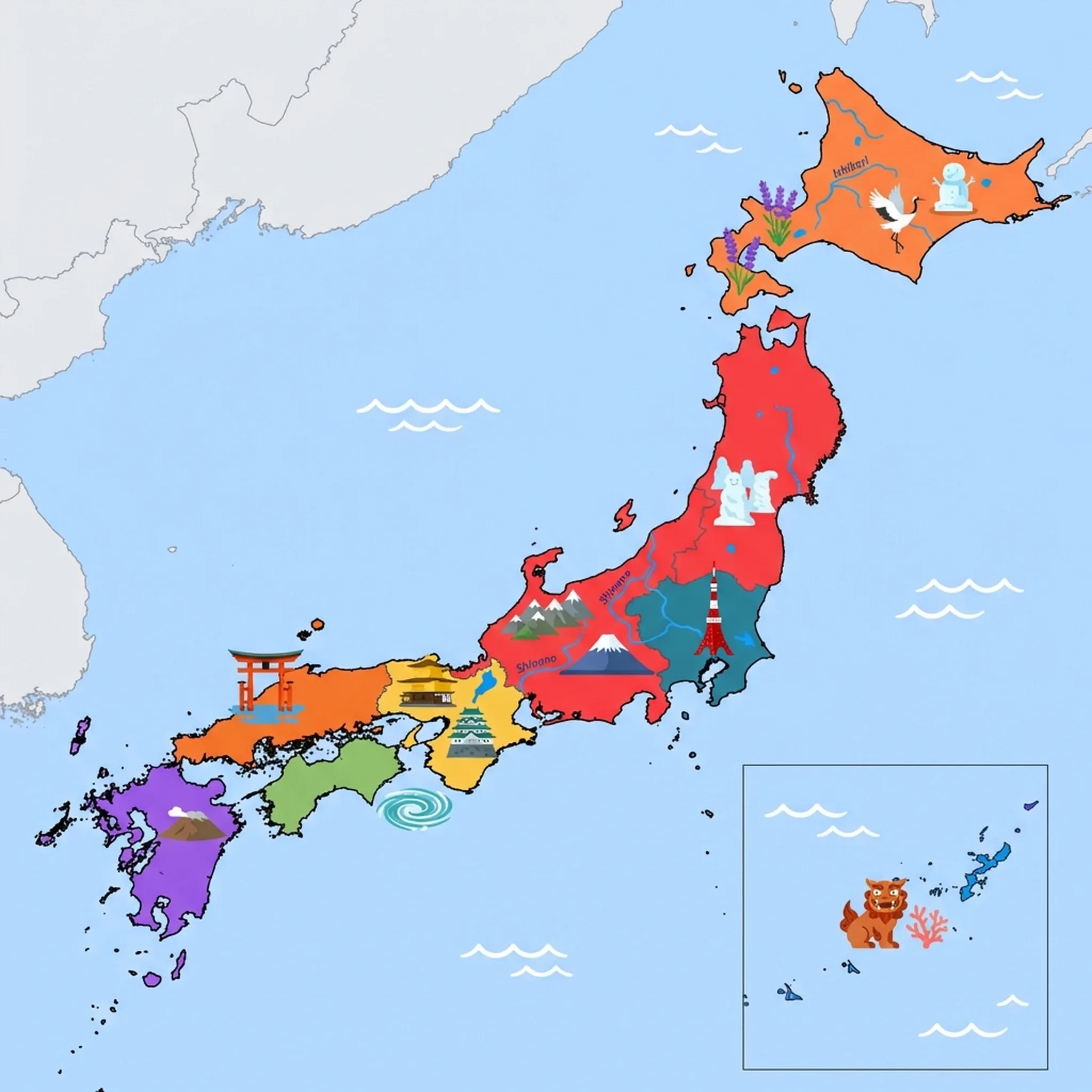
Click a region to explore
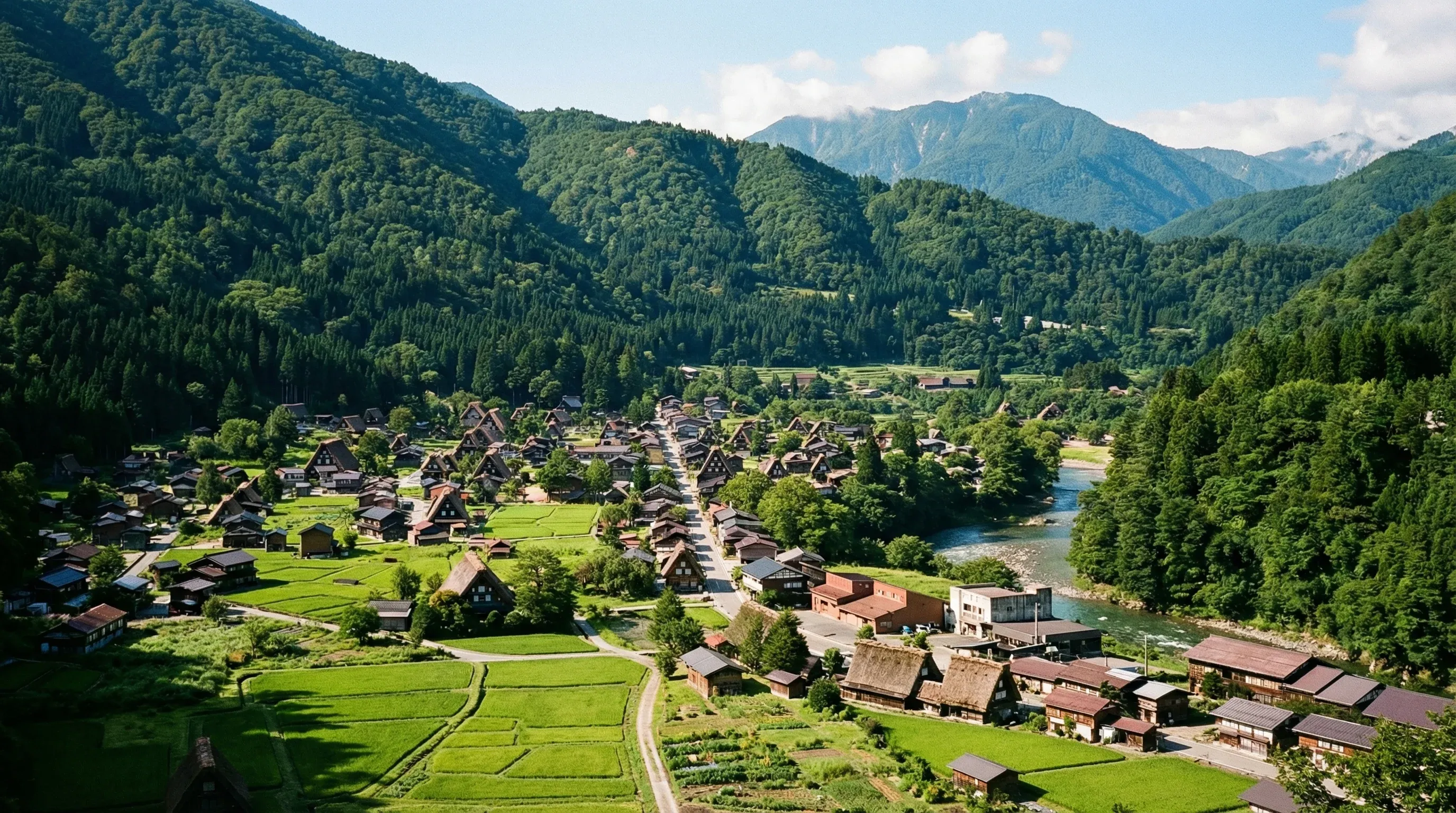
The Chūbu region, often referred to as the "Roof of Japan," creates a dramatic physical barrier between eastern and western Japan. For families, this is a playground of contrasts: the rugged, snow-capped peaks of the Japanese Alps offer world-class hiking and skiing, while the coastal plains and valleys preserve some of the country's most authentic Edo-period towns. Unlike the neon rush of Tokyo, Chūbu operates at a pace dictated by nature and tradition. The climate varies wildly; summers can be hot and humid in the Nagoya basin, while the alpine areas remain cool and refreshing, making them a perfect escape from the city heat. In winter, the region transforms into a snowy wonderland, boasting some of the heaviest snowfalls in the world, particularly around the Shirakawa-go villages and the ski resorts of Nagano.
Culturally, this is where the samurai spirit feels most palpable. Towns like Kanazawa rival Kyoto for geisha culture and tea houses but often with fewer international crowds, allowing families to engage more deeply with the history. The region is also a manufacturing powerhouse—home to Toyota and Yamaha—meaning you'll find excellent science and technology museums that fascinate curious children. Whether you are trekking ancient post roads in the Kiso Valley, eating gold-leaf ice cream in Kanazawa, or riding gondolas up steep mountains, Chūbu offers a depth of experience that is both educational and physically active for energetic kids.
Key Attractions
The undisputed highlight for animal-loving families is the Jigokudani Monkey Park in Nagano. Here, wild Japanese macaques bathe in natural hot springs to keep warm in winter—a behavior unique to this troop. There are no fences; the monkeys walk right past visitors, offering an unforgettable wildlife encounter that feels respectful and natural. Seeing the "snow monkeys" with snow piling on their heads is an iconic image of Japan that delights children of all ages.
For fans of Japanese animation, the recently opened Ghibli Park near Nagoya is a pilgrimage site. Unlike a typical loud theme park with rollercoasters, this is a beautifully landscaped park integrated with nature, featuring life-sized recreations of sets from movies like My Neighbor Totoro and Spirited Away. It captures the whimsy of Studio Ghibli perfectly. Nearby, nature lovers should head to Kamikochi, a high-altitude valley in the Northern Japan Alps. Flat, easy walking trails along the azure Azusa River make it accessible even for families with strollers or young children, offering breathtaking alpine views without the need for strenuous climbing.
In Kanazawa, the Kenrokuen Garden is considered one of Japan's three most beautiful landscape gardens. While gardens might seem dry for kids, Kenrokuen's massive scale, with its ancient fountains, teahouses, and expansive ponds filled with carp, turns a walk into an exploration. Just outside the garden, the 21st Century Museum of Contemporary Art, Kanazawa features the famous "Swimming Pool" installation where kids can stand "underwater" without getting wet—a fantastic photo opportunity and a fun introduction to modern art.
Practical Advice
The best time for hiking is late July to October when trails are snow-free. For snow monkeys, December to March is ideal for the snowy aesthetic, though the park is open year-round. Public transport is excellent, but crossing the Alps from one side (Pacific) to the other (Sea of Japan) takes time due to the mountains. The "Takayama-Hokuriku Area Tourist Pass" is a great value option for families covering this specific route.
Food & Drink
Typical meal times: Lunch is typically 11:30 am to 2:00 pm. Dinner runs from 6:00 pm to 9:00 pm, though rural restaurants in the Alps may close as early as 7:30 pm.
Typical meal costs: A set lunch costs ¥1,200–2,000 (approx. $8–13 USD / €7.50–12.50 EUR). Dinner is ¥2,500–5,000 (approx. $16–33 USD / €15–31 EUR).
Dietary requirements: Major cities like Nagoya and Kanazawa have vegetarian options, but in rural alpine ryokans, dashi (fish stock) is ubiquitous. You must request "shojin ryori" (Buddhist vegetarian cuisine) in advance where available.
Signature dishes:
- Hida Beef – A high-quality wagyu beef from the Takayama area, famous for its marbling. It is often served as sushi or grilled on a magnolia leaf with miso (Hoba Miso).
- Miso Katsu – A Nagoya specialty featuring a breaded pork cutlet smothered in a thick, sweet-savory red miso sauce.
- Houtou Noodles – Flat, thick wheat noodles stewed in miso soup with pumpkin and vegetables, a warming dish famous in the Mt. Fuji area.
- Gohei Mochi – Skewered rice cakes grilled with a walnut and miso glaze, a popular and cheap snack for kids hiking in the Kiso Valley.
Why this score?
The Japanese Alps offer significant hiking and winter sports, but the tourism infrastructure is highly organized with well-marked trails and efficient transport like the Alpine Route's cable cars. While mountainous, the presence of luxury ryokans and paved access to sites like the snow monkey park keeps the overall adventure level moderate for families.
Why this score?
Nagoya is a major medical center with several international-standard hospitals, and the region generally provides excellent healthcare. While English proficiency may drop in remote alpine villages, the heavy tourist flow ensures that emergency services are accustomed to assisting foreign visitors.
Why this score?
This region is a well-established destination for international travelers, particularly for the historic villages of Shirakawa-go and the 'Golden Route' extension to Takayama and Kanazawa. Nagoya serves as a major transit and industrial hub, while the Tateyama Kurobe Alpine Route attracts significant seasonal crowds.

Nagoya and Kanazawa are cheaper than Tokyo, but remote alpine accommodation can be pricey due to logistics. A family ryokan stay with two meals usually costs ¥30,000–50,000 (approx. $200–330 USD / €185–310 EUR) per night. Local bus fares in the mountains add up, often ¥2,000–3,000 (approx. $13–20 USD / €12–18 EUR) per person for round trips.

Getting Here & Around
Getting Here
- Train – The Tokaido Shinkansen connects Tokyo to Nagoya in just 1 hour 40 minutes. The Hokuriku Shinkansen connects Tokyo to Kanazawa in 2.5 hours.
- Airports – Chūbu Centrair International Airport (NGO) is an artificial island airport serving Nagoya and the wider region.
- Bus – Highway buses are the most economical way to reach the Alps (e.g., from Shinjuku to Matsumoto or Takayama).
Getting Around
- Train – The JR lines cover the coastal areas well. The "Wide View Hida" is a scenic train connecting Nagoya to Takayama.
- Bus – Essential for accessing the mountains. Shuttle buses run from parking lots to Kamikochi as private cars are banned to protect nature.
- Car – Highly recommended if you want to explore the Noto Peninsula or remote villages like Shirakawa-go at your own pace.
Nearby Airports (7 airports)
Shizuoka Airport
FSZShizuoka
Niigata Airport
KIJNiigata
Komatsu Airport
KMQKomatsu
Matsumoto Airport
MMJMatsumoto
Nagoya Airport
NKMNagoya
Noto
NTQWajima
Toyama
TOYToyama
View full flight map for Japan →
Official Links

Packing List
You will take shoes off constantly at temples, castles, and restaurants.
Public restrooms often lack paper towels or hand dryers.
Public trash cans are extremely rare; you must carry your garbage home.
Alpine areas like Kamikochi can be significantly colder than the cities.
Public bins are extremely rare; you are expected to carry your rubbish home or to your hotel.
Most public restrooms do not provide paper towels or hand dryers.
Japan is still cash-heavy and you will accumulate many coins (¥100, ¥500) quickly.
Japanese brands are often weaker than Western ones; bring your preferred brand from home.

Activities & Best Times

Hiking, wildlife, outdoor exploration, ecotourism
Home to the world-class Japanese Alps and the iconic Tateyama Kurobe Alpine Route. Peaks occur during the opening of alpine trails in late spring and the spectacular autumn foliage, with deep winter snow making high-altitude exploration inaccessible.

Urban tourism, museums, historical sites, architecture
Features authentic heritage sites like Kanazawa's Kenrokuen and the preserved villages of Shirakawa-go and Takayama. Spring and autumn offer world-class aesthetics and comfort, whereas extreme humidity in summer and bitter cold in winter detract from the urban experience.

Amusement parks, family entertainment venues
Boasts internationally significant attractions including Ghibli Park and Legoland Japan. Peak visitation aligns with school holidays and pleasant weather, though the parks remain accessible in shoulder months for those seeking shorter queues.

Learning experiences, scientific sites, historical education
High-quality scientific engagement via the Port of Nagoya and Gifu freshwater aquariums provides substantial educational value. These indoor facilities are reliable year-round but peak during family travel seasons.

Sport tourism, fitness activities, active recreation
Infrastructure such as Hakuba Iwatake and the Mishima Skywalk supports diverse outdoor sports and active exploration. Ideal conditions are found in stable weather windows, while winter focus shifts away from non-skiing active infrastructure.

Beach resorts, marine activities: diving, snorkelling, kite surfing, wind surfing, sailing
Miho no Matsubara and Shirahama are scenic coastal sites but not competitive with international beach destinations. Cold Pacific waters and limited beach resort infrastructure. Downgrade to marginal.

Attractions (41 total)



Public Holidays & Calendar Next 12 months
Public holidays, festivals, cultural celebrations, and seasonal natural phenomena coming up in Chūbu & Japanese Alps over the next 12 months.
Loading holidays and events...

Travel Advisory
All six major agencies agree that Japan is a safe destination where standard travel safety awareness is sufficient for visitors.
Safety Topics
Traveller Advice (3 groups)

Ensure you carry your original passport with you at all times as it is a legal requirement for foreign nationals in Japan.

While Japan is very safe, female travelers should remain vigilant in popular nightlife districts due to reported incidents of harassment or assault.

Japan is generally welcoming, but travelers should be aware that same-sex marriage and some related legal protections are not yet fully recognized by national law.
Agency Summaries
Travelers should follow standard safety protocols and stay informed of weather alerts and local guidance from Japanese authorities.
Japan is considered safe for New Zealanders, though awareness of seismic activity and petty crime in entertainment areas is advised.
The overall risk level is low, but travelers should be aware of regional risks such as earthquakes and potential crime in urban nightlife districts.
Japan offers a stable environment similar to Australia, with low crime rates but specific risks related to nightlife scams and natural disasters.
Standard safety measures are sufficient for travel to Japan. Visitors are encouraged to register for security updates and review local medical laws.
Japan is generally safe for travelers, though visitors should remain alert to natural hazards and stay informed via local media.
Information is provided for general guidance only and does not constitute travel, safety, medical, or legal advice. Conditions may change. Users are responsible for independently verifying information before travel.