
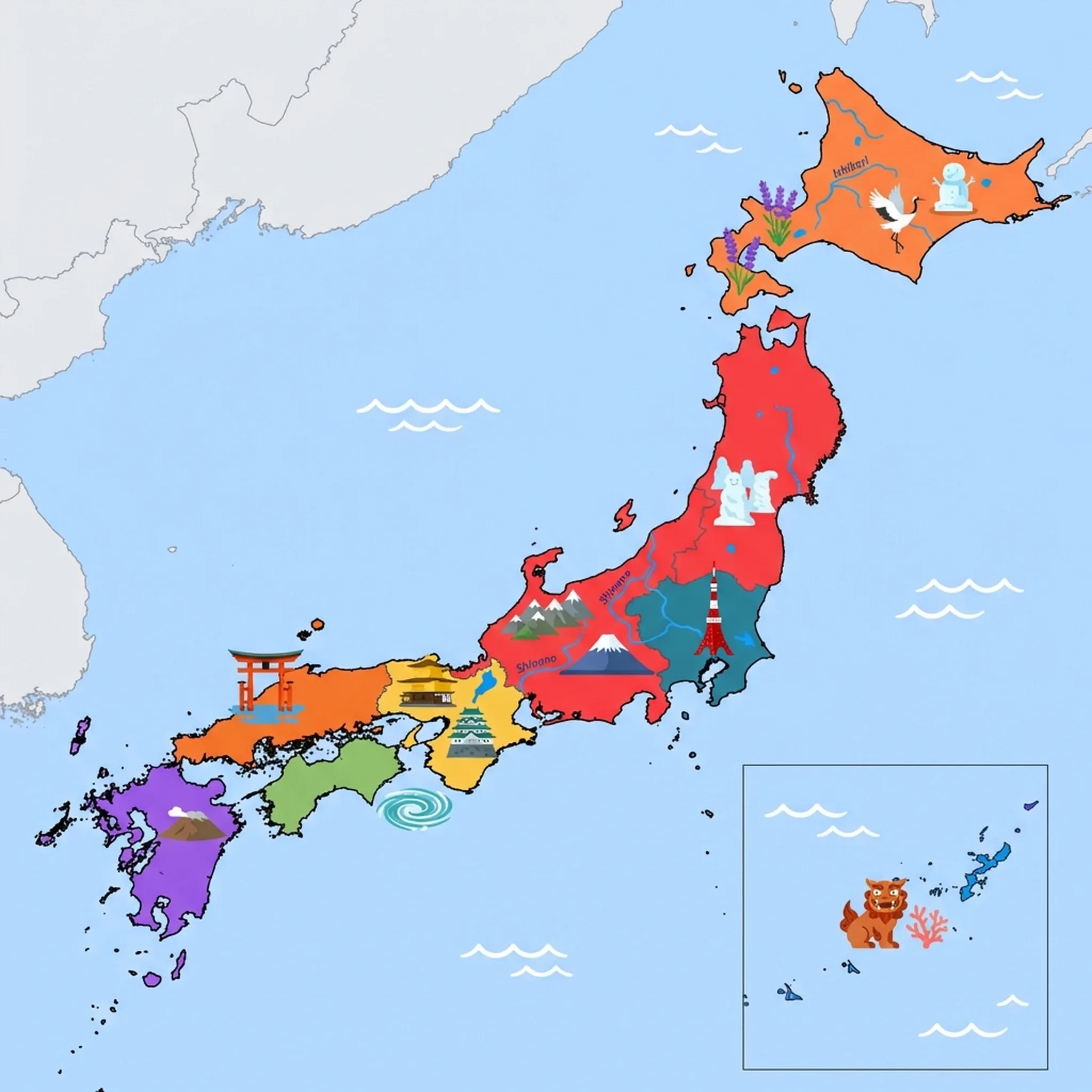
Click a region to explore
Chūgoku is a region of two distinct faces: the sunny, bustling San'yo coast along the Seto Inland Sea, and the quieter, mystical San'in coast facing the Sea of Japan. For families, this diversity means you can combine an educational trip to Hiroshima with relaxing island hopping and outdoor adventures. The climate is generally mild, particularly along the Inland Sea, which is often called the "Aegean of Japan" for its calm blue waters and citrus groves. This region feels less frantic than Tokyo or Osaka, giving families more space to breathe and explore.
The region is deeply rooted in Japanese folklore. The San'in coast is known as the land of the gods, where ancient myths of serpents and deities originated. Conversely, Hiroshima offers a powerful modern history lesson. While the topic of the atomic bomb is heavy, the Peace Memorial Park is designed with a focus on hope and the future, and many families find it a moving, essential experience for older children. Beyond history, the landscape offers unique surprises, from the massive sand dunes of Tottori (where kids can ride camels or sandboard) to the limestone caverns of Akiyoshidai. The train connectivity along the southern coast is superb, making it easy to zip between major sights on the Shinkansen.
Key Attractions
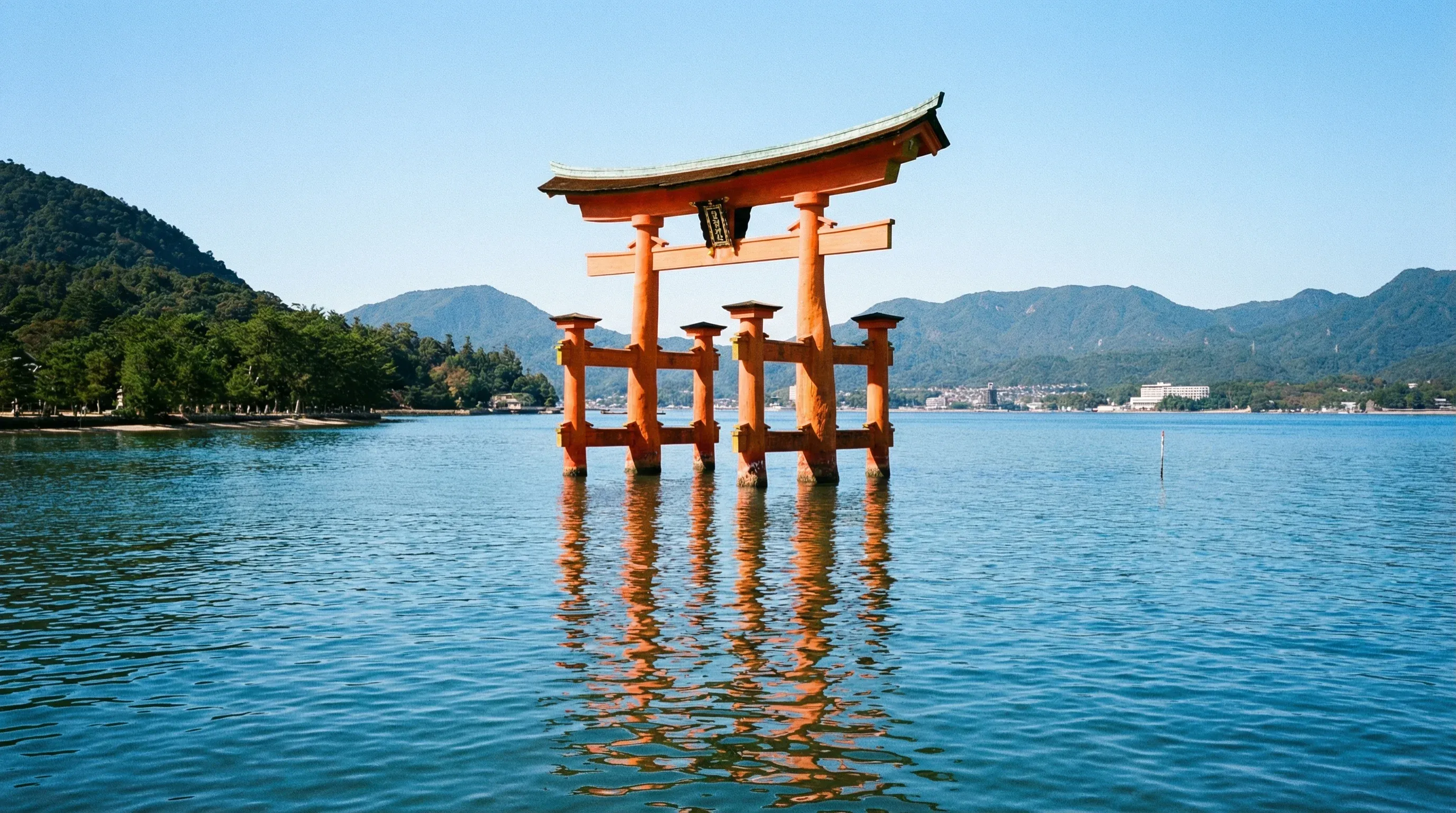
A short ferry ride from Hiroshima brings you to Itsukushima (Miyajima), one of Japan's most scenic spots. The massive orange torii gate of Itsukushima Shrine appears to float on the water at high tide—a magical sight. But for kids, the highlight is often the friendly (and hungry) wild deer that wander the town, and the ropeway ride up Mount Misen, which offers spectacular views and playful wild monkeys near the summit.
In Hiroshima city, the Hiroshima Peace Memorial (Genbaku Dome) is a UNESCO World Heritage site standing as a silent witness to history. The surrounding park is spacious and peaceful, offering a place for reflection. Moving east to Okayama, Okayama Castle is distinctive for its black exterior, earning it the nickname "Crow Castle." It is located right next to Okayama Korakuen Garden, a vast lawn garden where children can run relatively freely compared to more fragile moss gardens.
For art-loving families, the Adachi Museum of Art in Shimane is world-famous not just for paintings, but for its gardens, which are viewed through glass windows like living pictures. While less interactive for toddlers, it is a stunning visual experience for older children and teens interested in design or nature.
Practical Advice
Spring and Autumn are visually stunning here. The "JR Kansai-Hiroshima Area Pass" is an incredibly good value for tourists, covering the Bullet Train between Osaka and Hiroshima. Miyajima can get extremely crowded during Golden Week (early May) and autumn foliage season (November); visit early in the morning or stay overnight on the island to beat the day-trippers.
Food & Drink
Typical meal times: Lunch 11:30 am to 2:00 pm. Dinner 5:30 pm to 9:00 pm. Hiroshima has a lively nightlife scene where Okonomiyaki stalls stay open later.
Typical meal costs: Okonomiyaki is a budget-friendly family meal at ¥900–1,500 (approx. $6–10 USD / €5.50–9 EUR) per person. Set meals run ¥1,200–2,000 (approx. $8–13 USD / €7.50–12.50 EUR).
Dietary requirements: Hiroshima-style Okonomiyaki contains egg, pork, and seafood stock. Vegetarian versions are increasingly available in Hiroshima City—look for "Yasai-yaki" (vegetable fry) but confirm no dashi/bonito flakes are used.
Signature dishes:
- Hiroshima-style Okonomiyaki – A savory pancake layered with cabbage, pork, egg, and noodles (unlike the mixed Osaka style). It's cooked on a griddle in front of you—great theater for kids.
- Momiji Manju – Maple-leaf shaped cakes from Miyajima, filled with sweet bean paste, custard, or chocolate. Kids love the different flavors and shapes.
- Izumo Soba – Darker, more rustic buckwheat noodles from the Shimane area, served in stacked lacquerware boxes.
Why this score?
The region is largely developed with excellent rail links, making it easy to navigate for families. Outdoor activities like climbing the Tottori Sand Dunes or cycling the Shimanami Kaido are popular but occur within highly managed environments with plentiful amenities.
Why this score?
Hiroshima and Okayama host world-class medical facilities with experience treating international residents and tourists. In more rural areas like Tottori or Shimane, healthcare remains high-quality but English-speaking staff are less common than in the major metropolitan hubs of Honshu's eastern coast.
Why this score?
Hiroshima and Miyajima Island are top-tier international attractions, but the rest of the region, including the Tottori Sand Dunes and Shimane, sees far fewer foreign visitors. It remains a recognized destination for those looking to explore beyond the Tokyo-Kyoto axis, particularly historical and spiritual sites.

Slightly cheaper than Tokyo or Kyoto. A family hotel in Hiroshima is around ¥15,000–25,000 (approx. $100–165 USD / €95–155 EUR). Dining is excellent value, especially the filling Okonomiyaki.

Getting Here & Around
Getting Here
- Train – The Sanyo Shinkansen runs the length of the region, connecting Osaka to Hiroshima in about 1.5 hours and onto Hakata (Kyushu).
- Airports – Hiroshima Airport (HIJ) and Okayama Momotaro Airport (OKJ) serve domestic and some international routes.
- Ferry – Frequent ferries connect the mainland to Miyajima and the art islands of the Seto Inland Sea.
Getting Around
- Train – The Shinkansen is best for east-west travel. Local lines like the JR Sanin Line are much slower but scenic.
- Tram – Hiroshima has an extensive, charming streetcar network that is fun for kids and easy to use.
- Bicycle – The Shimanami Kaido is a world-famous cycling route connecting main island Honshu to Shikoku across bridges; rental bikes are available for families.
Nearby Airports (9 airports)
Hiroshima
HIJHiroshima
Iwami
IWJMasuda
Iwakuni Kintaikyo Airport
IWKIwakuni
Izumo
IZOIzumo
Oki Island Airport
OKIOki Island
Okayama
OKJOkayama
Tottori
TTJTottori
Yamaguchi Ube
UBJUbe
Miho
YGJYonago
View full flight map for Japan →
Official Links

Packing List
Japan is still cash-heavy; you will accumulate massive amounts of coins.
Essential for drying hands in public restrooms.
Frequent removal of shoes at shrines, ryokans, and dressing rooms.
Roads in the mountainous interior and ferries to islands can be winding/choppy.
Public bins are extremely rare; you are expected to carry your rubbish home or to your hotel.
Most public restrooms do not provide paper towels or hand dryers.
You will remove shoes frequently at temples, restaurants, and fitting rooms. Laces are a hassle.
Japanese brands are often weaker than Western ones; bring your preferred brand from home.

Activities & Best Times

Hiking, wildlife, outdoor exploration, ecotourism
Features globally unique natural attractions including the Tottori Sand Dunes and the rabbit-populated island of Okunoshima, providing authentic wildlife and landscape immersion. Best explored in spring and autumn when temperatures are comfortable for families to engage in extensive walking and exploration.

Urban tourism, museums, historical sites, architecture
Home to iconic heritage sites like Izumo Taisha and the preserved Kurashiki Bikan Historical Quarter, offering a world-class blend of feudal history and living culture. Peak visiting windows avoid the extreme humidity of summer while capturing the region's famous cherry blossoms and autumn foliage.

Sport tourism, fitness activities, active recreation
Provides specialized infrastructure for sandboarding and paragliding at the Tottori Dunes alongside well-regarded forest adventure parks. These activities require moderate weather conditions, making the stable, temperate days of May, October, and November the premier choices.

Beach resorts, marine activities: diving, snorkelling, kite surfing, wind surfing, sailing
San'in coast and Tsunoshima Bridge are scenic but cold, rugged coastlines more suited to sightseeing than beach vacations. Not internationally competitive as a beach destination.

Attractions (24 total)



Public Holidays & Calendar Next 12 months
Public holidays, festivals, cultural celebrations, and seasonal natural phenomena coming up in Chūgoku & Western Honshu over the next 12 months.
Loading holidays and events...

Travel Advisory
All six major agencies agree that Japan is a safe destination where standard travel safety awareness is sufficient for visitors.
Safety Topics
Traveller Advice (3 groups)

Ensure you carry your original passport with you at all times as it is a legal requirement for foreign nationals in Japan.

While Japan is very safe, female travelers should remain vigilant in popular nightlife districts due to reported incidents of harassment or assault.

Japan is generally welcoming, but travelers should be aware that same-sex marriage and some related legal protections are not yet fully recognized by national law.
Agency Summaries
Travelers should follow standard safety protocols and stay informed of weather alerts and local guidance from Japanese authorities.
Japan is considered safe for New Zealanders, though awareness of seismic activity and petty crime in entertainment areas is advised.
The overall risk level is low, but travelers should be aware of regional risks such as earthquakes and potential crime in urban nightlife districts.
Japan offers a stable environment similar to Australia, with low crime rates but specific risks related to nightlife scams and natural disasters.
Standard safety measures are sufficient for travel to Japan. Visitors are encouraged to register for security updates and review local medical laws.
Japan is generally safe for travelers, though visitors should remain alert to natural hazards and stay informed via local media.
Information is provided for general guidance only and does not constitute travel, safety, medical, or legal advice. Conditions may change. Users are responsible for independently verifying information before travel.